Police
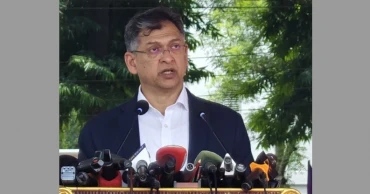
Govt to build police force free from political influence: Home Minister
Home Minister Salahuddin Ahmed on Sunday said the police must not serve as an instrument of any political party or group but should instead become a true friend of people and a symbol of public security.
The government's priority is to ensure public safety and build a modern, professional and people-oriented police force free from political influence, he said while addressing the graduation parade of the first phase of the 27th BCS (Police) batch at the Bangladesh Police Academy in Sardah, Rajshahi.
He said the government has taken various steps to restore the morale of the police force which was undermined by excessive politicisation during the previous “fascist government”.
The minister said a strict system of rewards for professionalism and disciplinary action for misconduct has been introduced to strengthen integrity and discipline within the force.
Congratulating the newly appointed officers who took part in the parade, the minister said this joyous moment should have come much earlier in their lives. He said it was deeply painful that they had endured 18 years of severe deprivation and inhumane suffering as victims of the vindictive actions of the previous authoritarian and fascist government.
The minister extended his heartfelt greetings to all the officers for regaining their rightful positions and due recognition following the fall of the authoritarian regime.
He said they were beginning their careers at a historic time for the country and urged them to uphold equality before the law.
“From political activists to marginal farmers, everyone is equal in the eyes of the law. No one seeking police services should face discrimination,” he added.
He also stressed the importance of maintaining the chain of command, discipline, loyalty and teamwork, while urging the officers to enhance their expertise in cyber security and criminal investigation to meet emerging challenges.
Reaffirming the government's zero-tolerance policy against corruption, Salahuddin called on all police members to perform their duties with honesty and dedication.
The minister expressed hope that members of the 27th BCS (Police) batch would use their knowledge and experience gained over the past 18 years in different professions to strengthen the Bangladesh Police.
A total of 58 probationary ASPs — 57 from the first phase of the 27th BCS (Police) batch and one from the 28th batch — officially entered service through the parade.
At the ceremony, Probationary ASP Dr Md Nurul Huda Bhuiyan won the Best in Field Activities award and was also named the Best Probationer. Probationary ASP ABM Mamun received the Best Shooter award, while Abu Numan Mohammad Khairul Islam won the Best Academic Award.
During the ceremony, the minister inspected the parade, took the salute and distributed awards among the best-performing probationary officers.
The event was attended as special guests by Land Minister Mizanur Rahman Minu, local Members of Parliament, Inspector General of Police (IGP) Md. Ali Hossain Fakir, Principal of Bangladesh Police Academy G M Azizur Rahman, Rajshahi Divisional Commissioner Dr. A.N.M. Bazlur Rashid, and Rajshahi Range Deputy Inspector General (DIG) Md. Ashik Saeed.
Senior military and civilian officials, local and foreign invited guests, guardians of the ASP probationers, and journalists from various media outlets were also present at the ceremony.
2 months ago

Salahuddin outlines steps to increase welfare benefits for police
Home Minister Salahuddin Ahmed on Sunday said the government has taken a series of initiatives aimed at ensuring welfare of the police personnel, including honorary promotions upon retirement and possible overtime allowances, as part of efforts to turn police into a modern and people-oriented force.
While addressing the “Welfare Parade” organised as part of Police Week-2026 at the Bangladesh Police Auditorium in the Rajarbagh Police Lines, he also said the government will fulfil all logical demands of police members in line with the country’s financial capacity.
Prime Minister Tarique Rahman was present as the chief guest while Senior Secretary of the Home Ministry Monzur Morshed Chowdhury and Inspector General of Police Md Ali Hossain Fakir, among others, addressed the programme.
Highlighting retirement-related benefits, Salahuddin said many police constables complete 40 years of service without receiving further promotion.
PM asks police to remain neutral, turn stations into reliable support centres
To address the issue, the government plans to introduce honorary promotions at retirement based on special policies and satisfactory service records, he said.
Under the proposal, eligible constables may receive an honorary promotion to the rank of assistant sub-inspector (ASI), ASIs to sub-inspector (SI) and SIs to the rank of inspector upon retirement, the minister said.
Besides, the government is considering introducing special overtime allowances for police personnel who work extended hours under a special policy framework, he said.
The proposed benefit may apply to officers from the rank of inspector down to constable and is expected to help improve morale and service quality, Salahuddin added.
Meanwhile, the government is also taking plans to modernise central and divisional police hospitals to improve physical and mental healthcare services for police members, considering their long working hours and heavy workload, he said, adding that the additional modern hospital facilities may also be constructed after necessary assessments.
On accommodation and infrastructure, the minister said the government remains committed to resolving accommodation shortages and improving office facilities for different police units, adding that land acquisition and funding for such projects are among government priorities.
Referring to current law and order, he said visible progress has been made over the past two months. “Special drives are underway against identified terrorists, extortionists and drug traffickers,” he said.
Salahuddin also stressed the importance of advanced training for police personnel to combat evolving crimes linked to technological developments, including cybercrime, online gambling and money laundering.
Meanwhile, a committee has already been formed to put forward suggestions to update laws to tackle gambling, cybercrime and financial crimes more effectively, he said.
Besides, the existing laws will be amended and updated to curb mob culture, the minister said, instructing police personnel to carry out their duties in line with public expectations.
5 months ago

16 DIGs sent into compulsory retirement as govt rejigs police leadership
The government has sent 17 senior police officers, including 16 holding the rank of Deputy Inspector General (DIG), into compulsory retirement.
The order was issued on Sunday through a notification from the Home Ministry, signed by its Senior Secretary Manjur Morshed Chowdhury by order of the President.
According to the notification, the police officers have been retired in the public interest under Section 45 of the Government Service Act, 2018. They will receive all retirement benefits as per the rules.
Those retired include DIG of the Anti-Terrorism Unit Mofiz Uddin Ahmed, DIG of Highway Police Imtiaz Ahmed, DIG of CID Md. Habibur Rahman, DIG (TR) at Police Headquarters Saleh Mohammad Tanvir, Director of National Security Intelligence (NSI) Md. Harun-or-Rashid, and DIG of Dhaka Police Staff College SM Akhtaruzzaman.
Besides, Commandant (DIG) of Noakhali PTC Md. Haidar Ali Khan, Commandant of Khulna PTC Md. Mahbubur Rahman Bhuiya, DIG of Tourist Police Md. Ruhul Amin, DIG of Highway Police Md. Rafiqul Hasan Gani, DIG of River Police Md. Mizanur Rahman, and Commissioner of Rangpur Metropolitan Police Md. Majid Ali.
The list further includes DIG at Police Headquarters Kazi Zia Uddin, DIG of Railway Police Md. Golam Rauf Khan, Commandant of Rangpur PTC Sheikh Mohammad Rezaul Haider, and DIG of Highway Police Rakhfar Sultana Khanam.
In the same order, Superintendent of Police (Supernumerary Additional DIG) of Railway Police Farhat Ahmed has also been sent into retirement.
The order, issued in the public interest, takes immediate effect, the notification said.
5 months ago
OpenAI considered alerting police before deadly Canadian school shooting
ChatGPT-maker OpenAI said Friday it had considered last year alerting Canadian authorities about a user who months later carried out one of the country’s deadliest school shootings.
In June 2025, OpenAI identified the account of 18-year-old Jesse Van Rootselaar through its abuse detection system for “furtherance of violent activities.” The company said it debated whether to report the account to the Royal Canadian Mounted Police (RCMP) but decided at the time that the activity did not meet the threshold for law enforcement referral. The account was banned that same month for violating OpenAI’s usage policy.
Amazon halts surveillance tech partnership as ad triggers privacy debate
Last week, Van Rootselaar killed eight people in a remote area of British Columbia before dying from a self-inflicted gunshot wound. OpenAI explained that its threshold for notifying authorities involves cases with an imminent and credible risk of serious physical harm, which it did not find in this instance. The Wall Street Journal first reported the company’s revelation.
Following the shootings, OpenAI said its employees contacted the RCMP, providing information about Van Rootselaar and his use of ChatGPT. “Our thoughts are with everyone affected by the Tumbler Ridge tragedy. We proactively reached out to the Royal Canadian Mounted Police and will continue to support their investigation,” an OpenAI spokesperson said.
RCMP Staff Sgt. Kris Clark confirmed OpenAI’s post-incident contact and said investigators are reviewing Van Rootselaar’s electronic devices, social media, and online activity. Authorities said he first killed his mother and stepbrother at home before attacking the school. He had prior mental health contacts with police, but his motive remains unclear.
Tech-themed fair showcases dancing robots for Lunar New Year
The small town of Tumbler Ridge, home to 2,700 people, is located over 1,000 kilometers northeast of Vancouver, near the Alberta border. The victims included a 39-year-old teaching assistant and five students aged 12 to 13. The attack was Canada’s deadliest since the 2020 Nova Scotia rampage, in which a gunman killed 13 people and set fires that claimed nine more lives.
7 months ago

153 police officers promoted to Police Inspector
In a latest reshuffle in the police administration, a total of 153 police officials including 147 sub-inspectors and six sergeants have been promoted to the rank of Inspector.
Bangladesh Police Headquarters issued separate notices, signed by Inspector General of Police (IGP) Baharul Alam, in this regard on Monday.
8 months ago

Guatemala declares emergency as police deaths rise to 9 in gang attacks
The death toll from coordinated attacks by suspected gang members on Guatemalan police rose to nine on Monday, prompting President Bernardo Arévalo to impose a 30-day state of emergency that curtails several civil rights and expands security powers.
National Civil Police Director David Custodio Boteo said a ninth officer died early Monday from injuries sustained in the attacks, while several others remain in critical condition. Some officers also suffered amputations.
The violence erupted over the weekend after inmates seized control of three prisons in apparently coordinated riots, taking 43 guards hostage. Authorities said the gangs were demanding privileges for their members and leaders. Shortly after police regained control of one prison on Sunday morning, suspected gang members launched a wave of attacks against police across the capital.
On Monday, police honored the fallen officers in a ceremony at the Interior Ministry, where flag-draped coffins were displayed. President Arévalo said the nation would not forget the sacrifice of the officers who died in the line of duty.
The government gazette published the emergency decree on Monday, citing “coordinated actions by self-named maras or gangs against state security forces, including armed attacks against civilian authorities.”
Under the emergency measures, authorities have limited freedom of movement and demonstrations. Police are also allowed to detain suspected gang members without a judicial order and may restrict or search vehicles in designated areas.
The unicameral Congress approved the state of emergency with minor changes on Monday night by a vote of 149 to 1, with 10 lawmakers absent or on approved leave. The decree, however, took effect on Sunday.
Traffic in Guatemala City was lighter than usual on Monday as residents stayed indoors amid heightened security. Schools were suspended nationwide as a precaution.
The US Embassy in Guatemala condemned the attacks on police and reaffirmed its support for Guatemala’s security forces. It had earlier instructed US government personnel to shelter in place on Sunday before later lifting the order and advising continued caution.
In October, Guatemala’s Congress amended the law to designate members of the Barrio 18 and Mara Salvatrucha gangs as terrorists, increasing prison sentences for gang-related crimes. The United States also designated the two groups as foreign terrorist organizations last year.
8 months ago
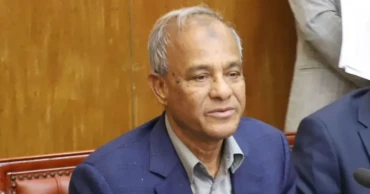
Police must remain 100% neutral during elections: Home Adviser
Home Affairs Adviser Lt Gen (retd) Jahangir Alam Chowdhury on Sunday directed law enforcement agencies to maintain absolute neutrality while performing election duties, warning them against accepting any unethical benefits, favours or hospitality from political parties.
“Police are not protectors of any political party, rather they are government employees who are paid by taxpayers' money. The main responsibility of the police force is to serve the people and ensure the rule of law,” he said.
The Home Adviser came up with the information while speaking at the passing-out parade of Assistant Superintendents of Police at the Bangladesh Police Academy in Sardah, Rajshahi.
Referring to the election-time duties, the adviser said the protection of human dignity and the rule of law largely depended on the conduct of field-level police personnel.
Significant progress in Hadi murder probe: Home Adviser
“Peace cannot be established by the use of force alone without gaining public trust. The law enforcers are fully prepared to ensure a free, fair and neutral upcoming national parliamentary election as nearly one lakh police personnel have been given special training to ensure election security,” he added.
If any chaos created at polling centres during the election, it must be dealt with firmly in line with the advice of the returning officers, he said.
Claiming that Bangladesh Police is not an ordinary force, the adviser said police should act as a servant of the state and the people.
Mentioning corruption as the biggest enemy of the state, the adviser said corruption destroys an institution from within and undermines public trust. If any police officer neglects their duties for personal gain or political advantage, they weaken the very foundation of the state.
Police officers may face various pressures and criticism in their professional lives, but honesty and patriotism can overcome all obstacles, he said.
No force can stop elections if people are determined: Home Adviser
The adviser also urged the police to build a corruption-free, impartial, humane, courageous and proud police force by upholding the sacrifices of the people and the expectations of future generations.
A total of 96 trainee officers of the 41st BCS (Police) batch, which began training on February 15, last year, formally entered their professional careers through the passing-out parade.
Besides, 87 trainees from the 41st BCS (Police) batch, one trainee from the 28th BCS, three from the 35th BCS, one from the 36th BCS, two from the 37th BCS and two from the 40th BCS were also present there.
9 months ago

DU authorities file case over attack on students
The Dhaka University (DU) authorities have filed a case against those responsible for attacking DU students at New Market Police Station on Thursday at the Science Lab intersection. The case was lodged on the night of January 15, according to a press release issued by the university’s Public Relations Office.
The press release stated that Dhaka University Vice-Chancellor Professor Dr. Niaz Ahmed Khan immediately spoke with the Home Affairs Adviser to ensure the safety of university students. He has also been maintaining communication with the Education Adviser and other senior government officials regarding the matter. Additionally, the university authorities have formally sent a letter to the Home Secretary seeking to ensure the security of student transportation.
The release further mentioned that students of the proposed Central University blocked the Science Lab area on the afternoon of January 15. When a bus carrying Dhaka University students was heading toward the campus, the protesters obstructed it. Upon receiving the information, members of the DU Proctorial Body and the Transport Manager rushed to the spot and managed to escort the bus away. During this time, the protesters attacked the DU students, leaving several of them injured.
Referendum: DUCSU announces month-long programme to secure victory for ‘Yes’
In protest against the incident, Dhaka University students staged a sit-in at the Nilkhet area on the evening of January 15. The Vice-Chancellor of Dhaka University, the Treasurer, the Proctor, the Provost of Shaheed Sergeant Zahurul Haq Hall, the Director of the Institute of Leather Engineering and Technology, senior faculty members, assistant proctors, DUCSU leaders, and leaders of the Zahurul Haq Hall unit spoke with the students and expressed solidarity with them.
The press release also noted that the administrator of Central University has expressed regret to the Dhaka University authorities over the incident.
9 months ago

Sylhet’s Gowainghat house fire caused by short circuit, police confirm no communal link
A fire that broke out at the home of late schoolteacher Birendra Deb in Sylhet’s Gowainghat was caused by an electrical short circuit, police said, rejecting claims of any communal link.
In a statement issued on Friday night, Assistant Superintendent of Police Md Samrat Talukder said the fire started from a short circuit at the house of Birendra Deb.
The fire broke out on Thursday afternoon at the house in Bahar village, East Para, under Nandirgaon Union of the upazila.
The affected family claimed that goods worth Tk 60 to 70 lakh were destroyed.
Meanwhile, from Thursday evening, photos and videos of the fire began circulating online.
Some social media users claimed the house of Birendra Deb was set on fire for political reasons, while others spread rumors that it was due to his religious identity.
In a statement issued Friday night, Sylhet District Police said a recent fire at a family home in Gowainghat was caused by an electrical short circuit.
While the incident was purely accidental, the police noted that it was being circulated on social media as a communal attack.
The statement added that the fire actually started on Thursday afternoon in the house due to an electrical short circuit. The fire service team later brought the blaze under control.
Police have contacted the victim’s family and inspected the site, confirming that the fire was caused by a short circuit.
No complaints were received from the family, and the police urged the public not to be misled.
The police also urged the public not to be confused about the incident.
The house belongs to the family of the late teacher Birendra Dev, and his four sons live there.
His eldest son, Bikash Chandra Deb, who is also a local school teacher, said the fire started in the straw storage shed, which was attached to the main house.
He added that a short circuit could have caused the fire, which quickly spread to the house.
Drug-addicted grandson held for grandmother’s murder in Sylhet
He further said that around noon, his wife saw the fire burning in the straw shed and the house while fetching water from the tube well. The flames spread quickly.
Bikash Deb added that his family has no enemies and he has no complaints against anyone.
“It was an accident and, with the help of local people, he is managing to survive despite losing everything,” he added.
Nobo Kumar Singh, Station Manager of Companyganj Fire Service Station, said, “The fire likely started in the straw shed due to an electrical short circuit.”
9 months ago

'Bodycams' to be used at risky polling centres: IGP Baharul
Inspector General of Police (IGP) Baharul Alam on Saturday (January 10, 2026) said police personnel deployed at high-risk polling centres during the next national election will be equipped with body-worn cameras to help prevent violence and ensure transparency.
“There are around 24,000 risky polling centers across the country. Police personnel assigned to these centers will be provided with body-worn cameras so that no violence or chaos can occur. Through these cameras, everything can be monitored,” he said.
The IGP made the remarks after attending a special welfare meeting with police officers and members of various units of the Rangpur Metropolitan Police and district police in the afternoon.
The IGP also sought cooperation from the public in carrying out police duties effectively.
EC to start disposing appeals against decisions on nomination papers
Referring to the flow of arms, he said illegal weapons are being seized gradually, although it is not possible to recover all of them at once.
Baharul Alam said police personnel across the Rangpur division remain fully committed to ensuring a free, fair, and festive election, noting that the Election Commission has taken initiatives to conduct the polls peacefully.
“It is our responsibility to maintain stability and create a suitable environment for the elections. All members of the Rangpur Range and Rangpur Metropolitan Police are determined to ensure full security,” he added.
He further said the police will not be working alone during the election. On polling day, around six lakh Ansar members will be deployed alongside police forces. In the pre-election period, members of the Army, Navy, Air Force, and other defense forces are also assisting law enforcement.
645 appeals filed with EC against decisions on nomination papers
Besides, the Border Guard, Coast Guard, and Navy are working in coastal areas to control criminal activities.
Rangpur Range Deputy Inspector General (DIG) Aminul Islam, Rangpur Metropolitan Police Commissioner Majid Ali, superintendents of police from eight districts of the division, and other senior police officials were present at the event.
9 months ago