Mount Everest
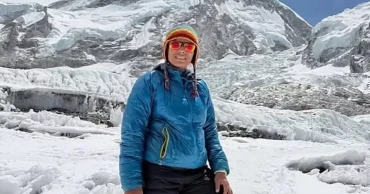
Nurunnahar Nimni becomes 3rd Bangladeshi woman to summit Everest
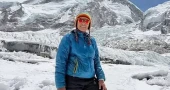
Bangladeshi mountaineer Nurunnahar Nimni has become the third Bangladeshi woman to successfully summit Mount Everest, the world’s highest peak.
Nepal on Wednesday congratulated Bangladeshi mountaineer Nurunnahar Nimni on successfully scaling Mount Everest.
"Hearty congratulations to Bangladeshi mountaineer Nurunnahar Nimni on successfully scaling Mount Everest this morning," said the Nepalese Embassy in Dhaka.
"We wish her continued success in all her future endeavours," Nepal said
4 months ago
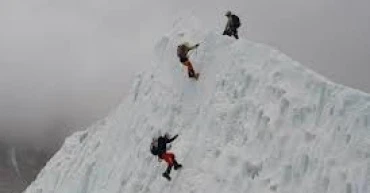
Mount Everest sees record-breaking 274 ascents in one day
Mount Everest witnessed a record number of successful ascents in a single day as 274 climbers reached the summit on Wednesday, officials said Thursday.
According to Rishi Ram Bhandari of the Expedition Operators Association Nepal, climbers took advantage of favorable weather conditions to make the ascent. The figure marks the highest number of summits achieved in one day via the popular southern route in Nepal.
Everest can be climbed from Nepal’s southern side or from the northern route in Tibet, China. On May 22, 2019, a combined 336 climbers reached the summit — 223 from Nepal’s side and 113 from Tibet. However, China has closed the northern route this year.
Veteran climber Kami Rita Sherpa earlier this week extended his own record by summiting Everest for the 32nd time. Pasang Dawa Sherpa followed closely with his 30th ascent, while Lakpa Sherpa set a new female record after reaching the summit for the 11th time.
This year’s climbing season started later than usual due to concerns over a massive hanging serac along a key section of the route. Around 494 climbers, along with a similar number of Sherpa guides, are expected to attempt the 8,850-meter (29,032-foot) peak before the climbing season concludes at the end of May.
Mount Everest was first conquered on May 29, 1953, by New Zealand mountaineer Edmund Hillary and Sherpa guide Tenzing Norgay, and since then thousands have scaled the world’s highest mountain.
4 months ago
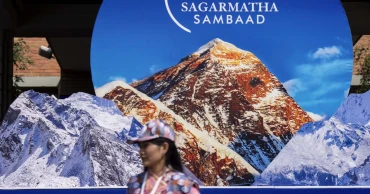
Nepal hosts environment conference as Himalayan glaciers melt
An environment conference opened in Nepal on Friday to discuss global climate change, including the impact on the highest Himalayan peaks where snow and ice are melting.
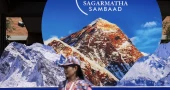
The three-day conference in Kathmandu titled, “Climate Change, Mountains and the Future of Humanity,” is expected to include discussions of critical climate issues.
“From the lap of Sagarmatha (Everest), the world’s highest peak, we send this message loud and clear that to protect the mountains is to protect the planet. To protect the mountains is to protect our seas. To protect the mountains is to protect humanity itself,” Nepal Prime Minister Khadga Prasad Oli told participants at the opening meeting.
Nepal is home to eight of the tallest mountains in the world including Mount Everest. A high level of glaciers melting in the Himalayan mountains because of global warming has raised signficant concerns. Melting snow and ice have exposed the mountains and increased the risk of rock slides, landslides and avalanches.
In one Indian city, reflective paint and bus stop sprinklers offer relief from killer heat
Scientists have warned the Himalayan mountains could lose up to 80% of their glaciers if the Earth warms in coming decades or centuries. They say flash floods and avalanches also could become more likely in coming years, in part because of climate change.
“The tragedy is that the Himalayas are facing an unprecedented stress test in real time today, exposing not only the fragile nature of our mountain ecosystems but also a glaring evidence of the lack of meaningful global climate action,” Nepal Foreign Minister Arzu Rana Deuba said. “As a mountainous country with high disaster risk vulnerability, Nepal faces a stark predicament.”
Nepal has experienced a series of severe weather events in the recent past with devastating impacts on people and their livelihoods, Deuba said.
"Floods and glacial lake outbursts have caused large-scale destruction and damage, and droughts, water scarcity and forest fires have brought untold suffering to the people across the country," she said.
Study finds cleaner brick kilns practices cut emissions by 20%, energy use by 23%
Ministers from neighboring India, Bhutan and Maldives are attending the conference.
Organizers have said they intend to publish a Kathmandu declaration after the discussions end Sunday.
1 year ago
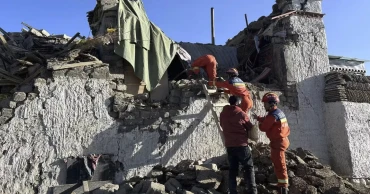
Earthquake kills 126 people in China near Mount Everest
A strong earthquake shook a high-altitude region of western China and areas of Nepal on Tuesday, damaging hundreds of houses, littering streets with rubble and killing at least 126 people in Tibet. Many others were trapped as dozens of aftershocks shook the remote region.
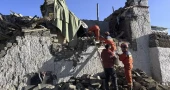
Rescue workers climbed mounds of broken bricks, some using ladders in heavily damaged villages, as they searched for survivors. Videos posted by China's Ministry of Emergency Management showed two people being carried on stretchers by workers treading over the debris from collapsed homes.
At least 188 people were injured in Tibet on the Chinese side of the border, the official Xinhua News Agency said.
More than 1,000 homes were damaged in the barren and sparsely populated region, state broadcaster CCTV reported. In video posted by the broadcaster, building debris littered streets and crushed cars.
People in northeastern Nepal strongly felt the earthquake, but there were no initial reports of injuries or damage, according to the country's National Emergency Operation Center. The area around Mount Everest, about 75 kilometers (50 miles) southwest of the epicenter, was empty in the depth of winter when even some residents move away to escape the cold.
The quake woke up residents in Nepal’s capital of Kathmandu — about 230 kilometers (140 miles) from the epicenter — and sent them running into the streets.
Read: Bangladesh on edge as earthquake threats escalating
The U.S. Geological Survey said the earthquake measured magnitude 7.1 and was relatively shallow at a depth of about 10 kilometers (6 miles). China's Earthquake Networks Center recorded the magnitude as 6.8. Shallow earthquakes often cause more damage.
The epicenter was in Tibet's Tingri county, where the India and Eurasia plates grind against each other and can cause earthquakes strong enough to change the heights of some of the world’s tallest peaks in the Himalayan mountains.
Tibet is part of China, but many Tibetans’ loyalties lie with the Dalai Lama, the spiritual leader who has lived in exile in India since a failed anti-Chinese uprising in 1959. Western governments and human rights organizations have repeatedly accused the Chinese government of abuses in Tibet, where it has cracked down on dissent while investing heavily in economic development.
There have been 10 earthquakes of at least magnitude 6 in the area where Tuesday’s quake hit over the past century, the USGS said.
About 150 aftershocks were recorded in the nine hours after the earthquake, and the Mount Everest scenic area on the Chinese side was closed.
Read more: Earthquake activity near Alaskan Volcano sparks concerns
Chinese leader Xi Jinping called for all-out efforts to rescue people, minimize casualties and resettle those whose homes were damaged. More than 3,000 rescuers were deployed, CCTV said.
Vice Premier Zhang Guoqing was dispatched to the area to guide the work, and the government announced the allocation of 100 million yuan ($13.6 million) for disaster relief.
About 6,900 people live in three townships and 27 villages within 20 kilometers (12.5 miles) of the epicenter on the Chinese side, state media said. The average altitude in the area is about 4,200 meters (13,800 feet), the Chinese earthquake center said in a social media post.
On the southwest edge of Kathmandu, a video showed water spilling out into the street from a pond in a courtyard with a small temple.
“It is a big earthquake," a woman can be heard saying. "People are all shaking.”
1 year ago

Physician Babar Ali 6th Bangladeshi to conquer Mount Everest, eyes Mount Lhotse next
Babar Ali, a physician from Hathazari upazila in Chattogram, reached the summit of Mount Everest on Sunday (May 19) at 8:45 am Bangladesh time, becoming the sixth Bangladeshi to conquer the world's highest peak.
Dr. Babar’s achievement has sparked widespread acclaim in Chattogram and across social media. His organization, Vertical Dreamers, shared the news in a Facebook post, stating, “By the grace of Almighty and the blessings of millions of well-wishers, mother nature has placed Babar on her peak (Everest) for a while.”
Farhan Zaman, the expedition’s chief coordinator, confirmed Dr. Babar’s ascent, saying, “Babar Ali has touched the highest peak Everest at 8:30 am local time (Nepal) and 8:45 pm Bangladesh time this morning.”
Read more: Climbers celebrate Mount Everest 70th anniversary amid melting glaciers, rising temperatures
Dr. Babar, who left Bangladesh for Nepal on April 1, underwent extensive preparation before embarking on his Everest journey. After a week of trekking from Kathmandu to the base camp, he began the ascent.
With his successful Everest climb, Dr. Babar now aims to conquer Mount Lhotse, the fourth highest mountain in the world. If he succeeds, he will be the first Bangladeshi to summit Lhotse and the first to climb two 8,000-meter peaks in a single expedition, marking a new milestone in Bangladeshi mountaineering.
Bangladesh’s history with Everest began when Musa Ibrahim reached the summit on May 23, 2010. Following him were Mohammad Abdul Muhith on May 21, 2011, Nishat Majumder on May 19, 2012, Wasfia Nazrin on May 26, 2012, and Sajal Khaled on May 20, 2013. Nishat Majumder was the first Bangladeshi woman to summit Everest.
As Dr. Babar Ali descends from Everest, he is already setting his sights on Lhotse, asking supporters for their continued prayers and support.
Read more: Last surviving member of the first team to conquer Mount Everest says it is crowded and dirty now
2 years ago
.jpg)
Virus fails to deter hundreds of climbers on Mount Everest
A year after Mount Everest was closed to climbers as the pandemic swept across the globe, hundreds are making the final push to the summit with only a few more days left in the season, saying they are undeterred by a coronavirus outbreak in base camp.
Three expedition teams to Everest canceled their climb this month following reports of people getting sick. But the remaining 41 teams decided to continue with hundreds of climbers and their guides scaling the 8,849-meter (29,032-foot) top in the season that ends in May, before bad weather sets in.
“Even though the coronavirus has reached the Everest base camp, it has not made any huge effect like what is being believed outside of the mountain,” said Mingma Sherpa of Seven Summit Treks, the biggest expedition operator on Everest. “No one has really fallen seriously sick because of COVID or died like the rumors that have been spreading.”
With 122 clients from 10 teams on Everest, the company led the biggest group but there were no serious illnesses among them, he said.
Nepalese officials have downplayed reports of coronavirus cases on Mount Everest, apparently out of concern of creating chaos and confusion in the base camp. After a gap year of no income from climbers, Nepal has been eager to cash in on this year’s season.
“Many people made it to the base camp and it is possible that the people who went there from here could have been infected,” Prime Minister Khadga Prasad Oli said. “But that does not mean that it (coronavirus) has reached the entire mountain, maybe a part of the base camp or the area below that.”
In April, a Norwegian climber became the first to test positive at the Everest base camp. He was flown by helicopter to Kathmandu, where he was treated and later returned home.
Prominent guide Lukas Furtenbach of Austria decided to halt his expedition this month and pull out his clients because of an outbreak among team members.
After returning from the mountain, Furtenbach estimated more than 100 climbers and support staff have been infected. He said in an interview last week that it was obvious there were many cases at the base camp because he could see people were sick and could hear them coughing in their tents.
“I think with all the confirmed cases we know now — confirmed from (rescue) pilots, from insurance, from doctors, from expedition leaders — I have the positive tests so we can prove this,” Furtenbach told The Associated Press.
China last week canceled climbing from its side of Everest due to fears the virus could spread from Nepal.
READ: China cancels Everest climbs over fears of virus from Nepal
The climbing season was accompanied by a devastating surge in coronavirus cases in Nepal, with record numbers of daily infections and deaths. On Friday, Nepal reported 6,951 new confirmed cases and 96 deaths, bringing the nation’s totals since the pandemic began to more than 549,111 infections and 7,047 deaths.
Another expedition, by the Telluride, Colorado-based company Mountain Trip, also announced it was pulling out of Everest.
“While it’s a difficult decision to make when considering all of the work, years of preparation, sacrifice and resources that have went into the expedition, it’s the only sensible outcome from a risk management standpoint,” a statement by the company said.
Six Sherpa guides working for the company have been evacuated to Kathmandu with COVID-19 symptoms, it said.
A total of 408 foreign climbers were issued permits to climb Everest this season, aided by several hundred Sherpas and support staff who have been stationed at base camp since April.
Since Everest was first conquered on May 29, 1953, thousands of people have scaled the peak and many Nepalese Sherpas have done it multiple times. Veteran Sherpa guide Kami Rita scaled the summit a record 25th time this month.
5 years ago
.jpg)
EXPLAINER: Why did Mount Everest's height change?
The world's highest mountain is now officially a little higher, and that might not be the end of the story.
5 years ago
.jpg)
Mount Everest: Nepal's government shuts off mountain amid virus outbreak
Mount Everest has shut down for the rest of the expedition season because of the coronavirus outbreak, reports BBC.
6 years ago