Panama Canal
Trump's border comments alarm Europe
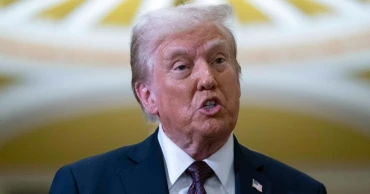
US President-elect Donald Trump has made expansionist comments about extending American influence into Canada, Greenland (a Danish territory), and even the Panama Canal.
His statements about potentially redrawing international borders, possibly through force, have sparked alarm in Europe, especially as they contradict the position that European leaders and Ukrainian President Volodymyr Zelenskyy are trying to convey to Russian President Vladimir Putin, reports AP.
Panama Canal administrator pushes back against Trump's assertions of Chinese meddling
Despite the controversial nature of Trump's words, many European leaders have responded cautiously, knowing that his actions don't always align with his rhetoric. Some have taken a more relaxed stance rather than offering a strong defence of Denmark, an EU member state. Analysts, however, suggest that even words alone can have a damaging effect on U.S.-European relations as Trump enters his second presidency.
In Europe, where countries rely on U.S. cooperation for trade, energy, defence, and security, many officials have expressed confidence that Trump has no intention of using force to annex territories.
Italian Premier Giorgia Meloni said that the U.S. would not attempt to annex territories in the near future, while German Chancellor Olaf Scholz stated that borders should not be altered by force, though he did not mention Trump directly.
Ukrainian President Zelenskyy, urging continued support from the incoming administration, emphasized the need for countries to feel secure in their sovereignty, particularly as Russia's invasion of Ukraine threatens this principle.
European foreign ministers from Britain and France also dismissed the notion of a U.S. invasion of Greenland, but French Foreign Minister Jean-Noël Barrot noted that Trump's comments served as a warning about the potential return of a "law of the strongest."
Judge sentences Trump in hush money case but declines to impose punishment
Greenland's prime minister, Múte B. Egede, stated that the island's citizens do not want to be part of the U.S., though they are open to increased cooperation. Danish Prime Minister Mette Frederiksen reiterated the strong alliance between Denmark and the U.S., emphasizing unity.
Security experts, though confident that the U.S. would not attack Denmark, have voiced concerns about the long-term impact of Trump's rhetoric on trans-Atlantic relations, NATO, and international norms. Some analysts are particularly concerned about Trump's suggestion that Canada should join the U.S. as a state, which has caused friction between the two countries.
Flemming Splidsboel Hansen, an expert on foreign policy and Russia, expressed worry about the weakening of NATO and the broader trans-Atlantic alliance, questioning what it might look like by the end of Trump's second term.
Some diplomats and analysts suggest that Trump's focus on Canada, Greenland, and the Panama Canal is linked to securing valuable resources and waterways for the U.S., particularly in the face of competition with China, which dominates the global supply of rare earth minerals critical for technology.
EU not to tolerate attacks within borders, France says amid Trump’s Greenland claim
However, analysts caution that Trump's proposed methods are dangerous and could set a concerning precedent. Security expert Alexander Khara likened Trump's stance on Greenland to Putin's justification for Russia's annexation of Crimea in 2014, warning that the idea of flexible borders could lead to more conflict and instability in the future.
1 year ago
Panama Canal administrator pushes back against Trump's assertions of Chinese meddling
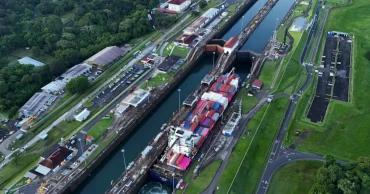
The administrator of the Panama Canal said Friday that the vital waterway will remain in Panamanian hands and open to commerce from all countries, rejecting claims by President-elect Donald Trump that the United States should take it over.
In an interview with The Associated Press, Ricaurte Vásquez denied Trump’s claims that China was controlling the canal’s operations, and said making exceptions to current rules concerning its operation would lead to “chaos.”
He said Chinese companies operating in the ports on either end of the canal were part of a Hong Kong consortium that won a bidding process in 1997. He added that US and Taiwanese companies are operating other ports along the canal as well.
Trump has gone so far as to suggest the US should take back control of the canal and he would not rule out using military might to do so.
“It might be that you’ll have to do something,” Trump said Tuesday. “The Panama Canal is vital to our country.” Trump has characterized the fees for transiting the canal that connects the Atlantic and Pacific Oceans as “ridiculous.”
Panama prepares to evacuate first island in face of rising sea levels
Panama President José Raúl Mulino has said unequivocally that the canal will remain in Panamanian hands.
Responding to the suggestion that the US could try to retake control of the canal, Vásquez said there was “no foundation for that sort of hope. That is the only thing I can say.”
Vásquez stressed that the Panama Canal was open to the commerce of all countries.
The canal can’t give special treatment to US-flagged ships because of a neutrality treaty, Vásquez added. “The most sensible and efficient way to do this is to maintain the established rules.”
Requests for exceptions are routinely rejected, because the process is clear and there mustn’t be arbitrary variations, he said. The only exception in the neutrality treaty is for American warships, which receive expedited passage.
Some 70% of the sea traffic that crosses the Panama Canal leaves or goes to US ports.
The United States built the canal in the early 1900s as it looked for ways to facilitate the transit of commercial and military vessels between its coasts. Washington relinquished control of the waterway to Panama on Dec. 31, 1999, under a treaty signed in 1977 by President Jimmy Carter.
Last month, Trump told supporters “We’re being ripped off at the Panama Canal.” He claimed that the US “foolishly gave it away.”
Regarding the fees for using the canal, Vasquez said a planned series of increases had concluded with one this month. Any additional increases would be considered in the first half of the year to give clients certainty in their planning and would go through a public comment process, he said.
Panama inaugurates third bridge over Panama Canal
“There’s no discrimination in the fees,” he said. “The price rules are uniform for absolutely all those who transit the canal and clearly defined.”
The canal depends on reservoirs to operate its locks and was heavily affected by drought during the past two years that forced it to substantially reduce the number of daily slots for crossing ships. With fewer ships using the canal each day, administrators increased the fees that are charged all shippers for reserving a slot.
The canal bisects Panama, running 51 miles end to end. It allows ships to avoid the longer and costlier trip around Cape Horn at the tip of South America.
“It is an enormous responsibility,” Vásquez said of Panama’s control of the canal. “Take the case of COVID, when it arrived, the canal took the necessary measures to protect the labor force, but while keeping the canal open, because the international commitment is to keep it open.”
1 year ago
.jpg)
Two ships carrying COVID-19 cases allowed to transit through Panama Canal
The Panamanian government has allowed Holland America's two ships to transit through the Panama Canal, without authorizing any passenger or crew member to disembark due to COVID-19 concerns, the country's Ministry of Health announced on Saturday.
6 years ago
.jpg)
4 passengers dead aboard cruise ship anchored off Panama
Four passengers have died aboard a cruise ship now anchored off the coast of Panama and two people aboard the ship have tested positive for the coronavirus, the cruise line said Friday, with hundreds of passengers unsure how long they will remain at sea.
6 years ago