Lightning
Lightning deaths in Bangladesh: Lack of shelters, awareness leaves rural people vulnerable
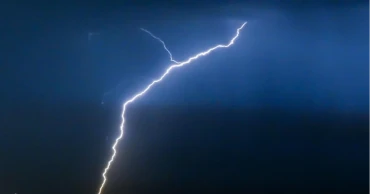
Lightning strikes have killed at least 11 people, including seven farmers, since Monday evening, highlighting a worsening and often overlooked climate threat in Bangladesh.
Among them at least nine people were killed by lightning strikes in Gaibandha, Bogura, Thakurgaon, Sirajganj and Natore districts on Sunday.
Besides, two farmers were killed in separate lightning strikes in Sunamganj Sadar upazila on Monday afternoon while harvesting paddy in haor areas, and three more people were injured in Shantiganj upazila.
Experts say the rising death toll is closely linked to climate change, which is intensifying storm patterns and increasing the frequency of lightning strikes across the country.
Data compiled by the Save the Society and Thunderstorm Awareness Forum (SSTF) show that 297 people — 242 men and 55 women — died from lightning between February and September in 2024. In an earlier period, from April 2022 to May 3, 2023, at least 340 people were killed.
Bangladesh, long vulnerable to extreme weather, records an average of around 300 lightning-related deaths annually, according to UN estimates.
By contrast, the United States — with nearly double Bangladesh’s population — reports fewer than 20 such deaths each year.
In the 1990s, annual fatalities in Bangladesh were only in the dozens, indicating a sharp upward trend over the decades.
Scientists and agencies, including NASA and the United Nations, attribute the increase to heightened atmospheric instability driven by global warming, leading to more frequent and intense thunderstorms.
Recognising the growing danger, the government has included lightning strikes in the official list of natural disasters in 2016 alongside floods, cyclones, earthquakes and droughts but the death toll from lightning keeps rising apparently for government inadequate measures and lack of people’s awareness.
Farmers most at risk
A majority of lightning victims are farmers, who spend long hours in open fields during the monsoon — the peak lightning season.
With limited access to safe shelters, they are particularly exposed when sudden storms develop.
In the low-lying areas of Sunamganj in north-eastern Sylhet Division, vast haors and wetlands sustain local livelihoods—but they also leave communities dangerously exposed to lightning strikes.
As climate change intensifies extreme weather, frequent thunderstorms have made lightning an increasingly deadly threat across these open landscapes.
The government is ramping up efforts to curb lightning deaths through early warnings, plantation drives and protective infrastructure, Disaster Management and Relief Minister Asadul Habib Dulu told parliament on Monday.
Responding to a notice raised by Sunamganj-1 lawmaker Kamruzzaman Kamrul, he said steps are being taken to protect people in haor and other high-risk areas, where farmers and fishers are especially exposed during summer and monsoon storms.
Kamrul said vast haor wetlands in his constituency leave residents vulnerable year-round, noting that at least 12 people were recently killed by lightning, including four in his area.
Citing NASA data, he added that Sunamganj’s haor belt records over 25 strikes per square kilometre.
Despite lightning being declared a national disaster, he pointed to gaps in effective programmes, data, equipment and shelters, urging science-based planning and more research.
The minister said lightning incidents have increased in recent years, particularly in haor and north-eastern regions.
He highlighted measures including awareness campaigns, planned sirens for early alerts, expanded palm tree plantation, and installation of lightning protection towers.
In an effort to reduce casualties, SSTF has stepped up awareness campaigns in rural areas.
It issued a three-point safety guideline for those working outdoors:
First, people should avoid getting wet in the rain or taking shelter under trees in open areas — one of the most common causes of fatalities.
Second, anyone in fields, rivers, canals or ponds should immediately seek refuge in a nearby building or concrete structure. If that is not available, they should move to a relatively safer, lower-lying area.
Third, children should be kept away from open fields during storms, and outdoor activities should be suspended.
SSTF also called for coordinated efforts by government agencies and civil society to expand awareness programmes during the peak lightning months of May and June, provide free treatment to the injured, and ensure compensation of Tk 5 lakh for families of victims.
Simple steps can save lives
Safety experts stress that many lightning deaths are preventable with basic precautions. The safest place during a thunderstorm is inside a fully enclosed building or a vehicle with a metal roof.
People are advised to avoid open spaces, elevated areas, tall trees and small temporary shelters. Doors and windows should be kept closed, and contact with metal objects, water and electrical appliances should be avoided.
If caught outdoors with no shelter, individuals should crouch low to the ground, minimising contact rather than lying flat. Those on water bodies should return to land immediately, as swimming or boating during storms significantly increases risk.
In forested areas, safer spots are low-lying zones with shorter, closely spaced trees rather than isolated tall ones.
As climate risks intensify, experts warn that without sustained awareness and protective measures, lightning will continue to claim hundreds of lives each year — many of them in vulnerable rural communities where a moment’s delay can prove fatal.
5 months ago

Palm trees under the axe; Naogaon bypass pays an environmental price
Along the Naogaon bypass road, tall palm trees once stood like silent sentinels—lining the highway, softening the concrete stretch with shade and symmetry, and serving a purpose far beyond aesthetics.
Today, many of those trees bear blunt, shaved tops, their branches cut back abruptly, leaving locals fearful that a decades-old natural shield is slowly being destroyed, locals and environmental activists said.
The cutting of branches from around 750 palm trees by the Northern Electricity Supply Company Limited (NESCO) has sparked anger and concern among residents and environmental activists, who say the work was carried out without consultation and with little regard for environmental consequences.
For years, villagers along the bypass—from Rambhadrapur to Battali Boalia—had planted palm trees using seeds collected from nearby areas. Most of the trees are now between 20 and 30 years old.
Outrage in Sylhet after date palm trees cut down at Shahjalal's shrine
Over time, they transformed the two-kilometre stretch into a greener, cooler corridor, breaking the monotony of the road and offering protection against lightning, a known benefit of palm trees in Bangladesh.
But recent branch-cutting and top-shaving to accommodate electricity poles and overhead lines have changed the landscape dramatically.
During a recent visit to the area, the UNB correspondent observed that while several thousand palm trees stand along the stretch, around 750 have been visibly altered, with many appearing weakened. Residents fear the damage may be irreversible.
“It was not right for the electricity office staff to shave the tops of the palm trees,” said local resident Sakhawat Hossain, pointing towards several injured trees. “Some trees died after similar work before. Even when we protested, no one listened,” he said.
Man held for felling 50 Bakul trees on Dhaka-Chattogram highway
Another local resident, Belal Hossain, echoed the frustration. “Palm trees take decades to grow. The electricity staff cut the branches and shaved the tops in just one day. They could have moved the poles slightly to save the trees, but instead they damaged them deliberately,” he said.
9 months ago
Thunderstorm Lightning in Bangladesh: Causes, Risks, and Safety Tips
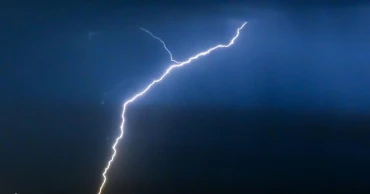
Bangladesh experiences a diverse kind of natural disaster almost every year. Thunderstorm lightning is one of the most common and deadly hazards among them. Every year, many people and livestock lose their lives and get injured due to lightning strikes, especially during the rainy season. Between 1990 and 2016, lightning caused an average of 114 deaths each year in Bangladesh. In 2016, lightning was nationally declared a natural disaster in the country.
However, thunderstorm lightning-related deaths and injuries can be prevented if people know what to do and take simple safety steps. Let’s learn more about what lightning is, why it happens so often in Bangladesh, and how to stay safe.
What Is Thunderstorm Lightning and How Does It Happen?
Lightning is a bright flash of electricity that appears in the sky during a storm. It’s part of a weather event called a thunderstorm, which involves water, air, and electricity. That's why it is called a hydrometeorological disaster.
Inside thunderclouds, tiny pieces of ice and water bump into each other and move around quickly. This movement causes the cloud to build up electric charges; some parts become positive and others become negative. When the difference between these charges becomes too strong, the energy is released as a sudden spark called lightning.
Read more: Rema–Kalenga Wildlife Sanctuary in Habiganj: A Comprehensive Travel Guide
This lightning can move between clouds, inside the same cloud, or between the cloud and the ground. The air around it gets extremely hot in a very short time, making the air expand quickly. This expansion creates the loud sound is known as thunder.
Why is Bangladesh Prone to Thunderstorms and Lightning?
Bangladesh experiences more lightning than most other countries in the world. The highest number of lightning strikes usually happens during the pre-monsoon (March–May) and monsoon (June–September) seasons.
There are several reasons for this:
Weather Patterns:
Bangladesh has a tropical climate that is hot and humid. During the pre-monsoon season, warm air from the south meets cold air from the north. This mix creates strong thunderstorms. The hot temperatures and high humidity help form tall clouds that can produce lightning.
Read more: How Green Industries Can Reduce River Water Pollution in Dhaka City
Climate Change:
Climate change is making lightning more frequent. As the Earth becomes warmer, more water evaporates into the air, creating bigger and more active storm clouds. Scientists say that lightning strikes have increased because of global warming and that they are becoming stronger and more violent.
Geography and Terrain:
Bangladesh’s location and land features also make it more vulnerable. It lies between the Bay of Bengal, the Indian subcontinent, and the Meghalaya Plateau, all of which affect its weather.The northeastern region, especially Sylhet, has hills and wetlands that receive a lot of rainfall and moisture, making lightning more likely. The southeast coastal areas and southwest regions also face frequent storms, especially when cyclones form in the Bay of Bengal.
Why Are Lightning Deaths Increasing in Bangladesh?
Lightning deaths are rising for several reasons.
Most people who die from lightning are farmers or outdoor workers who work in open fields. During the pre-monsoon season, especially in Boishakh (April–May), lightning becomes more common because of hot temperatures, dusty air, and pollution.
Read more: Can Green Buildings in Bangladesh Create Opportunities for Carbon Trading?
Most lightning accidents happen in the afternoon, when people are outside working. Men are more affected because they spend more time in the fields.
Even though lightning can strike anywhere, rural areas are the most affected. Bangladesh has a high population density, meaning many people live close together, which increases the risk.
Another big reason for the high number of deaths is a lack of awareness. Many people don’t know how dangerous lightning can be or what to do when a thunderstorm starts. Some even follow false beliefs instead of real safety practices.
Read more: What Can Dhaka Learn from the Smart City Singapore
Preventive Measures Against Lightning Fatalities in Bangladesh
Avoiding danger is the best way to stay safe. Here are some important steps to reduce lightning risks in Bangladesh:
Strategic Lightning Safety Plan
The government, local authorities, and organisations should work together to make a national lightning safety plan. This plan should include appropriate measures to:
- Build safe shelters.
- Spread awareness through campaigns and social media.
- Train local leaders, teachers, and health workers to teach lightning safety.
- Share weather warnings and updates quickly through apps and media.
Besides these, the Bangladesh National Building Code also requires buildings to have lightning protection systems.
Read more: What is Carbon Trading? How does it work?
Build Lightning-Safe Structures
Installing earthing systems (grounding wires that carry electricity safely into the ground) is one of the best ways to protect buildings and people.
This can be done by burying copper or steel rods in the ground and connecting them to metal parts of a building or structure. Boats can also be made safer by adding lightning rods and grounding devices.
Use the BMD Weather App
The Bangladesh Meteorological Department (BMD) has a smartphone app that gives weather forecasts and storm warnings. People can use this app to check if thunderstorms are likely and plan their outdoor work accordingly.
To increase awareness, schools, NGOs, and community leaders can organise workshops, campaigns, and public announcements about using the BMD app.
Read more: Top Strategies to Enhance Fire Resilience in Dhaka City
Identify Vulnerable Communities
Communities need to find out who is most at risk, such as farmers, construction workers, and fishermen, and ensure they have nearby safe shelters during storms.
Local authorities can study which areas face more lightning and plan protective measures like building shelters and installing grounding systems.
Read more: Green Roofs in Dhaka City: Pathway to Smart Urban Agriculture
Teach the 30:30 Rule
The 30:30 formula is an easy way to judge lightning distance and danger:
If one sees lightning and hears thunder within 30 seconds, it means the storm is close, and one should find shelter immediately.
Stay indoors for at least 30 minutes after the last thunder.
Farmers, fishermen, and schoolchildren should be taught this rule. They should also wear rubber shoes or use wooden or plastic tools while working outdoors.
Read more: Organizational strategies to minimize earthquake damages in Dhaka City
Create Public Awareness
People need to learn how to stay safe during lightning storms.Local organisations can arrange folk songs, dramas, and storytelling to spread messages in villages. Schools can host seminars, distribute leaflets, and teach students safety tips. Posters and billboards can show safety instructions in public places.
Television, radio, and newspapers can share lightning safety information and stories of real incidents to help people understand the danger.
Plant Palm Trees
Palm trees naturally attract lightning, which helps protect nearby people and buildings. Unfortunately, many have been cut down because of urban development. The government started a programme in 2017 to plant more palm trees in rural areas. Communities can be encouraged to do this by engaging local agricultural officers, organising tree-planting campaigns and teaching students about their importance.
Read more: Flood Control and How to Minimise Losses
Personal Safety Tips During Thunderstorm Lightnings
Here are some simple ways to stay safe from lightning strikes during a thunderstorm:
- The safest place is inside a closed building.
- A car with a metal roof is also safe.
- Keep doors and windows closed and stay away from metal objects, water, and electrical items.
- Avoid open areas, high places, tall trees, and small shelters like huts.
- Never stand under a single tree, as it increases the chance of being struck.
- Don’t use telephones or electrical appliances during a storm.
- If one can’t find shelter, one needs to crouch low to the ground and avoid contact with the ground as much as possible.
- In forests, stay in low areas with small trees close together.
- If one stays on the water during a thunderstorm, then one should come to the nearby land immediately. It is recommended to avoid swimming or boating during lightning strikes.
- If one floats on a boat during lightning strikes, then one should move the water vehicle under a bridge or cliff if possible.
Read more: Can a Sponge City Tackle Flooding in Dhaka?
Conclusion
Lightning is a natural and powerful event, but it doesn’t have to be deadly. With awareness, planning, and simple precautions, people in Bangladesh can protect themselves, their families, communities and livestock from deaths and injuries caused by thunderstorm lightning incidents.
By building safe shelters, teaching lightning safety in schools, planting palm trees, and using the BMD Weather App, the number of lightning-related casualties and fatalities can be reduced significantly, making Bangladesh safer for everyone.
Read more: How to Build Dhaka as a Water Wise City
1 year ago
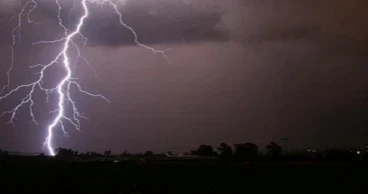
Met office issues lightning alert in 12 dists
The Bangladesh Meteorological Department has issued lightning alert for multiple districts, warning of gusty or squally winds accompanied by lightning flashes.
According to the Met office bulletin, rain to thunder showers accompanies by lightning flashes and temporary west/northwesterly gusty or squally speed 45-60 KPH or more is likely to occur over the districts of Jashore, Kushtia, Satkhira, Chuadanga, Khulna, Barishal, Dhaka, Faridpur, Madaripur, Mymensingh, Sylhet and Cox’s Bazar during next 02-04 hours commencing from 2:30 pm of Wednesday where in the following instruction are suggested.
It also issues some directives including:
· When roars stay indoors
· Close windows and doors
· Avoid travel if possible
· Take safe shelter
· Do not take shelter under trees
· Do not lie on concrete floors and do not lean against concrete walls
· Unplug electrical/electronic devices
· Immediately get out of water bodies
· Keep away from the object that conduct electricity
· When hail starts don’t go outside
1 year ago
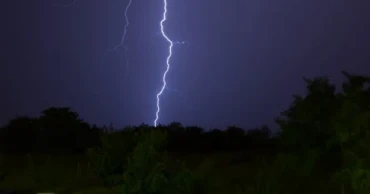
Lightning strike kills woman, injures three in Khulna
A woman died and three others were injured in a lightning strike in Paikgacha upazila of Khulna on Saturday.
Paikgacha Police Station Officer-in-Charge Tushar Kanti Das confirmed the matter.
The deceased was identified as Laki Khatun, 45, wife of Tofazzal of Laxmikhali village of the upazila.
14 injured in clash between two groups of Chhatra Dal in Narsingdi
The injured are Santosh Sana, son of late Haripada Mandal of Orabunia village, and his wife Subhadra Sana and Fazila Khatun of the same village were admitted to the hospital.
According to local UP member Hasanuzzaman, the four individuals were collecting algae in a shrimp enclosure owned by Bhutto on Saturday afternoon when a sudden thunderbolt struck, resulting in Laki Khatun's death and injuring the others.
Loco master’s quick action saves woman's life in Narsingdi
Santosh and Fazila were later discharged from the Upazila Health Complex; Subhadra Sana remains hospitalised for further treatment.
The body will be sent to the morgue after an initial examination, said the OC.
1 year ago
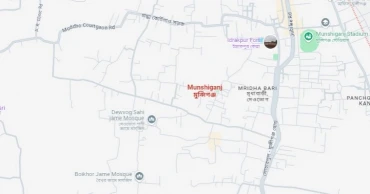
Lightning strike in Munshiganj kills woman, injures husband and son
A woman died, and her husband and son were injured in a lightning strike in Gazaria Upazila of Munshiganj on Friday.
The deceased has been identified as 55-year-old Halima Begum, the wife of 70-year-old Abdul Hannan.
Eleven houses gutted in fire at Teknaf
Abdul Hannan is currently receiving treatment at Gazaria Health Complex, said Mahbubur Rahman, Officer-in-Charge of Gazaria Police Station.
Locals reported that Halima and her husband were working on their land near their home during a light rain when a sudden thunderbolt struck, causing serious injuries to both. They were quickly rescued and taken to Gazaria Health Complex, where doctors declared Halima dead. Abdul Hannan was admitted for treatment.
Loco master’s quick action saves woman's life in Narsingdi
Fortunately, their 9-year-old son, Ramjan Mia, sustained only minor injuries.
OC Mahbubur Rahman stated that the body was handed over to the family following the legal procedures.
1 year ago

9 students injured by lightning strike in Kurigram
Nine students of Chakirpasha Islamia Dakhil Madrasha were injured by lightning in Rajarhat upazila of Kurigram district on Monday.The injured are Abdur Razzaque, Nazmin Nahar, Sumaiya, Roksana, Afroza, Nirma, Ali Raz, Farzana and Sanzida.
5 killed by lightning strikes in C’nawabganj, NaogaonQuoting Manik Mia, superintendent of the madrasha, Abdullah Hil Zaman, officer-in-charge of Rajarhat Police Station, said a streak of thunderbolt struck nine students of the madrasha while they were sitting in their tin-shed classroom in the afternoon amid rain, leaving them injured.
Lightning kills 3 in ChapainawabganjLater, they were taken to the Rajarhat Upazila Health Complex for treatment.Father, son die from electrocution, another by lightning in Natore
3 years ago

5 killed by lightning strikes in C’nawabganj, Naogaon
Five people were killed and another injured in separate lightning strikes in Chapainawabganj and Naogaon districts on Monday.
In Chapainawabganj, three people, including two farmers, were killed in separate lightning strikes in Sadar, Gomostapur and Bholahat upazilas on Monday.
The deceased were identified as Omar Ali, 52, a farmer from Sadar upazila’s Jamtala area, Shariful Islam, 35, a resident of Gomostapur upazila’s Prosadpur area, and Anowar Hossain, 60, a farmer from Bholahat upazila’s Mushrivuja area.
Lightning kills 3 in Chapainawabganj
Omar was killed as a streak of lightning hit him while working in a field, said Sadar upazila’s UNO Rowshan Ali.
Anowar died when a thunderbolt struck him while working in a paddy field, said Officer-in-Charge of Bholahat police station Selim Reza.
Shariful was struck by lightning while he was sitting on the porch of his house, said Gomostapur police station's officer-in-charge Mahbubur Rahman.
In Naogaon, two people were killed and another injured in separate incidents of lightning strikes in Porsha and Dhamoirhat upazilas of the district in the morning.
Lightning kills 2 farmers in Kushtia
Zahurul Islam, officer-in-charge of Porsha Police Station, said Abdul Jabbar, 30, son of Nazrul Islam of Paschim Duarpal village, was killed and Mehedi Hasan was injured when a streak of thunderbolt struck them while catching fish in the Punarbhaba River around 6 am.
Mehedi was taken to a local hospital.
Meanwhile, Muminul Rahman, 22, son of Azizur Rahman of Moishar village in Dhamoirhat upazila, was killed by the lightning strike while working at a paddy field at noon, said Mozammel Haque, officer-in-charge of Dhamoirhat Police Station.
2 dead in lightning during football match in Kushtia
3 years ago

Lightning kills 3 in Khulna
Three people were killed and four others injured in lightning strikes in Dakope upazila of Khulna district on Sunday.The deceased were identified as Azizul Sheikh, 62, son of Abdul Sattar of Kakra Bunia village, Sujit Mandal, 62, son of Krishna Mandal of Kalabogi village and Khorshed Sheikh, 60 of Paikgachha area in Dakope upazila.Jalal Uddin Gazi, Tildanga UP chairman, said Azizul died on the spot when a thunderbolt struck him while working at a fish enclosure with three others around 10 am at Kakra Bunia village.Besides, Sujit Mandal, a fisherman, was killed on the spot and four others were injured by a lightning strike while fishing in Kalabogi River around 10:30 am.
Struck by lightning, teenager dies and cousin is injured in SylhetThe injured were taken to a local hospital, said Dakope Upazila Nirbahi Officer Papiya Sultana.Besides, a thunderbolt hit Khorshed Alam Sheikh, 60, son of Rahim Sheikh of Paikgaccha area, while he was sitting on boat amid rain, leaving him injured.
Farmer killed by lightning in SirajganjLater, he died on the way to Dakope Upazila Health Complex.
3 years ago

Lightning kills fisherman in Kishoreganj
A 25-year-old fisherman was dead and another was injured as lightning struck them Friday night when they were catching fish at Nurpur Haor in Ashtagram upazila of Kishoreganj district.
The deceased was identified as Babul Mia, son of Malek Mia of Nurpur Sharifkanda village while the injured was identified as Mannan Mia, 23, son of Ismail Mia.
Lightning kills farmer in Chuadanga
Ali Mohammad Rashed, officer-in-charge of Ashtagram Police Station, said lightning struck Babul and Mannan while they were catching fish at the haor amid rain and strong wind around 7:30 pm yesterday evening. Babul died on the spot and Mannan was injured.
Mannan was sent to a local hospital.
Lightning kills 2 in Sunamganj
3 years ago