Finance Minister

Finance Minister stresses full automation, digitalisation of capital market
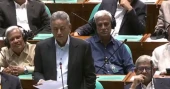
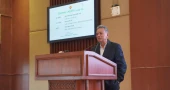
Finance Minister Amir Khosru Mahmud Chowdhury on Thursday stressed the need for transforming Bangladesh’s capital market into an institutional-based and fully paperless market, with the Investment Corporation of Bangladesh (ICB) becoming a market-driven, competitive and professional institution.
“ICB has to play a role in transforming Bangladesh’s capital market from a retail-based market into an institutional-based market,” he said while addressing an event marking the golden jubilee and anniversary of ICB.
The finance minister said ICB was established through an ordinance with the objective of developing a free-market economy and a market-based capital market in Bangladesh.
He said the corporation was also intended to channel people’s savings into the capital market and facilitate greater investment in the national economy.
Khosru said Bangladesh’s capital market had long remained heavily dependent on retail investors, whereas capital markets globally are primarily driven by institutional investors.
He urged ICB to move away from its traditional approach and become a fully market-oriented, competitive and professional organisation.
The minister said appointments to senior positions in the Securities and Exchange Commission and other financial-sector institutions are being made without political influence as part of the government’s economic reform programme.
“No appointments will be made to any bank or financial institution on political considerations,” he said, stressing the government’s policy of keeping such appointments free from political influence.
Khosru said work has begun to ensure full automation and digitalisation at every level of the capital market, including the securities regulator, stock exchanges, brokerage houses and ICB.
Recalling the government’s “No Paper Transaction, Nothing Paper” policy, he said all activities relating to listing applications, permissions and decision-making must now be completed online.
Referring to a recent breakfast meeting in New York between Prime Minister Tarique Rahman and senior executives of 15 major global institutions with a combined network of around $36 trillion, the finance minister said international investors had expressed confidence in Bangladesh’s capital market and economic reforms.
He said an environment is being created to bring global capital into Bangladesh through private funds, climate financing and derivative products.
Khosru also urged domestic institutions to move beyond dependence on conventional high-street banks and become accustomed to international practices in line with global financial markets.
He expressed hope that ICB would use its past experience and internal restructuring to emerge as a modern, internationally standard and efficient institution.
ICB Chairman Abul Ahmed, Bangladesh Securities and Exchange Commission Chairman Masud Khan, Finance Division Secretary Dr Md Khairuzzaman Majumder and Financial Institutions Division Secretary Nazma Mubarek attended the programme, chaired by Niranjan Chandra Debnath.
9 days ago
Laldia terminal investment puts Chattogram on path to becoming tech-driven logistics hub: Finance Minister
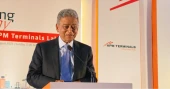
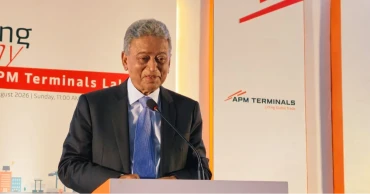
Finance Minister Amir Khosru Mahmud Chowdhury on Sunday said Denmark-based APM Terminals’ investment in Laldia Container Terminal will take Chattogram a step closer to becoming a technology-driven logistics hub.
“Our elected government is business- and investment-friendly and has an ambitious economic programme. However, we are trying to gradually strengthen our economic structure through proper planning,” he said while inaugurating the construction of Laldia Container Terminal at the project site in Patenga.
The minister described the investment as a milestone in Bangladesh’s journey toward becoming a trillion-dollar economy, saying such an ambitious economic transformation cannot be achieved by the government alone and requires active participation from the private sector.
APM Terminals, a Denmark-based global port operator, will invest $550 million in constructing the terminal under a public-private partnership (PPP) arrangement.
The investment is expected to increase gradually, he said.
APM Terminals operates terminals at some of the world’s leading ports and its arrival in Bangladesh is a milestone, Khosru said.
He also expressed his pleasure that the terminal is being built in his parliamentary constituency.
Shipping Minister Shaikh Rabiul Alam said the start of the terminal’s construction marked the beginning of a new chapter for Bangladesh in investment, technology and terminal operations.
“We are entering a new era of investment, technology and terminal handling. This is a major investment under the PPP model,” he said.
The terminal will have the capacity to handle around 800,000 twenty-foot equivalent units (TEUs) of containers annually and will feature modern facilities, he said.
“The establishment of international confidence in Bangladesh as an investment destination is beginning today,” the minister said.
Chattogram Port Authority Chairman Rear Admiral FM Moniruzzaman said the terminal would enhance Bangladesh’s regional and international reputation while creating greater opportunities to acquire expertise in modern terminal operations.
He said the Laldia terminal would be implemented under a PPP model and would have an approximately 615-metre-long jetty.
The terminal will be equipped with state-of-the-art technology, including modern ship-to-shore cranes and advanced cargo-handling systems, he said.
Container handling at Chattogram Port has been increasing by around 300,000 to 400,000 TEUs annually, while cargo handling is also growing steadily.
Against the backdrop of rising pressure from increased imports, exports and economic activities, the modern container terminal is being constructed at Laldia Char in Patenga as part of efforts to expand the port’s capacity.
1 month ago
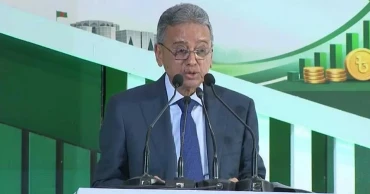
Bangladesh moving towards self-financed development: Khosru
Bangladesh is moving towards a development path financed increasingly by its own resources rather than dependence on debt, Finance Minister Amir Khosru Mahmud Chowdhury said on Tuesday.
“Under the leadership of the Prime Minister, we have taken initiatives to implement bold reforms. This has been possible because of his commitment,” he said while speaking at the opening ceremony of the Revenue Conference 2026 at the Bangladesh-China Friendship Conference Centre in the capital.
The minister said a modern, cashless, and contactless revenue system will be a key pillar of a prosperous Bangladesh.
Prime Minister Tarique Rahman inaugurated the conference, organised jointly by the Internal Resources Division of the Ministry of Finance and the National Board of Revenue (NBR).
Revenue target
Khosru said achieving the revenue collection target of Tk 6.04 lakh crore is the government's most important task at present.
“By achieving this target, we will be able to build a developed and prosperous Bangladesh as announced by the Prime Minister, Insha-Allah,” he said.
The minister expressed hope that Bangladesh will overcome the challenges of graduating to a middle-income country by 2029 and build a trillion-dollar economy by 2034.
Call to business community
Khosru described businesses as the driving force of the country's economy, saying development is not possible without investment and employment generation.
He also pledged that the government will always be by the business community, urging them to cooperate with the government in achieving the revenue target.
“Paying taxes and VAT on time is the responsibility of businesses. We know that sometimes you face difficulties because of administrative complications and the behaviour of officials. We have taken initiatives to resolve these problems quickly,” the minister said.
At the same time, he said the law must be strictly enforced against those who continue to evade taxes.
Accountability must be ensured
Khosru said both taxpayers and revenue officials have responsibilities under the law. “Just as taxpayers have a responsibility to pay taxes according to the law, revenue officials also have a responsibility to serve taxpayers impartially and respectfully,” he said.
He said the accountability mechanism must also be strengthened. “Harassing an honest taxpayer and giving unfair advantages to a dishonest taxpayer are both equally unacceptable,” he said.
The minister thanked development partners, economists, researchers and civil society representatives for their contributions to the revenue reform process.
Revenue reforms
Khosru said the government has undertaken major reforms to the country's revenue administration.
He said a final decision has been taken to split the existing NBR into two independent institutions — a Revenue Policy Department and a Revenue Management Department. “This is not just an administrative reorganisation. It is a fundamental change in our approach,” he said.
The minister said the Revenue Policy Department will work as an expert policy-making body responsible for developing a balanced, competitive and development-friendly tax structure.
He acknowledged that the reforms have created some uncertainty among revenue officials but assured them that the restructuring will create clearer career paths and greater opportunities for professional development.
Own-account financing
Khosru said the national budget for fiscal 2026-27 has set a record own-account revenue target of Tk 6.04 lakh crore, which is 46 percent higher than last year's actual collection.
He acknowledged that the target may appear ambitious but said it was set deliberately to meet the country's development needs.
Referring to the Prime Minister's vision, the minister said Bangladesh must move from a debt-based economy to an investment-based economy.
“To achieve that goal, we have to finance our development with our own resources. We have to strengthen domestic resource mobilisation,” he said.
Cashless, contactless revenue system
Khosru said modernisation, expansion and end-to-end automation are essential to achieving the revenue targets.
“The culture of taxpayers having to visit tax officials without special need must end. Our goal is a completely contactless and cashless revenue administration,” he said.
VAT and customs reforms
The minister said several reforms have been introduced to the Customs Act and VAT Act in the current budget to reduce harassment and establish a trust-based system.
He said tax payment should be made easier and urged all stakeholders to play a responsible role so that taxpayers do not have to spend time and money on prolonged legal disputes.
Khosru called for making the Alternative Dispute Resolution (ADR) method more effective so that disputes can be settled quickly, fairly and transparently wherever possible.
He also called for a clear Taxpayer Service Charter specifying the services available to taxpayers, the responsibilities of officials, the procedure for filing complaints and the timeframe for resolving them.
“The performance of the revenue administration should not be judged only by how much money is collected. It should also be assessed based on taxpayer satisfaction and service delivery,” the minister said.
NBR as business partner
Khosru said the NBR should no longer be viewed merely as a revenue-collecting agency.
“The Board of Revenue is no longer just a revenue-collecting institution. You are a companion in a businessman's financial journey,” he said, urging revenue officials to ensure that taxpayers feel proud of paying taxes and regard themselves as direct partners in the government's development efforts.
1 month ago
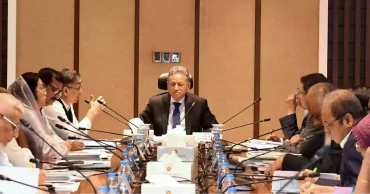
Budget's success depends on implementation, says Khosru
Finance Minister Amir Khosru Mahmud Chowdhury on Thursday said the true success of the budget depends on its effective implementation, urging officials of the Finance Division to work collectively to translate the fiscal blueprint into tangible outcomes.
Speaking at his first meeting with Finance Division officials at the Ministry of Finance, the minister said the budget, prepared through nearly two months of work, has received appreciation from people across the country.
“A well-prepared budget alone is not enough. Its real success depends on effective implementation,” he said.
Khosru expressed confidence that the Finance Division will be able to implement the budget through coordinated efforts.
Finance Division Secretary Dr Khairuzzaman Mozumder chaired the meeting.
The minister also called for changing the negative public perception of bureaucracy, saying he has realised over the past four months that any challenge could be overcome through teamwork.
He urged officials to move away from conventional approaches and embrace innovative thinking to keep pace with a rapidly changing world.
Khosru said official meetings should not remain one way, stressing the need to encourage open and spontaneous participation of officers.
He called for a work culture based on free discussion, mutual cooperation and “out-of-the-box” thinking, adding that the workplace should function like a family where officials focus on solutions instead of merely identifying problems.
The minister said objective and timely feedback from different wings of the Finance Division will facilitate better policy-making and decision-making.
Describing the Finance Division as the centre of the country’s economic management, he urged all officials to discharge their responsibilities with professionalism and dedication in the national interest.
Later, speaking to reporters after a meeting at the Secretariat on the integrated development plan for Cox’s Bazar, the minister said the government has initiated steps to prepare a comprehensive master plan to develop the coastal district into an international and regional tourism hub.
He said the government is also reviewing the long-standing 50 metre and 500 metre development restrictions in coastal areas to facilitate planned tourism infrastructure while ensuring environmental protection.
“Where tourism is developed, hotels, motels, resorts and recreational facilities will have to be established. Development opportunities must be created without compromising environmental conservation,” Khosru said.
He said the government has a broader vision for Cox’s Bazar, highlighting ongoing infrastructure projects, including the construction of an international airport, railway connectivity and improved road links from Chattogram.
The minister said these projects will be integrated to transform Cox’s Bazar into a modern digital tourism city.
He also said Bangladesh’s target of becoming a $1 trillion economy by 2034 will be supported by Cox’s Bazar as one of the country’s major growth hubs through the expansion of tourism, trade and service sectors.
2 months ago
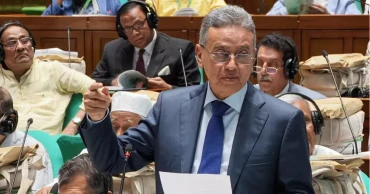
Finance Minister briefs JS on state banks' NPL situation, govt's debts
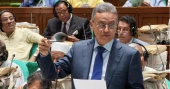
Finance Minister Amir Khosru Mahmud Chowdhury on Sunday informed Parliament that the total amount of default loans in nine state-owned banks stood at Tk 188,701.75 crore as of May 31 this year.
Replying to a question from reserved seat Jamaat-e-Islami MP Sabikun Nahar during the question-answer session, the minister said the figure was based on data submitted by the banks to the Credit Information Bureau (CIB) database of Bangladesh Bank.
The minister said the nine state-owned banks are Agrani Bank, Janata Bank, Rupali Bank, Sonali Bank, BASIC Bank, Bangladesh Development Bank, Bangladesh Krishi Bank, Rajshahi Krishi Unnayan Bank and Probashi Kallyan Bank.
He said reducing the high level of default loans is essential to restoring discipline in the country's banking sector.
Responding to a question from Jamaat MP Golam Rasul, the finance minister said the government's total outstanding debt stood at Tk 2,206,462 crore as of December 31. Of the total, external debt amounted to Tk 959,311 crore, while domestic debt stood at Tk 1,247,151 crore.
Answering another question from Jamaat MP Shahjahan Chowdhury, Amir Khosru said the government repaid foreign loans worth US$4.65 billion during the 2025-26 fiscal year. Of the total, US$3 billion was repaid as principal and US$1.65 billion as interest.
In reply to a question from Jamaat MP Mahbubul Alam, the minister said Bangladesh Bank has taken several initiatives to provide easier access to loans for young entrepreneurs.
He said the central bank has increased the refinancing fund for new entrepreneurs in the cottage, micro and small enterprise sector from Tk 100 crore to Tk 500 crore.
Under the scheme, new entrepreneurs can obtain collateral-free loans of up to Tk 10 lakh at a maximum interest rate of 7 percent, while loans of up to Tk 35 lakh are available against collateral.
Replying to a question from reserved seat MP Nilufar Chowdhury Moni, the minister said outstanding customs duties and taxes on imported goods collected by various customs houses under the National Board of Revenue over the past five years amounted to Tk 25,504.3 crore.
He added that out of Tk 3,912 crore payable by Bangladesh Petroleum Corporation, Chattogram Custom House had recovered Tk 590 crore by June this year.
Responding to a question from Dhaka-18 MP SM Jahangir Hossain, the finance minister said the government had decided to waive agricultural loans of up to Tk 10,000, including interest, for farmers across the country covering crops, livestock, fisheries and other agricultural activities.
Under the programme, banks had received Tk 1,352.74 crore from the government by July 2 to settle dues for 1,434,482 farmers, he said.
In reply to Nilphamari-4 MP Abdul Muntakim, the minister said Bangladesh Bank's regulations stipulate that a bank's fixed assets cannot exceed 30 percent of its paid-up capital.
As Sonali Bank's fixed assets are already significantly higher than the prescribed limit, the bank is currently unable to purchase additional fixed assets or construct new buildings, he added.
Answering a question from Cumilla-9 MP Abul Kalam, the finance minister said discussions between the Economic Relations Division and the World Bank are underway to prepare the financing pipeline for the 2026-27 fiscal year.
He said budget support remains one of the World Bank's financing instruments for Bangladesh, and the government's requirement and target for such support in FY2026-27 will be determined following consultations with the relevant stakeholders. The government will decide the sectors in which any budget support funds will be utilised based on national priorities.
2 months ago
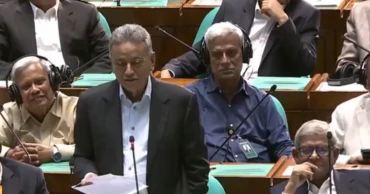
New BSEC appointments made transparently: Finance Minister
Finance Minister Amir Khosru Mahmud Chowdhury on Sunday told Parliament that investigations are underway against the former leadership of the Bangladesh Securities and Exchange Commission (BSEC) while the newly reconstituted commission has been formed through a transparent and professional selection process.
The Minister made the remarks while responding to a supplementary question from Jamaat-e-Islami MP Md Quamrul Hassan, elected from Mymensingh-6.
The MP alleged that during the Awami League government's tenure, politically biased and dishonest people were appointed to the BSEC and said there was allegation that some commission members had colluded in irregularities and manipulation in the stock market.
He wanted to know whether the government would ensure that only competent and non-partisan individuals are appointed to the commission in the future and whether action would be taken against officials who served during the previous AL government.
In reply, Amir Khosru said legal proceedings and investigations against the former BSEC chairman and others are already in progress.
He told the House that the commission has been reconstituted with a chairman and three members, while the process of appointing another member is continuing."None of them has been appointed on political considerations."
He added that the recruitment process was so transparent that even as Finance Minister he did not personally know the appointees beforehand.
"They are all professionals with exposure to the stock market and international capital markets. We have no reason to question their integrity," he said.
The Minister said the stock market has shown a sustained upward trend since the appointment of the new commission, gaining significant points over the past two months.
He claimed the market had recorded stronger gains during this period than it had over the previous five years, attributing the improvement to restored transparency and renewed investor confidence.
Amir Khosru also said the government has introduced, and will continue to introduce, major reforms in the capital market to strengthen its governance and credibility.
He said fund managers from major financial centres including Hong Kong, New York and London have already begun visiting Bangladesh and expressing interest in participating in the country's capital market.
The Minister expressed optimism that Bangladesh's capital market would develop into a globally recognised, transparent and trustworthy market, saying recent investor confidence and the upward movement in share prices indicate that the reform process is already producing results.
2 months ago
Digital transformation key to transparency, efficiency in financial sector: Finance Minister
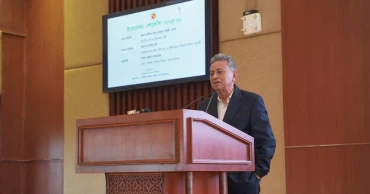
Finance and Planning Minister Amir Khosru Mahmud Chowdhury on Monday underscored the need for rapid digitalisation of Bangladesh’s financial services, saying innovation and technology are essential for improving service delivery, ensuring transparency and reducing costs.
“Bangladesh must accelerate its digital transformation so that citizens can access public and financial services without visiting offices,” he said while addressing “Innovation Showcasing 2025-26” programme organised by the Financial Institutions Division at the Multipurpose Hall of the Finance Division.
He said the government’s objective is to bring all sections of society, including businesses, professionals, farmers, workers and ordinary citizens, under digital services, making technology an inclusive platform for economic and social participation.
“There is no alternative to technology and digitalisation if we want to move the country forward,” he said, adding that digital services would help improve transparency, cut costs and save people’s valuable time.
The minister said the government has placed emphasis on digital skills and technology in the national budget to ensure that people from all professions can benefit from the digital economy.
Referring to the government’s efforts to strengthen digital governance, he said a high-level team is currently visiting Estonia to study its globally recognised digital governance model.
He said Bangladesh has already made progress in digital financial services but stressed that much more needs to be done, particularly in expanding public access and usage.
The minister urged banks, insurance companies and other financial institutions to increase the adoption of online services by encouraging customers to use digital platforms instead of visiting branches.
He suggested assigning dedicated staff at branches to guide customers in accessing digital services and explain how routine transactions can be completed from home.
“If customers continue to visit offices for services that are already available online, we have failed to communicate the benefits of digitalisation,” he said.
The minister also called for wider public awareness campaigns, including direct communication with customers, so they understand the convenience of digital financial services.
He said expanding digital access would significantly reduce travel costs, traffic congestion and time spent obtaining services, while boosting national productivity.
“Our goal is to ensure that people do not have to visit government offices, banks or insurance companies for services that can be delivered digitally,” he said.
The minister also stressed the need for full implementation of digital initiatives across all financial institutions, including the capital market and insurance sector, saying innovation would deliver meaningful results only if digital services reached people effectively.
Secretary of the Financial Institutions Division Nazma Mobarek presided over the event while Farida Yasmin, Joint Secretary and Chief Innovation Officer of the Financial Institutions Division gave the welcome address.Financial Institutions Division (FID) Secretary Nazma Mobarek said that the effective use of technology and small-scale innovations is making public services simpler, faster and more accessible while strengthening transparency and preventing corruption.
She said digital innovations are also contributing to improved governance by ensuring transparency, increasing tax compliance and helping prevent corruption, including financial irregularities and money laundering.
During the programme, five offices and agencies were honoured with awards in five categories in recognition of their outstanding innovative initiatives.
Under the supervision of the Financial Institutions Division, a total of 329 public services have been digitalised by its 25 offices and agencies to date.
3 months ago
11 Joint Investigation Teams working on priority money laundering cases: Finance Minister
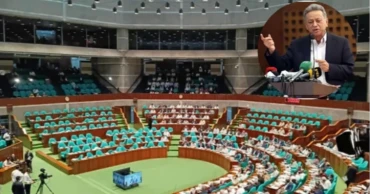
The government has formed 11 Joint Investigation Teams (JITs) led by the Anti-Corruption Commission (ACC) to probe priority money laundering cases as part of an intensified effort to trace, investigate and recover laundered funds, Finance Minister Amir Khosru Mahmud Chowdhury told Parliament on Wednesday.
Responding to a starred question from Jamaat MP Masum Mustafa elected from Netrakona-5, the minister said illegally acquired money is usually laundered abroad through highly secretive and complex methods, making it extremely difficult to determine the exact amount transferred out of the country.
The 11 teams also included officials from the Criminal Investigation Department (CID), the National Board of Revenue's Central Intelligence Cell and the Customs Intelligence and Investigation Directorate.
As of May 2026, courts had ordered the attachment and freezing of movable and immovable assets worth approximately Tk 76,814 crore at home and abroad in connection with the 11 priority cases, he said.
To implement court orders overseas, Bangladesh has sent 23 Mutual Legal Assistance Requests (MLARs) to relevant countries.
The minister said 142 cases have so far been filed in connection with efforts to recover laundered assets. Charge sheets have been submitted in 17 cases, while verdicts have been delivered in six cases.
To strengthen coordination among agencies involved in asset recovery, a Stolen Asset Recovery Division has been established under the Bangladesh Financial Intelligence Unit (BFIU), he said.
The government is also considering establishing a specialised asset recovery agency, following the example of several other countries, to improve the efficiency of efforts to trace and repatriate illicitly transferred wealth.
Amir Khosru said Bangladesh is receiving technical assistance, training and advisory support from a number of international organisations and foreign authorities, including the International Anti-Corruption Coordination Centre (IACCC), the World Bank and UNODC's Stolen Asset Recovery (StAR) Initiative, the International Centre for Asset Recovery (ICAR) and the US Department of Justice.
Bangladesh has also become a member of the Global Operational Network of Anti-Corruption Law Enforcement Authorities (GlobE Network) and the Asset Recovery Interagency Network-Asia Pacific (ARIN-AP) to facilitate international cooperation and information exchange.
The minister further said that, alongside criminal proceedings, the government has initiated civil recovery measures to bring back laundered funds.
Under this approach, around 30 banks affected by defaulted loans allegedly transferred abroad have begun the process of appointing nine international law firms under "No Win, No Fee" arrangements after signing non-disclosure agreements.
In the first phase, civil proceedings have been launched against six of the 11 priority cases involving Saifuzzaman Chowdhury, S Alam Group, Beximco Group, Sikder Group, Nassa Group and Orion Group.
The finance minister said plans are in place to further expand these recovery efforts.
He added that once the legal processes are completed and repatriated funds begin to return, the money will be allocated or spent in accordance with existing laws, relevant international agreements and government policies.
He said according to information compiled by the White Paper Committee formed by the Interim Government, the estimated volume of illicit financial outflows from Bangladesh during the 2009–2023 period stood at approximately $234 billion, averaging $16 billion annually, or about Tk 1.8 lakh crore.
The minister said the amount is equivalent to 3.4 per cent of Bangladesh's GDP in FY2023-24, around one-fifth of the country's export and remittance earnings, approximately 11.2 per cent of national savings, and nearly twice the volume of net foreign aid and foreign direct investment (FDI) inflows.
To recover the siphoned-off funds and prevent similar incidents in the future, the government has formed a 12-member inter-agency task force headed by the Governor of Bangladesh Bank, he said.
Based on the task force's recommendations, 11 priority cases have been identified under the Money Laundering Prevention Act, 2012. These involve former Land Minister Saifuzzaman Chowdhury, S Alam Group, Beximco Group, Sikder Group, Nassa Group, Orion Group, Bashundhara Group, former Prime Minister Sheikh Hasina and her family, Nabil Group, HBM Iqbal and Summit Group.
3 months ago

Cabinet body okays contract extension for online BRTA tax collection
The Cabinet Committee on Government Purchase on Wednesday approved a proposal to extend the existing contract for the online collection of motor vehicle (MV) taxes and fees for the Bangladesh Road Transport Authority (BRTA).
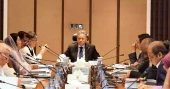
The recommendation came at a meeting of the committee held at the Secretariat with Finance Minister Amir Khosru Mahmud Chowdhury in the chair.
According to official sources, the proposal was submitted by the Road Transport and Highways Division to facilitate the continuation and expansion of services related to the collection of MV taxes and fees through the online banking platform.
The original contract value stood at Tk 218.71 crore. A variation amounting to Tk 21.43 crore has been proposed, raising the revised contract value to Tk 240.14 crore, which is 9.8 percent higher than the original contract amount.
The recommended contractor is Computer Network Systems (CNS) Limited.
3 months ago
Finance Minister orders transparent implementation of Family Card programme
Finance Minister Amir Khosru Mahmud Chiwdhury on Monday directed officials to ensure that the Family Card programme is implemented in a transparent manner free from any political influence, so that benefits reach the intended recipients.
The directive came during the fourth meeting of the Cabinet Committee on Family Card Distribution held at the conference room of the Ministry of Finance.
The meeting reviewed and approved the administrative expenditure required for implementing the Family Card programme and finalised the revised 2026 guidelines for piloting the initiative.
The committee also reviewed and gave policy approval to the draft Family Card Implementation Policy, 2026, which is expected to provide a structured framework for identifying eligible beneficiaries and distributing support under the programme.
Officials said the policy and guidelines are aimed at ensuring transparency, accountability and efficiency in the implementation process while preventing irregularities and political interference in beneficiary selection.
The Family Card programme is being introduced as part of the government’s broader social protection efforts to support low-income and vulnerable households across the country.
Speaking at the meeting, the Finance Minister stressed the importance of establishing a fair and credible beneficiary selection process so that the programme serves those who are genuinely in need.
Among others, Social Welfare Minister Prof Dr A.Z.M. Zahid Hossain, State Minister for Social Welfare Farzana Sharmin, and State Minister for Local Government, Rural Development and Cooperatives Mir Shahe Alam attended the meeting.
3 months ago