CAAB
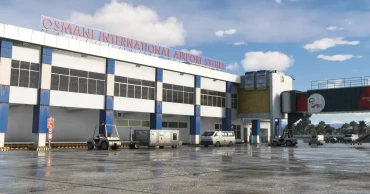
Sylhet Osmani Int’l Airport expansion project rises by Tk 470 crore
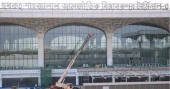
The expansion of Sylhet Osmani International Airport has ecome costlier by Tk 470.87 crore as project delays and major design revisions push up expenses and extend the completion deadline by two more years.
Officials said the Executive Committee of the National Economic Council (ECNEC) recently approved the first revision of the Expansion of Sylhet Osmani International Airport (Phase-I) project, raising its total cost to Tk 2,780.66 crore from the original Tk 2,309.79 crore, an increase of about 20.39 percent.
Under the revised plan, the project implemented by the Civil Aviation Authority of Bangladesh (CAAB) under the Ministry of Civil Aviation and Tourism will now continue until December 2027 instead of December 2025.
Of the total cost, the government will provide Tk 2,718.54 crore while CAAB will contribute Tk 62.12 crore from its own funds.
Fraud posing as customs officer arrested at Dhaka Airport
The project is designed to expand facilities at the country’s third-largest international airport in response to a rapid rise in passenger and cargo movement.
Officials said the cost hike is largely attributed to an expansion of the terminal building area by 3,646 square metres along with additional land development and civil construction work, which together added Tk 485 crore to the total estimate.
The project aims to build a modern international passenger terminal, a cargo complex, a new control tower, taxiways, parking aprons, and drainage and utility infrastructure to accommodate rising air traffic.
As of June 2025, the project’s financial progress stands at 14.49 percent (Tk 334.60 crore) while physical progress has reached 22.9 percent.
The Planning Commission approved the revised proposal noting that the project’s master plan and design have already been modified to meet operational requirements.
The Commission further emphasised that completing associated infrastructure such as drainage and utility systems is essential for ensuring the airport’s readiness for expanded international operations.
Sylhet Osmani International Airport serves a large expatriate community particularly from the UK, USA, Europe, and the Middle East.
With industrial growth in the Sylhet region and increasing cargo demand, officials believe the expansion will significantly boost both passenger and freight capacity, positioning the airport as a modern regional hub for international aviation.
Biman flight cancelled as boarding bridge hits engine at Sylhet airport
Osmani International Airport, located about 15 kilometers northeast of Sylhet city, was originally built between 1944 and 1945 during the Second World War to monitor Japanese advances from Burma.
Initially known as Sylhet Civil Airport, it primarily served domestic flights operated by Biman Bangladesh Airlines from Dhaka’s Shahjalal International Airport.
The airport was later renamed Osmani International Airport in honor of General M. A. G. Osmani, the Commander-in-Chief of the Liberation Forces during the Liberation War.
In 1986, the airport was upgraded to a fully functional domestic airport with the construction of a terminal building, installation of navigational aids, and reconstruction of the runway, taxiways, and aprons.
A limited expansion in 1998 enabled the operation of medium-sized aircraft such as the Airbus A310.
In 2002, the airport was designated as an international airport and received its first international flight operated by Biman Bangladesh Airlines. However, due to a shortage of modern equipment, it initially fell short of international standards.
Runway lighting and other essential facilities were added in 2004, allowing safe night operations.
Following the South Asia Transport and Trade Facilitation Conference in 2006, work began to upgrade terminal facilities to handle international operations. A new terminal building, two jet bridges, and a taxiway were constructed, enabling Biman to operate Hajj flights directly from Sylhet in 2007.
In 2015, Fly Dubai became the first foreign airline to operate flights from Sylhet to Dubai, though the service was briefly suspended and later resumed in 2016.
Now Osmani International Airport serves both domestic and international passengers and cargo, connecting Sylhet with major destinations at home and abroad through national and international carriers.
Read more: Bangladesh's travellers take to the skies to escape traffic chaos
11 months ago

Bangladesh's travellers take to the skies to escape traffic chaos
In a country where congested roads and punishing traffic often define everyday travel, a new mode of movement is quietly soaring in popularity, literally.
Helicopter services, once a symbol of luxury and reserved for high-profile government or military use, are now becoming a practical and sought-after choice among Bangladesh’s business elite, upper-middle class and experience-driven tourists.
From the skies above Dhaka’s chaotic streets to the serene landscapes of Cox’s Bazar and the Sundarbans, private helicopter charters are carving out a new path in domestic transport.
The rise is more than symbolic as it reflects a shift in the aspirations and expectations of modern travellers in Bangladesh.
“Due to severe traffic jams and the increasing need to save time, helicopters are becoming a viable alternative, especially for the elite,” said an official from one of the country’s leading helicopter service providers.
Today, the country is home to a growing number of private helicopter operators, including Probashir Helicopter, Meghna Aviation, Square Air, Bashundhara Airways, and Impress Aviation, offering tailored charter services.
A few other companies, such as Sikder Group and South Asian Airlines, currently remain grounded, their helicopters inactive for various operational reasons.
The growth has not gone unnoticed by regulators. Since the early 2000s, the Civil Aviation Authority of Bangladesh (CAAB) has licensed around a dozen non-scheduled helicopter operators and the number continues to rise steadily.
A Price for Altitude
Hiring a helicopter in Bangladesh is still a high-end affair, but increasingly within reach for affluent families or corporate clients.
A round trip from Dhaka to Cox’s Bazar can cost anywhere between Tk 2.5 lakh to Tk 4 lakh, depending on aircraft type and availability.
Shorter trips, such as to Narayanganj, Cumilla, or Munshiganj, range from Tk 80,000 to Tk 1.5 lakh.
Air passengers on Sylhet-Dhaka route facing severe ticket crisis
Beyond leisure and business, helicopters are also serving critical functions: Emergency medical evacuations, disaster response, survey work, and film production are among the rising non-tourism demands. Meanwhile, a growing number of families are now booking helicopters for weddings, family events, and even quick visits to remote hometowns.
“Though the service was once exclusive to top executives and political figures, it is now gradually being used by the upper-middle class for various purposes, including special occasions,” said a senior executive officer of a private service provider, requesting anonymity.
The Sky as a Stage
The routes are becoming more diverse and so is the clientele.
Helicopters now frequently land in Shariatpur, Cumilla, and Bogura, while scenic and tourist-heavy destinations like Sylhet, Bandarban, Saint Martin’s, and the Sundarbans are increasingly popular among domestic and international travellers alike.
According to operators, peak demand hits during winter and festival seasons, with many companies reporting fully booked calendars weeks in advance.
To meet this growing appetite, many service providers have expanded their fleets, overhauled maintenance protocols and adopted digital booking systems for a smoother experience.
Voices from Cockpit
Among the most ambitious players in the sector is Probashir Helicopter.
Its Managing Director, Byjed Al Hassan, told UNB that his company aims to provide a one-stop helicopter service, especially useful for international travellers arriving at the airport and seeking quick transit to destinations across the country.
He said the firm operates two types of helicopters — one with four seats and another with six.
“In the past, the minimum fare was Tk 75,000 per flying hour, but now it has increased to Tk 85,000 due to growing demand and a shortage of available helicopters. Many aircraft from other companies are grounded,” he explained.
Probashir Helicopter has even more ambitious plans on the horizon.
Indian airlines eye BD air passengers amid growing Dhaka-Delhi link: Envoy
The company aims to launch a Dhaka–Chattogram–Bandarban route to attract both local and foreign tourists.
If they receive clearance from the army, the route could begin operation as early as next year.
As per their plan, the fare would be Tk 20,000 per person from Dhaka to Chattogram, and Tk 7,000–8,000 from Chattogram to Bandarban.
For those seeking a more urban thrill, the company has introduced aerial city tours over Dhaka, showcasing landmarks such as Lalbagh Fort, Hatirjheel, Savar National Memorial, and even the Taj Mahal replica in Narayanganj’s Sonargaon.
The fare is $200 per person for foreign nationals and Tk 10,500 for locals.
For food-loving flyers, there is a unique journey to Munshiganj, where the helicopter lands on the banks of the Padma River, near the iconic Padma Bridge.
There, passengers are treated to a meal featuring Hilsa fish and other traditional delicacies before returning to the capital. The cost? $250 per foreign passenger.
Challenges
Despite the momentum, challenges persist. The cost remains prohibitive for the general population, and weather conditions often disrupt operations.
Industry insiders acknowledge that broader adoption will require infrastructure expansion, regulatory clarity and improvements in weather forecasting. Even so, optimism prevails.
Access of air passengers’ relatives restricted at Dhaka Airport from Sunday
Helicopter usage in Bangladesh dates back to the 1980s, primarily for government and military operations. While commercial services began taking off in the early 2000s, the real turning point came after 2015, when rising disposable incomes and increased demand for time-saving alternatives fuelled rapid growth.
Now, as CAAB works on updated safety protocols and supports infrastructure development, many see helicopter travel as not just a status symbol, but a meaningful contribution to Bangladesh’s evolving transport landscape.
In a country where progress often battles with bottlenecks, the rising of helicopter blades may well signal a new era in how people move, connect and experience the skies.
1 year ago
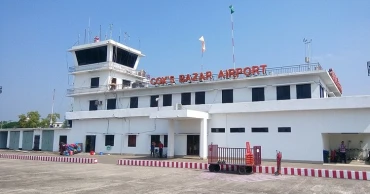
CAAB set to launch international flights from Cox’s Bazar by July end despite challenges
Undeterred by infrastructural and administrative challenges, the Civil Aviation Authority of Bangladesh (CAAB) is pressing ahead with its plan to begin overseas flights from Cox’s Bazar International Airport by the end of July.
Although nearly 40 percent of the airport’s expansion work remains incomplete and complications persist over land acquisition, eviction of thousands of residents, funding shortfalls, and a lack of clearance from the International Civil Aviation Organization (ICAO), CAAB has reportedly begun preparatory work to facilitate international operations.
According to CAAB sources, the decision to move forward was taken at a special meeting chaired by the then CAAB Chairman on April 21 this year.
Ongoing Challenges
· Construction of the airport terminal building is still nine months away from completion.
· Around 3,300 families continue to reside on airport land and have yet to be evicted.
· Acquisition of 4.64 acres of essential land remains pending.
As ICAO approval has neither been sought nor granted, launching international flights would technically breach global aviation norms.
Although an additional expenditure of nearly Tk 100 crore has been incurred, the government has yet to release the funds.
CAAB is currently lobbying top government officials to address the issue.
Infrastructural Progress
Notably, of the 1,700-foot runway extension into the sea, 1,300 feet lies over water—96 percent of this extension and 94 percent of the protective embankment have been completed.
Ctg airport flight operations halted for 2 hours after Biman glitch
Installation of the precision approach lighting system and a steel bridge is 83 percent finished, while drainage infrastructure stands at 55 percent. However, only 26 percent of the perimeter wall and patrol roads have been completed.
Upon full completion, the airport runway will expand from its existing 9,000 feet to 10,700 feet.
Future Prospects
The airport will feature a state-of-the-art Airfield Ground Lighting (AGL) system enabling safe night-time operations. Its architectural design includes illuminated pavements, flood management infrastructure, and aesthetic lighting along the seafront.
Recently transferred CAAB Chairman Air Vice Marshal M Mafidur Rahman told UNB, “We are working with determination for the country’s development. Even though some tasks are pending, we are trying to launch international flights soon. Hopefully, we will be able to do so within a short period.”
He went on to say, “Efforts to upgrade Cox’s Bazar Airport to international standards are underway. Despite some infrastructural and administrative challenges, we are working under the Prime Minister’s directive to launch international flights as soon as possible.”
Highlighting the urgency of the project, the former chairman said, “The terminal building, runway extension, security infrastructure and lighting systems are all progressing rapidly. An advanced AGL system will be installed for night operations, meeting international standards.”
Turkish Airlines flight makes emergency landing at Dhaka airport
“Over 3,000 families still need to be evicted and some crucial plots are pending acquisition. However, we are coordinating with the relevant agencies on these matters. Though project costs have risen, and Tk 100 crore remains due, the government is assisting us. We hope the funds will be released soon,” he added.
“We are committed to overcoming any challenge and turning Cox’s Bazar Airport into an international-standard facility. It will serve not only the tourism industry but also act as a key hub for regional connectivity,” he added.
Project Background
The initiative to transform Cox’s Bazar Airport into a regional hub and an alternative air connectivity centre during natural disasters was taken over a decade ago. Delays, delays in land acquisition and eviction, financial constraints, and planning inconsistencies have hampered timely execution.
Project Cost
The estimated cost of the project is Tk 1,794.31 crore, entirely financed by the Civil Aviation Authority of Bangladesh.
1 year ago
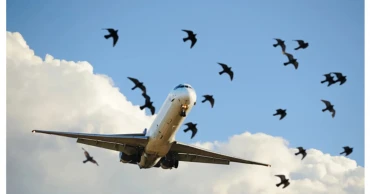
Bird strikes threaten aircraft safety in Bangladesh; monitoring system lies inoperative
The risk of bird strikes during aircraft take-off and landing is growing alarmingly at airports across Bangladesh particularly at the Hazrat Shahjalal International Airport (HSIA) in Dhaka , raising concerns over a potential aviation disaster.
Despite repeated incidents authorities have failed to implement an effective bird control system, leaving planes and lives at risk.
Aviation experts and insiders said Civil Aviation Authority of Bangladesh (CAAB) has fallen short in maintaining safety protocols with several systems either outdated or completely inoperative.
On May 20, a Turkish Airlines flight narrowly avoided tragedy after a bird strike ignited one of its engines shortly after take-off.
The pilot observing fire midair contacted the control tower and successfully executed an emergency landing—saving the lives of all 290 passengers on board.
Again, on June 27, a Biman Bangladesh Airlines flight bound for Singapore suffered a bird strike moments after departure.
The aircraft was forced to turn back midair due to engine damage, highlighting the recurring nature of these threats.
Sources at CAAB said the Bird Monitoring System installed spending over Tk one crore at HSIA in 2022 has been lying idle due to lack of maintenance.
One of its five surveillance cameras is broken, and the main system itself has been out of order for months.
It is now set to be shipped to Italy for repairs, but officials admit they currently have no reliable alternative to manage bird activity near the runway.
Besides, laser lights, once used to scare birds at night, are no longer operational.
Gas cannons which produce sound blasts every 10 minutes are used but their effectiveness is limited—especially during the day, said the sources.
Even more concerning, the number of bird shooters and functional weapons is dangerously inadequate.
Biman to lease two aircraft soon to meet operational demand: CEO
While CAAB should ideally have at least 20 shooter guns only one is working.
Currently, only three CAAB bird control staff are deployed, while the air force supports with two shooters per shift—who are unavailable during weekly holidays and VIP movements.
Experts said poorly maintained green areas, nearby water bodies attracting fish and insects, and scattered food waste around airport premises are contributing to increased bird activity.
Aviation expert Kazi Wahidul Alam said, “Globally, the bird strike risk is 0.5 per 10,000 flights but in Bangladesh, it's 1.73. That’s alarmingly high.”
ATM Nazrul Islam, another aviation expert, stressed the lack of modern deterrents.
“The sound systems have long been out of order. Other countries use special chemical sprays to eliminate bugs underground which reduces bird presence. We’ve done nothing similar, “he said.
A recent emergency meeting chaired by immediate-past CAAB Chairman Air Vice Marshal Md. Manjur Kabir Bhuiyan, recommended restoring the monitoring system, purchasing more shooter guns, and increasing manpower on the ground.
“Birds will continue to be drawn to areas with food and nesting conditions. Unless we address these root causes and invest in modern technology, we’re risking lives with every flight,” he warned.
As bird strike incidents pile up and equipment remains in disrepair, Bangladesh's aviation safety is standing on shaky ground.
1 year ago
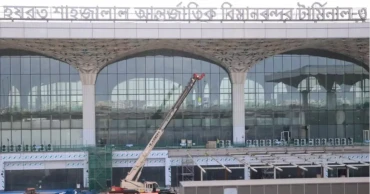
Dhaka Airport’s Third Terminal on track for completion this Oct, flights expected from early 2025
The construction of the third terminal at Hazrat Shahjalal International Airport in Dhaka is set to be completed by October this year, with flight operations expected to begin in early 2025, officials from the Civil Aviation Authority of Bangladesh (CAAB) have confirmed.
According to CAAB, the third terminal’s construction is in its final stages and is on track to be completed by the October deadline. The Civil Aviation Authority will take over the terminal from the contractor in October, following which the process of scheduling flights from the new terminal will commence early next year.
Following the fall of the Awami League government on August 5, uncertainty arose over the timely completion of the terminal. However, the interim government soon restored normalcy to the construction process.
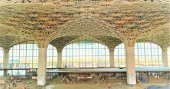
The striking design of the third terminal building has drawn attention in the project area, with finishing touches underway both inside and outside the facility.
Read more: Target set for Dhaka Airport Third Terminal's full functionality by December 2024: CAAB Chairman
Air Vice Marshal Md Monjur Kabir Bhuiyan, Chairman of CAAB, recently inspected the progress of the third terminal. He directed the officials and workers involved in the project to ensure timely completion with a high standard of work.
“About 98% of the work on the third terminal has already been completed, and overall progress is satisfactory. I have instructed those involved to finish the remaining tasks promptly,” Air Vice Marshal Monjur told UNB. “We expect all work to be completed by October. After taking over the terminal from the contractor, we will prepare to launch flight operations.”
Consultancy firm Nippon Koei has estimated that around 6,000 skilled workers will be needed for the operation, maintenance, and security of the terminal, with nearly 4,000 of them required for security alone. However, CAAB officials said that it might take a few months to recruit the necessary workforce, meaning the terminal may not be fully operational immediately. Initially, CAAB and Biman Bangladesh Airlines will manage the terminal, with full operations likely to begin in February next year.
Once operational, the third terminal will increase Hazrat Shahjalal International Airport’s passenger handling capacity by an additional 12 million passengers annually. Currently, the airport’s first and second terminals manage between 120 to 130 flights of more than 30 airlines daily, serving around 20,000 passengers. This equates to a capacity of approximately 8 million passengers per year.
The new terminal will add 230,000 square meters of space to the airport, featuring 115 check-in counters, 66 departure and 59 arrival immigration desks, and three VIP immigration desks. It will also include 27 baggage screening machines, 40 security scanners, 12 boarding bridges, 16 carousels, and 11 body scanners.
The construction project, launched by the government in 2017, began on December 28, 2019, with an estimated cost of Tk 21,398 crore. The Japan International Cooperation Agency (JICA) is providing Tk 16,141 crore as a loan, with the remaining funds coming from the Bangladesh government. The construction is being carried out by Japan’s Mitsubishi and Fujita and South Korea’s Samsung.
CAAB officials noted that once completed, the terminal will accommodate 37 aircraft at a time and feature two high-speed taxiways to reduce waiting times on the runway. Two buildings have also been constructed for import and export cargo operations. A three-story parking facility for 1,350 vehicles is nearing completion. Initially, 12 out of the 26 boarding bridges will be operational, with 15 self-service check-in counters and 10 automated passport control counters available for departing passengers.
The terminal has been designed to ensure smooth entry and exit for passengers. It will be connected to the elevated expressway, and airport railway station via a tunnel. Hajj pilgrims will also have a dedicated tunnel from the Ashkona Hajj Camp to the third terminal.
Last year, on October 7, former Prime Minister Sheikh Hasina partially inaugurated the terminal as part of her government’s development efforts ahead of the national elections. At that time, the government had announced that flights would operate from the third terminal by October this year.
Read more: Govt will decide on ground handling at Dhaka airport’s third terminal and Biman is ready: CEO
2 years ago
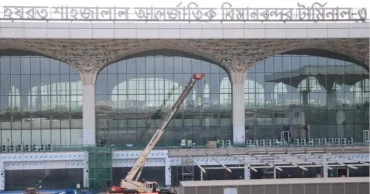
Construction of Dhaka Airport’s Third Terminal set to be fully complete by April 5
In a significant development for Bangladesh’s aviation sector, the construction of the third terminal at Dhaka’s Hazrat Shahjalal International Airport (HSIA) is slated to be fully completed by April 5, 2024, with the terminal expected to be fully operational by October. This marks a pivotal moment in the expansion and modernization of the country’s aviation infrastructure.
The Civil Aviation Authority of Bangladesh (CAAB) will take over the terminal’s responsibilities from the contractor once the construction is completed. This transition will initiate the process of moving operations from the old terminals to the new one, focusing on Operational Readiness and Airport Transfer (ORAT) project.
AKM Maksudul Islam, the project director, told UNB that nearly all construction work, including civil engineering tasks, is nearing completion. Any remaining work is expected to be finalized in the first week of April, ensuring a smooth handover to CAAB by April 6. Preparations are underway to fully launch the terminal’s operations in October, including the completion of system integration and calibration tasks, which have successfully passed multiple evaluations.
Read more: Terminal 3 will transform Bangladesh's passenger and cargo handling capabilities: EU Ambassador
Air Vice Marshal M Mafidur Rahman, Chairman of CAAB, informed UNB that the third terminal is almost ready for flight operations and is expected to be fully functional by October. The completion of this terminal will significantly increase Dhaka airport’s capacity, facilitating the growth of domestic and international airlines’ operations. This expansion is anticipated to improve passenger amenities, increase revenue, and enhance the airport’s overall efficiency.
2 years ago

With promise to transform country’s aviation sector, Dhaka Airport’s Terminal 3 set for soft opening today
The much-anticipated third terminal of Hazrat Shahjalal International Airport, which promises to transform the face of the country’s aviation sector, is set to have its soft opening on Saturday morning (October 7).
Prime Minister Sheikh Hasina will officially inaugurate the new terminal for the country’s leading international airport, that stands out as one of the most talked-about and exciting among all the ‘megaprojects’ undertaken by the AL-led government.
Rehearsals are currently underway on-site in preparation for the inauguration program. Once the prime minister has completed the formalities, a special flight operated by state-owned Biman Bangladesh will depart from Dhaka using the newly constructed third terminal. Ground handling services for this special flight will be provided by the airline.
Target set for Dhaka Airport Third Terminal's full functionality by December 2024: CAAB Chairman
Preparations for the inauguration are being carried out collaboratively by the Biman Bangladesh Airlines Authority and the Civil Aviation Authority of Bangladesh (CAAB). A Biman flight, BG371 to Kathmandu, has already departed twice from the terminal to rehearse for the opening, although immigration and other paperwork was not done there.
Talking to UNB ahead of the inauguration, Air Vice Marshal M. Mafidur Rahman, chairman of CAAB, said that approximately 90 percent of the construction of Terminal 3 has been completed under the Shahjalal International Airport Expansion Project (Phase I).
Apart from the main terminal, the cargo complex comprising both export and import facilities, is nearly complete, said the CAAB chairman: “The cargo complex is in its final stages and is expected to be operational by March or April.”
HSIA Terminal 3: Final preparations on course for Oct 7 inauguration
Security arrangements for the airport have been meticulously planned for Saturday’s soft opening.
“Our target is to make the terminal fully functional for passengers by December 2024. The work is progressing ahead of schedule, and we are confident that the terminal will be operational before the planned deadline,” he said.
Meanwhile Md. Shafiul Azim, managing director of Biman Bangladesh, told UNB the national flag carrier is fully prepared for the soft opening of Terminal 3.
“New equipment has been procured for the ground handling of Terminal-3, and international standard uniforms have been provided to the staff on duty. The airline conducted exercises, including ground handling, in preparation for the inauguration,” he said.
Terminal 3 is expected to provide a sea-change in terms of passenger experience and choice in a state-of-the-art setting. It starts with the 37 aircraft parking spaces, which has already seen some airlines that never flew to Bangladesh before, make queries to include Dhaka as a destination in the near future.
Soft opening of Dhaka airport’s 3rd terminal on Oct 7: CAAB Chief
The 26 boarding bridges (of which 12 are to be launched in October), along with 115 check-in counters, including 15 self-service, promise a breezier experience for anyone departing Dhaka, or flying in. .
The baggage handling system will be on the ground floor, departure lounge and boarding bridge on the second floor, and extensive duty-free shops and exit lounges.
Terminal 3 will have the capacity to serve 1.20 crore (12 million) passengers annually on its own, once fully operational. At present the airport is able to serve 80 lakh (8 million) passengers in a year. A multi-storey car parking facility, customs hall, VIP and VVIP passenger areas, and a transit passenger lounge are also part of the terminal's offerings.
The three-storey terminal, designed by Rohani Baharin of internationally renowned CPG Corporation (Private) Limited Singapore, will have a floor space of 230,000 square metres. Baharin’s CV includes the acclaimed third terminal of Singapore’s Changi Airport, as well as Ahmedabad’s new international airport.
The second phase of the project will involve constructing a corridor and the multi-level car parking building with 1,350 parking spaces.
In terms of passenger convenience, the new terminal will introduce automated passport control or e-gates, reducing wait times. Passengers can choose self-immigration through the e-gates or opt for assistance at one of 56 exit immigration counters. A modern fire-fighting system and advanced security screening process will enhance safety measures.
Read more: Groundhandling contract for Terminal 3 will go to Japan: CAAB chairman
The terminal will also include movie lounges, food courts, airline lounges, and world class duty-free shops. Facilities like Wi-Fi, mobile charging, prayer areas, and a Meeters and Greeters Plaza are thrown in for good measure.
Additionally, special arrangements have been made for mothers, including breastfeeding booths, diaper-changing areas, and a family bathroom. Children will have a dedicated play area.
The project, originally with an estimated cost of Tk 13,610.47 crore, got the nod of the Executive Committee of the National Economic Council (ECNEC) in October, 2017. However, the cost rose substantially later on as the entire vision changed and it was decided to go for a world class facility with the potential to transform the aviation sector in the long term. The final cost approved for the project stands at Tk 21,400 crore.
JICA, the Japanese government’s international development agency, has been helming the project as the main financier, with a consortium of three leading international firms - Mitsubishi, Samsung C & T (the construction arm of Samsung) and Fujita JV - contracted to implement it. It marked the first and till now only project in Bangladesh for Samsung C & T, the firm behind such international landmarks as the Burj Khalifa, Taipei 101, and the Petronas Towers, among others.
Read more: Govt will decide on ground handling at Dhaka airport’s third terminal and Biman is ready: CEO
3 years ago

Four private airlines, inc. three that are closed, owe CAAB over Tk 1223cr
The Civil Aviation Authority, Bangladesh (CAAB) is owed Tk 1223 crore by four private airlines.
Out of these four airlines, three are currently closed. The amount the three closed airlines owe is over Tk 1192 crore.
This information was divulged in the meeting of the Parliamentary Standing Committee on Ministry of Civil Aviation and Tourism on Sunday (September 17, 2023) held at the Sangsad Bhaban.
Also read: Irregularities in leasing Egypt Air planes: ACC questions 7 CAAB officials
The Parliamentary Committee on Ministry of Civil Aviation and Tourism wanted to know how much money CAAB owes or is owed in their dealings with domestic private airlines companies.
CAAB gave a report in this regard in the parliamentary standing committee meeting today with its chairman RAM Obaidul Muktadir Chowdhury in the chair.
According to the sources, CAAB in its report said that it is owed a total of Tk 1,222.98 crore by Regent Airways, Novo Air, United Airways and GMG Airlines. Among them, only Novo Air still flies.
As of last May, two other private airlines, US Bangla and Air Astra, both of which are still in business, have no debt.
Also read: Civil Aviation Ministry asked to take action against CAAB officials for irregularities
CAAB is owed more than Tk 408 crore by Regent Airways, while GMG Airlines owes more than Tk 396 crore.
CAAB is owed Tk 388.97 crore by United Airways and from Novo Air it is owed Tk 29.48crore.
After the meeting, a press release of the Parliament Secretariat informed that the parliamentary committee has recommended taking necessary measures to collect the money owed by the private airlines.
Meanwhile, the report of the sub-committee on the investigation of the Hotel Intercontinental renovation project which was presented in the previous meeting of the committee was in the discussion list of today’s meeting.
The report claimed that it was not needed to spend exorbitantly on the renovation works.
Also read: ACC finds 19 areas of corruption in Biman, Caab
Government money has been unnecessarily spent for the benefit of certain people, the report said.
According to the report, the rooms of 26 square meters has been increased to 40 square meters. As a result, the number of rooms was reduced to 226 from 272. The report claims that this was not necessary.
Apart from this, the committee recommended to widen the road from Cox's Bazar airport to the city on an urgent basis and improve its beauty, maintain the cleanliness of the beach and implement the activities with mutual coordination.
The committee members Mosharraf Hossain, Ashek Ullah, Syeda Rubina Akhtar, Kaniz Fatema Ahmed were present in the meeting.
3 years ago
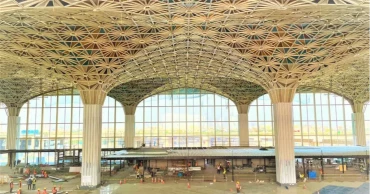
HSIA Terminal 3: Final preparations on course for Oct 7 inauguration
Preparations are underway for the inauguration of the third terminal of Hazrat Shahjalal International Airport, or Terminal 3 - one of the most exciting and potentially transformative projects undertaken by the Awami League-led governments across three electoral cycles.
Prime Minister Sheikh Hasina will inaugurate the first phase of the project on October 7.
However, the full utilisation of the terminal by passengers is expected at the end of 2024. This is due to the necessary calibration and preparation of the equipment used in terminal operations, which is projected to take up most of 2024.
The chairman of the Civil Aviation Authority of Bangladesh (CAAB), Air Vice Marshal Mafidur Rahman,confirmed to UNB that Prime Minister Sheikh Hasina will officially open the terminal with the usual fanfare associated with the inauguration of megaprojects under the present dispensation, on October 7.
Govt will decide on ground handling at Dhaka airport’s third terminal and Biman is ready: CEO
“The preparation for the inauguration is in its final stages. Structure of the terminal is ready, and now equipment is being installed,” said AVM Mofidur.
He further stated that airlines will be able to use the new parking apron and taxiway . The old terminal's apron can accommodate 29 aircraft, but after the soft opening, the third terminal's apron will be able to accommodate an additional 8 to 10 aircraft.
What sets Terminal 3 apart
The CAAB chairman said 37 aircraft can be parked at a time once the terminal – with an area of 5,42,000 square meters – is fully opened.
There will be 26 boarding bridges. Of these, 12 boarding bridges will be opened in October. There will be a total of 115 check-in counters (including 15 self-service check-in counters) for exits, according to CAAB.
In addition, there will be 10 self-service passport control counters for immigration, along with 66 external immigration counters. For arriving passengers, there will be 5 self-service check-in counters, making a total of 59 counters.
Currently, the existing terminal has 8 baggage belts, while the Third Terminal will have 16 baggage belts for arriving passengers. There will be separate belts for oversized luggage.
Soft opening of Dhaka airport’s 3rd terminal on Oct 7: CAAB Chief
The chairman mentioned that a multilevel car parking building with 1,350 parking spaces will be constructed for car parking at Terminal 3.
Below the new terminal, there will be a baggage handling system, and on the second floor, there will be an arrival lounge, a cantina, and boarding bridges, according to CAAB. Additionally, there will be a Duty-Free shop and an arrival lounge nearby.
The total area of the third terminal building is going to be 230,000 square metres, with a capacity of handling 12 million passengers annually.
The baggage handling area is 54,000 square metres, and the fire-fighting station with equipment covers 4,000 square metres. The import cargo terminal is 27,000 square metres, and the export cargo terminal is 36,000 square metres. The connecting taxiway is 66,500 square metres.
12 boarding bridges will be operational when Dhaka Airport’s 3rd Terminal partially opens this Oct: CAAB
There are two rapid exit taxiways, covering 41,500 square metres. Furthermore, the airport will have associated road connections, an elevated expressway, and the necessary equipment (automated warehouses) for passenger and cargo handling. All these activities are currently underway.
Additionally, there will be a hall and six channels for customs for passengers arriving from other countries. VIP services have been arranged for VIP passengers.
In the southern part of the Third Terminal, there is a 3,650-square-metre area dedicated to VIP and VIP passenger services.
A large lounge has been constructed for transit passengers in the new terminal. It will serve 40,00,000 passengers annually. However, there will be no direct connection with the old two terminals for now. A corridor will be constructed in the second phase of the project.
According to the CAAB chairman, 120–130 aircraft from over 30 airlines takeoff and land at Hazrat Shahjalal International Airport's first and second terminals every day.
About 20,000 passengers use the airport's two terminals every day. As a result, the HSIA currently has the capacity to serve about 80 lakh passengers annually.
Fakhrul returns from Singapore, complains of harassment at airport
With the opening of the third terminal, it will be possible to serve another 12 million passengers, he said. Once Terminal 3 , passengers will be able to avail the following facilities:
Self-immigration facilities
The new terminal building will feature a total of 10 automatic passport control stations or e-gates at the departure area. This innovative system allows passengers to complete the immigration process independently, eliminating the need to interact with immigration authorities.
Nevertheless, for those passengers who prefer not to handle immigration procedures independently, there will be 56 exit immigration counters staffed by immigration officials ready to assist them. Additionally, there will be 5 e-gates available for passengers arriving in Bangladesh from other countries, and 54 arrival immigration counters to ensure a smooth entry process.
State-of-the-art scanning systems for security
Currently, passengers undergo manual security checks at Hazrat Shahjalal International Airport. However, this practice is set to change. In the future, security checks will be entirely automated, eliminating the need for physical contact during the screening process right up until the passengers aboard the plane.
As a part of this streamlined procedure, passengers will be required to raise both hands inside the body scanner machine. This advancement is expected to result in significant time savings for both passengers and airport security personnel.
Less commuting hassles for passengers
Once the terminal officially opens, passengers will experience seamless travel transitions to and from the airport. This is attributed to the on-going construction of underground tunnels and flyovers in conjunction with the third terminal building, which will significantly enhance travel convenience.
Passengers will have effortless access to ground transportation, including convenient connections to the metro rail and Dhaka Elevated Expressway, facilitating swift departures and arrivals. Moreover, the terminal will be equipped with a state-of-the-art international-quality firefighting system to ensure passenger safety.
GP customers to enjoy roaming services at Dhaka airport
Other facilities include:
To cater to passengers' needs during transit, a range of amenities is being introduced. These include movie lounges and food courts designed to enhance the passenger experience. Additionally, airline lounges and dayrooms will be available for travellers seeking comfort and relaxation. Furthermore, 14 duty-free shops will be strategically placed throughout the terminal, offering passengers opportunities for both leisurely strolls and shopping.
Passengers can expect to find an array of amenities such as food courts, food galleries, Wi-Fi connectivity, and mobile charging facilities, both within and outside the terminal. To accommodate passengers' religious needs, separate prayer areas will be designated for men and women. The new terminal will also feature a dedicated "meeters and greeters plaza" to facilitate the welcoming of visitors.
The lounge will provide a dedicated breastfeeding booth, diaper-changing facilities, and a spacious family bathroom.
Additionally, a children's play area equipped with sleeper swings will be available for young travellers to enjoy.
Passengers at the new terminal will have access to 24-hour medical care, including health inspection services staffed by doctors, first-aid rooms for immediate medical assistance, testing centres, and isolation areas for various diseases, including COVID-19.
Back in 2017, the government initiated the Terminal 3 project for Dhaka’s main airport. However, work on the construction of the terminal commenced on December 28, 2019.
This ambitious and visionary project has been estimated to cost approximately Tk 21,398 crore. Notably, the Japan International Cooperation Agency, or JICA, is providing Tk 16,141 crore in the form of a loan to support the project, while the Government of Bangladesh is coughing up the remaining Tk 5,257 crore.
The highly coveted contract for construction of HSIA Terminal 3 was won by a consortium made up of 3 of Asia’s leading firms in the sector: Japan's Mitsubishi Heavy Industries, as well as Fujita Corporation, and South Korean behemoth Samsung C&T Corporation ("Construction & Trading Corporation”).
Where was the CCTV camera? Investigators wonder about missing gold at Dhaka Airport customs
3 years ago
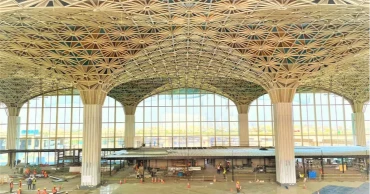
Soft opening of Dhaka airport’s 3rd terminal on Oct 7: CAAB Chief
Hazrat Shahjalal International Airport’s third terminal will have its soft opening on October 7. Prime Minister Sheikh Hasina will inaugurate the new terminal.
Air Vice Marshal Muhammad Mafidur Rahman, chairman of Civil Aviation Authority of Bangladesh (CAAB), said this during a press conference on Tuesday (August 08, 2023) noon at the under-construction third terminal.
Read: 12 boarding bridges will be operational when Dhaka Airport’s 3rd Terminal partially opens this Oct: CAAB
“We were informed yesterday (August 7) by the Prime Minister’s office (PMO) that the premier will inaugurate the third terminal at a soft opening on October 7,” the CAAB chief said.
However, he said, passengers will be able to fully use the third terminal by the end of 2024.
Read: Groundhandling contract for Terminal 3 will go to Japan: CAAB chairman
“We want to complete 90 percent of the third terminal project before October 7, and we are optimistic that the work will be finished ahead of schedule,” added the CAAB chairman.
3 years ago