Fashion show
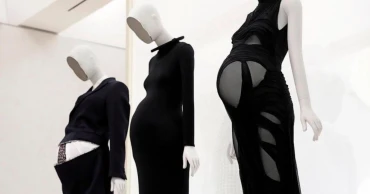
Met Gala fashion show aims to reclaim overlooked body types in art history
A new fashion exhibition opening alongside Monday’s Met Gala is aiming to challenge long-held ideas of beauty in art by spotlighting body types that have often been ignored.
The exhibit, titled “Costume Art,” begins with familiar classical ideals, including a glittering Dolce & Gabbana gown decorated with sequins and an image of the Greek goddess Aphrodite holding a golden apple, a symbol of traditional beauty standards rooted in ancient Greek art.
But curators say the goal is not to celebrate only that classical form. Instead, the show uses it as a starting point to question and expand how bodies are represented in art history.
Andrew Bolton, head curator at the Metropolitan Museum of Art’s Costume Institute, said the exhibition seeks to “reclaim the body” by bringing attention to forms that have long been overlooked or underrepresented.
Those include corpulent bodies, disabled bodies, pregnant bodies and aging bodies. The exhibition features around 400 items, many displayed on newly designed mannequins based on real people with diverse body shapes and conditions.
One section focused on aging includes a large grey hoodie with the phrase “I’M RETIRED. (This is as dressed up as I get.),” reflecting a more casual, humorous approach to aging and identity.
Bolton said the exhibition is the most body-inclusive show the museum has ever staged, and visitors attending the Met Gala will preview it before it opens to the public on May 10.
The show also marks the opening of new gallery space for the Costume Institute inside the museum’s main floor, near the Great Hall. The expansion was funded in part by the Met Gala, which raised a record $31 million last year. The new space will allow fashion exhibitions to run longer, with “Costume Art” scheduled to remain on view for eight months.
The exhibition pairs fashion pieces with artworks from different periods, arguing that fashion itself should be seen as art, and that art can also be understood through fashion. It begins with Grecian-inspired garments and classical imagery but gradually moves toward more diverse and modern interpretations of the human body.
One section focuses on pregnancy, featuring designs that highlight and celebrate the pregnant form. Among them is British designer Georgina Godley’s 1986 “Bump and Lump” dress, which emphasizes the shape of pregnancy. It is shown alongside a rare early 20th-century sculpture by Edgar Degas titled “Pregnant Woman,” depicting a nude figure holding her belly.
Another section explores larger body types and challenges stereotypes linking size with fertility or femininity. Designer Michaela Stark’s corsetry works are included, some of which are displayed on mannequins based on her own body. One piece titled “Fat Not Fertile” is paired with an ancient marble figurine of a similar body shape, highlighting changing perceptions of beauty and power.
Disability is also a central focus, with different displays highlighting physical, sensory and cognitive conditions. One mannequin inspired by Paralympian Aimee Mullins wears prosthetic-style boots designed by Alexander McQueen, paired with a 1965 sculpture titled “The Amputee.”
Irish disability activist Sinéad Burke is also represented through mannequins wearing adapted fashion pieces, including a Burberry trench coat and a Vivienne Westwood design. Another display features model and wheelchair user Aariana Rose Philip, presented in a seated pose wearing casual clothing with a slogan shirt.
The exhibition also addresses less visible conditions, including Alzheimer’s disease. A coat by designer Nadia Pinkney incorporates patterns inspired by brain scans of her relatives who lived with the condition. It is shown alongside artwork by Willem de Kooning, whose later work was affected by Alzheimer’s.
A final section explores themes of shared human experience such as aging and mortality. It includes pieces like a Vivienne Westwood jacket decorated with red beads symbolizing blood and injury, paired with historical religious artwork.
“Costume Art” will open to the public on May 10 and run through January 10, 2027.
5 months ago
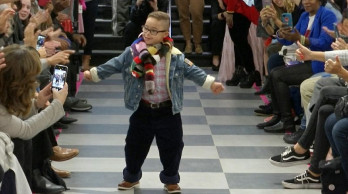
Fashion show lets Down syndrome models strut their stuff
New York, OCT 18 (AP/UNB) — One model sashayed down the runway with a leather jacket and a guitar, basking in applause from the crowd. Another danced and strutted in a multicolored bomber coat.
7 years ago