fast fashion
How Does Fashion Waste Contribute to Environmental Issues?
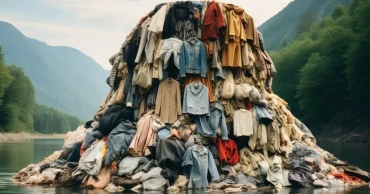
The fashion industry, which has always been praised for its productive and cultural contributions, has turned into one of the most environmentally damaging sectors in the world. Its impact stretches across natural resources and climates. From piling up in masses in landfills, polluting and clogging water, and making air unbreathable to destroying the balance in the earth’s resources and atmospheres, fashion waste is making life impossible on the planet.
What is Fashion Waste?
The term fashion waste refers to the useless materials naturally produced during the manufacturing of textile products and thrown away afterwards. It also includes worn-out clothes and other materials like wastewater, plastic waste, and toxic dyes discarded or discharged after their use.
Though the term fashion waste mostly highlights the wastage related to garments and fabrics, it has more branches. Any poisonous discharge of non-biodegradable waste that pollutes energy and natural elements like earth, water, and air during or after the manufacturing and use cycle of garment products falls under the definition of fashion waste.
Read more: How to Declutter Your Wardrobe to Donate Some Clothes
Key Environmental Impacts of Fashion Waste
.
Landfill Overflow
Much of the fashion waste is synthetic fibres such as polyester, nylon, and acrylic. These elements take about centuries to decompose and mix with soils or never decompose. There are many regions on the earth where miles after miles have been occupied by them. Massive piles of non-biodegradable materials are slowly eroding away, releasing poisons into the soil and air, making those regions unlivable. In 2018, the US single-handedly generated about 11.3 million tonnes of textile waste, about 66% of which ended up in landfills.
Water Clog and Pollution
Fashion waste contaminates water in two ways: chemically transforming its nature and clogging it with insoluble materials like plastic. Among chemical polluters, textile dyeing is the world's most common and second-largest water contaminant. Several rivers in Bangladesh and India, such as the Buriganga and Ganges, are carrying the mark of the devastating impact of textile waste.
Synthetic and plastic materials cause water clogs, impeding usual flow and preventing water from passing. They are the primary reason for clogged drains and sewerage. Synthetic clothes are also known to release microplastics into water during washing or when dumped in a water body. These microplastics are invisible, insoluble fibres that travel with river currents and fall into oceans, where they accumulate in large amounts and are consumed by marine life.
Read more: How to Choose the Best Fabric for Your Suit
Greenhouse Gas Emissions
Dumped clothing waste in landfills doesn’t only pile up and occupy spaces; during decomposition, it releases methane, one of the primary catalysts of the global greenhouse effect and about 25 times more potent than CO2.
Studies have found the fashion manufacturing industry to be highly energy-intensive. To manufacture a single shirt, about 2,700 litres of water are needed, and 2.1 kg of CO₂ is emitted. A pair of jeans produces 33.4 kg of CO₂ in their cotton cultivation and dyeing phases. At the current production acceleration rate in the fashion industry, the emission rate will increase by about 50% by 2030 without interference from regulatory bodies.
Resource Depletion
The fashion industry is one of the most resource-depleting sectors. For example, cotton covers around 2.5% of the world’s farmland and consumes about 24% of all insecticides and 11% of pesticides.
That’s a huge environmental cost for a single crop. Then there’s polyester, the most common fabric in today’s clothing, found in about 60% of garments. It’s made from crude oil, tying fast fashion directly to fossil fuel depletion.
Read more: Personal Grooming Tips and Tricks for Better Life and Career
The impact doesn’t stop at raw materials. The dyeing and finishing stages of textile production are some of the most chemically intensive and responsible for nearly 20% of global industrial water pollution. Around 43 million tonnes of chemicals are poured into the process each year.
1 year ago

Woke revolution: The latest fad in fashion!
Fashion has always been about fitting in. But the last two decades of the 21st century has witnessed a paradigm shift in the global fashion trends, the latest being "woke" -- a Gen Z and millennial term for being "awake" to the social and environmental issues.
Appearing Woke In Fashion
The views of these young shoppers are critical when it comes to social injustice, and most of them are more than willing to switch or shun brands based on their stance on contentious issues. This trend is increasingly forcing brands to integrate social and green themes into their products.
Read:Best Men's Wear Clothing Brands in Bangladesh
According to McKinsey & Company, an American management consulting firm, the rise of “woke” consumers was nine of 10 trends in the fashion industry in 2019.
They believe that the companies have a responsibility to address environmental and social issues. This category of consumers spends around $350 billion in the United States alone. Some 40 percent of the global consumers is Gen Z. Not only young consumers but also two-thirds of consumers worldwide are certain to evolve with their stance on greening. Half of them are activists and driven by passion while the other half is destined to make a decision based on a given situation.
Brands like Levi's and Nike have taken a clear stance on social issues in recent months. Nike is supporting Colin Kaepernick, the face of the NFL’s anthem protests, and Levi’s is leading a campaign against gun violence in the US. Gucci has also come forward to support a student-led march calling for more gun control in the US.
Read:How Do Sunglasses Protect Your Eyes?
Fast Retailing, the parent company of Japanese retailer Uniqlo, has been recruiting refugees since 2016. British retailer ASOS has launched an exclusive lingerie line in partnership with designer Katharine Hamnett. A fashion player, Balenciaga collaborated with World Food Programme.
Companies like Ben & Jerry’s, Danone, Patagonia, Allbirds, and Eileen Fisher have been certified for the impact of their decisions on people, society and the planet. From just seven in 2010, nearly 200 companies worldwide have risen up to woke as of April 2018. Some 40 percent of their products are made of recycled and sustainable materials.
Woke In Place Of Fast Fashion
Woke goes for companies that are aligned with values and social responsibilities. Rapid production is, in fact, now considered bad for the environment as it pollutes water, dissipates toxic chemicals.
With per annum 100 billion plus global textile production, environmental groups claim that if this trend continues, the environmental balance will be destroyed. As a result, the woke generation has become a conscious fashion movement against this fast trend. The influence of woke precisely gives importance to quality, ethics and sustainability over brief trends, cheap labour and wasteful manufacturing.
Read:How to buy men’s watches: A beginner’s guide
Summary
Developing greener themes into products in order to appeal to woke consumers can be risky for firms, but opportunities galore. The situation is likely to change soon, as stakeholders in the fashion industry currently tend to dominate the movement for environmental and social conscience. The number of consumers in other industries can be expected to rise to ensure the social commitment of global brands.
5 years ago

COVID-19: Bangladesh receives ventilators, PPE from H&M
Swedish company H&M has provided eight ventilators and 1500 Personal Protective Equipment (PPE) for Bangladesh to help address challenges of COVID-19.
6 years ago
