spy
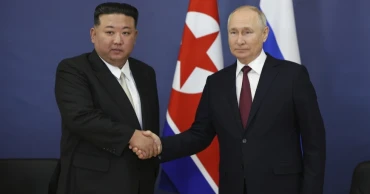
NKorean soldiers captured in Ukraine haven't shown desire to defect: Seoul spy
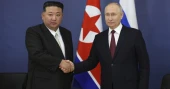
South Korea’s spy agency told lawmakers on Monday that two North Korean soldiers who were captured by Ukrainian forces while fighting alongside Russian forces in Russia’s Kursk border region haven’t expressed a desire to seek asylum in South Korea.
Ukrainian President Volodymyr Zelenskyy said on the social media platform X that he’s willing to hand over the soldiers to North Korea if the country’s authoritarian leader, Kim Jong Un, arranges for an exchange with Ukrainian prisoners of war in Russia. Zelenskyy added that “there may be other options” for North Korean soldiers who do not wish to return home, and a video released by his government indicated that at least one of the captured soldiers expressed a desire to remain in Ukraine.
In a closed-door briefing at South Korea’s National Assembly, the National Intelligence Service confirmed its participation in the questioning of the North Korean soldiers by Ukrainian authorities. The agency said the soldiers haven’t expressed a request to resettle in South Korea, according to two lawmakers who attended the meeting.
The agency said it was willing to discuss the matter with Ukrainian authorities if the soldiers eventually do ask to go to South Korea. About 34,000 North Koreans have defected to capitalist rival South Korea to avoid economic hardship and political suppression at home, mostly since the late 1990s.
Koo Byoungsam, spokesperson of South Korea’s Unification Ministry, which handles inter-Korean affairs, said facilitating the asylum of the North Korean soldiers would require “legal reviews, including on international law, and consultations with related nations.”
“There’s nothing we can say at the current stage,” Koo said.
Read: Ukraine claims to have captured 2 North Korean soldiers fighting for Russia
Seoul’s spy agency believes that about 300 North Korean soldiers have died and another 2,700 have been injured while fighting against Ukrainian forces, in what represents North Korea's first involvement in large-scale conflict since the 1950-53 Korean War.
The agency assessed that the North Koreans are struggling to adapt to drones and other elements of modern warfare. They are further disadvantaged by the crude tactics of their Russian commanders, who have thrown them in assault campaigns without providing rear-fire support, according to Lee Seong Kweun, a lawmaker who attended the agency’s briefing.
The agency said memos found on dead North Korean soldiers indicated that they had been ordered to commit suicide before being captured, according to Lee. The agency said one North Korean soldier, facing the threat of being captured by Ukrainian forces, shouted “General Kim Jong Un” and tried to detonate a hand grenade before he was shot and killed.
Zelenskyy confirmed the capture of the North Korean soldiers on Saturday, days after Ukraine, facing a slow Russian onslaught in the east, began pressing new attacks in Kursk to retain ground captured in a lightning incursion in August — the first occupation of Russian territory since World War II.
Moscow’s counterattack has left Ukrainian forces outstretched and demoralized, killing and wounding thousands and retaking more than 40% of the 984 square kilometers (380 square miles) of Kursk that Ukraine had seized.
Moon Seong Mook, a retired South Korean brigadier general, said the high death toll for North Korean soldiers was predictable, as they would not have been sufficiently prepared for an unfamiliar mission in the terrain of the Kursk region, which is vastly different from North Korea’s mountainous landscape.
Read more: North Korea tests hypersonic missile aimed at remote Pacific areas
Another disadvantage for the North Koreans is that they are not conducting independent operations but are being thrust into combat under Russian commanders, possibly struggling with unfamiliar tactics and communication issues due to language barriers, said Moon, who has taken part in numerous military talks with North Korea. The North Korean forces could be operating special surveillance teams to arrest or execute attempted deserters, he said.
“The current battlefield environment, combined with drones and other technologies, have created situations North Korean soldiers have never encountered before,” Moon said. “They are also being deployed in large numbers in wide-open fields, where there is no place to hide, in continuous battles to retake the area, and that seems to be where the casualties are coming from.”
North Korea’s decadeslong financial troubles, which have forced many soldiers to grow their own food or spend long hours deployed in construction and other work to sustain the national economy, could also have impacted the quality of training they receive at home, Moon said.
Still, there are concerns in Seoul that North Korea’s participation in the Ukraine crisis poses a significant threat to South Korea, as North Korean forces may gain crucial combat experience and Russia may provide technology transfers that could enhance North Korea’s nuclear-armed army.
1 year ago

Iran hangs former defense ministry official over spy claim
Iran said Saturday it had executed a dual Iranian-British national who once worked for its defense ministry, despite an international outcry over his death sentence and those of others held amid nationwide protests.
Iran’s Mizan news agency, associated with the country’s judiciary, announced Ali Reza Akbari’s hanging.
It did not say when it happened. However, there were rumors he had been executed days ago.
Iran had accused Akbari, without offering evidence, of being a spy for Britain’s MI-6 intelligence agency. It aired a highly edited video of Akbari discussing the allegations resembling others that activists have described as coerced confessions.
On Friday, State Department deputy spokesman Vedant Patel criticized Akbari’s pending execution.
“The charges against Ali Reza Akbari and his sentencing to execution were politically motivated. His execution would be unconscionable," he said. “We are greatly disturbed by the reports that Mr. Akbari was drugged, tortured while in custody, interrogated for thousands of hours, and forced to make false confessions.”
Read more: Iran executes 2 more men detained amid nationwide protests
He added: “More broadly, Iran’s practices of arbitrary and unjust detentions, forced confessions, and politically motivated executions are completely unacceptable and must end.”
Britain’s Foreign Office did not immediately respond to a request for comment.
Foreign Secretary James Cleverly had earlier called on Iran to stop the execution.
“The Iranian regime should be in no doubt,” he wrote Friday online. “We are watching the case of Ali Reza Akbari closely.”
Iran’s government for months has been trying to allege — without offering evidence — that foreign countries have fomented the unrest gripping the Islamic Republic since the death of a woman in September detained by the morality police. Protesters say they are angry over the collapse of the economy, heavy-handed policing and the entrenched power of the country’s Islamic clergy.
Iran is one of the world’s top executioners.
For several years, Iran has been locked in a shadow war with the United States and Israel, marked by covert attacks on its disputed nuclear program. The killing of Iran’s top nuclear scientist in 2020, which Iran blamed on Israel, indicated foreign intelligence services had made major inroads.
Akbari, who ran a private think tank, has not been seen in public since 2019, when he was apparently arrested. He also was close to Ali Shamkhani, a top security official in Iran, leading analysts to suggest his death sentence was tied to a possible power struggle within the country’s security apparatus amid the protests.
Akbari had previously led the implementation of a 1988 cease-fire between Iran and Iraq following their devastating eight-year war, working closely with U.N. observers.
Authorities have not released any details about his trial. Those accused of espionage and other crimes related to national security are usually tried behind closed doors, where rights groups say they do not choose their own lawyers and are not allowed to see evidence against them.
Read more: Iran execution: Man publicly hanged from crane amid protests
The anti-government protests, which have continued for nearly four months with no sign of ending, are one of the biggest challenges to the Islamic Republic since the 1979 revolution that brought it to power.
At least 520 protesters have been killed and more than 19,300 people have been arrested, according to Human Rights Activists in Iran, a group that has been monitoring the unrest. Iranian authorities have not provided official figures on deaths or arrests.
Iran has executed four people after convicting them of charges linked to the protests in similarly criticized trials, including attacks on security forces.
3 years ago

Indian border guards demand FIR against 'spy pigeon' from Pakistan
Strange it may appear, but India's border guards have demanded the registration of a police case against a pigeon suspected of being trained to "spy" by Pakistan.
Officials said the pigeon was caught by a Border Security Force (BSF) personnel in the northern Indian state of Punjab, which shares its border with Pakistan, after it found a comfortable perch on his shoulder on Saturday.
This was after the BSF trooper recovered a small piece of paper with a "contact number" that was attached to one of the pigeon's legs.
Senior Punjab Police officer Dhruv Dahiya told the media on Wednesday that they had received a complaint from the BSF personnel and sought legal opinion on his complaint before taking a call on the filing of a first information report (FIR).
Read BSF won't let BGB build mosque at 200-year-old site
“As the pigeon is a bird, I don’t think an FIR can be registered against it. But we have referred the matter to our legal experts. The number tagged on the pigeon’s leg is being analysed," he said.
This is not the first time that a pigeon flying from Pakistan has been caught by Indian authorities and labeled as a spy.
Last year too, a pigeon carrying a "coded message" was caught by villagers in Indian-controlled Kashmir and handed over to the local authorities. In October 2016 too, a pigeon was caught with a note threatening Indian Prime Minister Narendra Modi.
India and Pakistan are arch-rivals and have fought at least three major wars over the disputed region of Kashmir in the past 65 years.
Read China detains Japanese man, possibly on spying allegations
5 years ago
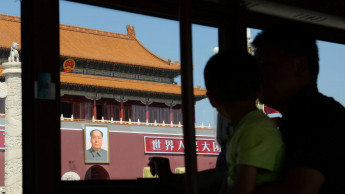
China detains Japanese man, possibly on spying allegations
Beijing, Oct 21 (AP/UNB) — Chinese authorities have detained a Japanese man, Japan's government said Monday, and news reports suggested he might be accused of spying.
7 years ago