power and energy sector
Bangladeshi universities urged to focus on power sector research
Bangladeshi universities have been urged to prioritise research to achieve self-sufficiency in the power and energy sector.
“We must ensure the optimal use of our natural resources to develop the power and energy sector,” said, Secondary and Higher Education Division Senior Secretary Siddique Zobayer on Thursday
.Energy cooperation provides mutual benefits not only to Bangladesh and Nepal but also entire South Asia: Ambassador
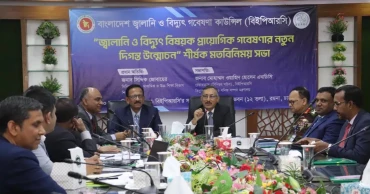
The secretary was speaking at the “BEPRC-Vice Chancellors Meeting on Identifying Areas of Applied Research in Energy and Power’, organised by the Bangladesh Energy and Power Research Council (BEPRC).
He stressed the importance of developing technology through research, innovating new technologies, and involving national and international researchers in the process.
Mohammad Wahid Hossain, chairman (Senior Secretary) of BEPRC, highlighted the Ministry of Power, Energy, and Mineral Resources’ efforts to ensure energy security. Established in 2015, the BEPRC aims to innovate and promote modern technology in the sector. He mentioned the council’s funding of relevant projects through local researchers to develop technologies suited to the sector.
BEPRC is focused on innovating and improving power and energy technologies, ensuring affordable and sustainable use of renewable energy, advising the government, and maintaining ties with regional and international research institutions. He noted that the council plays a key role in ensuring a sustainable energy and power supply, said Wahid.
An effective communication network has been created with a panel of distinguished scientists and experts who regularly engage in the council’s research activities. BEPRC also hosts technical seminars and workshops to encourage research at universities and institutions, he added.
BEPRC Member DrMd. Rafiqul Islam, delivered the welcome address.
2 top UAE companies plan to invest in port development, energy sectors in Bangladesh
Military and academic officials, including the Commandant of the Military Institute of Science and Technology (MIST), vice-chancellors and Pro-VCs from universities such as BUET, Dhaka University, Rajshahi University, and DUET were present at the time, among others.
1 year ago

Hasina govt took unplanned high-cost dev projects in power-energy sector: Adviser Fouzul
Power, Energy and Mineral Resources Adviser Muhammad Fouzul Kabir Khan has said that unplanned development projects were taken in the power and energy sector during Sheikh Hasina regime with implemention at a higher cost.
In an exclusive interview with UNB this week, Fouzul said during former prime minister Hasina’s tenure, the unplanned development projects with no value for money were often costlier than reasonable ones.
He said there was massive irregularities and corruption in the energy and power sectors during the previous government, causing huge financial losses.
The adviser, who also holds the road, transport and bridges ministry, criticised the approval of numerous unnecessary private power plants aimed at benefiting certain groups through nepotism, resulting in wasteful expenditure of public funds.
Painting a picture of the Hasina government’s irregularities and grafts , he said the current situation has been exacerbated by the government's practice of purchasing electricity at inflated prices, which has put financial strain on power companies and hindered the ability to pay suppliers in dollars for gas imports.
He acknowledged the difficulties in maintaining stable electricity tariffs, which have been raised repeatedly due to these challenges, ultimately harming consumers and leading to further waste of national resources.
To address the issues of corruption and irregularities, the government has decided to form an independent probe body led by a judge to identify the culprits and take action based on the committee's recommendations, he said, warning that no one would be spared.
The adviser emphasised efforts to address the ongoing energy crisis, saying that they have dismantled the existing rackets of irregularities and are restructuring power companies.
He shared that the development of Matarbari Power Plant project is interconnected with deep-sea ports, economic zones, railways, and road projects, and stressed the importance of implementing these additional projects to truly benefit from the power plant.
Measures taken after assuming office
On this, Fouzul mentione about the suspension of a special law from 2010, the cancellation of a controversial clause from the BERC Act, reduction in fuel prices and removal of chairmen from companies under the ministries.
He addressed the creation of specific guidelines to curb corruption in transfers and recruitment within the energy sector.
Loadshedding
The adviser said that power connections were given beyond the country’s capacity, leading to inevitable outages.
He assured that technical problems, such as those at Barapukuria power plant, have been swiftly addressed and steps are being taken to enhance gas import capabilities.
Irregularities and corruption in the power sector
Fouzul affirmed a zero-tolerance policy and encouraged public cooperation in reporting mismanagement.
He reiterated the commitment to open competition in project tenders, ensuring that no specific individual or group is favoured.
Initiatives regarding illegal gas connections
Fouzul expressed his plans to disconnect all unauthorised connections and hinted that investigations will reveal any corrupt officials involved.
He also said that no new gas connections will be issued, particularly in areas already served by gas lines.
Irregularities in the energy sector
The adviser admitted the existing irregularities in the sector and indicated that measures are being taken to address them, although legal complexities may require time. Plans are underway to review contracts with the assistance of a committee to be formed by a former judge.
He reaffirmed the government’s intention to restructure power companies and dismantle the existing framework of irregularities.
The adviser emphasised the importance of equal opportunities for all in Bangladesh, saying that despite the ongoing challenges, solutions are also being sought.
With initiatives to intensify gas exploration amid a pressing energy crisis, he announced plans for the drilling of 50 wells by 2025, with important collaboration from various firms.
He projected that gas shortages could be alleviated with these efforts and committed to maintaining strict timelines and budgets for all projects moving forward.
1 year ago

Grant financing deal of EUR 12mn signed to support power, energy sector
The French Development Agency (AFD) and the government of Bangladesh have signed a grant financing agreement of EUR 12 million or around Tk 1.24 billion to support advanced digital solutions in the power and energy sector in Bangladesh.
This agreement is part of a larger multi donor project involving the joint commitment of AFD and the European Union (EU), for a total investment of EUR 112 million.
Read:Bangladesh receives 2nd shipment of medical supplies from US
The project, called “Power Factor Improvement and Smart Grid under Dhaka Power Development Company (DPDC) Dhaka, Bangladesh” is the first ever smart grid project in Bangladesh and will be implemented over the next 5 years, said a media release.
EU Ambassador to Bangladesh Rensje Teerink said the European Union is committed to supporting Bangladesh in adopting advanced digital solutions in power distribution, in view of a sector decarbonisation, thanks to the joint effort with one of our Member States, France.
"This project is also relevant for the Team Europe Initiative on Green Energy Transition, which involves the EU, its Member States and like-minded partners. It aims at supporting Bangladesh in its transformative, low-carbon development, through an increased use of renewable energy and energy efficiency enhancement.”
Benoit Chassatte, AFD Country Director said for AFD in Bangladesh, 2020 was an opportunity to amplify existing commitments to modernize Dhaka’s power grid.
This is the first ever initiative in Bangladesh to equip the existing grid with reliable, cutting-edge new technology, allowing DPDC to optimize energy distribution without making an unnecessary additional heavy network capital investment.
Read:Formal announcement over vaccine coproduction soon: FM
"In addition, AFD has increased its commitment in the energy and power sector in Bangladesh by financing (EUR 151.56 million) in 2020 the Infrastructure Development Company Limited (IDCOL) and the Bangladesh Infrastructure Finance Fund Limited (BIFFL), both public financial institutions specializing in the financing of infrastructure and renewable energy projects, and the promotion of green initiatives.”
Through this project, 1,141,000 people will benefit from a significant improvement in the quality of electricity service.
It will also prevent an accumulated 104,000 tons of CO2 emissions per year, thereby contributing to Bangladesh’s climate goals.
With this project, AFD and the EU are reinforcing their role in supporting the Government of Bangladesh in the search for and use of advanced digital solutions in distribution stations and in medium-voltage grids.
The goal is to equip existing infrastructure with these new, innovative and reliable technologies in order to ensure services are prepared for the future.
Read:G7 must ensure vaccine access in developing countries: UN experts
A core aspect of Bangladesh’s economic development strategy is an improved performance of the power sector in terms of generation, transmission, and distribution.
The smart grid in Bangladesh is in its early stages, and merely consists of deploying smart meters.
5 years ago

Power, energy sector receives Tk 26,758 crore; slight decrease from outgoing fiscal
The country’s power and energy sector has received an allocation of Tk 26,758 crore in the proposed national budget for the fiscal year 2020-21 placed in the Jatiya Sangsad by Finance Ministry AHM Mustafa Kamal on Thursday.
6 years ago