Bangladesh Institute of Development Studies
Quality of democracy cannot improve without behavioural change: Planning Adviser
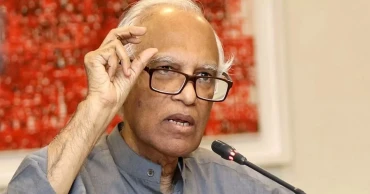
Planning Adviser Dr Wahiduddin Mahmud on Sunday (December 07, 2025) said democratic institutions alone cannot guarantee the quality of democracy unless political behaviour and political culture change.
“A parliament elected by people, a government accountable to that parliament, and independent watchdog institutions are all prerequisites.But the real test will always lie in political behaviour something that cannot change overnight,” he said an event at Bangladesh Institute of Development Studies (BIDS) in the capital.
Dr Wahiduddin said Bangladesh must prioritise an effective democratic transition, stronger accountability systems and a long-term roadmap for building a fair, discrimination-free society.
The Planning Adviser was addressing as the chief guest at the Annual BIDS Conference on Development 2025: Democracy and Development organized by the Bangladesh Institute of Development Studies (BIDS) held at the conference hall of the Parjatan Bhaban in the capital's Agargaon area.BIDS Director General Prof Dr AK Enamul Haque gave the opening remarks.
“The expectations today are modest — we are trying to secure the basic foundations of a representative democratic system. It is unfortunate, yet we must move forward with the hope that a stable and lasting framework for governance will emerge in new Bangladesh,” he said.
Read more: Misinformation big threat to democracy: Shafiqul Alam
Dr Wahiduddin said nearly five and a half decades after independence the nation is still striving to establish a ‘functional democratic arrangement, which should have been achieved long ago.
The Adviser highlighted the link between political patronage, youth unemployment and the spread of cadre-based politics, saying these interconnected problems cannot be solved by blaming politics alone.
“Poor-quality education, high dropout rates and youth joblessness are closely tied to why many young people choose political patronage as a livelihood,” he said.
On the economic front, he said democratic governance does not automatically ensure development unless accompanied by deep administrative reforms and an end to the informal networks of collusion between business and bureaucracy.
“Reforms through new rules and regulations may help but their success depends entirely on the behavioural environment — the incentives created, the culture of trust, and the social norms within which markets operate,” he said.
Read more: US-based IRI assessing environment ahead of Feb polls
He pointed to global experiences to argue that market liberalisation has produced widely different outcomes in different countries.
“In some East Asian economies, discipline, trust and strong internal accountability systems delivered sustained growth,” he said citing China and Vietnam’s reform experiences.
“Administrative accountability must be matched with a sense of responsibility.”
Turning to Bangladesh’s statistical system, he said greater transparency in data production is essential for evidence-based policymaking.
Digitalisation of BBS datasets would allow researchers and journalists to independently examine national statistics, ultimately improving their quality.
“But even then, political will remains crucial. If there is political demand for illicit gains, no regulation alone can prevent it,” he said.
Addressing the broader goal of creating a discrimination-free society, the Adviser said the debate naturally falls outside political consensus-building initiatives like the July Charter or the Consensus Commission.
“Questions of redistribution, social protection, market-state relations and reducing inequality are inherently ideological,” he said. “Parties must articulate these issues clearly in their manifestos.”
No country can prosper if it fails to ensure the minimum livelihood needs of all citizens and achieving this requires both an appropriate economic structure and genuine political commitment, said the adviser.
He said that three issues are very relevant at the present stage of the country after the July Revolution and these are transition to an effective representative democratic system, that democratic system will ensure economic development and third the quality of that development.
Read more: Tarique hails Australian MPs’ call for democracy, election integrity in Bangladesh
10 months ago

Evolving global order brings risks and opportunities for Bangladesh, economist Wahiduddin tells BIDS Conference
The evolving global order and changing geo-economic landscape present both challenges and opportunities for developing countries, as highlighted by renowned economist Wahiduddin Mahmud.
He shared his insights during a public lecture titled “Evolving Global Order and Geo-economics: Implications for Less Developed Countries” at the annual BIDS (Bangladesh Institute of Development Studies) conference in Dhaka.
Thailand keen on FTA with Bangladesh as soon as possible
The session, moderated by Policy Research Institute Chairman Zaidi Sattar, featured discussions with key figures including Selim Raihan, Executive Director of SANEM (South Asian Network on Economic Modelling), and Dr. Binayak Sen, Director General of BIDS.
Mahmud emphasized the significance of strong public support for governments to align political and foreign economic interests effectively. He pointed out that this support is crucial in tackling the exploitation of developing countries by multinational companies. He also noted the distinct nature of the current geopolitical tensions between superpowers, particularly the US and China, compared to the Cold War era.
High-level Saudi business delegation in Dhaka to explore investment opportunities here
Discussing the economic strategies of Vietnam and China, Mahmud illustrated how government involvement in privatized sectors can yield benefits.
Zaidi Sattar reflected on the shift from globalization to economic nationalism, observing that even advocates of globalization are adopting protectionist policies. This, he suggested, requires deep consideration by developing countries in crafting their economic strategies.
Selim Raihan commented on Bangladesh's historical non-involvement in geopolitics and its emerging role as a significant player amidst global power conflicts.
FBCCI will support steel industry to increase exports to Commonwealth nations
Overall, the discussions at the BIDS conference underscored the need for developing countries like Bangladesh to carefully navigate the new global order, balancing internal economic policies with external geopolitical pressures.
2 years ago

Dr Binayak Sen to take helm of BIDS
Dr Binayak Sen has been appointed as the director general of the Bangladesh Institute of Development Studies (BIDS), the state-backed development think-tank.
"I took over here officially today. I will serve the institution for the next three years," he told UNB.
He succeeds Khan Ahmed Sayeed Murshid.
Earlier, Dr Sen was a Research Director at the institution. He came from Bianibazar of Sylhet.
Also read: BIDS publishes ‘Readings in Bangladesh Development’
"I will try to speed up the activities of BIDS. I hope its reputation would spread across the globe in future," he also said.
Dr Binayak joined BIDS in 1986. He has worked with poverty, income disparity and human development for long.
He gathered a lot of experience to work in the labour market, social safety net, good governance and political economics etc.
Also read: 13pc people lost jobs due Covid-19 pandemic: BIDS
Around 70 research reports were published in local and international journals, according to him.
Dr Sen worked as senior economist at the World Bank's head office from 2004-2009.
He completed his MA in Economics from the Moscow State University and did PhD in Economics from the Institute of Oriental Studies of the Russian Academy of Sciences.
5 years ago

BIDS publishes ‘Readings in Bangladesh Development’
Bangladesh Institute of Development Studies (BIDS) commemorated Bangabandhu’s birth centenary by publishing two volumes of a “Readings in Bangladesh Development” on Wednesday.
5 years ago

Pandemic leaves 20,000 people jobless in Khulna city alone
The coronavirus outbreak has left around 20,000 workers in Khulna city without a job over the last four months and forced the closure of 20 percent business establishments.
6 years ago
.jpg)
13pc people lost jobs due Covid-19 pandemic: BIDS
About 13 percent people have become unemployed in the country due to Covid-19 pandemic, according to a survey of Bangladesh Institute of Development Studies (BIDS).
6 years ago