Chuadanga
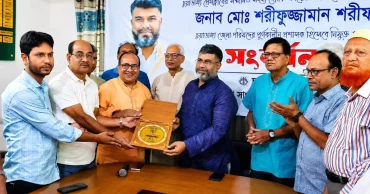
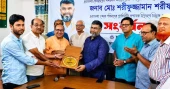
New Zila Parishad administrator seeks cooperation to build prosperous Chuadanga
Newly appointed Chuadanga Zila Parishad Administrator Md Sorifuzzaman has pledged to work with all stakeholders to accelerate development, improve public services and build a prosperous district through collective efforts.
He has also expressed his commitment to carrying out his responsibilities with sincerity, transparency and dedication.
Sorifuzzaman, general secretary of district BNP, made the remarks while addressing a reception accorded to him at the Chuadanga Press Club auditorium on Thursday.
He said necessary initiatives would be taken to ensure the district’s development, promote public welfare and address the legitimate demands of the journalist community.
Stressing the importance of good governance, administrator vowed to establish a corruption-free administration.
“The activities of the Zila Parishad will be carried out for the overall development of the district’s four upazilas, four municipalities, 43 unions and five police stations,” he said, adding that cooperation from all sections of society is required to achieve sustainable progress.
Among others, former principal of Chuadanga Government College Prof Siddiqur Rahman, Editor-in-Chief of the Daily Somoyer Somikoron Nazmul Haque Swapan, Editor and Publisher of the Daily Mathabhanga Sardar Alamin and Editor-in-Chief of the Daily Ajker Khaskhobor Rajib Hasan Kochi addressed the event.
4 months ago
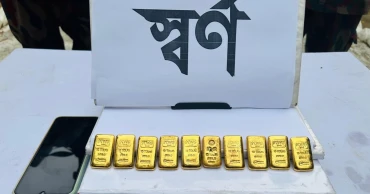
Smuggler held with gold bars worth Tk 2.48 crore in Chuadanga
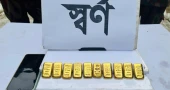
Border Guard Bangladesh (BGB) on Monday detained a suspected smuggler along with 10 gold bars worth approximately Tk 2.48 crore during an anti-smuggling drive in Chuadanga.
The detainee was identified as Alamgir Khan,55, son of the late Badal Khan of Mobarakpara in Darshana, Damurhuda upazila.
Tipped off, a BGB team conducted a dive at Darshana Railway Station in the morning after receiving information that gold was being smuggled to India, said Lieutenant Colonel Nazmul Hasan, commanding officer of Chuadanga-6 BGB.
Later, law enforcers intercepted a suspect who attempted to flee after being signaled to stop.
He was detained and a search led to the recovery of two packages wrapped around his waist with tape, containing 10 gold bars weighing 1.166 kgs.
A case was filed in this connection and the seized gold will be deposited with the Chuadanga Treasury Office, he added.
6 months ago

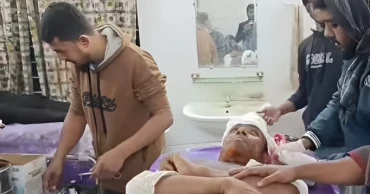
Jubo Dal leader stabbed in Chuadanga
A local leader of Jubo Dal, BNP’s youth wing, was stabbed allegedly by some Awami League supporters near a mosque at Iswarchandrapur village in Darshana upazila on Sunday night.
The injured is Ripon Hossain, 45, a leader of Darshana Municipality unit of Jubo Dal and son of late Mannan of Iswarchandrapur village of the municipality.
The victim’s family has accused several Awami League supporters in the area of carrying out the assault.
Locals rescued Ripon in a blood-soaked condition and first admitted him to Chuadanga Sadar Hospital.
As his condition deteriorated, he was taken to Rajshahi Medical College Hospital.
Mohammad Habibur Rahman Bullet, chief coordinator of Darshana BNP, strongly condemned the attack and demanded the immediate arrest and punishment of the accused.
BNP and its allied organisations staged a protest in Darsana town after Taraweeh prayers, calling for justice.
Ripon’s brother filed a case at Darshana Police Station on Sunday night.
The case cited prior enmity as the motive and identified the suspects as Awami League supporters.
BNP leaders and the victim’s family said political tensions escalated in the area centering the national election.
The accused, Awami League activists Hasem, 56, and Khairul Kamri, 45, supported candidates from Jamaat-e-Islami which earlier led to verbal disputes with Ripon.
The alleged attackers could not be reached for comment.
Dr. Sohran Hossain of Chuadanga Sadar Hospital, said Ripon suffered deep cuts in multiple parts of his body from sharp weapons.
After first aid, he was transferred to Rajshahi Medical College Hospital for specialised treatment.
Darshana Police Inspector (Investigation) Himel Rana said several police teams are conducting drives to arrest the accused.
Following the attack, tension has risen in the area and police have stepped up patrols to maintain law and order, he said.
7 months ago
6 injured as Jamaat-BNP supporters clash in Chuadanga over results
Supporters of Jamaat-e-Islami and BNP clashed over election results in Jagannathpur village of Kalidaspur Union of Alamdanga Upazila on Thursday evening, leaving at least six Jamaat workers injured.
The injured are Lutfar Rahman, 55, his son Abu Hasan, 23, Abu Bakkar Siddique, 60, Ikramul Haque, 45, Shamik, 21, Atiar Rahman, 50, and Shariful Islam, 48.
They have received primary treatment locally.
Jamaat leader held with cash near Chuadanga polling center
Locals said the confrontation began as a verbal argument between supporters of the two parties after the announcement of the election results. The dispute later escalated into a chase and physical clash.
Boni Israel, Officer-in-Charge of Alamdanga Police Station, said police quickly intervened to bring the situation under control. “The situation is currently normal. Legal action will be taken if a written complaint is lodged,” he added.
8 months ago
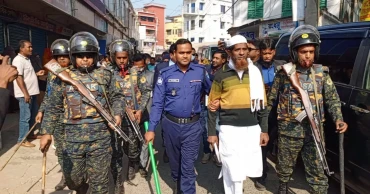
Jamaat leader held with cash near Chuadanga polling center
Police arrested a local leader of Jamaat-e-Islami along with Tk 79,000 in front of a polling centre over allegations of distributing money among voters in Sadar upazila of Chuadanga district on Thursday morning.
The arrestee is Sharif, 50, president of No-9 ward unit Jamaat-e-Islami and son of Azizur Rahman alias Aziz Master of Gulshan Para.
Mizanur Rahman, officer-in-charge of Sadar Police Station, said local people caught the Jamaat leader in front of Rizia Khatun Prabati Government Primary School polling centre while giving cash money to some voters.
Jamaat leader Belal Uddin hospitalised after arrest ‘with Tk 74 lakh’
Later, he was handed over to the local police station.
Police also recovered Tk 79,000 from his possession.
Presiding officer of the polling centre Abdus Sabur said, “I heard about the incident but it occurred outside my centre.”
The detainee is under police custody and efforts are on to take legal steps against him, said the OC.
Besides, police arrested Shahabuddin from Napitkhali polling station in Damurhuda upazila of the district for casting fake vote, said Tariqul Islam, Presiding officer of the polling station.
8 months ago
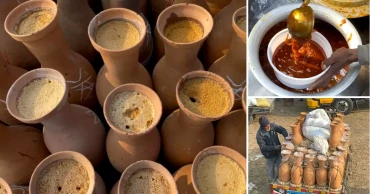
Chuadanga’s centuries-old molasses haat comes alive in winter
In the middle of winter, trading activity has surged at the historic Sarojganj date molasses market in Chuadanga, one of Bangladesh’s most renowned traditional haats for palm jaggery, with the aroma of freshly boiled sap filling the air.
Nearly 300 years old, Sarojganj Haat sits twice a week, on Mondays and Fridays, and during the peak season now records transactions worth more than Tk one crore weekly.
On each market day, sales range between Tk 1.5 crore and Tk 2 crore. If the current momentum continues, total transactions this season are expected to reach Tk 50–55 crore, according to local traders.
A visit to the haat presents a vibrant tableau of rural commerce. Earthen pots brimming with liquid jaggery line the stalls, while freshly made nolen patali are neatly stacked alongside newly produced molasses displayed in bamboo baskets and wooden frames. Buyers and sellers engage in animated bargaining, their calls echoing through the market.
Read more: A Sweet Legacy: Traditional molasses-making flourishes in Jhenaidah village
Renowned for its distinctive taste, rich colour and natural aroma, Sarojganj’s date molasses enjoys strong demand across the country.
Retail prices currently range from Tk 230 to Tk 350 per kilogram, depending on quality. Earthen pots weighing between 12 and 16 kilograms sell for Tk 1,800 to Tk 2,600, while different varieties of nolen patali fetch between Tk 300 and Tk 430.
Molasses collected from the haat is supplied to a wide network of districts, including Dhaka, Kushtia, Meherpur, Jhenaidah, Pabna, Rajshahi, Rangpur, Barishal, Sylhet, Khulna, Mymensingh, Magura, Rajbari and Panchagarh.
Sazzad Hossain, a molasses producer from Sarabaria village in Chuadanga Sadar upazila, said the jaggery is prepared using traditional methods passed down through generations.
“Sap collected from date palm trees is boiled in traditional ovens using tin strainers. When the sap thickens, it is stirred continuously to make molasses. We have been producing pure jaggery using this age-old method for generations,” he said.
On market days, sellers arrive with their produce by bicycle, van or even carrying heavy earthen pots on their heads. Buyers carefully examine the colour, thickness and overall quality before finalising their purchases.
Read more: Cold and fog bite into Narail’s honey season
Shahidul Islam, a trader from Pabna, said he returns to Sarojganj every year because of the product’s purity. “The price is a bit higher, but the quality is superior,” he said.
Date palm farmer Jamal Uddin from Baliakandi village in Chuadanga Sadar said he is collecting sap from 35 palm trees this season and expects to produce around 400 to 500 kilograms of molasses.
Local trader Ujjal Kumar Adhikari described Sarojganj Haat as one of the largest molasses markets in the country, operating continuously for nearly three centuries through generations of traders and producers.
Haat operator Md Alauddin Ala said traders from across Bangladesh, including Dhaka and Chattogram, regularly attend the market. “Each haat sees transactions worth Tk 1.5 crore to 2 crore, and we ensure the safety of both buyers and sellers,” he said.
According to the Department of Agricultural Extension (DAE) in Chuadanga, sap is being collected from around 2,72,000 date palm trees in the district this season, with a production target of 2,700 metric tonnes of molasses.
Read more: Severe cold throws normal life in Chuadanga out of gear
Deputy Director Md Masudur Rahman Sarkar said farmers are producing pure, sugar-free molasses and that regular monitoring is being conducted to prevent adulteration.
Locals said trading at the Sarojganj date molasses market will continue in full swing until Chaitra, promising yet another successful winter season for this historic marketplace that remains a symbol of Chuadanga’s rich agrarian heritage.
8 months ago
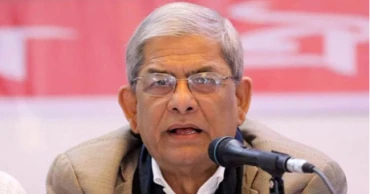
BNP seeks Army Chief’s intervention over Chuadanga BNP leader’s killing
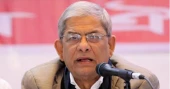
BNP Secretary General Mirza Fakhrul Islam Alamgir on Tuesday sought the intervention of the Army Chief over the alleged killing of Shamsuzzaman Dablu, general secretary of Jibannagar Municipal unit BNP in Chuadanga, by members of the security forces.
In a statement, Fakhrul said incidents involving killings by security personnel are not good for the country and weaken the rule of law.
“Some members of the security forces detained Shamsuzzaman Dablu last night (Monday night) in the name of recovering arms and subjected him to inhuman torture, which led to his death. I express my deep shock and sorrow over this inhuman and barbaric incident,” he said.
The BNP leader said the extrajudicial killing of Shamsuzzaman Dablu through torture is a gross violation of the country’s existing laws.
“The people expect that under the current interim government, anyone involved in a crime will be punished through judicial courts,” he said.
Fakhrul said detaining Chuadanga BNP leader Shamsuzzaman Dablu in the name of arms recovery and killing him through brutal torture can never be acceptable to the people of the country. “I am seeking the intervention of the Army Chief over such horrifying and tragic incidents,” he said.
The BNP leader strongly condemned and protested the incident and demanded an immediate and impartial investigation to ensure justice.
The BNP Secretary General prayed for the salvation of the departed soul and conveyed deep sympathy to the bereaved family members.
The death of a local BNP leader in army custody has sent shockwaves through Jibannagar in Chuadanga, raising questions about the circumstances surrounding his sudden death and triggering protests across the town.
All troops withdrawn after Chuadanga BNP leader’s death in custody
Shamsuzzaman Dablu, 50, general secretary of Chuadanga Poura BNP and a resident of Hospitalpara, died around midnight on Monday after being taken into custody during an army operation near the Jibannagar Upazila Health Complex.
Family members and BNP leaders alleged that Dablu died as a result of torture, a claim that has further fuelled anger in the area.
9 months ago

All troops withdrawn after Chuadanga BNP leader’s death in custody
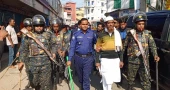
All army personnel involved in the operation have been withdrawn following the death of a BNP leader in army custody in Jibannagar upazila of Chuadanga district, the Inter-Services Public Relations (ISPR) said on Tuesday.
A high-level investigation committee has been formed to determine the actual cause of the incident and to take appropriate action, according to an ISPR press release.
Based on intelligence information, a special joint-force operation was conducted in Jibannagar upazila around 11pm on Monday, the ISPR said.
During the operation, Shamsuzzaman Dablu, 50, was arrested from a pharmacy adjacent to the Jibannagar Upazila Health Complex on suspicion of possessing illegal weapons.
The joint force searched the pharmacy and recovered one 9mm pistol, one magazine and four rounds of ammunition, the release said.
Read more: BNP seeks Army Chief’s intervention over Chuadanga BNP leader’s killing
At one stage, Dablu suddenly fell ill and became unconscious. He was immediately taken to the Jibannagar Upazila Health Complex, where the on-duty doctor declared him dead at around 12:25am.
Describing the incident as “regrettable and unacceptable”, the ISPR said all military personnel involved in the operation, including the camp commander, have been withdrawn. Legal action will be taken against those found guilty in accordance with military law, it added.
UNB Chuadanga Correspondent reports: The death of a local BNP leader in army custody has triggered widespread tension in Jibannagar, raising questions over the circumstances of his death and sparking protests across the town.
Shamsuzzaman Dablu, general secretary of Chuadanga municipality unit BNP and a resident of Hospitalpara, died around midnight after being taken into custody during the army operation near the upazila health complex.
According to local sources, Dablu was at a medicine shop when army personnel approached him at around 10:30pm. He died within two hours of being detained.
Family members and BNP leaders alleged that Dablu died due to torture while in custody, fuelling anger in the area.
“My brother has been murdered,” said Shariful Islam Kajol, Dablu’s brother.
Mahmud Hasan Khan, president of Chuadanga district BNP and candidate for Chuadanga-2, alleged that BNP leaders and activists were being tortured under the guise of operations. “The torture was so severe that Shamsuzzaman could not survive,” he said.
BNP leader’s death in custody sparks shock in Chuadanga
Chuadanga Superintendent of Police Mohammad Monirul Islam said Dablu was taken to the hospital after falling ill, where doctors declared him dead. “Lieutenant Colonel Imran of the army informed us of the incident,” he said.
A postmortem examination was conducted on Tuesday morning at the site by Jibannagar Upazila Executive Officer Md Al Amin in the presence of police.
Meanwhile, BNP leaders and activists continued protests in front of the Jibannagar Upazila Health Complex. Additional police have been deployed in the area to prevent any untoward situation.
9 months ago

BNP leader’s death in custody sparks shock in Chuadanga
The death of a local BNP leader in army custody has sent shockwaves through Jibannagar, Chuadanga, raising questions about the circumstances surrounding his sudden demise and prompting protests across the town.
Shamsuzzaman Dablu, 50, general secretary of Chuadanga pouro BNP and a resident of Hospitalpara, died around midnight on Monday (January 12, 2026) after being taken into custody during an army operation near Jibannagar Upazila Health Complex.
According to reports, Dablu was at a medicine shop when army personnel approached him at around 10:30 pm. Within two hours of being taken, he had died.
Family members and BNP leaders allege that Dablu’s death was the result of torture, a claim that has intensified anger in the area.
Read more: Mirza Abbas alleges plot to destabilise country, vows not to fall into trap
“My brother has been murdered,” said Shariful Islam Kajol, Dablu’s brother.
Mahmud Hasan Khan, president of Chuadanga district BNP and candidate for Chuadanga-2, said, “BNP leaders and activists are being tortured under the pretext of operations. The intensity of the torture was so severe that Shamsuzzaman could not survive.”
The army, however, maintains that Dablu fell ill suddenly during questioning and died of a stroke.
A foreign pistol and four rounds of ammunition were reportedly recovered from him during the operation, which the army described as part of a routine effort to recover arms.
Chuadanga district Superintendent of Police Mohammad Monirul Islam said that Dablu was taken to the hospital after falling ill, where doctors declared him dead. “Lieutenant Colonel Imran of the army informed us of the details of the incident,” he said.
The postmortem was conducted on Tuesday morning (January 13, 2026) at the site by Jibannagar Upazila Executive Officer Md Al Amin, in the presence of police.
Read more: BNP gears up in Sylhet as Tarique Rahman set to launch election campaign
Meanwhile, protests by BNP leaders and activists continued in front of the Upazila Health Complex, prompting the deployment of additional police to maintain order.
9 months ago

Unidentified man found dead in Chuadanga
Police recovered the body of an unidentified man from a corn field at Kayetpara in Alamdanga Upazila of Chuadanga district on Thursday.
Local people first spotted the body of the man, aged about 38–40, wearing trousers and a navy-blue jacket, in the field around 9 am and informed police, who recovered the body.
Police suspected that the man might have been strangled by miscreants elsewhere and then dumped in the field.
Read More: Two motorcyclists killed as pickup van hits them on Alamdanga-Kushtia Road
However, the exact cause of death will be determined after the post-mortem report.
Bani Israil, Officer-in-Charge of Alamdanga Police Station, said the body was sent to Chuadanga Sadar Hospital morgue for autopsy.
9 months ago