Least Developed Country

Bangladesh’s LDC graduation debate intensifies amid ‘economic risks’
Bangladesh’s scheduled graduation from Least Developed Country (LDC) status in 2026 faces growing uncertainty, with experts warning that deep structural weaknesses and an inadequate transition strategy pose serious risks to the economy.
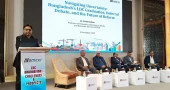
The remarks were made at a seminar on ‘LDC Graduation: Challenges & Prospects’ held on Sunday (9th November 2025) at a city hotel, organised by the Bangladesh-Malaysia Chamber of Commerce and Industry (BMCCI).
Senior policymakers, economists, and industry leaders to discuss strategic imperatives for the post-LDC transition, including trade competitiveness, institutional readiness, and inclusive development joined the seminar.
Commerce Secretary Mahbubur Rahman attended it as the guest of honour, while Professor Dr Selim Raihan, Executive Director of SANEM, delivered the keynote presentation. Economist Dr Zaidi Sattar, Chairman of the Policy Research Institute (PRI), chaired the seminar.
Read more: Tarique for urgent steps to tackle post-LDC graduation challenges
Other speakers included Dr Khondaker Golam Moazzem, Research Director at the Centre for Policy Dialogue (CPD); Dr A Razzaque, Chairman of Research and Policy Integration for Development (RAPID); Anwar-Ul-Alam Chowdhury (Parvez), President of the Bangladesh Chamber of Industries (BCI); and Faruque Hassan, former President of the Bangladesh Garment Manufacturers and Exporters Association (BGMEA).
Commerce Secretary Mahbubur Rahman said, “We request the United Nations General Assembly (UNGA) to visit Bangladesh to assess the latest situation ahead of the potential graduation. In addition to the EU and the USA, the government is in talks with Canada, Australia, Japan, South Korea, and other countries to boost bilateral trade and diversify export destinations.”
Dr Raihan highlighted that Bangladesh’s readiness for LDC graduation is under scrutiny amid global economic volatility and concerns over losing LDC-specific international support measures.
“The core risk lies in the trade sector, given Bangladesh’s heavy reliance on Ready-Made Garment (RMG) exports and duty-free, quota-free (DFQF) market access. The erosion of these trade privileges could cost the country billions in lost earnings and place additional pressure on foreign reserves,” he said.
Read more: Encouraged to see advanced preparation in Bangladesh for post-LDC graduation era: ADB Vice President
He pointed to persistent domestic structural challenges, including macroeconomic stress from low foreign reserves, fiscal gaps, high inflation, and global volatility; structural flaws such as weak tax collection, a fragile banking sector, high export concentration, and limited foreign direct investment (FDI); and reform deficits driven by entrenched ‘rent-seeking networks’ among political, business, and bureaucratic elites that continue to obstruct meaningful policy change
Dr Raihan also critiqued the government’s Smooth Transition Strategy (STS), describing it as ‘overly broad’ with an ‘overextended vision’ that risks becoming an unenforced policy document.
While the private sector advocates for a three-year deferral to gain ‘critical breathing space’ for compliance and to fast-track stalled reforms, securing a delay would be diplomatically challenging.
The UN Committee for Development Policy (CDP) requires evidence of ‘unforeseen and unmanageable’ shocks—not merely delayed reforms or poor preparedness—to grant a deferral. Experts also caution that seeking a delay could signal economic weakness, undermine investor confidence, and entrench complacency rather than promote essential reforms.
Dr Raihan concluded, “The real question is not timing but political will. Any deferral request must be transparent, evidence-based, and paired with a credible, time-bound reform agenda to ensure post-LDC resilience, rather than serving as a retreat.”
Read more: Munshiganj contingent of Advisory Council joins district-level consultation on LDC graduation
11 months ago
Bangladesh must act decisively to secure its economic future: Roundtable
Speakers at a roundtable have said Bangladesh must act decisively to secure its economic future as the global economic landscape becomes more complex and multipolar.
At the dialogue, concerns were raised about the drop in Foreign Direct Investment (FDI), the country’s preparedness for LDC graduation, and the role of foreign relations in boosting productivity.
The speakers also discussed the impact of a floating exchange rate for the US dollar, the need for scientific research into natural resources and the cost implications of relying on imported raw materials like US cotton.
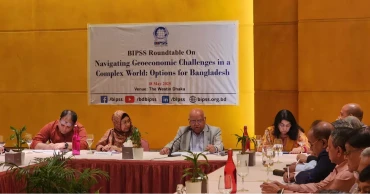
The Bangladesh Institute of Peace and Security Studies (BIPSS) organised the roundtable on Sunday titled ‘Navigating Geoeconomic Challenges in a Complex Multipolar World: Options for Bangladesh’.
The event brought together a distinguished group of panelists, diplomats, academics, journalists and policy experts to assess the rapidly evolving global economic landscape and its implications for Bangladesh’s geoeconomic security and strategic positioning.
Weekly Review: Dhaka Stock Market sees gains despite sluggish stocks
BIPSS President Major General (retd) Muniruzzaman moderated the event and opened the discussion by outlining the global shifts underway, including increasing trade disruptions, realignment of international systems and emerging economic frameworks such as safe-shoring and friend-shoring.
Centre for Policy Dialogue (CPD) Executive Director Dr Fahmida Khatun has said Bangladesh should reduce its dependency on aid and move toward a trade-based growth strategy.
With the country set to graduate from its Least Developed Country (LDC) status, she emphasised the need for a robust tariff and trade negotiation framework to preserve market access and maintain competitiveness.
Speaking at the roundtable, Dr Fahmida also pointed to the failure of multilateral economic agreements in recent years and suggested exploring regional platforms like the Regional Comprehensive Economic Partnership (RCEP) to secure more beneficial trade arrangements.
She focused on the shifting trade environment and the increasing use of tariffs by major powers, especially the United States.
Muniruzzaman emphasized that Bangladesh must respond to these changes by improving its supply chain resilience, ensuring energy security, investing in digital development and preparing for the evolving international order.
He noted that the country's limited economic diversification and exposure to global volatility make such strategic adjustments urgent.
Research Director, Bangladesh Institute Development Studies Dr Anwara Begum followed with a comprehensive overview of the role of international financial institutions and the emerging alternatives such as BRICS, the Belt and Road Initiative (BRI), and the Asian Infrastructure Investment Bank (AIIB).
She noted that Bangladesh faces increased difficulty accessing affordable loans due to shifting donor priorities and rising global interest rates.
Dr Anwara stressed the importance of attracting foreign direct investment (FDI) over aid and outlined the potential of Bangladesh’s Blue Economy.
She, however, highlighted critical gaps in infrastructure, such as vessel readiness and aquaponic capabilities, which need urgent attention. She also raised concerns about forced migration caused by climate change and emphasised the need for inclusive policies and oversight mechanisms to ensure effective implementation.
Assistant Professor, Department of Economics, East West University Parvez Karim Abbasi drew attention to Bangladesh’s vulnerability to external regulations imposed by international financial bodies.
He argued that while the digital economy has been widely discussed, implementation remains weak, as highlighted by past financial security breaches.
Abbasi identified three pressing issues for Bangladesh: the emerging realignments in the Middle East and its implications, the global race for rare earth elements, where Bangladesh holds untapped potential, and the risk of future ‘water wars’ amid regional tensions.
He underscored the need for a stable political environment to attract FDI and called for the strategic handling of Bangladesh’s natural resources to avoid exploitation.
Abbasi reiterated that economic policy must be consistent and depoliticised, warning that ad hoc shifts with every new administration weaken investor confidence.
Without research and strategic planning, he said, Bangladesh cannot effectively diversify its economy.
Dr Anwara Begum called for increased focus on sustainable development and green financing, while also urging the government to curb labor exploitation in overseas employment sectors through stronger regulation.
Dr Fahmida provided insights into recent changes in the exchange rate regime and clarified common misconceptions about U.S. tariffs on Bangladeshi exports.
Surge in remittance: $1.94 billion sent through legal channels till Oct 26
She also discussed the conditions attached to recent IMF loans and highlighted the importance of macroeconomic stability and compliance with international standards on labor and environmental rights as Bangladesh approaches LDC graduation.
Muniruzzaman emphasised that Bangladesh must adopt a forward-looking, proactive approach to remain competitive in the shifting global order.
He stressed the need for a clear economic vision, institutional reforms, and consistent diplomacy to attract investment and strengthen resilience against external shocks.
1 year ago
Graduation: Bangladesh remains confident; Dr Yunus orders precautionary measures
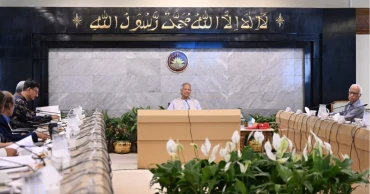
Chief Adviser Prof Muhammad Yunus on Tuesday directed the officials concerned to take necessary precautionary measures to keep Bangladesh's every sector unaffected and ensure maximum benefits as the country remains confident to smoothly graduate from the LDC status.
"We have already taken the decision….we have to move at full speed," Chief Adviser's Press Secretary Shafiqul Alam quoted Dr Yunus as saying in a meeting with the experts that lasted for nearly two hours.
The Chief Adviser at the high-powered experts committee’s meeting on LDC graduation also laid emphasis on constant monitoring by a dedicated team so that no turbulence is seen in this journey.
Briefing reporters at the Foreign Service Academy after the meeting, Special Assistant to the Chief Adviser Dr Anisuzzaman Chowdhury said they have discussed all the issues and listed the precautionary measures.
"We must have the conference," he said, citing examples of how other relatively weaker countries successfully graduated.
He said they are confident that there will be no problems but there will be precautionary measures.
Chowdhury said they are working on having a separate strong trade negotiating body as there is no such trade agency.
With pro-Bangladesh foreign policy, Dhaka wants improved ties with S Asia family
Responding to a question, he said they are continuing their economic diplomacy and in economic diplomacy all things cannot be shared, noting that there are always challenges and opportunities.
Chowdhury said the graduation process should be seen positively instead of thinking of stepping back.
Chief of the high-powered experts committee Chowdhury made a presentation at the meeting followed by two hours of very intensive discussion, said the Press Secretary.
Prof Yunus mentioned that Bangladesh would be a manufacturing and economic hub in the region, and discussed how it could be made this hub in a better way after the graduation from LDC status.
Finance Adviser Dr Salehuddin Ahmed, Planning Adviser Dr Wahiduddin Mahmud, Foreign Affairs Md Touhid Hossain, Commerce Secretary Sk Bashir Uddin, Education Adviser CR Abrar, Environment, Forests and Climate Change Adviser Syeda Rizwana Hasan, Industries Adviser Adilur Rahman Khan, Special Envoy on International Affairs to the Chief Adviser Lutfey Siddiqi, Executive Chairman of the Bangladesh Investment Development Authority (BIDA) and the Bangladesh Economic Zones Authority (BEZA) Chowdhury Ashik Mahmud Bin Harun and Bangladesh Bank Governor Ahsan H Mansur were, among others, present at the meeting, he said.
Chief Adviser’s Deputy Press Secretary Abul Kalam Azad Majumder was also present at the media briefing.
Bangladesh is scheduled to graduate from the Least Developed Country (LDC) category to a developing nation in November 2026.
After the graduation, Bangladesh will become ineligible for almost all trade benefits, such as zero duty access, and strictly abide by the Trade Related Aspects of Intellectual Property Rights (TRIPs).
Bangladesh will, however, continue to enjoy duty-free market access for three more years after its graduation to a developing nation in 2026.
The extension was endorsed by 166 members of the World Trade Organisation (WTO) at its Ministerial Conference held in Abu Dhabi a year ago.
1 year ago
Securing new economic partnerships, sustaining growth trajectory top priorities: FS
Foreign Secretary Md Jashim Uddin has said securing new economic partnerships and sustaining Bangladesh’s growth trajectory are now the top priorities of the government as Bangladesh is set to graduate from the Least Developed Country (LDC) category in 2026.
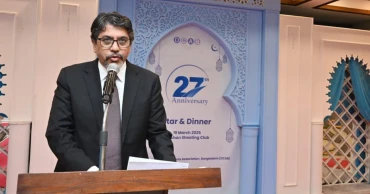
“In 2026, Bangladesh is set to graduate from the Least Developed Country (LDC) category. This transition marks a milestone in our economic and diplomatic journey,” he said while speaking at an iftar-dinner event on Wednesday evening.
The Foreign Secretary said diplomatic efforts are crucial for attracting international investments, enhancing multilateral cooperation and building strategic partnerships with developed nations.
Army chief meets CA, briefs him on country’s security situation
1 year ago

LDC graduation: High-level committee starts working over possible challenges
A high-level committee has started working out strategy and plan to overcome the possible challenges of Bangladesh’s graduation from the status of a least developed country (LDC).
Prime Minister Sheikh Hasina on April 26 last formed the 22-member committee, headed by Principal Secretary Dr Ahmad Kaikaus, for preparation, planning, implementation and monitoring in tackling the possible challenges of Bangladesh’s LDC graduation.
The committee sat in its first meeting virtually on Wednesday. Dr Ahmad Kaikaus presided over the meeting, joining it from the Prime Minister’s Office.
The meeting discussed different possible negative impacts on the country’s economy, socioeconomic and other areas, especially in the export oriented sectors like RMG and pharmaceuticals during the post-graduation period.
Also read: Bangladesh’s LDC graduation: Govt has its plan to face next challenges
Economic Relations Divisions (ERD) Secretary Fatima Yasmin made a power-pint presentation in the meeting.
The committee decided to sort out the possible challenges in different sectors within a month. To this end, a six-member subcommittee was formed under senior secretary of Commerce Ministry Dr Md Jafar Uddin.
“The subcommittee was asked to identify the sector-wise challenges and prepare an action plan within one month,” PMO Secretary Md Tofazzel Hossain Miah told reporters after the meeting.
Noting that Bangladesh would lose different international supports during the post-graduation period, he said duty free and quota free access and concessional loan facilities from bilateral or multilateral sources for Bangladesh would be narrowed for Bangladesh following the graduation.
Also read: Work together to tackle negative impacts after LDC graduation: Speakers
Besides, the issue of intellectual property rights would shrink any time after 2033, he said.
In the meeting, the committee also took the decision to arrange a large-scale seminar with experts of different sectors and academicians as early as possible to receive their views and opinions over the post-LDC challenges.
The committee will sit in a meeting every month regularly.
The committee members are Principal coordinator (SDGs Affairs) at the PMO (Zuena Aziz), senior secretary of ICT Division, Senior secretary of Finance Division, NBR chairman, the member (GED) of the Planning Commission, Senior secretary of Commerce Ministry, PMO secretary, ERD secretary, foreign secretary, industries secretary, agriculture secretary, environment secretary, BIDA executive chairman, chairman of Bangladesh Trade and Tariff Commission, liberation war affairs secretary, Planning Commission’s member Sharifa Khan, FBCCI president, BGMEA president, DCCI president, Bangladesh Association of Pharmaceutical Industries (BAPI) president, director general (Executive Cell and PEPZ) at PMO (member secretary of the committee) joined the meeting.
Also read: Swedish development cooperation to continue past LDC graduation
Bangladesh has started its LDC graduation journey with the initiative of Prime Minister Sheikh Hasina. She participated in the 4th LDC related summit of the United Nations held on May 9-13, 2011, where “Istanbul Plan of Action” was adopted.
Since then, Prime Minister Sheikh Hasina took the action plan for the LDC graduation of Bangladesh, and she has been giving directives to this end constantly, said the PMO Secretary.
5 years ago

Netherlands for accommodating climate to boost trade, investment with Bangladesh
Netherlands has put emphasis on an accommodating business climate for foreign investment and trade, as well as adherence to global labour and environmental standards, to attract more foreign investment and business to Bangladesh.
The Bangladesh side underscored the need for promoting responsible business conduct in the global supply chain and for continued international support measures after its graduation from the Least Developed Country (LDC) status.
Bangladesh and the Netherlands held the Foreign Office Consultations on Thursday virtually and discussed the issues.
Both countries shared their concerns about recent developments in Myanmar, including the serious challenges these developments pose for the safe, sustainable, dignified and voluntary return of the Rohingyas to their homeland.
Also read: Dutch investors urged to invest in Bangladesh’s aquaculture sector for growth, diversification
The two countries also reiterated their continued commitment to justice and accountability for the human rights violations committed in Myanmar.
The Bangladesh delegation was led by Foreign Secretary (Senior Secretary) Ambassador Masud Bin Momen while the Netherlands delegation was led by the Secretary-General of the Dutch Ministry of Foreign Affairs Paul Huijts.
The fourth round of Foreign Office Consultations took place amid Bangladesh’s Golden Jubilee and Father of the Nation Bangabandhu Sheikh Mujibur Rahman’s birth centenary celebrations, and the upcoming 50th anniversary of the establishment of diplomatic ties between the two countries.
The Netherlands and Bangladesh have maintained an enduring friendship over the course of those 50 years, marked by a significant Dutch role in Bangladesh’s early infrastructural development and water management and food security efforts, now considered key successes for both countries.
Also read: Dutch NGOs reiterate support to Bangladesh
Both delegation leaders acknowledged the impact COVID-19 has had on their societies and shared their views on post-COVID-19 economic recovery to ‘build back better’.
They noted the strong ties between the two countries over the past 50 years and elaborated on political and economic developments as well as the evolving nature of the bilateral relationship, with a shift from development cooperation to economic cooperation. Both sides agreed to continue exchanging views on human rights and rule of law, including in multilateral fora.
The delegations held an in-depth discussion on how to further strengthen the economic ties and knowledge exchange in a wide variety of areas, including water management, agriculture, digitalisation and climate adaptation.
The Bangladesh Delta Plan 2100 was specifically discussed as a key vehicle for integrating cooperation on water management and food security.
Also read: Swedish, Dutch envoys for maintaining focus on Rohingya crisis until their repatriation
The two delegation leaders discussed developments in the region, including the current focus on increasing cooperation and connectivity between the EU and the Indo-Pacific region.
The Netherlands expressed its gratitude for Bangladesh’s hospitality towards the Rohingya people and noted ongoing discussions on humanitarian issues between the international donor community and Bangladesh.
The Foreign Office Consultations underlined the willingness of both countries to explore and take up opportunities to further deepen and diversify the bilateral ties.
5 years ago

Don’t allow development and democratic progress to be disrupted: PM
Prime Minister Sheikh Hasina on Thursday urged people to take a vow afresh not to allow anyone to hinder Bangladesh’s democratic and development progress by playing ducks and drakes with their fate.
“On this auspicious occasion of the Golden Jubilee of Independence, we’ve to vow afresh that no one can play ducks and drakes with the fate of the people of Bangladesh. No one can hinder the country’s democratic and development progress,” she said.
The Prime Minister was addressing the nation on the eve of Independence Day 2021.
State-owned Bangladesh Television and Bangladesh Betar simultaneously broadcast the Prime Minister’s speech at 7:30 pm on Thursday. Private television channels and radio stations also aired the speech.
The Prime Minister called upon people to work for building Bangladesh as a developed, prosperous and non-communal Sonar Bangla (Golden Bengal) as dreamt by the Father of the Nation.
“Let’s build Bangladesh as a developed, prosperous and non-communal Sonar Bangla by forgetting all the differences and being imbued with the spirit of the Liberation War,” she said.
Noting that the celebration of the Golden Jubilee of Independence just should not be a formality, she said, “On the occasion of the birth centenary of the Father of the Nation and the Golden Jubilee of Independence, we’ve to take vow afresh to take our country to a new height.”
Also read: Make a vow to implement Bangabandhu’s dreams: PM
Sheikh Hasina said Bangladesh has achieved an unimaginable success in the socio-economic index as a result of her government’s tireless works over the past 12 years.
Last month, she said, Bangladesh received the final recommendation to graduate from the least developed country (LDC) group.
“Bangladesh has not only surpassed its neighbours in various indexes like life expectancy, gender equality, universal primary education, women education, women's political rights, women and child mortality, sanitation and food availability, but also exceeded many developed countries in many cases,” she said.
But the path of this development has not been smooth at all as the anti-liberation forces inside and outside the country carried out various ill-motivated activities to hinder the progress of Bangladesh. “This process still continues. So, we all will have to resist all the anti-state attempts by playing the role of vigilant watchdogs.”
Sheikh Hasina said passing half a century of independence is a significant milestone for the life of a nation.
“For us, this Golden Jubilee celebration has become more colorful as Bangladesh Awami League, forming the government, started running the government with the ideology of Liberation War. Today, Bangladesh has stood raising its head in the world as a proud country proving all the negative and pessimistic predictions against Bangladesh wrong, she said.
Even a decade ago, Sheikh Hasina said, Bangladesh was presented as an example of poverty. “But today development experts are presenting Bangladesh as a role model for poverty alleviation and development.”
Also read: Develop the habit of reading: PM Hasina
Presenting the current picture of several socio-economic indicators compared to the 2005-06 fiscal year, she said the per capita income increased to US$ 2,064 now from just US$ 543, while the poverty rate dropped to 20.5 percent from 41.5 percent, the GDP size rose to Tk 2800,000 crore from only Tk 482,337 crore, and the foreign currency reserve to US$ 44 billion from only US$ 0.744 billion during the period.
She said the budget size has increased to Tk 568,000 crore in the current fiscal year from only Tk 61,000 crore in 2005-06 fiscal year, while the average life expectancy to 72.6 years in 2019-20 fiscal from 59 years in 2005-06 fiscal, the infant mortality rate has come down to 28 from 84 per thousand, the maternal mortality rate to 165 from 370 per lakh and the power generation capacity has increased to 24,421 megawatt from 4,900 megawatt. “Today's achievement is, in fact, the achievement of the common people of this country,” she added.
She said Father of the Nation Bangabandhu Sheikh Mujibur Rahman had declared the Independence of Bangladesh in the early hours of March 26, 1971 just before he was arrested by Pakistani army. His announcement spread across the country through the wireless of the then EPR, she said.
The independence of Bangladesh had come as the result of the 24-year continuous political struggle. And Father of the Nation Bangabandhu Sheikh Mujibur Rahman had led from the front in this struggle from the beginning to the end, said Sheikh Hasina, also the eldest daughter of Bangabandhu.
Also read: PM Hasina leads from front in battle against pandemic: Envoy
“Today, we’re proud citizens of independent and sovereign Bangladesh thanks to the birth of that great man named Bangabandhu Sheikh Mujib. Today, we’re proud of our own country, language and culture because he was born,” said the PM.
Sheikh Mujib is the creator of a country and a state. “So, we’re celebrating his birth centenary and the golden jubilee of independence simultaneously,” she said.
On the eve of the Independence Day, the PM extended her sincere greetings to all the citizens of Bangladesh living at home and abroad.
Sheikh Hasina thanked the people of Bangladesh for keeping Bangladesh Awami League, the political party that led the Liberation War, in power while celebrating these two important milestones in the national life.
5 years ago

Bangladesh indomitable: FM
Foreign Minister Dr AK Abdul Momen on Saturday highlighted Bangladesh’s “indomitable” spirit with success stories in its journey towards higher development trajectory noting that the country becomes successful whatever it chases for the better.
5 years ago
.jpg)
LDC graduation’s gains to outweigh any losses
Finance Minister A H M Mustafa Kamal on Saturday said graduation from the Least Developed Country (LDC) status would be a matter of great honour and pride for the country.
5 years ago
.jpg)
Bangladesh meets all criteria to graduate from LDC: Finance Minister
Bangladesh has met all the three criteria for graduating out of least developed country (LDC) status, and is waiting for the meeting of the United Nations Commission on Population and Development (UNCPD) to confirm that, according to Finance Minister AHM Mustafa Kamal.
5 years ago