crime against humanity
No unrest following verdict against Hasina: Home Adviser
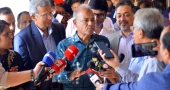
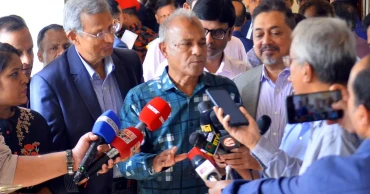
Home Affairs Adviser Lt Gen (retd) Md Jahangir Alam Chowdhury on Wednesday (November 19) said there is no unrest in the country following the tribunal’s death sentence handed down to former Prime Minister Sheikh Hasina.
Talking to reporters at the Secretariat after an inter-ministerial security meeting held ahead of the Victory Day 2025 celebrations, the adviser reaffirmed that nothing unexpected had occurred in connection with the verdict.
Read more: Hasina verdict: Security forces in tense standoff with group looking to storm Dhanmandi 32
Responding to questions about reports of unrest after the court’s decision and any potential threats ahead of Victory Day, Jahangir said no such incidents had taken place and there was no cause for concern regarding the upcoming national celebrations.
He said the Victory Day events will proceed as scheduled and noted that there is no reason to anticipate any disturbance during the commemorations.
Parade will not take place this year too, he said.
Commenting on allegations that law enforcers picked up a journalist on Tuesday night, the adviser said he had only just been informed of the matter and would look into it.
Read more: Home Adviser signals zero tolerance on unrest as election in February
10 months ago
BNP hails Hasina’s death sentence verdict, says justice served
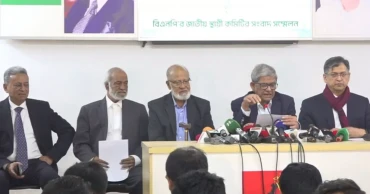
BNP on Monday night (November 17) said it believes justice has been served through the International Crimes Tribunal’s verdict sentencing deposed Prime Minister Sheikh Hasina to death for crimes against humanity committed during the July-August Uprising.
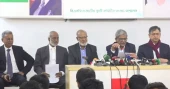
“After a long judicial process, following international standards, the International Crimes Tribunal has delivered its verdict against Awami fascist Sheikh Hasina and her two accomplices. This verdict has ensured justice,” said BNP Secretary General Mirza Fakhrul Islam Alamgir.
He shared the party’s formal reaction at a press briefing after a meeting of the BNP Standing Committee at the party chairperson’s Gulshan office.
Fakhrul said people at home and abroad had long called for accountability for the crimes committed under the previous regime.
“The people of Bangladesh and the international community have been waiting for justice for the brutal acts of murder, torture and genocide carried out by the fallen dictator and her associates,” he said.
Fakhrul said the tribunal handed down the maximum punishment under the law to Sheikh Hasina and former Home Minister Asaduzzaman Khan Kamal, while former Inspector General of Police Chowdhury Abdullah Al-Mamun, who cooperated with the court, received a reduced sentence of five years’ imprisonment.
Read more: UN rights body regrets Hasina’s death sentence, calls verdict important for victims
He said the BNP is firmly committed to the rule of law and urged the country’s people to stay alert in this regard.
Fakhrul said their party also demanded fair trials for all other accused persons in other cases.
“With this verdict, we believe the souls of those who were victims of enforced disappearances, killings and extrajudicial executions over the past sixteen years — and the thousands who were killed during the 2024 student uprising — will find some peace. The anger of their families will ease to some extent,” the BNP leader said.
The BNP Standing Committee meeting, chaired virtually by Acting Chairman Tarique Rahman from London, began at 8:30pm and continued for two hours.
BNP Standing Committee members Khandaker Mosharraf Hossain, Abdul Moyeen Khan, Amir Khosru Mahmud Chowdhury and Salahuddin Ahmed were also present at the press briefing.
Earlier in the day, the tribunal convicted Sheikh Hasina and two others in a case related to crimes against humanity committed during last year’s July–August uprising, in which more than 1,000 people were killed.
The ICT-1 sentenced Sheikh Hasina to death, while former Home Minister Asaduzzaman Kamal also received the death penalty. Former Inspector General of Police Chowdhury Abdullah Al-Mamun, who gave testimony as a state witness, was sentenced to five years’ imprisonment.
The court further ordered the confiscation of the properties of Sheikh Hasina and Asaduzzaman Kamal in favour of the state.
Read more: Awami League using looted money for acts of sabotage: Rizvi
10 months ago
Relatives of July uprising martyrs gather at tribunal ahead of Hasina verdict
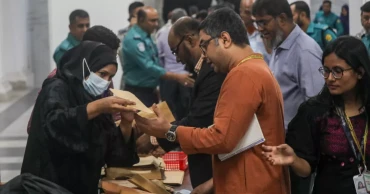
Relatives of the martyrs of last year’s July uprising gathered at the International Crimes Tribunal (ICT) area on Monday morning (November 17) ahead of the verdict in the case against former Prime Minister Sheikh Hasina and two others over alleged crimes against humanity during last year’s July-August.
Some of the injured victims of July movement were seen on the tribunal premises with posters and banners around their necks.
Dhaka under security blanket as ICT set to deliver verdict in Hasina’s case today
10 months ago
Nation on alert as ICT set to deliver verdict in Hasina’s case
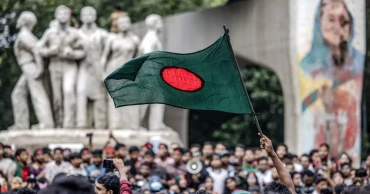
Security has been tightened across the country, particularly in and around the International Crimes Tribunal (ICT) in Dhaka, ahead of Monday’s (November 17) verdict in a high-profile case of crimes against humanity.
The tribunal is set to deliver its judgement on cases against former Prime Minister Sheikh Hasina and two others, who stand accused of crimes against humanity committed during last year’s July-August uprising.
The verdict will be delivered amid fresh tensions as a series of arson and crude bomb attacks were reported in Dhaka, Savar, Kushtia, Gazipur and other parts of the country.
Awami League, whose activities remain banned in Bangladesh, called for a ‘complete shutdown’ on Sunday and Monday in protest citing several demands including the cancellation of the tribunal’s proceedings.
Border Guard Bangladesh (BGB) has been deployed in Dhaka, Gopalganj, Faridpur and Madaripur districts to ensure overall security and maintain law and order.
Read more: Fakhrul calls for full justice ahead of ICT verdict in Hasina’s case
Two other accused in the case are former Home Minister Asaduzzaman Khan and former Inspector General of Police (IGP) Chowdhury Abdullah Al-Mamun. Mamun testified as a state witness.
The prosecution has claimed all five charges against Hasina and other accused have been proven and sought the maximum punishment.
In a press briefing on November 13, Chief Prosecutor Md Tajul Islam said they have appealed to the court for the highest penalty.
On the other hand, state-appointed lawyer Md Amir Hossain has sought acquittal for both Hasina and Asaduzzaman Khan, while Mamun’s lawyer Zayed Bin Amjad has also sought his acquittal.
Home Affairs Adviser Lt Gen (retd) Md Jahangir Alam Chowdhury on Sunday said whatever verdict the tribunal delivers in case against former Prime Minister Sheikh Hasina on Monday will be executed and people will accept it.
Law enforcement agencies are fully prepared to prevent any untoward incident centering the verdict, he said.
Bangladesh Television (BTV) will broadcast the verdict live.
The live verdict will be shown via giant screen at 10 spots of the Dhaka, said MH Tamim, a prosecutor of the ICT.
BNP Secretary General Mirza Fakhrul Islam Alamgir on Sunday urged people and political parties to resist the ‘vested quarter’ that, he alleged, is trying to create anarchy ahead of Monday’s verdict in the case filed against ‘fascist Sheikh Hasina for committing genocide’.
“The verdict in the trial over the genocide committed by fascist Hasina will be delivered tomorrow (Monday). Extreme uncertainty and fear are now prevailing across the entire country because of this,” Fakhrul said at a discussion in Dhaka.
Jamaat, allies to mobilise on streets on Hasina verdict day
The UN Office of the High Commissioner for Human Rights (OHCHR) in its report on February 12 said Bangladesh’s previous government and security and intelligence services, alongside violent elements associated with the Awami League, systematically engaged in a range of serious human rights violations during last year’s student-led protests.
Based on deaths reported by various credible sources, the report estimates that as many as 1,400 people may have been killed between 15 July and 5 August, and thousands were injured, the vast majority of whom were shot by Bangladesh’s security forces. it said.
Initially, Sheikh Hasina was the sole accused in the case.
On March 16 this year, the prosecution appealed to include former IGP Mamun as an accused alongside Sheikh Hasina and the tribunal approved it.
After the Awami League government was toppled on August 5, 2024, the ICT was reconstituted.
The first case in the reconstituted tribunal concerned alleged crimes against humanity during the July uprising, with Sheikh Hasina as the accused.
The tribunal conducted its first hearing on October 17 last year, issuing an arrest warrant against Hasina that day.
After extending the deadline several times, the tribunal’s investigation agency submitted its final probe report to the Chief Prosecutor’s Office on May 12 this year.
On June 1, the prosecution formally filed charges against Sheikh Hasina and the two accused.
The charges include inciting violence in a press conference at Ganabhaban on 14 July 2024, ordering the elimination of protestors using helicopters, drones, and lethal weapons, shooting death of student Abu Sayed at Begum Rokeya University, Rangpur, killing of six protestors at Chankharpul, Dhaka and burning of six people to death in Ashulia.
The tribunal formally framed these charges on July 10.
Hasina and Asaduzzaman remain at large, while former IGP Mamun is the only arrested accused.
On the day the charges were framed, Mamun admitted his involvement in crimes against humanity during the uprising and applied to testify as a state witness.
Arguments in the case began on October 12 and concluded on October 23.
Relatives of victims, including the father of martyr Abu Sayed testified in the case, along with key witnesses including Nahid Islam, Convener of National Citizen Party (NCP) and Amar Desh editor Dr Mahmudur Rahman.
In total, 54 witnesses testified during the trial.
Read more: BGB deployed in Dhaka, 3 other districts
10 months ago
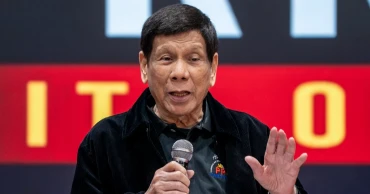
Former Philippine president Duterte arrested on ICC warrant for killings
Former Philippine President Rodrigo Duterte was taken into custody at Manila's international airport on Tuesday following an arrest order from the International Criminal Court (ICC) over a crime against humanity case filed against him, according to the Philippine government.
Duterte was apprehended upon arrival from Hong Kong, with police enforcing the ICC’s arrest warrant in connection to the large-scale killings that took place under his violent anti-drug campaign, President Ferdinand Marcos' office stated.
Philippine VP prepares for impeachment, avoids commenting on resignation
“Upon his arrival, the prosecutor general presented the ICC notification of an arrest warrant to the former president for crimes against humanity,” the government said. “He is now in the custody of authorities.”
The unexpected arrest led to a commotion at the airport, where Duterte’s lawyers and aides vocally protested, claiming they, along with a doctor and legal representatives, were denied access to him after he was detained. “This is a violation of his constitutional rights,” said Sen. Bong Go, a close ally of Duterte.
Duterte’s arrest and subsequent downfall left families of those killed in his anti-drug campaign in shock, with many breaking down in tears.
“This is a long-awaited victory for justice,” said Randy delos Santos, the uncle of a teenager who was fatally shot by police in a 2017 anti-drug operation in Metro Manila.
“Now we feel that justice is moving forward. We hope that senior police officials and the hundreds of officers involved in these unlawful killings will also be held accountable and punished,” he added.
Three officers responsible for the killing of his nephew, Kian delos Santos, were convicted in 2018 for the high-profile murder, which led Duterte to temporarily halt his brutal anti-drug campaign at the time.
This conviction was among only a few against law enforcers linked to the campaign, reinforcing victims’ families' concerns that justice within the country remained elusive, prompting them to seek the ICC’s intervention.
It was unclear where Duterte was taken after his arrest, but the government confirmed that the 79-year-old former president was in good health.
The ICC’s investigation into Duterte’s drug-related killings covers the period from November 1, 2011—when he was mayor of Davao City—until March 16, 2019. Duterte withdrew the Philippines from the Rome Statute in 2019, a move that human rights advocates believe was aimed at evading accountability.
Afghans arrive in the Philippines to complete visa processing for resettlement in US
Duterte’s administration attempted to block the ICC probe in 2021, arguing that Philippine authorities were already investigating the same allegations, and therefore, the ICC—meant to be a last resort—had no jurisdiction.
However, in 2023, ICC appeals judges ruled that the investigation could proceed, dismissing the Duterte administration’s objections. The Hague-based ICC intervenes when national authorities are either unwilling or unable to prosecute individuals for serious international crimes, such as genocide, war crimes, and crimes against humanity.
President Ferdinand Marcos Jr., who took office in 2022 and has since had a contentious relationship with Duterte, has opted not to rejoin the ICC. However, his administration has stated that it would comply if the ICC requested international law enforcement to arrest Duterte through a Red Notice, a global alert for locating and detaining a suspect temporarily.
1 year ago

UN investigator: Crimes against humanity under Myanmar junta
The head of the U.N. body investigating the most serious crimes in Myanmar said Friday that preliminary evidence collected since the military seized power on Feb. 1 shows a widespread and systematic attack on civilians “amounting to crimes against humanity.”
Nicholas Koumjian told U.N. reporters that the Independent Investigative Mechanism for Myanmar, which he heads, has received over 200,000 communications since the army takeover and has collected over 1.5 million items of evidence that are being analyzed “so that one day those most responsible for the serious international crimes in Myanmar will be brought to account.”
Also Read: Xi vows to continue expanding opening up, sharing development opportunities, promoting economic globalization
In determining that the crimes against civilians appear to be widespread and systematic, he said investigators saw patterns of violence -- a measured response by security forces to demonstrations in the first six weeks or so after the military takeover followed by “an uptick in violence and much more violent methods used to suppress the demonstrators.”
“This was happening in different places at the same time, indicating to us it would be logical to conclude this was from a central policy,” Koumjian said. “And, also, we saw that particular groups were targeted, especially for arrests and detentions that appear to be without due process of law. And this includes, of course, journalists, medical workers and political opponents.”
Myanmar for five decades had languished under strict military rule that led to international isolation and sanctions. As the generals loosened their grip, culminating in Nobel Peace Prize laureate Aung San Suu Kyi’s rise to leadership in 2015 elections, the international community responded by lifting most sanctions and pouring investment into the country.
Also Read: 10 dead in India Covid hospital fire
The Feb. 1 military takeover followed November elections which Suu Kyi’s National League for Democracy party won overwhelmingly and the military rejects as fraudulent. Since the takeover, Myanmar has been wracked by unrest, with peaceful demonstrations against the ruling generals morphing first into a low-level insurgency in many urban areas after security forces used deadly force and then into more serious combat in rural areas, especially in border regions where ethnic minority militias have been engaging in heavy clashes with government troops.
Christine Schraner Burgener told The Associated Press shortly before her 3 ½ year term as the U.N. special envoy for Myanmar ended on Oct. 31 that “civil war” has spread throughout the country.
The U.N. investigative body was established by the Geneva-based Human Rights Council in September 2018 with a mandate to collect, consolidate, preserve and analyze evidence of the most serious international crimes and violations of international law committed in Myanmar.
Koumjian, an American lawyer who served as an international prosecutor of serious crimes committed in Cambodia, East Timor and Bosnia, was appointed by U.N. Secretary-General Antonio Guterres as its head in 2019 with instructions to prepare files that can facilitate criminal prosecutions in national, regional or international tribunals to prosecute genocide, crimes against humanity and war crimes.
Also Read: 8 dead, several injured at Astroworld Festival in Houston
Koumjian said his team has been collecting evidence from a wide variety of sources including individuals, organizations, businesses and governments, and the evidence includes photographs, videos, testimonies and social media posts “that could be relevant to show that crimes happened and who is responsible for those crimes.”
The investigative body has received information from social media companies, which he wouldn't name except for Facebook because it had made its cooperation public.
“We began engaging with Facebook as soon as we were created in 2019, and they have been meeting with us regularly,” Koumjian said. “We have received some, but certainly not all, that we have requested. We continue to negotiate with them and actually I am hopeful that we are going to receive more information.”
He said the Human Rights Council specifically instructed the investigators to cooperate with the International Criminal Court's probe into crimes committed against Myanmar’s Rohingya Muslim minority and the case at the International Court of Justice brought by Gambia on behalf of the Organization of Islamic Cooperation accusing Myanmar of genocide against the Rohingya.
“So we are sharing documents with those proceedings,” Koumjian said.
The court actions stem from the Myanmar military’s harsh counterinsurgency campaign against the Rohingya in August 2017 in response to an insurgent attack. More than 700,000 Rohingya fled to neighboring Bangladesh to escape what has been called an ethnic cleansing campaign involving mass rapes, killings and the torching of homes.
Koujian said: “All we’re doing is collecting evidence of the very worst violence, hopefully sending a message to perpetrators: `If you commit this, you run the risk that you will be held to account.’”
4 years ago

It's genocide with implications regionally: Ex-Malaysian Minister on Rohingya issue
Former Malaysian Foreign Minister Dr Syed Hamid Albar on Monday described the Rohingya crisis as a serious violation of human rights, genocide, and crime against humanity with implications at the regional level.
6 years ago