revenue target

FBCCI welcomes budget, flags revenue target, implementation as key challenges
Federation of Bangladesh Chambers of Commerce and Industry (FBCCI) on Saturday welcomed the proposed national budget for fiscal year 2026-27, describing it as pragmatic and implementable, while flagging revenue mobilisation and efficient execution as the two most critical challenges ahead.
In a written reaction to the Tk 9,38,000 crore budget, the country's largest ever and 18.7 per cent higher than the outgoing fiscal year, the apex trade body extended its congratulations to the Prime Minister and Finance Minister, noting that the budget gives priority to economic stability, investment, employment, production and social justice.
“The size of the budget is large but implementation is not impossible, what is needed is foresight, efficiency and transparency,” FBCCI said in its statement on Saturday.
FBCCI expressed optimism over the government's adoption of the "3R" framework: Recovery and Stabilisation, Restoration and Reconstruction, as the guiding economic strategy, saying it would help restore macroeconomic stability, boost investment and foster inclusive and sustainable growth.
The body also supported GDP growth and inflation targets set at 6.5 per cent and 7.5 per cent respectively, expressing hope that disciplined fiscal management would help ordinary citizens regain purchasing power.
FBCCI acknowledged that the total revenue target of Tk 6,95,000 crore, equivalent to 10.2 per cent of GDP, with the National Board of Revenue (NBR) assigned Tk 6,04,000 crore, represents a formidable challenge given current domestic and global economic conditions.
The federation urged structural reforms at NBR and a revenue management system conducive to growth, trade and investment to meet the target.
On the budget deficit of Tk 2,43,000 crore, 3.6 per cent of GDP, FBCCI cautioned the government to exercise restraint in borrowing from the banking sector, as it crowds out private sector credit and adversely affects investment and employment. It recommended greater reliance on concessional external financing at reasonable interest rates.
The total interest payment burden, Tk 1,05,000 crore in domestic interest and Tk 22,500 crore in foreign debt servicing was described as a significant fiscal pressure.
In a wide-ranging set of recommendations, FBCCI called on the government to focus on: Activation of investment-friendly economic zones; export diversification and new market exploration; human resource development in IT and electronics; reduction of administrative red tape and cost of doing business.
Besides, strengthening of the capital market and expansion of the bond market; improved accountability in ADP implementation; interest rate reduction and banking sector reform; uninterrupted power and energy supply; logistics and supply chain efficiency; and development of legal frameworks for free trade zones were among the recommendations.
FBCCI welcomed several budget provisions it said reflected its own prior proposals, including: mandatory online VAT return filing, quarterly VAT submission, online income tax return and refund systems, online single-window services, and an expanded plug-and-play industrial facility.
The body also praised the raising of the tax-free income ceiling from Tk 3,50,000 to Tk 3,75,000 with provisions for gradual future increases, though it urged the government to maintain the 5 per cent tax slab and reduce the top tax rate from 35 per cent to 25 per cent.
Welcoming the five-year lock-in on corporate tax rates, FBCCI also sought a 2.5 per cent reduction for listed companies to enhance competitiveness, and proposed lowering the minimum turnover tax on sales from 1 per cent to 0.5 per cent given the current slowdown.
Among specific measures appreciated, FBCCI highlighted: the reduction of advance income tax on industrial raw material imports from 5 per cent to 4 per cent; reduction of source taxes on basic agricultural commodities including rice, wheat, potato, onion, garlic, ginger, salt, sugar and edible oil to 0.5 per cent; complete withdrawal of the 5 per cent regulatory duty on import of dates and all cooking spices; and reduced withholding tax on foreign loan interest for industrial investment from 20 per cent to 10 per cent.
The federation also welcomed the full import duty waiver, along with VAT and supplementary duty on laptops, desktop computers, servers, printers and monitors, calling it a major push for IT sector development.
On social protection, FBCCI commended free train travel for senior citizens above 65 years of age, a 25 per cent metro rail discount, and expansion in the number and coverage of social safety net beneficiaries.
FBCCI welcomed the government's Tk 60,000 crore “Stimulus Package 2026” for easing credit flow to the private sector, along with a Tk 2,000 crore allocation for SME development through IDCOL, BIFFL and the SME Foundation. An additional Tk 500 crore allocation for women and youth entrepreneurship was termed a positive step.
Tax and VAT exemptions for startup companies — including zero turnover tax, and full VAT exemption on local purchases and premises rental for startups were also praised.
The proposed 20 per cent renewable energy target by 2030 and zero-import-duty on solar energy equipment until 2035 received FBCCI's support as part of a push for a sustainable energy framework.
On the gold and jewellery sector, FBCCI praised the reduction of source tax on gold imports from 5 per cent to 0.5 per cent under the new bonded warehouse regulations, and supported the proposed replacement of 5 per cent VAT on jewellery services with a fixed charge of Tk 2,500 per unit.
FBCCI said it is currently reviewing the Finance Bill and related income tax, VAT and customs notifications in consultation with its member organisations, and will submit a comprehensive set of post-budget recommendations to the government after the review is complete.
3 months ago
Revenue target, inflation control biggest hurdles in proposed budget: CPD
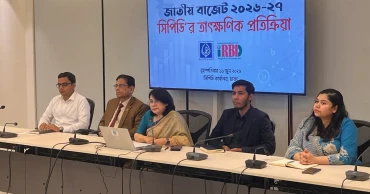
The Centre for Policy Dialogue (CPD) has identified the target to achieve the proposed revenue collection of Tk 695,000 crore and bringing inflation down to 7.5 percent as the biggest challenges in implementing the national budget for fiscal year 2026-27.
Finance Minister Amir Khosru Mahmud Chowdhury on Thursday unveiled a record Tk 938,000-crore budget, the largest in Bangladesh's history.
Giving instant reaction to the budget at a press briefing at CPD’s Dhanmondi office later in the day, CPD Executive Director Fahmida Khatun said budget targets must be realistic to ensure effective implementation. “If the targets are not realistic, it will be difficult for the government to implement the budget, which could undermine economic discipline.”
She described the revenue target as particularly ambitious, noting that Bangladesh has historically struggled to meet its revenue collection goals.
“Although high revenue targets are regularly set, they often remain unattained. The proposed target requires a significant jump in revenue mobilisation, which will be a major challenge for the government,” Fahmida said.
She warned that failure to achieve the revenue target could make it difficult to contain inflation within the projected 7.5 percent level. “Average inflation in the current fiscal year is around 9 percent. Bringing it down by about 1.5 percentage points within a year will be challenging. If the government falls short in revenue collection and resorts to increased bank borrowing, the task will become even more difficult.”
The CPD executive director said inflation control would require a stable exchange rate, improved food and energy supply systems, and prudent monetary management. “Bangladesh is currently pursuing a contractionary monetary policy. In this context, policymakers will need to strike a careful balance to stimulate investment. Greater coordination between fiscal and monetary policies is also necessary.”
While describing the proposed GDP growth target as ambitious, she said it was not unattainable given the size of Bangladesh’s economy and population.
The budget projects economic growth at 7.5 percent, compared to an estimated 6.5 percent growth in the current fiscal year. “To achieve this target, private investment and productivity must increase, while exports need fresh momentum. At the same time, ongoing reforms must continue. Given the current investment climate, the condition of the financial sector and persistent energy challenges, achieving the target will be quite difficult,” Fahmida said.
She also observed that the budget could have placed greater emphasis on economic stability rather than growth.
However, the CPD executive director welcomed tax incentives for solar panels and electric vehicles, as well as the budget's focus on skills development, agriculture, and small and medium enterprises (SMEs), describing them as positive measures for the economy.
CPD Distinguished Fellow Mustafizur Rahman was also present at the briefing.
4 months ago

Revenue target set at Tk 5.64 lakh crore for FY2025-26
The proposed national budget for the fiscal year 2025–26 sets the revenue collection target at Tk 5.64 lakh crore, which is equivalent to 9 per cent of the country’s Gross Domestic Product (GDP).
Finance Adviser Salehuddin Ahmed presented the budget of Tk 7.90 lakh crore, proposing the new revenue target during his televised budget speech on Monday.
Salehuddin said efforts are underway to rationalise tax exemptions and achieve medium-term revenue goals through the continued initiatives of the National Board of Revenue (NBR) that to enhance revenue collection.
Salehuddin also mentioned that the NBR has been strengthened with increased manpower to support these efforts.
He said that steps are actively under consideration to gradually reduce tax exemption facilities expand the tax net and introduce uniform VAT rates on various goods and services where possible.
Of the total estimated revenue income of Tk 5.64 lakh crore, Tk 4.99 lakh crore is expected to be collected through the NBR, while the remaining Tk 65,000 crore is projected to come from other sources.
This marks the first budget presentation by Salehuddin Ahmed in nearly one and a half decades since his tenure as the governor of Bangladesh Bank.
NBR scrambling to meet IMF conditions on revenue collection for release of 2 tranches of $4.7bn loan
He noted that the budget size has been kept relatively smaller this year in a bid to keep the deficit under control and in line with prevailing realities. “Amid ongoing political unrest, the new budget aims to bring some ‘relief’ to low-income groups.”
Earlier, the interim government’s Advisory Council approved both the proposed national budget and the Finance Bill for FY2025–26 in a meeting chaired by Chief Adviser Muhammad Yunus at his office.
1 year ago
Sheola land port fails to meet revenue target
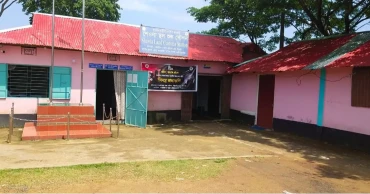
Sheola Land Port in Beanibazar has missed its revenue target for the first half of the 2024-25 fiscal year, collecting only Tk 20 crore out of the Tk 30.86 crore target that left a significant shortfall of Tk 10 crore.
Customs officials attribute the missed target to political instability earlier in the fiscal year, which disrupted the assessment and clearance of goods for several days.
They claim the activities of the Audit, Investigation, and Research (AIR) unit have curbed false declarations and minimised opportunities for revenue evasion, affecting overall import volumes.
Workers at the port have a different perspective as they argue that irregularities, particularly weight manipulation during the assessment of goods, have discouraged trade through the port.
Allegations of Corruption
Recent allegations of corruption against Customs officials have also triggered labour unrest at the port. Workers claim that weight manipulation is a major issue. For example, stones imported from India are often mixed with soil and sand during loading at the mines.
Previously, port authorities at Tamabil and Sheola deducted the weight of soil and sand before calculating duties. But current Sheola officials are reportedly unwilling to exclude this weight, leading to dissatisfaction among importers.
Import Decline
Over the past six months, Sheola Customs processed imports worth Tk 11 crore, including coal, ginger, oranges, apples, Shatkora, limestone, and rice. Customs sources highlighted that January’s revenue appears inflated due to the clearance of outstanding dues from the previous month.
Read: Trade with India through 3 land ports suspended, uninterrupted at Benapole
They cautioned that a more accurate picture of revenue trends will emerge from August onwards.
Coal importer Iqbal Hossain noted that the rising value of the US dollar has hindered many traders from opening letters of credit (LCs). Those who managed to do so had to purchase dollars at higher rates in the open market and show 100% margin deposits in banks, leading to reduced import activity.
Official Statement
Sheola Customs Assistant Revenue Officer Shimul Sen remarked, “Revenue targets are increased each year, and we have also seen a corresponding rise in collections. However, meeting targets remains challenging. While this year’s target was somewhat achievable, political unrest and reduced imports due to high duties have impacted revenue collection in the first six months of the fiscal year.”
Read more: 131MT rice imported from India through Hili Land Port
Port users said that the challenges at Sheola Land Port reflect broader issues within Bangladesh’s customs and trade infrastructure, where balancing enforcement with facilitation remains a critical challenge.
1 year ago

IMF relaxes forex reserve and revenue targets for $4.70 billion loan
The International Monetary Fund (IMF) has relaxed several targets including foreign exchange reserves, revenue collection, automatic price adjustment of fuel for the $4.70 billion loan package for Bangladesh.
At the beginning of this year, the IMF had set forex reserves target at $25.34 billion by September and $26.81 billion by June next year as conditions for the loan package.
According to BPM6 – reserve calculation method – Bangladesh’s forex reserves stand at $21.15 billion.
Bangladesh urged IMF to downsize required reserves to $20 billion for next loan instalment, says official
On a net basis, this amount has further decreased to below $18 billion.
In this situation, the Finance Division officials requested the IMF to relax the target for forex reserves.
Considering the request, the IMF has relaxed the target. Bangladesh has committed to keep the reserves at $18.4 billion at the end of December this year, and at $20 billion at the end of June next year.
IMF delegation meets BGMEA President to discuss challenges and prospects of RMG sector
Last Tuesday and Wednesday, the visiting IMF delegation discussed the issues with the relevant officials of the Finance Division of the Ministry of Finance.
Sources in the Finance Division said that after discussion, IMF agreed on being flexible on some conditions. Finance Secretary Md. Khairuzzaman Majumder led the meeting on behalf of the government. The IMF mission was led by Rahul Anand, head of the IMF’s Asia-Pacific division.
IMF team holds meeting with Power Division, discusses subsidy
2 years ago

Benapole Customs falls short of its revenue target again
Benapole Customs House has fallen short of its targeted revenue by Tk509 crore in the first six months of the current 2021-22 fiscal as the customs house collected about Tk1,991 crore against a target of Tk2,500 crore.
However, Tk101 crore more was collected this time than the first six months of 2019-20 fiscal year. At that time the revenue collection target was Tk 1,889 crore.
In the first six months of this year, 11,53,034 metric tonnes of goods have been imported which was 11,53,034 metric tonnes in the first six months of 2019-20 fiscal year. Besides, 2,76,003 metric tonnes have been exported this time which was 1,76,296 metric tonnes in the first half of 2019-20.
Although imports have declined slightly compared to last year, exports have increased.
According to Benapole Customs sources, the National Board of Revenue (NBR) has set a revenue target of Tk 6,245 crore for imported goods this year. Earlier, in the fiscal year 2020-21, the revenue target at Benapole port was Tk 6,244.62 crore. At the end of last fiscal year, Tk 4,143 crore was collected. Although the growth of revenue during the year was higher than other times, the deficit was Tk 2,057 crore.
Besides, the shortfall was Tk 3,392 crore against the target in 2019-20 fiscal year while it was Tk1,145 crore in 2018-19 and Tk 179.64 crore in 2017-18.
Can the target ever be achieved?
Meanwhile, there are doubts in all sections about achieving the target of such a large amount this year. Experts said it is necessary to develop the infrastructure in customs and ports to expand trade in order to increase revenue, which is a long term prospect. Otherwise, it will never be possible to collect the expected amount of revenue.
The businessmen of India and Bangladesh are more interested in trade through this port due to the ease of communication. However, due to lack of necessary infrastructure, traders cannot import products as per the demand. And so, the revenue is declining continuously.
Sazedur Rahman, general secretary of the Benapole C&F Agent Association, said it will be difficult to collect such a large amount of revenue in the current fiscal year because of the Covid situation. However, the record clearly shows even prior to Covid the port always missed its target.
4 years ago

Budget 2021-22: 'Striking balance between revenue targets, facilitating businesses crucial'
Finding a balance between achieving revenue targets and ensuring a business-friendly environment is crucial to overcome the economic challenges unfolded by the pandemic.
The government's expenditure comes from revenue, but it always tries to facilitate the businesses, National Board of Revenue member of tax policy Md Alamgir Hossain said Saturday.
Alamgir was addressing the "Pre-Budget Discussion for FY2021-22" organised by Dhaka Chamber of Commerce and Industry (DCCI) in association with Samakal and Channel 24.
Economic Affairs Adviser to the Prime Minister Dr Mashiur Rahma said "Achieving the revenue target without hurting economic activities is a priority for the government."
Also read: NBR to prioritize local industries in 2021-22 budget, says its chairman
"However, our tax-GDP ratio is comparatively low due to rebates at different levels. To make it more acceptable to everyone, a global standard tax, value added tax (VAT), supplementary duty (SD) and customs duty rate need to be in place."
Dr Mashiur said frequent changes in tax rate may slow down business growth and he suggested a gradual increase in it with a minimum time frame.
Brac Chairperson Dr Hossain Zilllur Rahman said, "As the second wave of Covid-19 is going on, it may wallop the economy. The next budget should also have a plan of recovery like the last one. Social protection should get major attention in it."
Disbursement of loans under stimulus for the cottage, micro, small and medium enterprises (CMSMEs) should be faster, and for that, mobile financial services can be engaged as a delivery vehicle, he added.
Also read: Budget 2021-22: Finance Ministry's coordination council meets to set priorities, parameters
Zilllur Rahman added that to keep the growth trajectory upward, the domestic market needs to be incentivised along with the export sector. "We need a transition from cheap labour economy to skilled labour economy and a game-changing policy review needs to be framed."
DCCI President Rizwan Rahman hoped that the next budget would have special attention to taxation and VAT policy, infrastructure, industry and trade as well as the financial sector.
5 years ago

Economists suggest greater imagination on part of govt to meet revenue target
Amid the slowdown in economic activities due to the coronavirus pandemic, noted economists suggest the government must be more imaginative and tactful to get close to meeting the ambitious target of revenue collection set for the current fiscal.
6 years ago