Ministry of Home Affairs

District-level committees formed to withdraw politically motivated cases
The government has formed district-level committees to recommend the withdrawal of politically-motivated and harassment cases through a transparent and systematic manner.
The Ministry of Home Affairs has recently issued a gazette notification that outlines the committees' composition, scope of work and operational procedures, said a PID handout on Monday.
Probe body formed over allegation of torturing Home Ministry staff
According to the notification, the committees were formed to ensure that the process of reviewing and recommending the withdrawal of such cases is carried out in a transparent and systematic manner.
The Deputy Commissioner in his or her capacity as the District Magistrate will serve as the chairperson of the district-level committee.
The Superintendent of Police and the Public Prosecutor will be members, while the Additional District Magistrate will act as the member secretary.
For metropolitan areas, a Deputy Commissioner of Police will replace the Superintendent of Police, while the Metropolitan Public Prosecutor will serve in place of the Public Prosecutor.
The notification states that an accused person or any one of the accused's immediate family members —father, mother, spouse, brother, sister, son or daughter—may submit an application on behalf of the accused to the District Magistrate of the concerned district seeking withdrawal of a politically motivated case.
An applicant must attach photocopies of all relevant case documents certified by the lawyer concerned along with the application, it said.
With the issuance of the new notification, the Ministry of Home Affairs' earlier gazette notification issued on May 21, 2026 stands cancelled.
2 months ago
CCGP approves procurement of 212 pickup vehicles for Bangladesh Police
The Cabinet Committee on Government Purchase (CCGP) on Wednesday approved a proposal to procure 212 double-cabin pickup vehicles for operational use by Bangladesh Police.
The proposal was placed by the Ministry of Home Affairs at a meeting of CCGP held at cabinet division meeting room with Finance Minister Amir Khosru Mahmud Chowdhury in the chair.
Under the proposal, the vehicles will be purchased through the Direct Procurement Method (DPM) at a total cost of Tk 182.32 crore.
State-owned company Progoti Industries Limited has been selected as the supplier for the procurement.
The procurement is aimed at strengthening the operational capacity and mobility of Bangladesh Police in carrying out law enforcement and public security activities across the country.
4 months ago
Nationwide tight security measures taken ahead of Pahela Baishakh; events to conclude by 6 pm
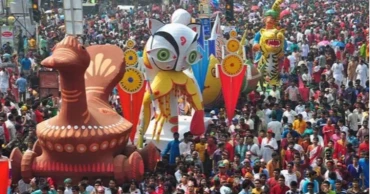
The Ministry of Home Affairs has taken strict security measures across the country to ensure peaceful and joyful celebrations of Pahela Baishakh (Bangla New Year) as well as the New Year festivities of Chakma, Marma, Tripura, Garo, and other ethnic minority communities.
The decision was taken at a law-and-order meeting on Thursday at the conference room of the Ministry of Home Affairs at Secretariat presided over by Senior Secretary Monzur Morshed Chowdhury, said Faisal Hasan, Public Relations Officer (Director) of the Ministry of Home Affairs.
Monzur Morshed said the administration and law enforcement agencies would take all necessary measures to ensure that this festival, which reflects Bengali culture and heritage, is safe.
All events nationwide including those at Ramna Park, Suhrawardy Udyan, Dhaka University, Hatirjheel, and Rabindra Sarobar are required to conclude by 6 pm and no new entry will be allowed after 5 pm.
Tight security will be enforced for the Faculty of Fine Arts’ Baishakhi Procession at Dhaka University, where participants will not be allowed to wear masks, though masks carried for display must not cover faces.
Entry to the procession must occur at the start, and no one will be allowed to join midway.
For safety reasons, flying sky lanterns, fireworks, gas balloons, and vuvuzela horns are completely prohibited and motorbike or car racing within 300 feet of event venues is strictly banned.
Dog squads will conduct sweeps at Ramna Botmul, Dhaka University, and other key locations while watchtowers, CCTV cameras, and sufficient archways will be installed at strategic points.
Nationwide undercover police in plain clothes and mobile courts under executive magistrates will operate to prevent eve-teasing, snatching, and pickpocketing.
Fire service vehicles, ambulances, and medical teams will be deployed at major venues, and diving teams will be on duty at Ramna Lake to prevent accidents.
For security reasons, Dhaka University TSC Metro Rail station will remain closed on Pahela Baishakh and from 7 pmon 13 April, vehicles without university stickers will not be allowed to enter the campus area.
The public has been requested not to carry bags, backpacks, diyas, or lighters, and parents are advised to carry identification notes for children.
Officials from the Home Ministry and other relevant ministries, along with representatives from the police, RAB, BGB, and various intelligence agencies, attended the meeting.
6 months ago
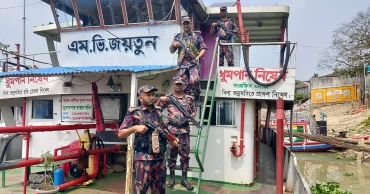
BGB deployed at fuel depots to prevent hoarding, ensure smooth supply
Border Guard Bangladesh (BGB) have been deployed at fuel depots across the country to prevent hoarding, maintain discipline in fuel distribution.
The deployment was made following directives from the Ministry of Home Affairs as reports emerged of attempts to illegally stockpile fuel due to supply concerns and price hikes in the international market, said Shariful Islam, public relations officer of BGB headquarters.
The deployment, supervised by the BGB headquarters, is being carried out under a coordinated and structured plan to ensure depot security, he said.
BGB personnel are operating from temporary base camps set up at secure locations, especially in areas far from their unit headquarters.
Govt forms vigilance teams in all districts to monitor fuel supply
Since the morning of March 25, BGB members have been deployed at 19 depots in nine districts—one in Dhaka, two in Kurigram, three each in Rangpur and Rajshahi, two in Sylhet, three each in Moulvibazar and Cumilla, and one each in Brahmanbaria and Sunamganj.
The deployed personne are carrying out regular monitoring and ensuring strict implementation of administrative and security measures.
They are also strengthening intelligence surveillance, preventing illegal fuel hoarding and sales and taking prompt action to avert any sabotage.
Besides, border patrols have been intensified to prevent fuel smuggling.
Measures include increased river patrols, installation of checkpoints and regular inspections of trucks and other vehicles used in import and export activities at border points.
6 months ago
Reshuffle in police admin: 10 SPs transferred
In a latest reshuffle in police administration, ten top officials of Bangladesh police under superintendent of police rank have been transferred and given new postings.
Ministry of Home Affairs issued a notification in this regard on Wednesday.
According to the notification, Md Shahadat Hossain superintendent of Bogura has been transferred to APBn SP while Mirza Sayem Mahmud, superintendent of Khagrachhari was transferred to Bogura.
Ali Hossain Fakir appointed as Bangladesh police chief
Meanwhile, Mostaque Sarkar, deputy police commissioner of DMP was transferred in Khagrachhari while Mizanur Rahman, superintendent of Mymensingh police was made the superintendent of Noakhali Police.
Besides, Quamrul Hasan, deputy police commissioner of DMP made the superintendent of Mymensingh Police while Kazi Akhtar-ul-Alam, superintendent of Sylhet police was transferred to APBn and Chowdhury Md Zaber Sadek, superintendent of Jamalpur Police was made the superintendent of Sylhet police.
On the other hand, Farhana Yeasmin, deputy police commissioner of DMP was made the superintendent of Jamalpur police while Farzana Islam, superintendent of Barishal police was transferred to River police and AZM Mostafizur Rahman was made the superintendent of Barishal police.
The order will come into effect soon.
7 months ago
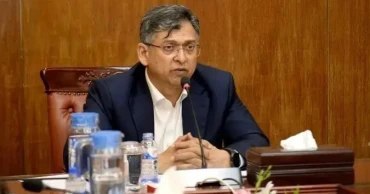
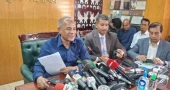
Govt approves withdrawal of 1,202 more politically motivated cases: Home Minister
Home Minister Salahuddin Ahmed on Tuesday said the government has approved the withdrawal of 1,202 more politically motivated cases filed over the past 17 years against opposition leaders, party activists and others.
Earlier approval was given for withdrawal 1,006 politically motivated cases , he told reporters at the Ministry of Home Affairs .
He said cases involving murder, drugs, arms, explosives, and violence against women and children were excluded and only politically motivated cases were considered for withdrawal.
The Minister said the government has taken initiatives to withdraw more such cases.
Decision on party symbols in local polls to be taken in Parliament: LGRD Minister
“Each case will be carefully verified to ensure it is truly political. A committee will be formed to prevent misuse, and a decision will be taken soon,” he said.
Responding to journalists’ questions about cases filed after August 5, 2024, Salahuddin Ahmed said some cases involved ordinary and innocent people who were made suspects for personal gain.
He said some privileged groups filed such cases which are under review.
“We will verify the facts carefully. We are committed to upholding the rule of law and will continue all efforts to ensure no one suffers from unnecessary politically motivated cases,” he said.
7 months ago
Govt orders deposition of licensed firearms by Jan 31 ahead of election
The government has ordered the deposition of all licensed firearms at the nearest police stations by January 31, ahead of the national election scheduled for February 12.
The directive was issued through a notification by the Ministry of Home Affairs on Sunday.
The notification also bans the carrying or public display of firearms until the completion of the national election and referendum.
The restriction will, however, not apply to candidates whose nomination papers have been validly submitted and accepted by the Election Commission, or to armed ‘retainers’ duly authorised for them.
The notification warns that any violation of the order will be dealt with in accordance with the law.
All superintendents of police and the authorities concerned have been instructed to take necessary measures to ensure the implementation of the directive.
The government on December 15 formulated a policy on issuing firearm licences and appointing armed retainers for politically important individuals and candidates ahead of the 13th National Parliamentary Election slated for February 12.
Titled ‘Firearm Licence and Retainer Appointment Policy–2025 for Politically Important Persons and Candidates for the Post of Member of Parliament’, the policy was issued by the Ministry of Home Affairs.
The ministry said the policy was formulated to ensure public security, maintain law and order and prevent election-time violence.
Under the policy, a ‘retainer’ is defined as an armed person appointed and authorised to protect a politically important individual or a candidate.
DMP chief orders use of firearms to stop arson attacks in Dhaka
A ‘politically important person’ refers to a current or former high-ranking political figure recognised by the government.
To be eligible for a firearm licence, an applicant must be a recognised politically important person or a candidate who has submitted nomination papers for the 13th Parliamentary Election, and must face a verified security threat as assessed by the relevant authorities, including intelligence agencies.
9 months ago
Feb Polls: Foreign Adviser clarifies visa policy, cautions against disruptive entry
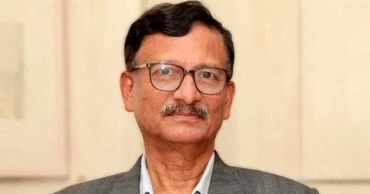
The government on Wednesday said it remains hopeful of a smooth transition through the national election but wants to prevent the arrival of any “unexpected individuals” from abroad who may attempt to create an undesirable situation during the election period.
“We are not stopping the issuance of visas. Those who wish to come may apply for visas, and we will issue them as long as their purpose is valid,” Foreign Affairs Adviser Md Touhid Hossain told reporters at the Ministry of Foreign Affairs, responding to a journalist’s query regarding reports of the suspension of visa-on-arrival facilities.
“You know, during the election period, there may be attempts to create unexpected situations. Some unwanted individuals may try to enter the country suddenly,” he said.
The Foreign Adviser said the Ministry of Home Affairs is truly better positioned to comment on the matter but acknowledged that the Ministry of Foreign Affairs has received instructions in this regard.
Read more: Bangladesh issues special visa guidelines ahead of national election
The Ministry of Foreign Affairs and External Trade, Bhutan on Tuesday informed the general public that the Embassy of the People’s Republic of Bangladesh in Thimphu has officially conveyed that the government of Bangladesh has suspended the “Visa on Arrival” facility for all eligible countries, including Bhutan, with effect from January 15 to February 15.
In view of this, Bhutan said, all Bhutanese nationals intending to travel to Bangladesh during the above period are advised to apply for a visa in advance through the Embassy of Bangladesh in Thimphu prior to their travel.
The Bhutanese Ministry advised all travelers to take note of this change and make the necessary arrangements well in advance to avoid any inconvenience.
Foreign Affairs Adviser Hossain on January 8 confirmed that they have asked its three key diplomatic missions in India to keep their visa sections closed for a time being on security grounds.
“What I have done is that I have asked our three missions to keep their visa sections closed for the time being. It’s a security issue,” he said while responding to a question at the Ministry of Foreign Affairs at that time.
Read more: Foreign Adviser communicates with Pakistani counterpart ahead of OIC ministerial meet on Somalia
Asked about the matter, Hossain on Wednesday had taken the decision due to a special situation, noting that they have to look after the security of the missions.
9 months ago
64 districts get SPs through lottery: Home Adviser
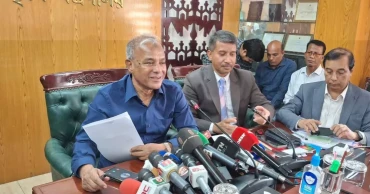
The government has appointed Superintendents of Police (SPs) for 64 districts across the country through a lottery system ahead of the national election slated for the first half of February next year.
According to a gazette notification, signed by Md Mahbubur Rahman, deputy secretary at the Ministry of Home Affairs, was issued on Wednesday (November 26).
Earlier in the day, Home Affairs Adviser Lt Gen (retd) Md Jahangir Alam Chowdhury said the SPs have been appointed through the lottery after categorising the districts into three considering the law-and-order issue.
Talking to reporters after a review meeting of the Annual Development Programme of the Ministry of Agriculture at Secretariat, he claimed that no meritorious officers have been left out during the SP postings.
Bangladesh sees crime spike ahead of polls; police stress preparedness
Responding to a question on the lottery system, the adviser said, “Yes, the news is correct. The lottery was conducted exactly as planned. We established three categories—A, B, and C—not based on district size but on the law and order situation.”
After categorising districts, the adviser said, officers were assigned accordingly.
“Out of a total of 64 SPs, 18 were reassigned, while others remained unchanged. The lottery then decided which officer would go to which district, based on luck,” he asserted.
Asked if the same system would apply to officer-in-charge postings, he replied saying ‘Insha’Allah,’ emphasizing that primarily the most capable officers were selected.
New police commissioner for Gazipur Met Police; new SPs in 6 districts
10 months ago
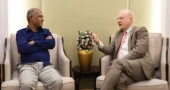
Home Adviser signals zero tolerance on unrest as election in February
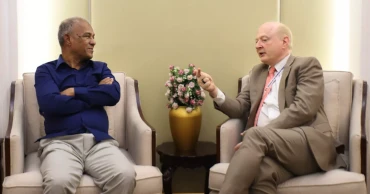
Home Affairs Adviser Lt Gen (retd) Md Jahangir Alam Chowdhury on Tuesday (November 18) said law-enforcement agencies are fully prepared to act against any attempt to destabilise the country, as the next national election is going to be held in the first half of February.
He made the remarks at a meeting with German Ambassador to Bangladesh Dr Rudiger Loltz at the Ministry of Home Affairs, where the overall law-and-order situation dominated the discussions.
The Adviser said law and order across the country remains normal, except a few isolated incidents reported following the verdict against Sheikh Hasina.
He warned that strict action will be taken against anyone attempting to disrupt public security in the coming days.
Read more: Fakhrul calls for resistance against ‘vested quarter’ ahead of Hasina verdict
Jahangir Alam said that the responsibility for announcing the specific polling date lies with the Election Commission, but emphasised that security agencies are ready to support the electoral process whenever required.
The meeting also focused on public reactions to the verdict, preparations surrounding the national election timeline, prisoner extradition, cybercrime, and other areas of cooperation.
Germany and Bangladesh are ‘tested friends’, the Adviser said, adding that he hopes bilateral relations will continue to strengthen.
Additional Secretary (Political) of the Home Ministry Khandaker Md Mahabubur Rahman and Anja Kersten, Deputy Head of Mission at the German Embassy, also attended the meeting.
Read more: Working with a clear commitment to create fair election atmosphere: CEC
11 months ago