Ducsu
Facebook post triggers tension in Shahbagh as DUCSU leaders come under attack
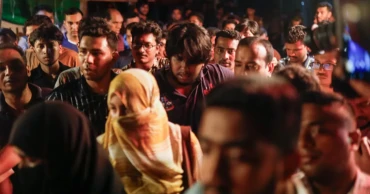
Tension gripped Shahbagh police station on Thursday evening following a clash between activists of Jatiyatabadi Chhatra Dal (JCD) and Dhaka University Central Students’ Union (DUCSU) leaders over a Facebook post.
Two DUCSU leaders elected from the panel backed by Islami Chhatra Shibir, were briefly left in a vulnerable situation before being escorted to safety by senior JCD leaders.
The incident involved DUCSU Literature and Cultural Affairs Secretary Musaddiq Ali Ibne Mohammad and Social Welfare Secretary Zubayer bin Nesari (A B Zubair).
5 months ago

Sarba Mitra Chakma announces resignation from DUCSU
Dhaka University Central Students’ Union (DUCSU) executive member Sarba Mitra Chakma has decided to resign from his post following widespread criticism over a viral video showing some youths being forced to do squats while holding their ears at Dhaka University central field.
In a Facebook post on Monday afternoon, Sarba Mitra said the students of Dhaka University elected him with high expectations and since assuming office he had placed several proposals before the administration to ensure campus security.
These included introducing registered rickshaws on campus and restricting vehicle movement.
Read More: DUCSU member forces outsiders to hold ears for playing on DU field
He wrote there is no CCTV coverage or adequate security at the central field. “From harassment of female students to mobile phone, wallet and bicycle theft, almost all kinds of incidents have occurred there. Female students had complained they could not play on the field due to the presence and harassment by outsiders,” he added.
He alleged that the proposal to renovate the wall adjacent to Dhaka Medical College (DMC) was returned by the administration allowing outsiders to continue entering the campus by climbing over it.
The DUCSU member said that the video showing outsiders being made to do ear-hold squats at the central field surfaced on social media last month, a period during which incidents of theft and robbery increased significantly.
“Although my approach was wrong due to various reasons including administrative stagnation, I felt it was not possible to stop outsiders and ensure students’ security at the central filed without such strictness,” he wrote.
Read More: Referendum: DUCSU announces month-long programme to secure victory for ‘Yes’
Stating that his sole concern was the safety of Dhaka University students, Sarba Mitra said he had tried to find solutions on his own, even beyond his official responsibilities.
“But the law is the law. In trying to fulfil my responsibilities regarding security, I went beyond the law which has affected my personal life and mental state. I no longer have the ability to continue,” he said.
“There is no point in holding a position where it becomes difficult or impossible to work,” he added.
The video of the incident went viral on social media on Sunday, sparking widespread criticism across various platforms.
8 months ago

Paws and play take over TSC as DU holds first pet carnival
Wagging tails, curious whiskers and smiling faces filled the Dhaka University Teacher-Student Centre (TSC) on Tuesday afternoon (January 20, 2026) as the campus hosted its first-ever Pet Carnival, turning the iconic spot into a lively celebration of companion animals.
Organised by Dhaka University Central Students’ Union (DUCSU) with support from the Ministry of Fisheries and Livestock, the colourful event brought together pet lovers and their furry friends for an afternoon of fun, learning and awareness.
Read more: US colleges welcome pets in dorms to ease students’ stress
8 months ago
Referendum: DUCSU announces month-long programme to secure victory for ‘Yes’
Dhaka University Central Students’ Union (DUCSU) has announced a month-long programme comprising 15 events across the country to ensure the victory of the ‘Yes’ vote in the upcoming national referendum.
The initiatives aim to increase public awareness and participation in the referendum under the pro-reforms slogan, “Vote ‘Yes’, Choose a Safe Bangladesh.”
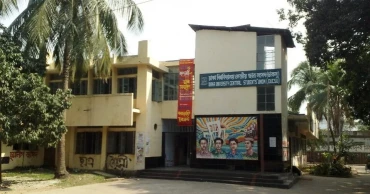
The programmes were announced on Wednesday at a press conference held in front of the DUCSU building. DUCSU Vice President (VP) Shadik Kayem outlined the month-long plan at the briefing.
According to the press conference, the 15 initiatives to build public support in favour of ‘Yes’ include nationwide door-to-door outreach, online campaigns, exhibition debates, seminars on state reforms, exchange meetings with civil society members and journalists, discussions with online activists, a discussion titled “Thoughts of the July Injured,” publication of songs, poems and documentaries, speech competitions, street plays and mime performances, dialogue with student and social organisations, and visits to educational institutions across the country to unite students.
In his written statement, Shadik Kayem said the core spirit of the July mass uprising was the reform of the existing state structure and the establishment of a discrimination-free society. He described the referendum as a historic pathway to implementing those reforms, adding that participating in the referendum and casting a ‘Yes’ vote is a responsibility to uphold the sacred legacy of the blood of the July martyrs.
Hadi shooting: DUCSU leaders march to Home Adviser’s office
He said a ‘Yes’ vote would pave the way for reforms such as limiting any individual from serving as prime minister for more than two terms, ensuring transparency in public sector recruitment, enabling public participation in major constitutional changes, increasing women’s representation, safeguarding the legitimate rights of people of all religions and ideologies, and recognising internet access as a fundamental right. At the same time, it would help end the culture of enforced disappearances, extrajudicial killings, secret detention centres, and other human rights violations.
At the press conference, DUCSU called upon all anti-fascist political parties including BNP, Jamaat, and NCP, along with student organisations, professional bodies, civil society members, and the wider student community and general public to unite and create a nationwide groundswell in favour of the ‘Yes’ vote in the referendum.
8 months ago
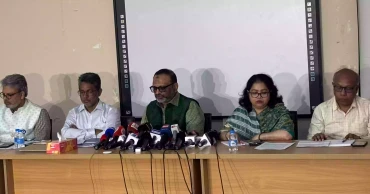
DUCSU ballot papers prepared with five-step security process: VC
Although a portion of the ballot papers of DUCSU election was initially printed at Nilkhet they were finally made usable through a five-level security process at the authorised institution, said Vice-Chancellor Professor Dr. Niaz Ahmad Khan on Sunday.
“The place or number of ballot printing does not have any impact on the fairness of the election,” he said at a press conference at Professor Abdul Matin Chowdhury Virtual Classroom in the administrative building of the university.
Professor Niaz explained that the process involved printing and cutting the ballots to specific measurements, assigning security codes, pre-scanning them in OMR machines, and obtaining the signatures and seals of the Chief Returning Officer and relevant Returning Officers to make them fit for voting.
“This complex security process cannot be completed in any shop at Nilkhet. At Nilkhet only the initial work was done and the final process was completed at the vendor’s office,” he said.
He said an experienced institution was given the responsibility of printing the ballots for the election.
Because of the record number of voters and candidates, a supporting institution was included under the tender along with the main vendor for quick preparation of ballots, said the VC.
The supporting vendor did not inform the university about the printing of 88,000 ballots on 22 reams of paper at Nilkhet, he said.
The vendor was show-caused for this incident and they apologised giving explanation, he added.
“If the candidates apply properly mentioning specific issues, they can observe the CCTV footage and the voter-signed list. This process will be completed in the presence of the experts nominated by the authorities,” he said.
Earlier BNP-backed teachers’ organization Sada Dal and Chhatra Dal raised allegations of irregularities in the election regarding ballot paper printing at Nilkhet.
1 year ago

A New Era in Bangladesh Student Politics: Why Shibir's Strategy is a Wake-Up Call for Other Parties
In the wake of Shibir's decisive victory in the DUCSU election 2025, other parties have received a wake-up call, as the win signals a major shift in student politics. According to a social media sentiment analysis by SharedToday, Shibir's success can be attributed to a positive campaign focused on service and discipline, a strategy other parties may need to adopt.
The New Face of Campus Politics
The old labels and abstract political narratives are losing their grip on students. Shibir reframed the election around present-day issues such as discipline, order, and practical services. This approach resonated overwhelmingly with students. While the "anti-independence" narrative did see a jump in engagement late in the DUCSU election, it ultimately failed to stop Shibir's momentum. Students chose to interact with content about "present-tense" capacity and discipline, rather than history.
A Wake-Up Call from the DUCSU and RUCSU Elections
In the recent DUCSU polls, Shibir's victory was a result of a well-executed strategy of timing, simple promises, and strong organization. Shibir's VP candidate, Sadiq, dominated online engagement in the final days, with his share jumping from 53.09% to 88.97%, creating a perception of "inevitability" that rivals couldn't counter. In the General Secretary race, Farhad held his lead from the beginning, while his rivals' engagement shares collapsed.
Read more: From DUCSU to JUCSU: Shibir’s winning streak rolls on
This trend appears to be continuing in the RUCSU election. According to a SharedToday inception report on September 16, Shibir's Sammilito Jote panel is dominating social media engagement with 92.6% of the share. In the VP race, Shibir's Mostakur Rahman has a commanding 66.2% share of engagement. While JCD and Oikya's campaigns are smaller, they are leaning more positive.
For instance, JCD's AGS candidate Zahin Biswas Esha has the strongest individual footprint online, with a 61.3% engagement share in her position. However, the overall data indicates that Shibir's powerful, service-oriented narrative is what is resonating most, capturing over 93% of all panel-level engagement in the early stages of the RUCSU campaign.
Lessons for Other Parties
The success of Shibir provides a clear lesson for other parties. The fragmented "July Bloc" (including Independent and Odhikar) saw its online engagement share collapse from 4.97% to 0.31% in the final stretch of the DUCSU election, largely due to a drop in presence and lack of "last-mile amplification". JCD, while holding its base in DUCSU, failed to excite voters, and its VP candidate's engagement collapsed from 30.33% to 9.08%.
Read more: JUCSU: Newly-elected VP Zitu vows to end sycophantic student politics
Shibir's strategy of disciplined organization, a focus on tangible services, and a positive message of moral leadership stands in stark contrast. As other parties look to compete, they may need to move away from old slogans and embrace a more positive, service-oriented approach to win over a pragmatic student body.
1 year ago
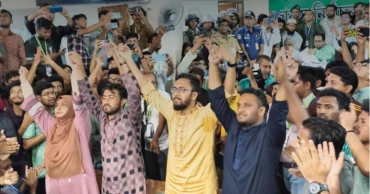
From DUCSU to JUCSU: Shibir’s winning streak rolls on
Islami Chhatra Shibir has tightened its grip on Bangladesh’s student politics, storming to a resounding victory in the Jahangirnagar University Central Student Union (JUCSU) elections.
Riding high on its earlier victory of Dhaka University’s DUCSU polls, the Shibir-backed ‘Coordinated Student Alliance’ clinched 20 out of 25 central council seats, leaving rival groups trailing far behind.
Although independent candidate Abdur Rashid Zitu won the Vice President (VP) post Shibir-backed panel candidates secured the remaining key positions.
Zitu grabbed the VP post with 3324 votes. He is the convener of JU’s Gonoovvutthan Rokkha Andolon and a 47th batch student of the Institute of Comparative Literature and Culture.
The results were announced on Saturday at 7 pm by the JU Election Commission.
The Shibir-backed candidates elected include General Secretary Mazharul Islam (3930 votes) AGS (Male) Ferdous Al Hasan (2358) AGS (Female) Ayesha Siddiqua Meghla (3402) Education & Research Secretary Abu Ubaida Usama (2428) and Environment & Nature Conservation Secretary Md. Shafayet Mir (2811).
Other elected members from the Shibir-backed panel include: Literature & Publication Secretary Jahidul Islam Bappi (1907), Co-Cultural Secretary Md. Raihan Uddin (1986), Drama Secretary Md. Ruhul Islam (1929), Co-Sports Secretary (Female) Farhana Akter Lubna (1976), Co-Sports Secretary (Male) Md. Mahdi Hasan (2105), IT & Library Secretary Md. Rashedul Imon Likhan (2436), Co-Social Welfare & Human Development Secretary (Female) Nigar Sultana, Co-Social Welfare & Human Development Secretary (Male) Touhid Islam (2442) Health & Food Security Secretary Husne Mubarak (2653) and Transport & Communication Secretary Tanvir Rahman (2559).
JUCSU Polls: Independent Abdur Rashid grabs VP, Shibir’s Mazhar bags GS
Executive members include Tarikul Islam (1766) and Abu Talha (1854) (male) and Nabila Binte Harun (2753) Fabliha Jahan (2475) and Nusrat Jahan Ima (3014) (female).
Among the remaining five seats three went to independents and two to the Bangladesh Ganatantrik Chhatra Sangshad (Bagchas) panel. Independent winners were Cultural Secretary Muhibullah Sheikh Jisan (2018) and Sports Secretary Mahmudul Hasan Kiran (5778).
Bagchas won Social Welfare & Human Development Secretary (Ahsan Labib, 1590) and male executive member (Mohammad Ali Chishti, 2414) post.
The elections held for the first time in 33 years saw nearly 68% turnout with about 8000 of 12000 eligible voters casting ballots.
Counting took almost 40 hours as votes were tallied manually rather than by machine.
1 year ago
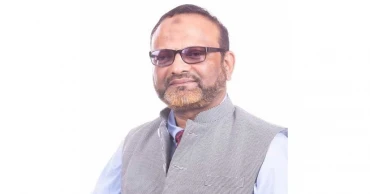
DU VC grateful for successful holding of DUCSU polls
Dhaka University Vice-Chancellor Professor Niaz Ahmad Khan has expressed gratitude to the students, candidates, media workers, law enforcement agencies, and all those involved in the electoral process for the Dhaka University Central Students’ Union (DUCSU) and Hall Union.
He thanked the students for their extensive cooperation and said that honouring the students’ demand, the university administration organised the long cherished DUCSU election with the cooperation of various stakeholders.
For spontaneous presence at all stages of the election, the VC expressed special gratitude to the journalists. He expressed deep sorrow at the death of Tariqul Islam Shibli, a journalist of Channel S who died while covering the polls, and prayed for the forgiveness of the departed soul.
Expressing gratitude to the Election Commission and all involved in the electoral process, the VC said that the Election Commission truly worked day and night.
“One member of the commission, leaving his child in ICU in a critical condition, carried out responsibilities with us continuously out of duty. I gave this example to show that much hard work of many people is behind organising the DUCSU election. My colleagues worked with great sincerity throughout the past eleven months of this arrangement. They scrutinised and implemented every step and plan thoroughly. Their role is outstanding by any measure.”
He said “Responding to our arrangement, guardians, various teachers’ forums, the observer team from Chittagong University, and stakeholders at different levels came forward. We want to thank them.”
Shibir-backed panel sweeps DUCSU polls for first time in history
Wishing the winning and defeated candidates well, the vice-chancellor said that their contributions must be mentioned for two reasons. First, they played a role in reactivating a very important institution like DUCSU. Second, from the preparation stage to election day, by showing tolerance of differing opinions, they stayed together without major conflict.
“Despite different groups, views, and disagreements, they have created an excellent example that we can be united for Dhaka University and the country out of affection.”
The vice-chancellor said, “I especially want to remember the role of the law enforcement agencies. In some difficult situations, the Ministry of Home Affairs, the police administration, various branches of the police, and intelligence agencies played a major role.”
As a national institution, the interest and support shown by the people of the country toward Dhaka University is a great achievement for us. I salute the entire nation for standing with Dhaka University. We still have a long way to go. Through the reactivation of DUCSU, in the process of creating an inclusive university, and in the reconstruction of Bangladesh, we want to remain with the country and the nation, the VC mentioned.
1 year ago
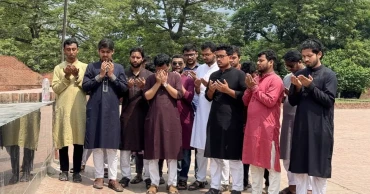
DUCSU leaders of Shibir-backed panel pay homage to ’71 and July martyrs
Leaders of the Chhatra Shibir-backed panel, who won the Dhaka University Central Students’ Union (DUCSU) elections, paid homage on Thursday to the martyrs of the 1971 Liberation War and the July uprising.
They offered prayers at the graves of the July uprising martyrs and at the Martyred Intellectuals Memorial in Rayerbazar.
Newly elected DUCSU Vice-President Abu Shadik Kayem, General Secretary SM Farhad, Assistant General Secretary Mohiuddin Khan, along with other panel members, were present.
The programme was part of a schedule announced by Islami Chhatra Shibir to celebrate their victory in the DUCSU polls.
The leaders said they would begin their official activities after taking office, starting by honouring the martyrs who fought against fascism in the country.
Students’ anti-extortion stance helped Shibir win DUCSU elections: Manna
“We believe fulfilling the expectations of the martyrs is our responsibility, and we want to start this from DU, where the July uprising began,” said Vice-President Shadik Kayem.
“By visiting and offering prayers at the graves of the 1971 and July uprising martyrs today, we have initiated our post-victory activities,” added General Secretary SM Farhad.
In the DUCSU 2025 elections, the Shibir-backed panel Oikkyoboddho Shikkharthi Jote achieved a landslide victory, winning 23 posts.
1 year ago
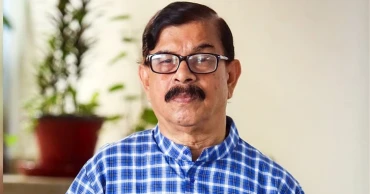
Students’ anti-extortion stance helped Shibir win DUCSU elections: Manna
Nagorik Oikya President Mahmudur Rahman Manna on Wednesday said students’ strong stance against extortion, grabbing and dominance, along with their desire for new politics, helped Islami Chhatra Shibir panel win the DUCSU elections.
Speaking at a discussion, he, however, said the DUCSU polls do not reflect the national vote and will neither influence national politics.
“This generation, after a year, feels that we do not want to see this criminalised politics, the lies, the extortion, the politics of capture and domination. They do not want to see such behaviour in politics. They want to do something new,” he said.
Ganatantra Mancha organised the programme titled ‘Democratic Transition in Bangladesh: The Path to Reform’ at Dhaka Reporters’ Unity (DRU).
Manna, a former DUCSU Vice President, warned that if politics is only about lies, extortion and the struggle for power, it will not be sustainable.
About the DUCSU polls’ impact on national politics, he said, “I have been DUCSU Vice President twice. I was very popular among students, but I did not have a political party. I did not come to power, and my party could not come to power either. Winning in DUCSU does not mean they will achieve something huge in national politics.”
About Chhatra Shibir’s victory in the DUCSU elections, Manna said, “Thirty or 40 years ago, some political parties could not openly participate and faced danger if anyone noticed them. Now, they are standing tall before us. Even big parties are being challenged.”
Manna added that the DUCSU election has shown that fair voting is possible, even though many found the results hard to believe.
He thanked the student community, saying they showed courage that previous generations could not.
BNP leader Salahuddin congratulates DUCSU election winners
The Nagorik Oikya leader said that independent candidates are now willing to run, signalling a shift. “Politics is no longer about large rallies but about digital campaigns and the ideas of the new generation. This generation has rejected old traditions like greeting seniors, following rigid protocols, and domination politics. They understand that politics requires sincerity, struggle, and commitment, not shortcuts to power.”
He said while political parties have become opportunistic, students have set a different example. “For fair elections in the future, unity and reforms are essential. For this, as much firmness is needed as flexibility when necessary.”
Manna suggested that Supreme Court decisions could provide acceptable solutions during crises and must be respected by all parties.
The Nagorik Oikya president said that politics is not something to take lightly; it is a struggle connected to people’s lives. “So, everyone has a responsibility to build honest, inclusive, and reform-oriented politics. Only then can good elections and a stronger political culture be ensured for the future.”
1 year ago