Salahuddin Ahmed

BNP pays tribute to veteran leader Salahuddin Ahmed
BNP leaders on Wednesday paid tribute to the party’s veteran leader and former MP Salahuddin Ahmed in front of the party’s Nayapaltan central office.
After the second namaz-e-janaza following Zohr prayers, senior leaders led by BNP Acting Secretary General Ruhul Kabir Rizvi placed the party flag over Salahuddin’s coffin and paid tribute to him.
BNP Vice-Chairman Barkat Ullah Bulu, chairman’s adviser Abdus Salam, Joint Secretaries General Khairul Kabir Khokon, Habib-un-Nabi Khan Sohel and Abdus Salam Azad, Dhaka South BNP Convener Rafiqul Alam Majnu, and the deceased’s son and Dhaka South BNP Member Secretary Tanvir Ahmed Robin, among others, were present.
Earlier, they along with leaders and activists of the party’s different units and affiliated organisations, attended the second janaza for Salahuddin.
A munajat was offered after the janaza praying for the salvation of the departed soul.
Earlier, the first namaz-e-janaza was held at the South Plaza of the Jatiya Sangsad Bhaban in the morning.
Prime Minister Tarique Rahman, Speaker Hafiz Uddin Ahmad, Deputy Speaker Kayser Kamal, Chief Whip Nurul Islam, Water Resources Minister Shahiduddin Chowdhury Anee, cabinet members, whips, and current and former MPs attended the prayer.
President Mirza Fakhrul Islam Alamgir’s military secretary, Major General ASM Bahauiddin, placed a wreath on the coffin on behalf of the president. The prime minister, the speaker, the deputy speaker, the chief whip and other whips also paid their last respects by placing wreaths separately.
Salahuddin Ahmed died at Evercare Hospital in Dhaka at around 8pm on Tuesday while undergoing treatment for lung problems and other health complications. He was 80.
Family members said his third and final janaza would be held at Lal Mosque in Shyampur at 3pm, after which he would be buried beside his father’s grave in Jurain.
13 days ago
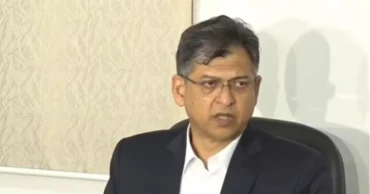
No journalist to be victimised under Cyber Security law: Salahuddin
The government is exercising utmost caution so that the proposed Cyber Security (Amendment) Act does not become an oppressive law and that no journalist or media outlet is victimised under it, Home Minister Salahuddin Ahmed said on Monday.
The proposed law would be finalised only after extensive consultations with stakeholders and consideration of their recommendations, he said at a press briefing at Secretariat following a consultation meeting with representatives of print and electronic media at the Ministry of Information and Broadcasting.
“Our primary objective is to ensure that no journalist falls victim to the misuse of this law,” he said.
The Home Minister said the draft amendment bill was earlier laced before the Cabinet which directed the authorities to hold extensive discussions with IT experts and other stakeholders involved in cyberspace.
Then the government published the draft on its website to seek opinions from people from all walks of life, he said adding that feedback has already been received from various institutions, human rights organisations, students and cyberspace users.
Monday’s meeting was the government’s second consultation with editors, senior journalists, newspaper organisations and representatives of professional journalists’ associations.
At the first meeting on September 10, editors were requested to submit their views in writing or through the website.
The minister said many participants presented their views at Monday’s meeting and pledged to submit written recommendations.
He said a proposal came to hold detailed discussions between media and cyber experts to ensure that the media is not harmed or victimised and that necessary safeguards are incorporated into the law.
“The government has gladly accepted the proposal,” Salahuddin said, adding that the government has no intention of enacting the law to target the media.
Regarding safeguards for journalists in print, electronic and online media, the minister said a proposal was made to make prior court approval mandatory before taking action against or arresting a journalist.
He said the government considered the proposal appropriate and logical.
Stakeholders will be given another 15 days to submit formal recommendations which will then be considered for inclusion in the draft, he said.
A provision setting a specific timeframe for the disposal of cases or appeals will also be considered to prevent people from remaining in legal uncertainty for an indefinite period, the minister added.
Salahuddin said a special coordination mechanism would be formed to help finalise the draft.
The Principal Information Officer will serve as the focal point, while the Ministry of Posts, Telecommunications and Information Technology and the Ministry of Information and Broadcasting will jointly coordinate the process.
Representatives of the Editors’ Council, Electronic Media Association and a panel of cyber experts formed by the IT ministry will participate in the process and are expected to submit recommendations within 7 to 15 days, said the minister.
The revised draft will then be published on the government website again for further public feedback before being placed before the Cabinet, the minister added.
If the recommendations are accepted they will be incorporated into the draft before an inter-ministerial review and submission to the Cabinet.
After Cabinet approval, the bill will be placed before Parliament where it will undergo further deliberation involving members of both the ruling and opposition parties as well as views emerging from seminars and symposiums outside Parliament.
Salahuddin said the main objective of the proposed law is to establish a balanced legal framework to protect the country, society and young people from cybercrimes and other criminal activities.
The act is also intended to comply with international standards while protecting social and religious harmony, family values and indigenous culture, he said.
29 days ago
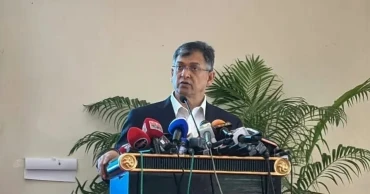
Home Minister warns police of criminal, even sedition cases for indiscipline
Home Minister Salahuddin Ahmed on Saturday warned police members that disciplinary violations and criminal offences committed while performing their duties could lead to both departmental punishment and criminal proceedings including sedition cases.
“Correct yourselves quickly. If anyone violates discipline or commit any kind of offence while performing duties, we will not limit the matter to departmental punishment,” he said while addressing the medal-awarding ceremony of Police Week 2026 as the chief guest.
He said the government has information that some field-level police members are neglecting their duties and, in some cases, secretly providing information or otherwise assisting forces of “fascism.”
“We will not limit ourselves only to disciplinary action. If a criminal offence has been committed, justice will be ensured under the criminal law, Penal Code or CrPC, as applicable,” he said.
Warning police officers who fail to understand public expectations, the minister said, “If any police officer, regardless of rank, fails to understand public expectations, the consequences will not be good.”
He urged police to become people-friendly and refrain from conduct that appears abnormal or undemocratic to people.
“People do not want to see us as kings or emperors. They want people-friendly police,” he said, urging senior officers not to engage in activities that cause discomfort, unrest or distress among people, and not to allow or tolerate such conduct by subordinates.
The minister said the government believes in “punishment and reward” and is continuously rewarding the virtuous and punishing wrongdoing, although it might not have been possible to ensure justice in every case.
He said the police force was politically misused and abused by the “fallen fascist forces” and was turned against people. Many police members were compelled to follow illegal or unlawful orders, he said, adding that the government gave them an opportunity to reform and regain public trust.
At the same time, the minister said minor mistakes made in good faith while performing duties would be considered separately.
“If minor mistakes occur while performing duties in good faith, they will certainly be viewed accordingly,” he said.
The minister also stressed the need to implement the aspirations for change and a discrimination-free society that emerged from the 2024 student-mass uprising.
He said the government would increase the police force’s manpower and capabilities if necessary, including recruiting officers and personnel through extensive short courses.
“Police strength, numbers, equipment and logistics will be increased as necessary, and we are increasing them,” he said.
1 month ago
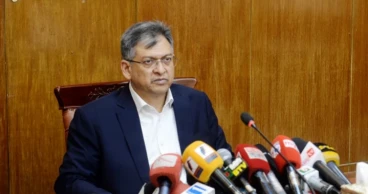
Govt not worried over crude bomb blasts, arson attacks: Home Minister
Home Minister Salahuddin Ahmed on Sunday said the government is not at all worried about recent crude bomb blasts, arson and other activities in the capital, saying such acts had been visible earlier.
He said those involved in the crude bomb blasts have been arrested while those behind the arson attacks on buses are being identified through CCTV footage, the minister told reporters at Secretariat.
He said the government has heard that the “ousted fascist force”, “mafia force” and the banned political party Awami League has announced a “so-called” programme following a verdict by the International Crimes Tribunal.
“Perhaps today is the 20th, and they have called it a lockdown. Targeting that, some crude bomb blasts took place at one or two places in the capital at night,” he said.
“We have been able to arrest every accused along with motorcycles. They are being interrogated. Those who hurled a crude bomb in front of the High Court gate have also been arrested. Arrests have also been made in Jatrabari incident,” he said.
Regarding the bus arson, the minister said some buses including abandoned ones and those parked at different places at night without drivers or helpers were targeted.
“As you have seen, one or two of them were set on fire. We are also trying to find them out by examining CCTV footage. They will definitely be identified and action will be taken against them,” he said.
The government is “not paying much attention” to these incidents, he added.
Asked about the possible law-and-order situation in the coming months amid a message from ousted former prime minister about returning in December, Friday’s incident at Gulshan and the “lockdown” programme announced for Sunday, the minister said, “We have heard the word lockdown. But where is the lockdown visible here? The nation is rejecting these.”
He said Awami League which is accused of killing 1,400 people and carrying out a massacre has yet to apologise to the nation or admit their mistakes. “According to the UN report, it was 1,400, and according to our report, it was more than 2,000.”
“They have not apologised to the nation, have not admitted their mistakes and are making statements from abroad,” he said.
The minister said the people would never politically accept Awami League in the country, describing such activities as “irrelevant”.
“Whether they return in December or February, we have no attention on these matters,” he said.
Asked whether the Awami League is taking advantage of the opposition party’s long marches and whether the opposition is providing an opportunity for Awami League to take to the streets, Salahuddin said the government pays attention when the opposition criticises it.
Regarding the opposition’s long march, he said, “The opposition has some demands, and they held the long march over those demands. They can do so. This is democratic culture, and they will carry out their programmes. Our responsibility is to help them hold their programmes peacefully. We have done that.”
He said a long march was held in Chattogram without any violence or clash, while another long march from Dhaka to the northern region was held peacefully on Saturday.
“They have expressed their views. They may have different demands, but if people support those demands, people will speak for them,” he said.
The minister said the next election would be held after five years in accordance with the rules and through the democratic process and public opinion would then show whom the people support.“I have no comment on this matter now,” he said.
He said the “fascist forces” of the Awami League are carrying out small scale crude bomb attacks in reaction to the ICT verdict and has announced the programme for that reason.“There is no connection with instability,” he said.
Salahuddin added that Awami League has been carrying out such activities for nearly two years and that it was a continuation of those activities.
“Whether they have any connection with the opposition’s programme, you should find that out yourselves. I do not want to comment on this,” he said.
Regarding the opposition’s demands for resolving the fuel, gas and electricity crises, the home minister said the issues have already been discussed extensively in parliament.
1 month ago
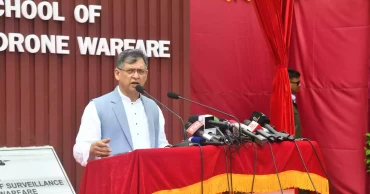
Digital surveillance being strengthened to combat border crimes: Salahuddin
Home Minister Salahuddin Ahmed on Tuesday said the government is taking initiatives to strengthen technology-based surveillance along the border to combat drug and arms smuggling, human trafficking and illegal trespass.
“We are preparing digitally to tackle illegal entry, drug and arms smuggling, and human trafficking. Skilled and trained personnel will be developed for this purpose,” he said.
The minister made the remarks while speaking as the chief guest at the inauguration of the “Border School of Surveillance and Drone Warfare” at the Sylhet Border Guard Bangladesh (BGB) Sector Headquarters.
After the inauguration, he inspected the activities of the training centre and witnessed a practical demonstration of drone technology.
Salahuddin said the BGB is being modernised to curb criminal activities along the border, which he said will help reduce smuggling and other crimes.
He said the Narcotics Control Act is also being strengthened to prevent the spread of drugs.
The minister said thermal and night-vision drones will be deployed in remote border areas where surveillance by manpower is difficult.
“These drones will help detect movements on the other side of the border and enable authorities to take prompt action,” he said.
Salahuddin said initiatives are also being taken to manufacture and assemble drones in Bangladesh, which could eventually contribute to the country's defence industry.
He said drone technology could play an important role not only in border security but also in relief distribution and rescue operations during disasters.
Referring to the advanced drones displayed at the training centre, the minister said sophisticated drone technologies from developed countries will gradually be incorporated into Bangladesh's capabilities. “We have plans to achieve more advanced capabilities within the next one to two years,” he said.
On the issue of mob culture, he said the government remains vigilant against the trend and has already managed to bring it under control to a significant extent.
During his daylong visit, Salahuddin is scheduled to hold a meeting with senior officials of the district administration and law enforcement agencies at Sylhet Circuit House in the afternoon.
He is also scheduled to attend a discussion organised by the BNP at the District Shilpakala Academy marking the party's founding anniversary.
Earlier, the minister arrived at Osmani International Airport around 11:20am. It was his first visit to Sylhet since assuming office as home minister.
1 month ago
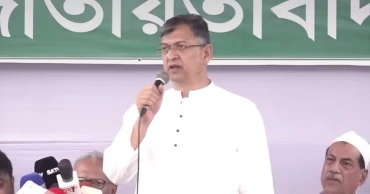
Home Minister pledges to turn police into people-friendly force
Home Minister Salahuddin Ahmed on Wednesday pledged to transform Bangladesh Police into a people-friendly force that meets public expectations.
“We pledge that the Bangladesh Police will become a people-friendly force in line with public expectations, InshaAllah,” he said while speaking at a discussion and doa mahfil marking Eid-e-Miladunnabi at the BNP central office in Nayapaltan.
The Home Minister said no one should expect a revolutionary overnight change in the country’s law and order situation, but expressed confidence that the situation would improve under the leadership and guidance of Prime Minister Tarique Rahman.
“Under the leadership and guidance of Prime Minister Tarique Rahman, the leader of the masses, we will be able to improve the law and order situation to a level where public expectations will be met,” he said.
The minister urged people to cooperate with the law enforcement agencies by providing information and other necessary support.
Salahuddin said changes were being brought to the legal frameworks governing various law enforcement agencies to ensure accountability and transparency in their activities.
He said law enforcement personnel were being rewarded, awarded certificates and medals for good and outstanding performance, while the principle of punishing wrongdoers and rewarding those who perform well was being followed.
The Home Minister said the present government inherited a fragile law-and-order situation following the 2024 student uprising, along with very high public expectations.
He said modernising the law enforcement agencies, boosting their morale and motivating them to work as servants of the people were being pursued simultaneously.
Salahuddin also claimed that during the six months since the government assumed office, there had not been a single major criminal incident where the police failed to apprehend those responsible within a reasonable period or bring them before the law.
He said the morale of the police and other law enforcement agencies had improved significantly during the period and that they were now working with renewed strength to combat crime.
Referring to several nationally discussed cases, including an incident in Rangpur and the Ramisa murder case, the home minister said those responsible had been brought under the law within a reasonable time and the cases had been handed over to the courts through due legal procedures.
He said the government also extended necessary cooperation to help complete judicial proceedings within shorter periods where required by society.
BNP Acting Secretary General Ruhul Kabir Rizvi, Chairman’s Advisory Council member Abdus Salam, Joint Secretary General Khairul Kabir Khokon and Shaheed Uddin Chowdhury Anee, among others, attended the programme.
2 months ago
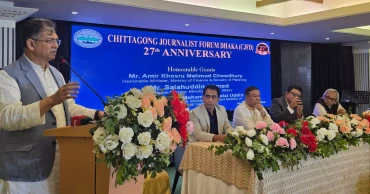
Govt focusing on domestic gas exploration, marine resource extraction: Home Minister
Home Minister Salahuddin Ahmed has said the current government is putting importance on exploration of domestic gas resources, extraction of marine resources to develop the blue economy, expansion of green energy and diversification of energy sources for sustainable economic development.
“Unless we extract the resources of the deep sea and harness the potential of the blue economy…..we will lag behind. Why not start it from today? That is why we have made plans,” he said.
The home minister made the remark, while addressing a programme marking the 27th founding anniversary of Chattogram Journalist Forum Dhaka (CJFD) at the All Community Club in Gulshan on Friday night.
Focusing on Chattogram and Cox’s Bazar based enormous potentials for the country’s economy, he said: "There is only one Matarbari, one Sonadia and one Cox’s Bazar that houses the country’s single marine drive road and the world's longest sandy beach. Still, it remains largely virgin. We have to develop it. Everything is there.”
He said Cox’s Bazar and Chattogram should not be known only for tourism destinations but also for economic hubs.
“It is not enough to know Cox’s Bazar and Chattogram as tourist destinations, rather we have to complete the process by turning them into economic hubs. We have to flourish and explore their potential,” the minister said.
Noting that Bangladesh has yet to properly utilise its marine resources, he stressed the need for initiating a process now to extract marine resources in future.
“How many marine resources do we extract? How much seaweed do we extract from the sea? Nothing (we extract). We could not extract the gas beneath the sea either. We have not been able to harness the other potential of the blue economy, including mineral resources,” Salahuddin said.
He said the government has also decided to give greater attention to both offshore and onshore gas exploration.
“We have focused on our own gas exploration, both offshore and onshore, and decisions have been taken in this regard. But it will take time,” he said.
Salahuddin said even if exploration begins today, it could take at least seven to eight years to start commercial extraction and bring the gas into the national grid.
“But if we do not start today, we will remain dependent on the same sources even after seven years,” he said.
About green energy, he said the government has also set a target of generating between 5,000 and 10,000 megawatts of electricity from renewable energy by 2030.
“We will gradually move towards green energy and renewable energy. For that, we have set a target of generating 5,000 to 10,000 megawatts from the renewable energy sector by 2030,” he said, adding that the government has relaxed its policies to attract foreign investment in this sector.
The Minister also stressed the need to diversify Bangladesh's sources of gas and energy imports to reduce dependence on a single source.
Citing that during the Awami League period, Bangladesh had become dependent on the single sources for gas, he said, “We became dependent on the Middle East and the Gulf,” he added.
As the Ukraine war and the Iran-Israel war created crises, now Bangladesh still sometimes has to buy gas from the spot market at two or three times the price, he went on.
“So, we’ve decided that there will be no single sourcing. We’re now trying to source gas from Malaysia, Indonesia and various other countries. Discussions are underway with them,” said the Minister.
He said the government is preparing a long-term master plan to meet the country's growing energy and power demand in line with economic growth, industrialisation and increasing use by consumers.
He said Bangladesh currently generates around 15,000 megawatts of electricity, while peak-hour demand reaches around 17,000 megawatts, leaving a shortage of around 2,000 megawatts, particularly after the evening.
“We are meeting this shortage now, but gradually we have to take our generation capacity to 30,000 megawatts,” he said.
The minister also said the government has a plan to build an expressway railway from Chattogram to Dhaka. “If this is implemented, it will be possible to travel from Chattogram to Dhaka in just two hours,” he said.
The 27th founding anniversary of CJFD was celebrated in a festive atmosphere with the participation of its members. The programme included a discussion, cultural event, cake cutting and dinner.
State Minister for Land Mir Mohammed Helal Uddin joined the programme virtually as a special guest.
Besides, Prime Minister's Speech Writer SAM Mahfuzur Rahman and Bangladesh Federal Union of Journalists (BFUJ) Secretary General Kader Gani Chowdhury, among others, spoke on the occasion.
CJFD President Shamim Jahangir delivered the welcome address, while its General Secretary Touhidur Rahman conducted the event.
2 months ago
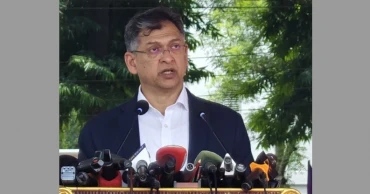
Govt to build police force free from political influence: Home Minister
Home Minister Salahuddin Ahmed on Sunday said the police must not serve as an instrument of any political party or group but should instead become a true friend of people and a symbol of public security.
The government's priority is to ensure public safety and build a modern, professional and people-oriented police force free from political influence, he said while addressing the graduation parade of the first phase of the 27th BCS (Police) batch at the Bangladesh Police Academy in Sardah, Rajshahi.
He said the government has taken various steps to restore the morale of the police force which was undermined by excessive politicisation during the previous “fascist government”.
The minister said a strict system of rewards for professionalism and disciplinary action for misconduct has been introduced to strengthen integrity and discipline within the force.
Congratulating the newly appointed officers who took part in the parade, the minister said this joyous moment should have come much earlier in their lives. He said it was deeply painful that they had endured 18 years of severe deprivation and inhumane suffering as victims of the vindictive actions of the previous authoritarian and fascist government.
The minister extended his heartfelt greetings to all the officers for regaining their rightful positions and due recognition following the fall of the authoritarian regime.
He said they were beginning their careers at a historic time for the country and urged them to uphold equality before the law.
“From political activists to marginal farmers, everyone is equal in the eyes of the law. No one seeking police services should face discrimination,” he added.
He also stressed the importance of maintaining the chain of command, discipline, loyalty and teamwork, while urging the officers to enhance their expertise in cyber security and criminal investigation to meet emerging challenges.
Reaffirming the government's zero-tolerance policy against corruption, Salahuddin called on all police members to perform their duties with honesty and dedication.
The minister expressed hope that members of the 27th BCS (Police) batch would use their knowledge and experience gained over the past 18 years in different professions to strengthen the Bangladesh Police.
A total of 58 probationary ASPs — 57 from the first phase of the 27th BCS (Police) batch and one from the 28th batch — officially entered service through the parade.
At the ceremony, Probationary ASP Dr Md Nurul Huda Bhuiyan won the Best in Field Activities award and was also named the Best Probationer. Probationary ASP ABM Mamun received the Best Shooter award, while Abu Numan Mohammad Khairul Islam won the Best Academic Award.
During the ceremony, the minister inspected the parade, took the salute and distributed awards among the best-performing probationary officers.
The event was attended as special guests by Land Minister Mizanur Rahman Minu, local Members of Parliament, Inspector General of Police (IGP) Md. Ali Hossain Fakir, Principal of Bangladesh Police Academy G M Azizur Rahman, Rajshahi Divisional Commissioner Dr. A.N.M. Bazlur Rashid, and Rajshahi Range Deputy Inspector General (DIG) Md. Ashik Saeed.
Senior military and civilian officials, local and foreign invited guests, guardians of the ASP probationers, and journalists from various media outlets were also present at the ceremony.
2 months ago
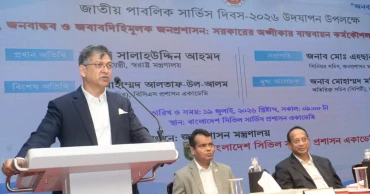
Neutral civil service key to meeting public expectations: Home Minister
Home Minister Salahuddin Ahmed on Sunday stressed the need for government officials and employees to remain completely free from political bias and discharge their duties with patriotism, integrity and professionalism to meet public expectations.
“People have placed high expectations on the present government. Transparency and accountability must be ensured at every level of the administration to fulfil those expectations,” he said.
The minister made the remarks while inaugurating a 4-day workshop titled “Efficient, Citizen-friendly and Accountable Public Administration: Strategies for Implementing the Government’s Commitments” at the BCS Administration Academy auditorium at Shahbagh, marking National Public Service Day 2026.
He said the civil service, as the state's main driving force, must move away from the trend of politicisation witnessed over the past 17 years and transform itself into a true public service institution while ensuring transparency and accountability at every level of the administration.
Salahuddin Ahmed said workshops should produce tangible benefits for the public instead of serving as ceremonial events or attracting the attention of higher authorities.
The minister said the civil servants should consider themselves public servants rather than rulers. “You are among the most privileged sections of society. Do not see yourselves as rulers; dedicate yourselves to serving the people.”
Salahuddin Ahmed also stressed the need for comprehensive reforms in the country's statistical system, alleging that key national statistics have been distorted for political purposes during the previous regime.
He said inaccurate data were presented on the population census, agricultural production and per capita income, underscoring the need to strengthen the Bangladesh Bureau of Statistics (BBS) as one of the country's most important institutions for evidence-based policymaking.
Highlighting economic priorities, Salahuddin Ahmed said agriculture and remittances should receive the highest attention to strengthen the country's economic foundation.
He said Bangladesh still depends heavily on its farmers and agricultural sector and called for the development of agro-based industries by expanding agriculture, fisheries and livestock production.
The Minister also emphasised the importance of vocational and technical education to transform the country's large population into a skilled workforce.
He added that the government is also considering revitalising the Family Planning Department to address the country's rising birth rate.
Salahuddin Ahmed said policy decisions are formulated by the government based on its political mandate, while civil servants are responsible for translating those policies into programmes, preparing projects and ensuring proper implementation through monitoring by the Implementation Monitoring and Evaluation Division (IMED).
He instructed officials to strictly follow existing rules and regulations while implementing the elected government's election manifesto and its 31-point commitments, saying these represent the mandate given by people.
3 months ago

Govt aims to build national unity and develop country: Home Minister
Home Minister Salahuddin Ahmed on Thursday said the current government is committed to strengthening national unity and building the country.
He made the remarks while briefing reporters after exchanging Eid greetings with Prime Minister Tarique Rahman at his Gulshan residence in Dhaka.
The minister said people from all walks of life, regardless of political affiliation, must remain united to build a developed and prosperous Bangladesh.
“Our main goal and only slogan is ‘Bangladesh First’. We believe in working together to build the country, putting Bangladesh above all else,” he said.
“We want to move forward through strength in unity by taking every citizen along with us,” he added.
Referring to the political situation after August 5, 2024, the minister said people in Bangladesh are now enjoying a free, independent and peaceful environment.
“In this atmosphere of freedom, the country has been able to celebrate several festive Eids consecutively,” he said, calling on people to pray for the country’s continued prosperity, peace, stability and overall welfare.
The Home Minister also said Prime Minister Tarique Rahman and his wife Dr Zubaida Rahman visited the graves of late President Ziaur Rahman and thrice-former prime minister Khaleda Zia, at the Zia Udyan in Sher-e-Bangla Nagar on the occasion of Eid-ul-Azha.
Later, they also visited and paid their respects at the grave of late Arafat Rahman Koko, the PM's younger brother; and Dr Zubaida’s late father, ex-Navy Chief Mahbub Ali Khan in Banani.
They also paid tribute to the 57 military officers, as well as others killed from February 25-27, 2009 in the Pilkhana tragedy, and prayed for the salvation of their departed souls, the home minister said.
State Minister for Local Government Mir Shahe Alam and the home minister’s son, Syed Ibrahim Ahmed, a member of the Bangladesh Cricket Board’s ad hoc committee, were present at the briefing.
4 months ago