India-Pakistan War
Pakistan warns of strong response to any attack on anniversary of clash with India
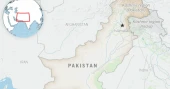
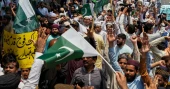
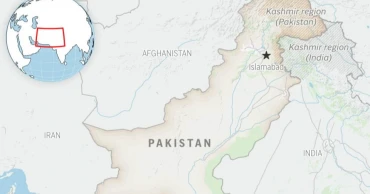
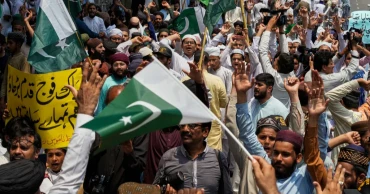
Pakistan on Thursday warned of a strong response to any future aggression as it marked the first anniversary of last year’s four-day military conflict with neighbouring India that pushed the two nuclear-armed rivals close to war before a US-brokered ceasefire ended the fighting.
In a statement, Pakistan’s military said any “hostile design” against the country would be met with “greater strength, precision and resolve” than during the May 2025 confrontation, which Islamabad named “Marka-e-Haq” or “Battle of Truth.”
The conflict erupted after gunmen attacked tourists in Indian-administered Kashmir, killing 26 people, most of them Hindu visitors. India accused Pakistan-backed militants of carrying out the attack, an allegation Islamabad denied while demanding an independent investigation.
On May 7 last year, India launched strikes inside Pakistan, prompting retaliatory attacks from Pakistan involving drones, missiles and artillery shelling. The clashes left dozens dead on both sides before a ceasefire was reached on May 10 through US mediation.
Pakistan had claimed during the conflict that it shot down at least seven Indian military aircraft, including a French-made Rafale fighter jet. India acknowledged losses but did not disclose details.
Donald Trump has repeatedly claimed credit for helping prevent a wider war between the two neighbours.
India and Pakistan have long maintained tense relations and have fought two of their three wars over the disputed Himalayan region of Kashmir, which both countries claim in full.
5 months ago

Ceasefire a meaningful beginning, but 'retaliation' mindset risks it: Prof Shahab Khan
Highlighting the importance of permanent solutions, Executive Director of the Bangladesh Center for Indo-Pacific Affairs Professor Shahab Enam Khan has said although the situation between the two South Asian nations has "stabilised" for now, there remains a risk of renewed escalation if either India or Pakistan makes a "strategic miscalculation".
"The ceasefire marks a meaningful beginning, but a prevailing "retaliation" mentality could jeopardise it, possibly leading to further military confrontations," Khan, who also serves as a professor at the Department of International Relations of Jahangirnagar University, told UNB on Sunday.
The foreign affairs expert said this risk is a "significant concern" for the international community, especially major powers like Beijing and Washington, as well as regional neighbours such as Tehran and others in the Middle East and South Asia, who are closely monitoring developments.
India and Pakistan agreed to a ceasefire on Saturday after “US-led talks” to end the most serious military confrontation between the nuclear-armed rivals in decades but accused each other of violating the deal just hours later.
The ceasefire had been expected to bring a swift end to weeks of escalating clashes, including missile and drone strikes, triggered by the mass shooting of tourists last month that India blames on Pakistan, which denies the charge.
But multiple explosions were heard in two large cities of Indian-controlled Kashmir hours after the countries agreed to the deal.
Indian Foreign Secretary Vikram Misri said late Saturday that “there had been repeated violations of the understanding arrived between the two countries” and accused Pakistan of breaching the agreement.
Focus on Permanent Solutions
To promote lasting peace, Prof Khan said, it is politically wise to avoid retaliatory rhetoric and focus on permanent solutions.
He said this strategy should incorporate the growing international consensus on resolving the tensions surrounding Kashmir and terrorism.
Dhaka appreciated Indian Prime Minister Narendra Modi and Pakistan Prime Minister Shehbaz Sharif for agreeing to a ceasefire with immediate effect and to engage in talks.
"I most sincerely commend Prime Minister Narendra Modi of India and Prime Minister Shehbaz Sharif of Pakistan for agreeing to a ceasefire with immediate effect and to engage in talks," said Chief Adviser Professor Muhammad Yunus in a message on Saturday night.
Prof Yunus expressed his deep appreciation to US President Donald Trump and US Secretary of State Rubio for their effective mediation.
India and Pakistan accuse each other of violating ceasefire hours after reaching deal
"Bangladesh will continue to support our two neighbours to resolve differences through diplomacy," Prof Yunus said.
Delhi could consider sharing information and evidence related to the Pehelgaon attacks, while Pakistan should disclose evidence indicating that military actions on its territory violated international law and principles of war, Prof Khan said.
Role of International Community
He said the international community can play a vital role in facilitating investigative support and implementing confidence-building measures to alleviate tensions and mistrust.
"Therefore, India and Pakistan must maintain open and honest dialogue at various levels, including among political parties," Prof Khan said.
The ongoing communication between both militaries and discussions at the national security adviser level are aiding the de-escalation process and bridging gaps in political communication.
"However, a critical issue both countries must address is misinformation and disinformation," Prof Khan said, adding that without a political commitment to counter misinformation warfare, public perception will continue to pose political challenges.
Nonetheless, he thinks, history demonstrates that periods of tension often serve as opportunities for improved relations, as seen with European states or the Asean group.
India and Pakistan agree to ceasefire in US-mediated talks
"This recent episode could potentially pave the way for greater cooperation between the two developing countries, with India assisting Pakistan in combating terrorism and Pakistan helping India expand its economy," Prof Khan said.
The revitalisation of a reformed Saarc has never felt more necessary than in the past week of heightened tensions, he said, adding that the earlier they embrace regional cooperation, the better it will be for South Asia and its neighboring countries.
Efforts by Trump Administration
"After a long night of talks mediated by the United States, I am pleased to announce that India and Pakistan have agreed to a FULL AND IMMEDIATE CEASEFIRE. Congratulations to both Countries on using Common Sense and Great Intelligence. Thank you for your attention to this matter!” US President Donald Trump said through his verified social media handle on Saturday night.
Responding to a question, Prof Khan told UNB that the recent escalation of tensions has increased geopolitical risks in the region, posing threats to peace, stability and economic growth.
"It is commendable that the Trump Administration played a key role in alleviating these tensions and reducing military pressures," he said.
India-Pakistan clash sees use of Chinese missiles, French jets, Israeli drones and more
Diplomatic efforts from Beijing and Tehran have also contributed to diffusing the situation, Prof Khan observed.
Meanwhile, he said, Delhi has made a positive gesture by indicating a willingness not to complicate matters unless Islamabad continues to pose military threats.
1 year ago
India and Pakistan agree to ceasefire in US-mediated talks
India and Pakistan on Saturday agreed to a ceasefire following US-led talks to end the most serious military confrontation between the nuclear-armed rivals in decades.
The ceasefire deal follows weeks of clashes, missile and drone strikes across their borders that were triggered by a gun massacre of tourists last month that India blames on Pakistan, which denies the charge. Dozens of civilians have been killed on both sides.
The first word of the truce came from US President Donald Trump, who posted on his Truth Social platform that he was pleased to announce that India and Pakistan had agreed to a full and immediate ceasefire.
"After a long night of talks mediated by the United States, I am pleased to announce that India and Pakistan have agreed to a FULL AND IMMEDIATE CEASEFIRE. Congratulations to both Countries on using Common Sense and Great Intelligence. Thank you for your attention to this matter!” US President Donald Trump said through his verified social media handle.
Operation Sindoor: Modi chairs meeting with military chiefs, Rajnath Singh
Pakistan’s Foreign Minister Ishaq Dar announced the ceasefire on Geo News. He said Saudi Arabia and Turkey played an important role in facilitating the deal.
Indian Foreign Secretary Vikram Misri said the head of military operations from both countries spoke Saturday afternoon.
“It was agreed between them that both sides would stop all firing and military action on land, and in the air and sea. Instructions have been given on both sides to give effect to this understanding.” The top military officials would speak again on May 12, Misri added.
The deal has brought a swift conclusion to military escalation.
India said it targeted Pakistani air bases early Saturday after Islamabad fired several high-speed missiles at military and civilian infrastructure in the country’s Punjab state. Pakistan said it intercepted most missiles and responded with retaliatory strikes on India.
1 year ago

India-Pakistan clash sees use of Chinese missiles, French jets, Israeli drones and more
Tensions between nuclear-armed neighbors India and Pakistan have sharply escalated following Indian missile and bomb strikes on targets in Pakistan and Pakistan-administered Kashmir.
Pakistan’s leadership has condemned the strikes as an act of war.
The two countries have released few specific details, and conflicting accounts of the events have only added to the confusion.
According to the Soufan Center, a security-focused think tank, the conflict is being complicated by a surge in misinformation: “The internet has been flooded with disinformation, false claims, and manipulated photos and videos,” it said.
“This information warfare is compounded by both sides’ commitment to save face,” the center added.
While independent verification of the various claims is currently not possible due to the ongoing conflict, a clearer picture emerges through official statements and known military capabilities.
Disinformation and the Use of Foreign Military Hardware
Pakistan said Saturday it had used hypersonic missiles launched from a JF-17 Thunder fighter jet—a platform jointly developed with China—to destroy an Indian S-400 air defense system in the border state of Punjab. India denied any damage and promised to present evidence later.
Praveen Donthi, a senior analyst with the International Crisis Group, commented that while the countries have not officially declared war, they are “effectively at war,” with misinformation contributing to fear, especially among residents in border regions.
“It’s become a remorseless race for military one-upmanship,” he noted.
Operation Sindoor: Modi chairs meeting with military chiefs, Rajnath Singh
On the same day, Pakistan said it had used its Fatah-II missiles to strike an Indian missile depot and two airbases. Indian officials acknowledged targeting Pakistani military installations in return.
Though neither side has revealed full details on the extent of the damage, Pakistan claimed it intercepted most of India’s missiles and launched counterattacks.
Pakistan Claims It Downed Five Indian Fighter Jets
In response to an Indian strike launched early Wednesday—following a deadly attack on tourists in Indian-administered Kashmir—Pakistan’s military spokesperson Lt. Gen. Ahmed Sharif claimed that its air force had downed five Indian warplanes: three French Rafales, one Russian-made SU30MKI, and a MiG-29.
He asserted that no Pakistani aircraft were lost and all returned safely.
Prime Minister Shehbaz Sharif echoed the claim, telling Parliament that Pakistan had the chance to shoot down 10 Indian jets but opted to down only the five that attacked its territory. He said India deployed about 80 aircraft in total for the operation.
India has not confirmed any aircraft losses, but debris from three planes has been found in separate areas.
Lack of Visual Evidence Clouds the Situation
India operates all three of the fighter jet models Pakistan claims to have shot down, according to the International Institute for Strategic Studies' Military Balance report. These jets are capable of both air-to-air combat and ground attacks.
Both countries maintain their aircraft did not cross into the other’s airspace. If Pakistan's version is accurate, its pilots likely engaged Indian jets from long range, rather than in a traditional dogfight. Pakistan may also have used surface-to-air missiles to down the aircraft—an approach seen as effective in modern warfare, as demonstrated in Ukraine.
Pakistan is known to have numerous Chinese-made surface-to-air missile systems.
Spotlight on Chinese Military Exports
Pakistan’s air force includes a mix of U.S.-made F-16s, French Mirages, and newer Chinese models such as the J-10C and the JF-17. Alongside U.S.-supplied missiles, Pakistan fields Chinese weapons like the PL-12 and PL-15, both of which are capable of engaging targets beyond visual range.
Foreign Minister Ishaq Dar told lawmakers the J-10C was responsible for downing the Indian aircraft, suggesting the use of Chinese weaponry.
Lisa Curtis, head of the Indo-Pacific security program at the Center for a New American Security, noted: “It’s interesting that Pakistan is saying it is using Chinese jets that it has imported from China to shoot down Indian aircraft.”
She pointed out that in 2019, during a previous military standoff, “it was a Pakistani F-16 provided by the United States that was used to shoot down an Indian aircraft.” This shift indicates Pakistan is now relying more on Chinese equipment than in the past, she added.
News of the engagement led to a stock surge for AVIC Chengdu Aircraft—the Chinese company that manufactures both the J-10C and JF-17—on the Shenzhen Stock Exchange. Meanwhile, shares of France’s Dassault Aviation, which makes the Rafale, fell sharply on Wednesday before recovering the next day.
Conflicting Narratives from Both Sides
India has yet to specify which military assets were used in its strikes. The Defense Ministry stated the attacks hit nine sites linked to plots against India. At a Wednesday briefing, India released video footage of eight strikes—four in Pakistan-controlled Kashmir and four within Pakistan proper.
Pakistan, however, claimed the attacks killed 31 civilians, including women and children, in areas such as Pakistan-administered Kashmir and the Punjab province. It also said two mosques were among the structures hit.
While both nations have acknowledged the use of missiles, video footage suggests that bombs—possibly dropped by drones—were also involved. Pakistan reported it had also shot down an unspecified number of drones.
Indian authorities described their strikes as precise, and footage appears to confirm that specific targets were hit with limited collateral damage, rather than widespread bombing.
1 year ago

Possible ‘War’ Impacts: Manabzamin Editor-in-Chief proposes all-party talks by Prof Yunus
Expressing his desire to see an end to the conflict between the two South Asian countries, Daily Manabzamin Editor-in-Chief Matiur Rahman Chowdhury on Saturday proposed Chief Adviser Prof Muhammad Yunus to hold talks with all political parties soon to discuss ways for facing the challenges that might emerge if the “war” between India and Pakistan is prolonged.
"It seems to me that Bangladesh will be the most affected country (in the region) if the ‘war’ between India and Pakistan continues for a longer period. To face these likely challenges, our politics and political leadership must remain united. I suggest Professor Yunus to hold talks with all political parties about this issue," Chowdhury said.
America's Rubio speaks to Pakistan Army Chief, Indian FM
He made the remarks while speaking as the chief guest at a shadow parliament debate competition at the Bangladesh Film Development Corporation (BFDC) where the participants debated on the causes of the India-Pakistan war highlighting political and historical aspects.
Debate for Democracy hosted the event chaired by its Chairman Hasan Ahmed Chowdhury Kiron.
The debaters of Begum Badrunnesa Government Women's College won the competition against the debaters from Bangladesh University.
The judges of the competition were Daily Amader Shomoy Executive Editor Mainul Alam, Dr Tajul Islam Chowdhury Tuhin, poet and senior journalist Jahanara Parvin, UNB Special Correspondent AKM Moinuddin and Daily Manabzamin Diplomatic Correspondent Mizanur Rahman.
Chowdhury said Bangladesh is a peaceful country, and the country needs to look at its own interest.
He said Bangladesh needs to remain very cautious while making any remarks, stressing that Bangladesh needs to remain careful so that it does fall into a geopolitical trap.
"We must remain careful from all fronts so that no remarks from our side contribute to war tensions," said the Editor-in-Chief.
1 year ago

‘Missiles in the Sky’: Panic grips Indian border cities as war clouds gather
Millions of people in cities along India’s border and in Indian-administered Kashmir are living in fear as blackouts and explosions shake their communities.
New Delhi, India — Aqib Parray, a resident of Jammu in Indian-administered Kashmir, was standing at a local shop near his home when the power suddenly went out late on Thursday, May 8. Moments later, loud explosions echoed in the air.
Parry recalled the panic that swept through the streets as people rushed to their homes. “From my rooftop, I saw missiles streaking across the sky,” he said, describing the scene. “Then the internet went out. We’ve never seen anything like this in Jammu.”
For two generations of Indians and Pakistanis, the sight of missiles in the sky and the threat of war—coupled with blackouts and the looming danger of missiles, even far from the frontlines—was unprecedented. In 1999, the two countries fought over the contested Kargil region, but the conflict was contained.
Now, as tensions escalate between India and Pakistan, millions of people in both countries are witnessing a situation they have never experienced before. This includes the 750,000 residents of Jammu, along with millions more in other cities that were struck on Thursday evening, according to the Indian government.
The Indian Ministry of Defence reported that eight missiles were fired from drones originating from Pakistan towards Jammu and surrounding areas, including Satwari, Samba, Udhampur, and even targets in Pathankot, Punjab. India claims all missiles were intercepted, and no casualties were reported.
However, Pakistan’s Information Minister Attaullah Tarar denied any attacks on Indian-administered Kashmir or across the international border.
India and Pakistan trade fire and accusations as fears of a wider military confrontation rise
Despite official statements, the growing anxiety is palpable in cities near the frontier, particularly in Indian-administered Kashmir, following the death of 26 civilians in Pahalgam and two days after India launched missile strikes on several Pakistani cities. The threat of war looms heavy, especially in communities close to the border.
‘Sleepless Nights’
In Indian Punjab, authorities imposed blackouts in multiple districts, including Chandigarh, Jalandhar, Pathankot, and Mohali, after dusk. Sabarpreet Singh, a 46-year-old businessman from Amritsar, said he is struggling to cope with the situation. “Things are changing so fast. I haven’t been able to sleep. I’m thinking of leaving the city with my family—my wife and children are terrified when the sirens go off,” he said.
On the evening of Wednesday, a similar blackout was enforced in parts of Gujarat’s Kutch region and in border areas of Rajasthan, where the India-Pakistan frontier cuts through the Thar Desert.
The situation is even more dire along the Line of Control, the de facto border dividing disputed Kashmir between India and Pakistan. Both sides have exchanged heavy artillery, resulting in civilian casualties. India has evacuated thousands of residents, who now sleep in shelters at night.
“There were attempts to target military sites in Jammu, including the defense airport,” a local intelligence officer told Al Jazeera, requesting anonymity. “While we have confidence in our defense systems, the security situation is worsening. We are closely monitoring the situation.”
Praveen Donthi, a senior analyst at the International Crisis Group, explained that India's current unease is understandable. “After India struck deep inside Pakistan and Pakistani-administered Kashmir on May 7, killing at least 31 people—whom India labeled terrorists, but Pakistan called civilians—Pakistan is under immense pressure to retaliate,” he said. “The government and civil society in Pakistan were unwilling to de-escalate without a response.”
‘Senseless Belligerence’
On Thursday, New Delhi accused Pakistan of attempting to target military sites in several cities, including Srinagar and Amritsar, using drones and missiles. While Indian officials claimed to have “neutralized” these attacks, India retaliated by targeting Pakistan’s air defense systems in multiple locations, including Lahore, Pakistan’s second-largest city.
Pakistan’s military, however, stated that its air defense system brought down 25 Indian drones overnight, including in Lahore and Karachi. Pakistani officials confirmed at least one civilian death and five injuries.
Pakistan says it intercepted 25 Indian drones; India claims it neutralised attacks
Indian Foreign Secretary Vikram Misri reaffirmed that any future Pakistani attack would be met with a swift response from New Delhi. He insisted that India was merely acting in self-defense after the escalation initiated by Pakistan, which he identified as stemming from the Pahalgam attack.
Pakistan’s Ministry of Foreign Affairs denied any involvement in attacks on India or Indian-administered Kashmir and warned that any escalation based on false pretenses would be met with “full resolve and determination.”
Political scientist Sumantra Bose emphasized the urgent need for international intervention. “The situation requires immediate diplomatic action to prevent further escalation,” he said. “This conflict is senseless and has been poorly managed. It should never have escalated to this point.”
Bose warned that the situation was quickly spiraling out of control. “It is a continuous loop of retaliations from both sides. If this goes on, it could lead to an even greater conflict.”
US State Department spokesperson Tammy Bruce confirmed on Thursday that the US is actively engaged with both India and Pakistan at multiple levels. She acknowledged Pakistan’s call for an independent investigation into the Pahalgam attack, adding that the US supports efforts to hold the perpetrators accountable.
However, Indian Foreign Secretary Misri had already rejected calls for an independent investigation, citing a lack of confidence in Pakistan’s willingness to cooperate.
Praveen Donthi observed that the Trump administration, until May 7, appeared to be allowing the situation to play out without significant interference. He warned, “Unless the US and other global powers intervene more actively, the situation could spiral into a full-scale war.”
Tensions escalate as India, Pakistan exchange drone and missile strikes
Bose, for his part, argued that “it is already a state of war.” He added, “Things are quickly getting worse. The key decision-makers in both India and Pakistan must be compelled to stop this senseless belligerence and end the cycle of escalation before it’s too late.”
Source: With inputs from Al Jazeera
1 year ago
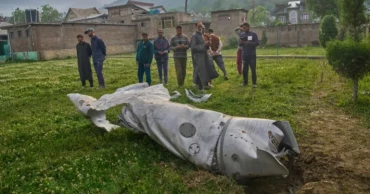
Tensions escalate as India, Pakistan exchange drone and missile strikes
Tensions between South Asia’s two nuclear-armed neighbours have surged following a deadly exchange of drone and missile attacks, with both India and Pakistan claiming to have repelled cross-border assaults while accusing each other of unprovoked aggression.
Pakistan’s military announced on Wednesday that it had downed 25 Indian drones in various regions along the eastern border, asserting the attacks were deliberate violations of its airspace.
The military described the operation as a "firm and calibrated response" to protect Pakistan’s sovereignty.
Meanwhile, India reported thwarting a coordinated Pakistani drone and missile strike targeting one of its key military installations in the northern region.
Indian defence officials said the attempted incursion was “aggressively neutralised,” preventing any major damage or casualties.
Malala Yousafzai calls on India, Pakistan to reduce tensions
The flare-up follows a deadly Indian offensive on Tuesday that reportedly killed at least 31 people and injured dozens more in Pakistan’s Punjab province and parts of Pakistan-administered Kashmir. Islamabad has condemned the attack as an "act of brutality."
Speaking at an emergency press briefing, Pakistani Prime Minister Shehbaz Sharif vowed retaliation. “We will avenge the blood of our innocent martyrs,” he declared. “India’s unprovoked aggression will not go unanswered.”
India, however, maintains that its actions were in response to “continued infiltration attempts and militant threats emanating from Pakistani territory.”
Pakistan shoots down Indian drone in the city of Lahore, officials say
The cross-border hostilities have prompted international concern, with calls from the United Nations and regional partners urging both nations to exercise restraint and avoid further escalation.
As of Thursday morning, military activity was reported to be ongoing in some border areas, with residents in both countries fearing a deeper conflict may be imminent.
Source: With inputs from Al Jazeera
1 year ago

Pakistan shelling killed soldier in Kashmir: India
An Indian soldiers was killed and two others were wounded when Indian and Pakistani troops clashed along the highly militarised frontier in Kashmir, an official said Wednesday.
6 years ago