US flood
Over 100 dead in US floods amid extreme weather warning
As extreme weather events grow more frequent and intense across the United States, experts warn that government preparedness and public awareness are failing to keep pace, putting lives and infrastructure increasingly at risk.
Climate scientists and disaster researchers say climate change is turning rare events into regular occurrences, yet many Americans still underestimate the threat. The consequences have been devastating — as seen in this month’s deadly flash floods in central Texas that killed over 100 people, despite the region’s long history of floods.
Michael Oppenheimer, a climate scientist at Princeton University, explained how the nature of weather extremes is evolving. “What happens with climate change is that what used to be extreme becomes average, typical, and what used to never occur in a human lifetime or maybe even in a thousand years becomes the new extreme,” he said. “We start to experience things that just basically never happened before.”
According to the National Oceanic and Atmospheric Administration (NOAA), the 10-year summer average of its Climate Extreme Index — which tracks hurricanes, droughts, rainfall, and temperature extremes — is now 58% higher than it was in the 1980s.
Despite the growing threat, experts argue that both public and institutional responses remain alarmingly inadequate. “There’s plenty of evidence that we sit there and do absolutely nothing while these risks are coming right at us like a moving railroad train and we’re standing in the tracks. And then all of a sudden, bam,” Oppenheimer said.
Part of the problem lies in how people perceive disaster risk. Many base their decisions on past experiences, assuming similar outcomes. “That is flash flood alley. We know that floods happen in that region all the time... I’ve already seen normalcy bias statements by people in the regions saying, well, we get flooding all the time,” said Marshall Shepherd, a meteorology professor at the University of Georgia.
Experts warn that outdated thinking is leaving people vulnerable, especially as disasters become more severe in previously unaffected regions. “The message needs to be, if you’re used to some degree of nuisance flooding, every so often, look at what happened in Texas and realize that this is a shifting baseline,” said Kim Klockow McClain, a social scientist who studies extreme weather communication.
Flash floods kill over 80 in Texas; dozens still missing
Psychological denial is another factor. People often believe disasters won’t happen to them — until they do. “It’s sort of a psychological mechanism to protect us that it can’t happen to me,” said Susan Cutter, co-director of the Hazards Vulnerability & Resilience Institute at the University of South Carolina.
“Just because I’ve lived through a fire or a flood or a hurricane or a tornado, that does not mean that the next time is going to look like the last time,” added Lori Peek, director of the Natural Hazards Center at the University of Colorado.
As climate threats intensify, aging infrastructure and population growth in vulnerable areas compound the risks. Peek warned that the U.S. is unprepared for the scale of future disasters. “As our population has continued to rise, it’s not only that we have more people in the country, it’s also that we have more people living in particularly hazardous areas like our coastal areas,” she said.
Experts also criticized recent government decisions, including staff cuts to key federal agencies under the Trump administration, such as the Federal Emergency Management Agency (FEMA), the National Weather Service, NOAA, and the U.S. Geological Survey. These agencies play crucial roles in disaster response and climate research.
“We’re destroying the capability we have that we’re going to need more and more in the future,” Oppenheimer warned.
Looking ahead, Peek urged a shift in strategy: “This is our future. It’s obvious that we’re living into a future where there are going to be more fires and floods and heat waves.”
1 year ago
Flash floods kill over 80 in Texas; dozens still missing
At least 82 people have died in devastating flash floods that swept through Texas during the Fourth of July holiday weekend, with dozens more still missing, including children from a summer camp, officials confirmed Sunday.
The disaster struck along the Guadalupe River near San Antonio, triggering a large-scale search operation amid growing questions about preparedness and the speed of emergency warnings.
Floods hit at the worst possible time
The flash floods, fueled by heavy rainfall, hit the region during the early hours of Friday when most people were asleep. Central Texas’ Hill Country is known to be highly vulnerable to flash floods, as its dry, compacted soil prevents water absorption, forcing rain to flow rapidly across the land.
The National Weather Service issued a flood watch on Thursday afternoon, followed by an urgent warning around 4 a.m. Friday, warning of “catastrophic damage” and severe risks to human life.
Locals reported that by 5:20 a.m., water levels in Kerrville were already dangerously high. The torrential rain, dropping nearly 12 inches (30 centimeters) overnight, caused the Guadalupe River to rise by 26 feet (8 meters) in just 45 minutes.
Death toll likely to rise
Governor Greg Abbott said on Sunday that at least 41 people across Texas remain unaccounted for. Kerr County Sheriff Larry Leitha confirmed the recovery of 68 bodies, including 28 children, from the region, which is home to several youth summer camps.
Fatalities in neighboring counties brought the confirmed death toll to 79 by Sunday evening.
At Camp Mystic, a Christian summer camp along the Guadalupe River, ten girls and a counselor were still missing, officials said. Authorities have not yet provided updated figures for missing persons from other camps or surrounding areas.
“We don’t even want to begin to estimate at this time,” Kerrville City Manager Dalton Rice said, pointing to the large number of visitors during the holiday weekend.
What to know about Texas flash floods that killed nearly 70
Officials face scrutiny over delayed warnings
Survivors described the floodwaters as a “pitch black wall of death” and raised concerns over the lack of timely emergency alerts.
Kerr County Judge Rob Kelly, whose home is along the river, insisted on Saturday that “nobody saw this coming.” Officials have referred to the disaster as a “100-year flood,” an event considered highly unlikely based on historical data.
Meteorologists, however, warn that human-induced climate change is increasing the frequency and intensity of such disasters. While specific storms cannot immediately be linked to global warming, experts say a hotter atmosphere retains more moisture, leading to heavier rainfall.
Officials also faced questions about why river communities and summer camps were not warned or evacuated before 4 a.m.
Some argued that frequent false alarms can make residents complacent, while others noted that Kerr County had previously proposed a stronger flood warning system similar to tornado alerts, but the plan faced public opposition over its costs.
Officials ended a press briefing on Sunday after repeated questions from reporters about the delays in warnings and evacuations.
Massive cleanup and rebuilding ahead
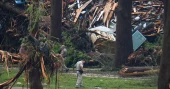
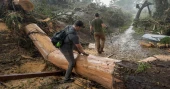
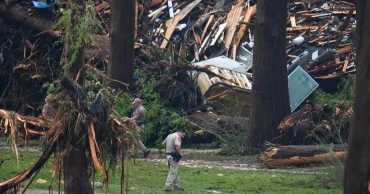
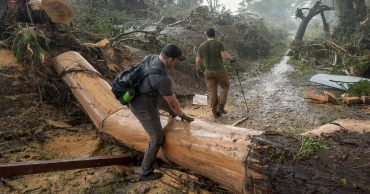
The flash floods destroyed entire campgrounds and ripped homes from their foundations, leaving widespread devastation.
“It’s going to be a long time before we’re ever able to clean it up, much less rebuild it,” Kelly said after surveying the destruction by helicopter.
The disaster has drawn comparisons to previous deadly floods, including last year’s Hurricane Helene, which forced many residents and businesses to abandon devastated areas.
President Donald Trump has said he plans to visit the flood-affected region on Friday.
1 year ago
.jpg)
Tropical Storm Beta stalls along Texas coast, brings floods
Tropical Storm Beta stalled out Tuesday along the Texas coast, flooding streets in Houston and Galveston hours after making landfall amid an unusually busy hurricane season.
6 years ago