wind energy
States sue Trump administration for blocking the development of wind energy
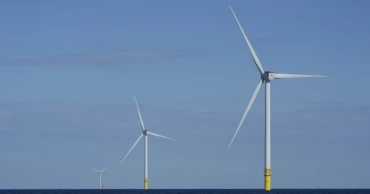
On Monday, a coalition of state attorneys general filed a lawsuit challenging President Donald Trump’s decision to halt wind energy development.
The group—comprising attorneys general from 17 states and Washington, D.C.—is contesting an executive order Trump issued on his first day in office. The order placed a freeze on all approvals, permits, and federal loans for wind energy projects, both on land and at sea. The coalition argues that the president does not have the legal authority to unilaterally suspend the permitting process and warns that the move undermines a crucial energy source vital to their economies, energy strategies, public health, and climate objectives.
They are urging a federal court to rule the executive order illegal and to block federal agencies from enforcing it.
“This unjustified and harmful order puts thousands of well-paying jobs and billions in clean energy investments at risk,” said New York Attorney General Letitia James, who is spearheading the lawsuit. “It’s also stalling our much-needed shift away from fossil fuels, which continue to damage our health and our environment.”
AI app supports families navigating ADHD and autism
White House spokesperson Taylor Rogers said Democratic attorneys general are “using lawfare to stop the president’s popular energy agenda,” instead of working with him to unleash American energy and lower prices for families.
“The American people voted for the president to restore America’s energy dominance, and Americans in blue states should not have to pay the price of the Democrats’ radical climate agenda,” Rogers said in a statement to The Associated Press.
Trump vowed during the campaign to end the offshore wind industry if he returned to the White House. His order said there were “alleged legal deficiencies underlying the federal government’s leasing and permitting” of wind projects, and it directed the Interior secretary to review wind leasing and permitting practices for federal waters and lands.
The lawsuit was filed in federal court in Massachusetts.
Trump’s order targeted a priority of Biden’s climate plan
The Biden administration saw offshore wind as a climate change solution, setting national goals, holding lease sales and approving nearly a dozen commercial-scale projects. Trump is reversing those energy policies. He’s boosting fossil fuels such as oil, natural gas and coal, which cause climate change, arguing it’s necessary for the U.S. to have the lowest-cost energy and electricity in the world.
The Trump administration took a more aggressive step against wind in April when it ordered the Norwegian company Equinor to halt construction on Empire Wind, a fully permitted project located southeast of Long Island, New York, that is about 30% complete. Interior Secretary Doug Burgum said it appeared the Biden administration rushed the approval.
Equinor went through a seven-year permitting process before starting to build Empire Wind last year to provide power to 500,000 New York homes. Equinor is considering legal options, which would be separate from the complaint filed Monday. The Norwegian government owns a majority stake in Equinor.
Wind provides about 10% of the electricity generated in the United States, making it the nation’s largest source of renewable energy. The attorneys general argue that Trump’s order is at odds with years of bipartisan support for wind energy and contradicts his own declaration of a “national energy emergency,” which called for expanding domestic energy production.
States have already invested large sums to develop wind energy
The coalition includes Arizona, California, Colorado, Connecticut, Delaware, Illinois, Maine, Maryland, Massachusetts, Michigan, Minnesota, New Jersey, New Mexico, New York, Oregon, Rhode Island, Washington and Washington, D.C. They say they’ve invested hundreds of millions of dollars collectively to develop wind energy and even more on upgrading transmission lines to bring wind energy to the electrical grid.
1 year ago

Denmark keen to invest in offshore wind energy in Bangladesh: Envoy
Denmark wants to invest US$1.3 billion for the generation of offshore wind energy in Bangladesh, the country's outgoing ambassador Winnie Estrup Petersen said on Wednesday (July 19, 2023).
The ambassador made the offer while paying a courtesy call on Prime Minister Sheikh Hasina this morning at latter’s office here in the city.
PM's Press Secretary Ihsanul Karim briefed reporters after the meeting.
Danish JV submits proposal to set up 500 MW offshore wind power plant in Bangladesh
The prime minister said Bangladesh needs assistances from the friendly countries for its development. In this regard, she mentioned that Bangladesh is setting up 100 special economic zones across the country where both foreign and domestic investments are required.
Both the premier and the envoy appreciated the 50 years of development partnership between Bangladesh and Denmark, said the press secretary.
Denmark committed to support Bangladesh’s aspirations for climate-oriented economic growth: Danish Minister
During the meeting, the Danish ambassador lauded the leadership of PM Hasina in socioeconomic development of Bangladesh.
Hasina told the envoy that her government has substantially reduced the poverty level in the country.
Referring to the development of women, she said that they have put emphasis on the development of women sports.
Regarding the development of democracy in the country, the PM said “We’ve a history of long struggle for democracy in the country.”
The Danish envoy said that her country is the sixth largest exporter in the ICT sector globally. In this connection, Sheikh Hasina said that ICI sector of Bangladesh is also growing first.
Danish ambassador, IFAD country director visit tulip gardens in PanchagarhAmbassador Petersen said that the two countries can extend cooperation in several fields including human development. “We’ve achieved many things through cooperation,” she added.
The ambassador said that she has spent a good time in Bangladesh living with good friends.
The envoy presented books to the premier marking the 50-year development partnership between the two countries.
PMO Secretary Mohammad Salahuddin was present.
3 years ago

Bangladesh bets big on wind energy to curb climate change
Bangladesh aims to significantly expand renewable energy sources in its total energy mix in its relentless pursuit of a net-zero carbon footprint.
As one of the key steps in this regard, the Sustainable and Renewable Energy Development Authority (Sreda) has set a target of generating 5,000 MW of onshore and offshore wind power by 2030.
Wind energy is power obtained from the force of wind using turbines. The country currently generates only 2.9 MW of wind power.
Read Bangladesh going for green energy to mitigate climate change impact: Minister
According to Sreda officials, the huge target is being considered as an immediate option for the next few years in compliance with the government’s commitment to promoting renewable energy -- given the fact that an American agency recently pegged the country’s wind power generation potential at 30,000 MW.
The US Department of Energy’s National Renewable Energy Laboratory (NERL) conducted a study -- Assessing the Wind Energy Potential in Bangladesh: Enabling Wind Energy Development with Data Products -- from June 2014 to December 2017.
The United States Agency for International Development (USAID)-funded study concluded with the observation that “preliminary results demonstrate that, for wind speeds of 5.75–7.75 metre per second (m/s), there are more than 20,000 square kilometres of land with a gross wind potential of over 30,000 MW”.
READ: Wind energy vision: Contracts for Chandpur, Inani projects likely soon
About the wind power potentials, Sreda chairman Mohammad Alauddin said the organisation will now conduct a detailed study on the basis of the NREL’s findings to get the bankable data "so that potential investors can invest in the sector and make their investment commercially viable".
"A proposal on wind power's potential will be placed before the Power, Energy and Mineral Resources Ministry to incorporate the target in the proposed Integrated Energy and Power Master Plan (IEPMP) up to 2030, now being framed with the help of Japan International Cooperation Agency (JICA)," he told UNB.
The NREL study said, “Although this estimate is not realistic, when proper filters are applied to screen out undesirable land for wind development, it suggests that Bangladesh's 10% renewable target by 2021 is achievable”.
Read Policy support instrumental for renewable energy development: Experts
“The preliminary technical potential analysis calculates gross potential and does not filter out already-developed land, environmentally sensitive land, or land unsuitable for other reasons," it added.
The NERL study found the wind potentials at nine locations across the country, having an average wind speed of 5-6 metre per second at a height of over 60-80 metre above ground level (AGL) -- Lalpur of Natore in Rajshahi, Chandpur, Sitakunda and Parkay Beach in Chattogram, Gouripur in Mymensingh, Madhupur Tea Estate in Habigonj, Dacop in Khulna near Mongla port, Inani Beach in Cox's Bazar, and Badarganj in Rangpur.
Of these, initiatives have already been taken to set up wind power plants at three places -- at Dacop, Inani Beach and Chandpur, each having 50 MW capacity. A contract has already been awarded for the Dacop location.
Read India At COP26 Says Its Solar Energy Capacity Increased 17 Times In 7 Years
"Exploiting the new and efficient technology, we're now planning to set up a good number of wind power plants by 2030," Alauddin said, referring to the NREL study that found the wind speed at six metres per second at a higher hub height.
Energy experts, however, are skeptical about the country's wind power's potential and it's commercial viability.
Eminent energy expert Dr M Tamim said that the proposal for generating 5,000 MW of power from wind is "not only highly ambitious, but highly subjective as well".
READ: Bangladesh’s future focus may be on nuclear energy use: Dr Tawfiq
"Which technology will be used, where it will be used and what will be the cost of electricity and who will be the investors in such projects... these are big questions," said the Professor of Petroleum and Mineral Resources Engineering at BUET.
Sreda statistics show that the country currently generates a total 777.24 MW of electricity from different renewable sources.
Of this, 543.25 MW is generated from solar energy, 2.9 MW from wind, 230 MW from hydro, 0.69 MW from biogas, and 0.4 MW from biomass, while the country’s total power generation capacity is about 25,000 MW.
Read _Bangladesh’s two dream projects face speed bumps
Shariar Ahmed Chowdhury, a professor at United International University, said that wind energy is very sensitive. "If data lacks 10% accuracy, it has a big impact and there may be a variation of 30-40% in the final output," he said.
4 years ago

Wind energy vision: Contracts for Chandpur, Inani projects likely soon
Two more wind power plants -- one in Chandpur and another at Inani Beach, Cox’s Bazar -- are likely to be awarded soon as the government wants wind energy to be poured into the national grid power to ensure a better power supply in the country.
5 years ago
.jpg)
Why Bangladesh may not achieve its 2021 clean energy target
The Bangladesh government's ambitious target of generating 1152 MW power from wind energy by 2021 seems almost impossible to achieve. Experts attribute this to its failure to showcase the sector's potential in a credible way before investors.
5 years ago