skilled workforce
President seeks greater Australian support for skilled workforce, LNG supply
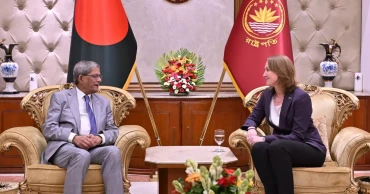
President Mirza Fakhrul Islam Alamgir on Thursday sought greater Australian cooperation in developing skilled human resources, skills training and energy security, including LNG supplies, while promoting investment and expanding economic partnership between Bangladesh and Australia.
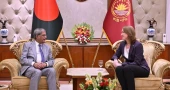
He made the call when Australian High Commissioner to Bangladesh Susan Ryle paid a courtesy call on him at Bangabhaban.
During the meeting, the Australian envoy conveyed congratulations to President Mirza Fakhrul on behalf of Australian Governor-General Sam Mostyn and handed over a formal letter of greetings.
The President thanked the Governor-General for the greetings.
He sought Australia’s cooperation in diversifying Bangladesh’s energy sources and proposed creating opportunities for importing LNG from Australia.
Mirza Fakhrul also called for greater Australian investment in infrastructure, renewable energy, energy exploration, agro-processing, medical technology, logistics and manufacturing.
He expressed hope that the meetings of senior officials and the Trade and Investment Framework Agreement (TIFA) scheduled for November in Canberra will play an important role in expanding bilateral trade and investment.
The President welcomed opportunities for skilled Bangladeshi professionals to migrate to Australia, particularly in information technology, engineering and other technical fields.
He also sought continued Australian support for scholarships and academic exchange programmes, as well as cooperation in establishing a campus of the University of Canberra in Dhaka.
To develop job-oriented skills for Bangladesh’s growing workforce, Mirza Fakhrul proposed expanding cooperation between Australia’s Technical and Further Education (TAFE) institutions and Bangladesh’s Technical Training Centres (TTCs).
He emphasised technical training in various fields, including caregiver training.
Referring to the Rohingya crisis, the President expressed gratitude for Australia’s continued humanitarian assistance and called for its continued support for a sustainable solution to the protracted crisis.
He expressed hope that the Bangladesh-Australia partnership will place greater emphasis in the future on practical economic opportunities, skills development, investment and increased people-to-people connectivity and mobility.
The Australian high commissioner stressed the need for strong foreign exchange reserves, tax reforms, judicial independence and a business-friendly regulatory framework to attract Australian investment.
She also appreciated the banking reforms in Bangladesh and expressed Australia’s interest in further strengthening existing cooperation between the two countries in areas of mutual interest.
The President’s military secretary, secretary, press secretary and an additional secretary of the Ministry of Foreign Affairs were present at the meeting.
Australian Deputy High Commissioner Clinton Pobke also attended the meeting.
17 days ago

Bangladesh faces skilled workforce gap despite millions of jobs: Bobby Hajjaj
State Minister for Primary and Mass Education Bobby Hajjaj on Sunday said Bangladesh is facing a significant shortage of skilled human resources despite having millions of job opportunities.
“Everyone says there is a shortage of jobs in Bangladesh, but the reality is quite the opposite. There are millions of jobs available: the problem is finding skilled people to grab them,” he said while speaking at a skills development summit.
Global Entrepreneurship Network Bangladesh and Daffodil International University organised the programme at Daffodil Plaza in Dhanmondi.
The state minister noted that nationals from neighbouring countries, particularly India, are coming to Bangladesh and securing employment, while Bangladeshis remain jobless in their own country due to a lack of marketable skills.
Highlighting the gap between academic credentials and practical competence, he said, “When candidates appear before interview boards, they recite a list of degrees. But when it comes to skills, they fall short and that is why they fail to secure the jobs they desire.”
Bobby Hajjaj stressed that a fundamental shift in mindset is the first step towards addressing the crisis. “The core problem is our mindset. Having taught for 17 years, I have seen a serious lack of skills-oriented thinking among students. We want to bring about that change from the primary level and build a generation that is truly ready for the job market.”
He urged student participants to develop innovative, technology-driven projects capable of contributing to national development, and announced that students who successfully create practical and effective software solutions will be recognised and rewarded.
The State Minister also assured that government support will be extended to help commercialise such innovative projects.
6 months ago

Bangladesh, Australia want cooperation to enable mobility of skilled workforce
Bangladesh and Australia on Monday emphasized enhancing collaboration between Bangladesh’s Technical Training Centres (TTCs) and Australia’s Technical and Further Education (TAFE) for ensuring mutual recognition of degrees and upgrading technical education standards of Bangladesh to enable the mobility of the skilled workforce.
Australian High Commissioner to Bangladesh Susan Ryle met Foreign Affairs Adviser Md Touhid Hossain at the Ministry of Foreign Affairs and discussed various issues of mutual interest including trade, investment, migration and visa facilitation.
"We are working together to strengthen our growing trade and investment ties, support Bangladesh’s development goals and work together to shape a safe, prosperous and free Indo-Pacific," said the Australian High Commission in Dhaka.
The Adviser reiterated that the international community must demonstrate their will to ensure the repatriation of the Forcibly Displaced Myanmar Nationals (the Rohingyas) to their motherland in Rakhine State through a roadmap and the process should start immediately.
The Australian High Commissioner expressed the readiness of her government to work with Bangladesh regarding the Rohingya issue and assured to extend necessary support for the early repatriation of the Rohingyas to their homeland, said the MoFA.
The Foreign Affairs Adviser congratulated the High Commissioner for her new role and assured her to provide necessary support during her tenure in Bangladesh.
1 year ago

UCEP launches skilled workforce scheme
UCEP Bangladesh launched the QuEST-II project to create skilled workforce at its headquarters in Dhaka on Monday.
The project aims to create a skilled and inclusive workforce that will support the socio-economic development of Bangladesh, said a media release.
The Department of Foreign Affairs and Trade (DFAT) has provided financial support for the project.
Australian High Commissioner to Bangladesh Jeremy Bruer was the chief guest at the launching ceremony.
Khaled Mamun Chowdhury ndc, Director General, Department of Labour, was present as a special guest.
Dr. Mohammad Alauddin, Chairperson of UCEP Bangladesh, presided over the event, and Dr. Md. Abdul Karim, Executive Director of UCEP Bangladesh, gave the welcome address and expressed his gratitude to DFAT for its investment in the project, which will enable UCEP to serve as a model for skills workforce development and empower underprivileged children and youth.
The High Commissioner praised UCEP Bangladesh for its significant contribution to technical and vocational education and training in the country and its dedication to improving the lives of underprivileged children and youth, including females and individuals with disabilities.
The programme ended with a cultural performance by the students of UCEP Bangladesh.
The organisation is proud to work with DFAT towards the common goal of improving education quality and creating a brighter future for all citizens.
UCEP Bangladesh looks forward to continuing its partnership with DFAT to bring about positive change in society and create a better future for all.
3 years ago

Bangladesh’s recognition as developing nation to be retained: PM
Prime Minister Sheikh Hasina on Sunday said the government is committed to sustaining Bangladesh’s recognition as a developing country through the expansion of education and building skilled workforce and worthy citizens.
5 years ago
Bangladesh eyes sending more skilled workforce to Japan
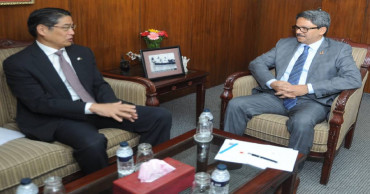
Bangladesh has said the recently signed Memorandum of Cooperation (MoC) on recruiting ‘Specified Skilled Workers’ will help Japan receive more skilled workforce from Bangladesh benefiting both the countries.
6 years ago