UK
Five men arrested near US air base in UK released on bail
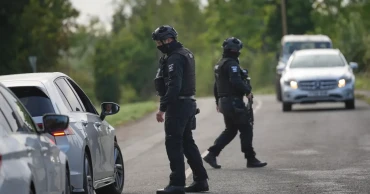
Five young British men arrested near a US-operated air base in England have been released on bail as UK counterterrorism police investigate possible links to Iran, Russia or non-state militant groups.
The men, all British nationals from London and in their 20s, were arrested early Sunday near RAF Fairford after three vans were spotted in the surrounding countryside. They were initially detained on suspicion of explosives offences and later arrested on suspicion of preparing an act of terrorism.
Police said they remain under investigation and face strict bail conditions. The national news agency PA reported that no viable explosives had been found.
Counter Terrorism Policing chief Laurence Taylor said investigators were pursuing several lines of inquiry, including whether the suspects were acting knowingly or unknowingly on behalf of a foreign state.
Iran denied any involvement, with its embassy in London rejecting what it called “unfounded and malicious” speculation.
US Secretary of State Marco Rubio said the incident “clearly involves the hands of a foreign actor” but did not identify a country.
Residents of 85 homes near Whelford were evacuated while bomb-disposal experts examined the vans. They were allowed to return Monday, although a police cordon remained.
The arrests come amid heightened UK concerns over alleged Iranian and Russian proxy activity. RAF Fairford has been used by US bombers during military operations in the Middle East, including the recent conflict involving Iran.
14 days ago
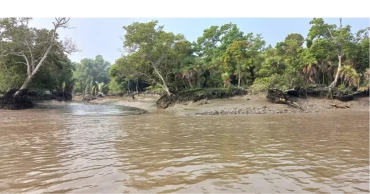
Sundarbans climate project to close early amid UK aid cuts
A UK-funded climate resilience project in Bangladesh is being forced to close two years ahead of schedule following cuts to Britain’s foreign aid budget, leaving thousands of vulnerable people without planned support and threatening to undermine work already carried out, according to The Independent.
The UK Foreign, Commonwealth and Development Office (FCDO) is implementing cuts to the foreign aid budget that will reduce the UK aid budget from 0.5 percent to 0.3 percent of Gross National Income.
The cuts have affected aid programmes in a number of developing countries, with observers describing them as a “moral catastrophe” and expressing particular concern over reductions in funding for climate projects, said the report.
Among those affected is British development charity Practical Action, which has managed part of a major development project in Bangladesh since 2023.
The project aims to improve the lives of tens of thousands of people through interventions including solar power systems, climate-resilient agriculture and aquaculture feedstocks and technologies, as well as weather information systems providing early warnings for extreme rainfall and cyclones.
The project is located in Bangladesh’s Sundarbans, the world’s largest tidal mangrove forest, much of which is a UNESCO World Heritage Site. It began in 2023 and was originally expected to continue until 2028.
However, in April 2026, Practical Action was told that it would have to end its project in June this year, according to Tamanna Rahma, climate resilience lead for Practical Action Bangladesh. Following lobbying by the charity, the deadline was later extended to September, she said.
Practical Action was expected to receive £2.2 million by 2026, but received “far less than this”, Rahma said.
The project was originally expected to reach 57,000 people by the end of this year, but will ultimately reach around 37,000 people, according to Rahma.
“This abrupt cut has threatened our reputation in the community, which we have carefully built up over the past two and a half years,” Rahma said. “It has also impacted the long-term stability of the interventions that we have made, and limited our ability to plan for an effective exit.”
The reduction in funding for Practical Action’s project forms part of wider cuts to the UK-Bangladesh bilateral aid programme, which is set to fall from £66.7 million to £31 million between 2025/26 and 2026/27, according to figures revealed in July and cited by The Independent.
Rahma said the early exit was particularly damaging because communities in the project area require continued support to adapt to the impacts of climate change.
“Every year we are seeing more severe storms and cyclones, while the sea is rising and soil is becoming salinated,” she said. “There is huge demand for financing such as this, yet the ability to make these kinds of tangible programmatic interventions is declining.”
The Sundarbans is situated on the Ganges Delta, where the Ganges, Brahmaputra and Meghna rivers converge before flowing into the Bay of Bengal.
The vast mangrove forest covers 10,277 square kilometres and is home to 42 mammal species, including endangered tigers and river dolphins, as well as nearly 300 species of birds.
Many residents also continue to suffer the after-effects of Cyclone Aila, which affected an estimated 100,000 people when it struck the Sundarbans in 2009, destroying local infrastructure and significantly changing the landscape in parts of the region.
The Sundarbans is also facing sea-level rise of roughly 3 centimetres a year, around twice the global average, according to the report. The rising sea level is displacing communities and damaging once-fertile soil.
1 month ago
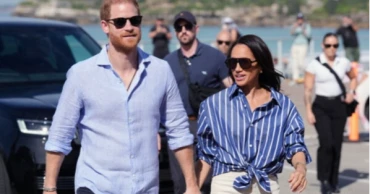
Harry, Meghan to spend extended period in UK with children
Prince Harry and his wife Meghan are planning to return to the United Kingdom with their children for an extended stay from this fall, but they will not resume their duties as working members of the royal family, The Associated Press learned Wednesday.
Their children, Prince Archie, 7, and Princess Lilibet, 5, have enrolled at British schools and are expected to begin classes in September, according to a person close to the Sussexes who spoke on condition of anonymity.
The family plans to live at a private residence outside London that is not linked to the royal family. They will keep their home in Montecito, California, as well as their holiday property in Portugal.
The Daily Telegraph first reported the development. Asked about the report at an event with US veterans in Washington on Wednesday night, Harry said, "Nothing to say."
Harry and Meghan stepped down from royal duties and moved to California more than six years ago. They later signed commercial deals, including with Netflix and Spotify.
Their relationship with other members of the royal family has remained strained. However, Harry has recently spoken about wanting to rebuild ties with his father, King Charles III, who is undergoing treatment for an undisclosed type of cancer.
Charles was informed about the couple's plans on Sunday. Harry and Meghan also visited the UK last month.
Buckingham Palace generally does not comment on speculation involving non-working members of the royal family. A spokesperson for Harry and Meghan also declined to comment.
According to a source close to the couple, Meghan will continue to run her company, As Ever, from the UK, while Harry will be able to spend more time working with his UK-based charities.
Harry and Meghan's relationship with the royal family has been tense since they moved to a mansion in Montecito.
In interviews and Harry's memoir, "Spare," the couple said they left Britain to escape the pressures and restrictions of royal life. They also accused palace officials of failing to properly support Meghan over her mental health and said a member of the royal family had raised concerns about the skin color of their first child before his birth. Meghan has described herself as biracial.
Relations were further strained by Harry's legal battles with British tabloid newspapers. He has accused them of illegally accessing his phone and invading his privacy when he was younger.
Harry has lost several lawsuits against media organizations, including a case against the publisher of the Daily Mail that ended last month.
The latest case could leave Harry facing legal costs running into millions of pounds. The court ruled that he and other plaintiffs were responsible for the publisher's legal fees. Associated Newspapers said its legal costs amounted to 34.5 million pounds ($47 million).
Harry has also been involved in a legal dispute with the British government over security arrangements for his family during visits to the UK. He argues that he and his family need armed police protection because of the risks associated with being members of the royal family, even though they are no longer working royals.
After losing a court challenge over his security last year, Harry said he wanted to improve relations with his family.
"I would love reconciliation with my family. There's no point in continuing to fight anymore," Harry told the BBC, adding that he did not know how much longer his father had.
Harry returned to the UK last month for several charity engagements. Meghan and the children joined him for part of the trip, and they met King Charles at his Highgrove estate in western England.
It was the first time Archie and Lilibet had seen their grandfather since Queen Elizabeth II's Platinum Jubilee in 2022.
While Harry has recently spent time with his father, there has been little indication of improved relations with his elder brother, Prince William, heir to the throne.
Peter Hunt, a former BBC royal correspondent, said the family's return would come as a surprise to William.
"In the short term, Harry will be able to deepen his rapprochement with his father," Hunt told Britain's Press Association. "And his presence back home will make it harder for his brother to duck a reconciliation."
1 month ago
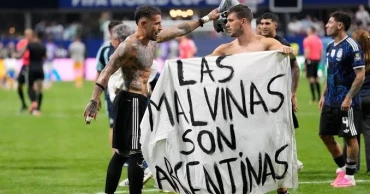
UK calls on FIFA to investigate Argentina over Falklands banner at World Cup
The British government has called on FIFA to investigate Argentina's national football team after its players celebrated a World Cup semifinal victory while holding a banner asserting Argentina's claim over the disputed Falkland Islands.
Argentina defeated England 2-1 in the World Cup semifinal in Atlanta on Wednesday. During the post-match celebrations, players displayed a banner handed to them by supporters that read, "Las Malvinas son Argentinas" ("The Malvinas are Argentine").
Argentina refers to the Falkland Islands as Islas Malvinas. The islands became the focus of a 10-week war in 1982 after Argentina's military government invaded the British-controlled territory. Britain regained control following the conflict.
UK Business Secretary Peter Kyle described the players' actions as "entirely inappropriate" and said he expected FIFA to conduct a thorough investigation.
Under FIFA's disciplinary code, political, ideological, religious or offensive messages displayed at stadiums are prohibited. Violations can result in fines ranging from $5,000 to $20,000. FIFA had not commented on the matter as of Thursday.
Argentina defender Lisandro Martínez said the banner carried strong emotional significance.
"I can imagine a Malvinas war veteran seeing that banner and crying," said Martínez, who has played for Manchester United in England for the past four years. "I don't know whether there will be sanctions, but the message simply expressed our belief that the islands belong to us."
Long-running political dispute
The Falkland Islands are a British Overseas Territory with a population of around 3,500 people. They are located about 480 kilometres off Argentina's coast and nearly 13,000 kilometres from Britain.
Argentina maintains that Britain illegally took control of the islands in 1833. Britain says its claim dates back to 1765 and that it expelled Argentine forces attempting to establish sovereignty over the territory in 1833.
The 1982 Falklands War claimed the lives of 649 Argentine troops, 255 British military personnel and three islanders.
The conflict coincided with the 1982 FIFA World Cup in Spain, where Argentina, England, Scotland and Northern Ireland all competed. British broadcasters declined to televise Argentina's opening match of the tournament, in which the defending champions lost to Belgium.
Argentina midfielder Leandro Paredes said the banner reflected a painful chapter in his country's history.
"It is a sad part of our history for everyone involved, and it still hurts," he said. "We knew we were playing for them as well."
FIFA's political neutrality under scrutiny
Kyle told the BBC that politics should remain separate from football, adding that the issue was now FIFA's responsibility.
FIFA's commitment to political neutrality has faced renewed scrutiny during this World Cup. Critics have questioned decisions by FIFA President Gianni Infantino and the governing body's disciplinary panel, particularly after United States forward Folarin Balogun was allowed to play against Belgium in the round of 16 despite receiving a red card in the previous match.
Under FIFA rules, Balogun should have been suspended for the next game, but the ban was postponed for one year on probation. Belgium went on to beat the United States 4-1 and advance to the quarterfinals.
Infantino is expected to attend Sunday's World Cup final between Argentina and Spain in East Rutherford, New Jersey, alongside US President Donald Trump and Argentine President Javier Milei.
Similar incidents in the past
Argentina's players displayed the same "Las Malvinas son Argentinas" slogan during a World Cup warm-up match in Buenos Aires in 2014. FIFA later fined the Argentine Football Association 30,000 Swiss francs (about $37,000) after that tournament.
In another case, South Korean footballer Park Jong-woo received a two-match FIFA suspension after displaying a banner reading "Dokdo is our territory" following South Korea's victory over Japan in the bronze medal match at the 2012 London Olympics.
More recently, during the 2022 World Cup, FIFA fined Serbia's football federation 20,000 Swiss francs (about $24,800) after a political banner showing Kosovo as part of Serbia and carrying the slogan "No Surrender" was displayed in the team's dressing room before a match against Brazil.
2 months ago

UK plans voluntary overnight social media curfew for older teens
The UK government on Wednesday announced plans to introduce a voluntary six-hour overnight social media curfew for 16- and 17-year-olds, aiming to reduce the harmful effects of excessive screen time among teenagers.
Under the proposal, social media platforms would automatically activate a curfew from midnight, although teenagers would be able to turn the setting off if they choose.
The Labour government also said features designed to keep users online for longer, such as autoplay videos, would be disabled by default for users aged 16 and 17.
The latest proposal follows last month's announcement of a social media ban for children under 16, expected to take effect next spring. The planned ban would apply to platforms including Snapchat, TikTok, YouTube, Instagram, Facebook and X, but would not cover messaging services such as WhatsApp and Signal.
The new measures, announced during the final weeks of Prime Minister Keir Starmer's government, will require parliamentary approval. His expected successor, Andy Burnham, is widely expected to continue with the plans.
Online Safety Minister Kanishka Narayan rejected suggestions that teenagers would simply disable the optional curfew. He said evidence from a recent pilot programme involving more than 300 teenagers and their parents across the UK showed a significant drop in overnight social media use, along with improvements in sleep and concentration.
Narayan also said that when some platforms introduced similar default settings last October, more than 90 percent of teenagers chose to keep them enabled.
"The evidence is clear, and I don't think it's fair to assume teenagers will all switch the settings off," he told Sky News.
The opposition Conservative Party criticised the proposal.
Laura Trott, the party's education spokesperson, questioned the effectiveness of a voluntary curfew, saying it "makes no sense."
"Either the government believes 16- and 17-year-olds should use social media or it doesn't. A curfew they can simply turn off is unlikely to make any real difference," she said.
The National Society for the Prevention of Cruelty to Children (NSPCC), the UK's leading children's charity, welcomed the move but said it would not be enough on its own.
NSPCC Chief Executive Chris Sherwood said the measures could improve young people's online experience but warned that stronger action would still be needed to address addictive platform designs that encourage excessive screen time and affect children's wellbeing.
Rachel de Souza, England's Children's Commissioner, described the proposal as a positive step, saying many young people want to reduce their social media use but struggle to do so.
She added that she would closely monitor how the curfew is implemented to ensure it is effective.
2 months ago
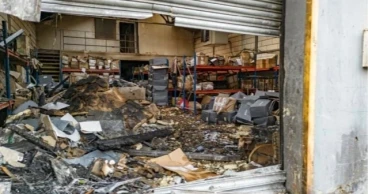
Technology fuels growing security threats in UK, senior police officials warn
British counterterrorism officials have warned that technology and online platforms are increasingly being used by hostile states, extremist organisations and far-right groups to threaten the United Kingdom, making online security a growing challenge.
Speaking on Thursday, Vicki Evans, the Metropolitan Police's senior national coordinator for counterterrorism, said tackling online threats has become a "constant battle" and stressed that police cannot address the problem without stronger cooperation from technology companies.
While Islamist extremism continues to pose the biggest security threat, officials said risks linked to far-right extremism and hostile foreign states have risen sharply over the past five years.
Laurence Taylor, head of counterterrorism policing, said hostile state activity has become one of the fastest-growing security concerns facing Britain.
Evans said police have uncovered more than 20 Iran-linked plots in 2025, including alleged assassination attempts, kidnappings and other serious crimes targeting the UK. Authorities are also investigating whether arson attacks on Jewish sites earlier this year were connected to Iran.
She added that Russia has continued to organise surveillance operations across Britain, targeting individuals and institutions, seeking to identify people viewed as enemies by Moscow and recruit others to spread Russian narratives or carry out activities on its behalf.
Across Europe, Russia has reportedly recruited dozens of people through messaging platforms such as Telegram to carry out acts of vandalism and arson, including an attack on a London warehouse storing communications equipment intended for Ukraine.
Authorities said Dylan Earl, who led that plot, was recruited through Telegram by the Wagner Group, a mercenary organisation designated as a terrorist group by the UK government.
Evans also revealed that police have arrested teenagers as young as 15 in connection with proxy operations linked to hostile states. She warned that anyone could become a target, particularly through online platforms.
"This isn't something happening somewhere else," she said. "It's happening here—in our communities, workplaces and online spaces."
Taylor said Britain's national terrorism threat level was raised from "substantial" to "severe" in April, partly because cases involving far-right extremism have increased significantly.
He said police have seen a rise in online content promoting racism, misogyny and extreme homophobia, creating an environment where extremist views are becoming more common and less likely to be challenged.
As an example, Taylor referred to the case of 18-year-old Alina Burns, who was sentenced to nearly 20 years in prison in May after attacking a stranger with an axe. Police said the attack was motivated by far-right extremist beliefs.
Officials also expressed concern about the growing online radicalisation of children and teenagers.
Taylor said 22-year-old Alfie Coleman, who was sentenced on Wednesday to 13 and a half years in prison for attempting to buy a gun from an undercover MI5 officer, had been radicalised online from the age of 14.
Evans said extremist groups are deliberately creating online content that appeals to young people by combining propaganda with gaming footage, music and historical images. Some are encouraged to imitate violent acts seen in video games or compete in carrying out harmful activities online and offline.
She warned that some online groups encourage cybercrime, violent extremism, serious assaults, child sexual abuse and even terrorism.
Evans also raised concerns about the widespread availability of violent and graphic online content that, while legal, can distort young people's understanding of what is acceptable and make them more vulnerable to manipulation by extremist groups and hostile states.
Although the UK government has proposed banning social media use for children under 16, Evans said that measure alone would not be enough. She called for technology companies to take greater responsibility for limiting harmful content, noting that laws often struggle to keep pace with rapidly evolving online platforms.
She warned that young people can quickly become drawn into harmful online content, making early intervention essential.
3 months ago
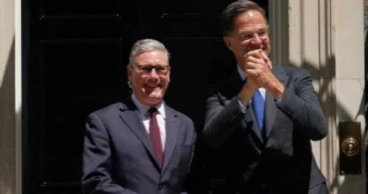
UK unveils future defence plan centred on drones, autonomous systems amid spending debate
Britain on Tuesday unveiled a long-awaited defence investment plan that puts drones, autonomous fighter aircraft and uncrewed submarines at the heart of its future military strategy, reflecting how modern warfare is increasingly being shaped by advanced technology.
The plan comes after months of delays caused by disagreements between military leaders and Treasury officials over defence funding. Like many NATO members, Britain is facing growing pressure to boost military spending in response to Russia's increasingly aggressive actions and concerns over long-term US security commitments.
Prime Minister Keir Starmer said the strategy is designed to prepare Britain for what he described as "a more dangerous and volatile world than at any time for decades."
However, the plan stops short of committing to raise defence spending to 3% of the UK's gross domestic product (GDP) by 2030, a key issue that contributed to the resignation of former Defence Secretary John Healey on June 11.
Healey had criticised the government for not investing enough in the armed forces despite growing security threats. Referring to British intelligence assessments, he warned that Russia could be in a position to attack a NATO member by 2030. He said the Treasury's proposal would increase defence spending to only 2.68% of GDP by 2030, after reaching 2.6% next year.
Starmer said new Defence Secretary Dan Jarvis had revised and strengthened the investment plan. The updated proposal includes £15 billion (about $20 billion) in new spending, higher than the £13.5 billion previously offered but still well below the £28 billion defence officials had sought.
The prime minister said Britain would reach the 3% spending target during the next parliamentary term, which could run until 2034.
He said the investment would ensure British armed forces have the advanced capabilities needed to respond to evolving security threats and protect the country. The full defence plan is scheduled for publication later on Tuesday.
The roadmap also outlines how Britain intends to increase defence spending to NATO's target of 3.5% of GDP by 2035 as it seeks to rebuild military strength after years of budget pressures.
Britain has closely studied the war in Ukraine, where drones have become a key part of the battlefield. Ukrainian forces are estimated to use around 200,000 drones every month to defend against Russian attacks.
As part of the new strategy, Britain plans to invest billions of pounds in drone technology across the army, navy and air force. Instead of building a planned fleet of new destroyers, the Royal Navy will develop hybrid ships that can serve as command centres for drone operations.
Speaking at a drone manufacturing facility near London, Starmer said the nature of warfare is changing rapidly. He pointed to Ukraine's use of advanced technology to damage Russia's Black Sea Fleet, carry out strikes deep inside Russian territory and slow the advance of one of the world's largest armies.
Britain's defence review also comes as US President Donald Trump continues urging NATO allies to spend more on defence. Trump has repeatedly argued that European countries should contribute more to their own security instead of relying heavily on the United States.
The defence plan is expected to remain a major issue after Starmer leaves office. Following the recent resignations of Healey and junior Defence Minister Al Carns, Starmer announced last week that he would step down as prime minister. He is expected to attend the NATO summit in Turkey on July 7-8 before leaving office.
Former Greater Manchester Mayor Andy Burnham, who is widely seen as the frontrunner to succeed Starmer, is expected to face pressure to maintain the defence commitments outlined in the new strategy.
Opposition Conservative Party defence spokesperson James Cartlidge criticised the plan, calling it "too little, too late."
He said the review was nearly a year overdue and accused Starmer of pushing it through in an effort to secure a political legacy.
3 months ago
Sustainable return of Rohingyas remains key goal: UK
The United Kingdom (UK) on Saturday said they will continue to support collective efforts to find durable solutions for Rohinyga refugees, alongside assisting host communities with essential services and livelihood opportunities, in partnership with the government of Bangladesh.
“While safe, voluntary, dignified and sustainable returns remain the ambition, the UK will also help ensure Rohingya refugees in Bangladesh can live safely and with dignity, while building self-reliance through meaningful livelihoods,” said the British High Commission Dhaka in a statement marking the World Refugee Day.
The British High Commission said they stand in solidarity with the 1.2 million Rohingya who fled from their homes in Myanmar and sought refuge in Bangladesh.
The UK is a leading donor to the Rohingya response, providing over £452 million to support the Rohingya and host communities since 2017.
The UK continues to provide life-saving assistance and shine an international spotlight on the crisis, to ensure that it is not forgotten amid emerging new crises.The country thanked the government and people of Bangladesh for continuing to host the Rohingya in their time of need.“We continue to honour the incredible resilience of the Rohingya people in adversity,” said the British High Commission.
This year’s observation of World Refugee Day also marks the 75th anniversary of the Refugee Convention.
The 1951 treaty, adopted in the aftermath of the Second World War, enshrined that anyone forced to flee war, conflict, or persecution has the right to seek safety and protection. UN Secretary-General António Guterres issued a message calling for stronger support for people forced to flee and the communities that have welcomed them.
“As divisions deepen across our world, new and protracted conflicts are compelling millions of women, children and men to seek safety far from home,” he said.
He stressed that “these turbulent times” call for renewed solidarity and robust action to protect refugees.
3 months ago
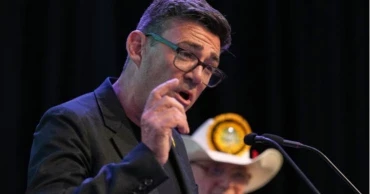
Labour’s Andy Burnham wins by-election, intensifying leadership pressure on UK PM Starmer
Andy Burnham, the Mayor of Greater Manchester, has won a parliamentary by-election in northwest England, a result that could set up a direct leadership challenge to British Prime Minister Keir Starmer.
Burnham secured a clear victory in the Makerfield seat, defeating Rob Kenyon of the anti-immigration Reform UK party. He won nearly 55% of the 45,510 votes cast in a crowded field of more than a dozen candidates, finishing more than 9,000 votes ahead of his nearest rival.
The result strengthens Burnham’s position as a leading figure in the Labour Party and fuels speculation that he could seek to replace Starmer as both party leader and prime minister. Known as the “King of the North,” the 56-year-old politician has led Greater Manchester since 2017 and is widely seen as a popular figure within Labour’s ranks.
In his victory speech, Burnham signalled clear national ambitions.
“Everyone knows that politics isn’t working. Everyone can feel that the country isn’t where it should be. Tonight could, just could, be the turning point,” he said.
He also said Labour had “a final chance to change” and rebuild public trust, calling for “a new politics based on unity and hope” and warning against what he described as a “divided, dark politics” seen elsewhere.
Starmer congratulated Burnham but defended his own leadership, saying voters backed Labour’s “campaign of hope and optimism over division and hate,” in a post on X.
Labour currently holds power but has faced growing public dissatisfaction since its landslide win in July 2024. Starmer has struggled with sluggish economic growth, strained public services, and cost-of-living pressures, along with political setbacks including controversial appointments.
The party is also losing support to both the Green Party on the left and the Reform UK party on the right, which has gained ground in post-industrial areas such as Makerfield.
Burnham’s win is being seen as a boost for Labour’s chances of countering Reform UK’s rise. Reform leader Nigel Farage said he was “disappointed” by the outcome.
The result follows months of internal pressure on Starmer after poor local election results in May led to calls from some Labour MPs for him to step down. While Starmer has rejected those demands, speculation over his leadership has continued to grow.
Former health secretary Wes Streeting resigned in May, warning of a “vacuum” in leadership vision, and has said he would consider running if a contest opens. Makerfield MP Josh Simons stepped down to trigger the by-election, clearing the way for Burnham’s return to Parliament.
Under Labour rules, a leadership challenge can be triggered if at least 20% of Labour MPs back a candidate, currently around 81 lawmakers.
Burnham is expected to take his seat in Parliament soon and may push for talks with Starmer on the party’s future direction. Allies suggest he would favour an orderly transition rather than a sudden confrontation.
However, Starmer has insisted he will not resign and told reporters at the G7 summit that he would “fight if there’s a challenge,” saying he remains committed to the mandate given in the 2024 election.
Political observers say Burnham’s return to Westminster significantly increases pressure on Starmer, especially after defeating Reform UK in a key battleground seat.
Analysts note that Burnham’s victory strengthens his claim that he can reconnect Labour with voters in areas where the party is losing ground.
Professor Rob Ford of the University of Manchester said the result makes it harder for Starmer to ignore internal pressure, arguing that Burnham now has a strong political narrative built around electoral success and voter appeal.
3 months ago
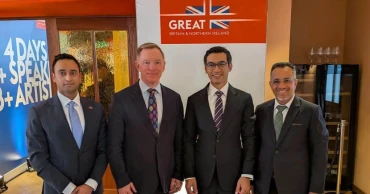
Bangladesh, UK explore new avenues for economic partnership, investment growth
Bangladesh and the United Kingdom (UK) have discussed ways to expand trade and investment cooperation between the two countries, with particular emphasis on attracting greater British investment into Bangladesh's rapidly growing economy.
Executive Chairman of the Bangladesh Investment Development Authority (BIDA) Chowdhury Ashik Mahmud Bin Harun held a series of meetings in London on Monday with Sir Chris Bryant MP, UK Minister of State for Trade at the Department for Business and Trade; Baroness Rosie Winterton, UK Trade Envoy to Bangladesh; and Oriel Petry, Senior Vice President for Government Affairs at Airbus UK and discussed issues of mutual interest.
Acting High Commissioner to the UK Dr Nazrul Islam was present in the meetings.
The meetings highlighted Bangladesh's ongoing economic transformation, investment-friendly reforms, and the significant opportunities available across sectors including manufacturing, infrastructure, aviation, renewable energy, technology, and services.
Pls add as last para
Meanwhile, the British High Commission in Dhaka on Tuesday said Minister for Trade, Sir Chris Bryant, met BIDA Executive Chairman Ashik Chowdhury at SXSW in London to reinforce the Bangladesh-UK partnership, boosting trade and investment in the aviation sector and driving growth and prosperity for both Bangladesh and the UK.
4 months ago