Non-communicable diseases
Consumer awareness key to controlling non-communicable diseases: Speakers
The prevalence of non-communicable diseases (NCDs), including hypertension, is rising at an alarming rate in Bangladesh due to unhealthy dietary habits and increasing dependence on processed foods.
According to the World Health Organization (WHO), foods high in salt, sugar, and fat increase the risk of hypertension and other NCDs. To build consumer awareness on this issue, Front-of-Pack labeling (FOPL) can play an important role.
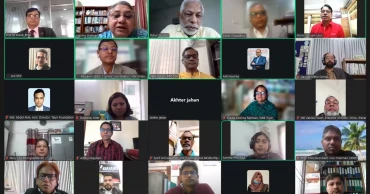
Speakers highlighted these information and recommendations at a webinar titled “Safe Food to Combat Non-Communicable Diseases and Our Role,” organized by the research and advocacy organization PROGGA (Knowledge for Progress), with support from Global Health Advocacy Incubator (GHAI), on 1st February 2026, marking National Food Safety Day. The day will be observed under the theme, "Nirapod Khaddo Nishchit Kori, Sustho Sobol Jibon Gori" this year.
Read More: Boosting fish output pointless without food safety measures: Adviser Farida
At the webinar, they said that, according to WHO data, approximately 570,263 people die each year in Bangladesh from non-communicable diseases. According to the Global Burden of Disease Study 2021, around 27,387 deaths annually are linked to unhealthy dietary practices such as excessive sodium intake, trans-fat consumption, and sugar-sweetened beverages. However, the budgetary allocation for controlling non-communicable diseases is extremely inadequate, accounting for only 4.2 percent of the total health budget.
Professor Dr. Sohel Reza Choudhury, Head of the Department of Epidemiology & Research, National Heart Foundation Hospital & Research Institute, said, “Promoting healthy dietary habits and reducing dependence on processed foods are crucial to lowering the risk of hypertension and other non-communicable diseases among the population.”
Professor Dr. Nazma Shaheen, former Director of the Institute of Nutrition and Food Science, University of Dhaka, stated, “Introducing Front-of-Pack labeling is necessary to inform the public about unhealthy food components such as excessive salt, sugar, and trans-fat. This measure can effectively help reduce the burden of hypertension and other NCDs in the country.”
Read More: Toxic harvest: Food safety slipping away in Bangladesh
Professor Dr. Mohammad Shoeb, Member, Bangladesh Food Safety Authority, said, “The government is working to introduce an easy-to-understand Front-of-Pack labeling system to make consumers especially aware of the health risks of processed foods. We hope to implement it soon.”
Muhammad Ruhul Quddus, Bangladesh Country Lead, GHAI, stated, “In addition to raising public awareness, it is imperative to ensure sustainable financing to effectively address non-communicable diseases such as hypertension.”
Md. Monir Hossain Liton, Head of Online (Bangla), Daily Times of Bangladesh was also present as discussant. The webinar was chaired by ABM Zubair, Executive Director, PROGGA and moderated by Samiha Bintay Kamal, Program Officer, PROGGA. Journalists from print, television, and online media, civil society representatives, experts, and relevant multilevel stakeholders from different regions across the country joined the webinar.
8 months ago

Non-communicable diseases behind 70% of normal deaths: Health Minister
Health and Family Welfare Minister Zahid Maleque said that one million people die normal deaths in the country every year. Of these, 70 percent die of non-communicable diseases.
He made the remarks while addressing a launching ceremony of the annual research paper organized by the Non-Communicable Diseases Control (NCDC) at a city hotel on Thursday.
The minister said the country's health sector is today more advanced than at any time in the past. But many new problems have also emerged along with the development in the health sector of the country.
“We are committed to tackling infectious diseases through health care development and we have dealt with infectious diseases like TB, cholera and diarrhea very successfully. We have also dealt with Covid-19 pandemic. These are now under control. But many non-communicable diseases have increased during this time”, the minister added.
Environmental pollution is one of the reasons for these deaths related to non-communicable diseases. Our lifestyle and food habits are also responsible for increasing these deaths. Treatment of these diseases is costly. As a result, expenditure is increasing at the individual and state levels.
Giving importance to research, Maleque said the research helps policymakers to take effective decisions. So we will be engaged in more and more research. The results of several studies have been published today. We hope that the results will play a significant role in the development of our overall health system, especially in the fight against the NDC.
"The government is also emphasizing health education. At present, there are 38 government medical colleges and 5 medical universities in the country."
Zahid Maleque highlighted the various initiatives and successes of the government in dealing with Covid-19.
Also read: 'Rich man's disease': Curious case of Covid in Dhaka slums
4 years ago

BADAS starts dissemination of diabetes journey app
The diabetes journey application and the country’s first diabetes treatment guideline were disseminated Friday among doctors.
5 years ago

Heart disease leading cause of death globally for last 20 years: WHO
Non-communicable diseases now make up 7 of the world’s top 10 causes of death, according to WHO’s 2019 Global Health Estimates, published on Wednesday.
5 years ago