CMSME
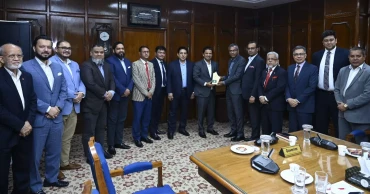
BB governor for stronger focus on CMSME, agro sectors to drive growth
Bangladesh Bank Governor Md Mostaqur Rahman on Monday stressed the need for greater focus on cottage, micro, small and medium enterprises (CMSMEs) and the agriculture sector to boost economic growth and create employment.
The governor made the remarks when a Dhaka Chamber of Commerce and Industry (DCCI) delegation, led by its President Taskeen Ahmed, paid a courtesy call on him at the central bank headquarters in Motijheel.
The governor said the economy has become overly dependent on a limited number of products, services and export markets in recent years, underscoring the urgency of diversification through CMSMEs and agro-based sectors.
“This will help stimulate the domestic economy and generate employment,” he said, adding that high logistics and product management costs remain key drivers of persistent inflation.
Highlighting broader macroeconomic challenges, the governor noted that Bangladesh’s GDP growth has been below expectations, affecting both foreign and domestic investment inflows. “There is no alternative to reforming business and trade policies and reducing the cost of doing business.”
During the meeting, DCCI President Taskeen Ahmed expressed concern over the slowdown in private sector credit growth, which has declined to 6.03 percent—the lowest in 22 years.
Taskeen said the current policy rate of 10 percent has pushed lending rates up to around 16–17 percent, reflecting a liquidity crunch in the banking system and making financing increasingly costly and less accessible, particularly for SMEs and manufacturing industries.
To ease the situation, Taskeen proposed a gradual reduction in the policy rate to lower borrowing costs and encourage private investment.
He also suggested introducing subsidised credit facilities for priority sectors, including manufacturing, export-oriented industries and SMEs.
He further noted that a wide spread between lending and deposit rates—exceeding 5 percent—has eroded investor confidence and contributed to a decline in private investment.
Emphasising the importance of restoring confidence in the financial sector, the DCCI president called for stronger governance in banking and financial institutions.
He also raised concerns over recent changes in loan classification policy, where the timeframe has been reduced from nine months to three months, saying it has added pressure on businesses already grappling with high costs, energy shortages and weak demand.
In this context, he proposed extending the loan classification period to at least six months and reconsidering loan rescheduling facilities for unintentional defaulters.
DCCI Senior Vice President Razeev H Chowdhury, Vice President Md Salem Sulaiman, board members and senior officials of Bangladesh Bank were present at the meeting.
6 months ago

Brac Bank leads CMSME Cluster Financing Workshop in Laxmipur to fuel growth
Brac Bank, under Bangladesh Bank's guidance, has organized a Cottage, Micro, Small & Medium Enterprises (CMSME) Cluster Financing Workshop in Laxmipur to enhance financing to the growing industrial hubs.
As the lead bank, Brac Bank hosted the event per Bangladesh Bank's directive. All banks operating in the district participated in the interactive event to enhance industry-bank collaboration, identify more clusters, and increase financing flow.
BRAC Academy launches its 2nd branch in Bogura
Arif Hossain Khan, Executive Director of Bangladesh Bank Chattogram Regional Office, attended the event as the chief guest. Syed Abdul Momen, Deputy Managing Director & Head of SME Banking; Alomgir Hossain, Head of Small Business (Central), SME Banking; Jamshed Ahmed Chowdhury, Regional Head, Distribution Network, Brac Bank, and branch managers of different banks were present at the workshop held at a hotel in Laxmipur town Thursday, said a press relesae.
Representatives from the Federation of Bangladesh Chambers of Commerce and Industry (FBCCI), Bangladesh Small and Cottage Industries Corporation (BSCIC), and Agriculture Extension Office attended the workshop.
Brac Bank, DIU join hands to advance women entrepreneurship
Bangladesh Bank has assigned different banks to host such workshops on cluster financing as lead banks in various districts throughout the year. BRAC Bank has become the lead bank in Laxmipur and Gaibandha.
Several industry clusters in Bangladesh generate significant industrial output, create employment and play a catalytic role in economic development.
Pirojpur, Jashore and Khulna are home to cricket bat clusters, Dhaka, Chattogram, Bhairab, and Brahmanbaria are famous for leather clusters, Gaibandha and Pabna are renowned for hosiery, Tangail and Sirajganj for power loom and textiles, Bhairab for shoes, Satkhira for medical products, Bogura’s Dhunot and Dupchanchia for blanket, Jashore and Bogura for light engineering and Moulvibazar for Agar-Atar industries.
Brac Bank secures Bancassurance business approval
Easy access to financing can help flourish CMSME industries in different industrial clusters in the country. Collaboration among government bodies, entrepreneurs and banks can uplift clusters and allow them to contribute significantly to the manufacturing sector and national development.
2 years ago
.jpg)
How Bangladesh Bank is encouraging more women to become entrepreneurs
Business loans provide entrepreneurs and startup founders the much-needed capital for expanding their operations. But lower cost of borrowing is what matters the most to them.
To spruce up credit demand and encourage more women to begin their own venture, Bangladesh Bank (BB) is now wooing the female entrepreneurs of the country with lower interest rates.
As the biggest step, the central bank has reduced the interest rate from 7 to 5% in line with its ambitious target of disbursing at least 15% of the loan amount earmarked for the small and medium-sized enterprises (SMEs) to women entrepreneurs by 2024.
Read Some Inspiring Women Entrepreneurs in Bangladesh in Diverse Sectors
At the same time, the central bank has reduced the interest rate from 3 to 0.5% at the institutional level as an incentive to banks and financial institutions for providing loans to women entrepreneurs.
4 years ago
.jpg)
Small businesses pin hopes on budget to stay afloat
Hit hard again, this time by the second wave of the Covid-19 pandemic, Bangladesh's small and medium enterprises (SMEs) are now pinning hopes on the upcoming budget to stay afloat. Not to mention that the survival of these firms is important as they are one of the major employers in the country's economy.
Ranging from short-term liquidity and tax cuts to simple compliance for availing loans and extension of debt repayment periods by at least two years, these enterprises seek an array of relief from the government to tide over the economic crisis. These leeways to SMEs, entrepreneurs say, will not only help the sector survive but also ensure the preservation of jobs.
Read Speakers urge for simplifying process of stimulus fund disbursement to SMEs
Kazi Sazedur Rahman, the president of Paper Cup Manufacturers' Association of Bangladesh (PCMAB), told UNB that though a slew of stimulus packages was announced by the government last year, over 80 percent of the small entrepreneurs in Bangladesh failed to reap the benefits of the same due to corruption in the system.
“Though Bangladesh Bank said that over 72 percent of the stimulus packages worth Tk20,000 crore were disbursed as loans until March 31, the reality is different. Some 95 percent of the disbursed loans were availed by corporate houses through sister concerns floated overnight," said Sazedur, also the MD of KPC Industry.
According to him, the SME sector has again been hit hard by the second wave of Covid. "The government has so far been very supportive of the sector, but the problem lies at the loan distribution level. Many SMEs are already out of the banking system. If more help is not extended to the sector in the coming fiscal, then many more SMEs will disappear."
Also read: Central bank to support SMEs build resilience
The small entrepreneurs also seek a substantial cut in the value-added tax on various items in the upcoming budget -- from the existing 15 percent to 5 percent. "Lower taxation will, in turn, benefit the economy as many SMEs don't acquire trade licenses to avoid paying 15% VAT. So, a cut in VAT will benefit both the government as well as the SMEs," Sazedur said.
"Moreover, the central bank should immediately impose a moratorium on old loan repayments as it has already extended the deadline till June 30 for banks to disburse stimulus funds among businesses in the cottage, micro, small and medium enterprise (CMSME) sector. Otherwise, many defaulting entrepreneurs won't get the benefit."
Read Raise threshold for financial reporting of SMEs: DCCI
5 years ago

DCCI for SME act, new definition of CMSMEs
Dhaka Chamber of Commerce and Industry (DCCI) on Monday called on the government to formulate an SME act and redefine cottage, micro, small and medium enterprises (CMSMEs) in the upcoming Industrial Policy.
5 years ago

CMSMEs can now take term loan under stimulus package
Cottage, micro, small and medium enterprise (CMSME) affected by Covid-19 will now be eligible to avail term loans under the collateral free credit guarantee scheme of Bangladesh Bank as part of the government-announced stimulus package.
5 years ago

Stimulus package loan distribution deadline extended until March 31 for small enterprises
Bangladesh Bank has further extended the deadline until March 31 for the disbursement of loans under the government-announced stimulus package of Tk 20,000 crore for the Covid-19 affected cottage, micro, small and medium enterprise (CMSME) sector.
5 years ago