Festival
Artists sculpt magic at Northern China’s ice and snow festival
Every January, the northeastern Chinese city of Harbin hosts a remarkable winter tradition. Despite the city - capital of Heilongjiang province—already being blanketed in ice, artists flock here from near and far to create even more, competing to craft the year’s finest ice sculpture.
The result is enchanting. Illuminated from within, the sculptures transform parts of the city into a magical, almost cinematic landscape, reminiscent of a festive holiday show. Visitors, often traveling long distances, bundle up to experience the spectacle.
5 simple lifestyle changes that may help slow biological ageing: Experts
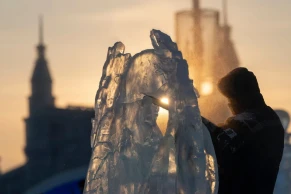
In images captured by Associated Press photographer Ng Han Guan on Saturday, an ice sculptor readies his piece for the festival’s competition, while spectators approach the glowing icy steps of a towering obelisk adorned in yellow and purple lights.
The festival continues through mid-February, and for the adventurous, it even offers the chance to swim among the ice.
9 months ago
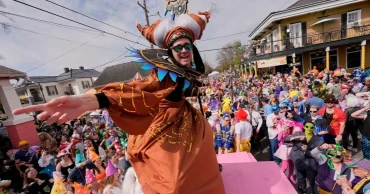
Carnival returns to Louisiana with weeks of parades and festivities
As people in much of the US. pack away holiday decorations and settle back into normal routines after New Year’s, Louisiana is doing the opposite gearing up for its most anticipated season of the year.
Across the state, preparations are underway for Carnival, a festive, weeks-long celebration held before Lent. The season is marked by rich food, lavish balls and an ongoing lineup of large parades that take over city streets.
Carnival is known for excess and spectacle: elaborate costumes, nonstop celebrations and countless strings of colorful plastic beads draped around revelers’ necks. It’s a time devoted to enjoyment before the more reflective period of Lent begins.
Origins of CarnivalCarnival has deep roots in Christian, particularly Roman Catholic, traditions. It represents a time of eating, drinking and celebration leading up to Ash Wednesday, which signals the start of Lent a season of fasting and spiritual preparation for Easter.
Every year, more than a million visitors join Louisiana locals in New Orleans for the world-famous festivities. But Carnival isn’t confined to the city. Celebrations take place throughout Louisiana and across the Gulf Coast, including in Mobile, Alabama, home to what is considered the oldest Mardi Gras celebration in the U.S. Similar events are also held internationally, especially in parts of Europe and Brazil.
Carnival vs. Mardi GrasWhile the terms are often used interchangeably, Carnival and Mardi Gras are not the same. Carnival refers to the entire season leading up to Lent. Mardi Gras or Fat Tuesday is a single day that marks the final celebration before Lent begins.
Mardi Gras always falls on the day before Ash Wednesday and serves as the grand finale of Carnival, offering one last chance for indulgence.
Length of the SeasonCarnival officially begins on Jan. 6, known as Epiphany or Twelfth Night in the Catholic calendar. The season concludes on Mardi Gras, but the date changes each year because it depends on when Easter occurs. Mardi Gras can fall anytime between early February and early March. This year, Fat Tuesday lands on Feb. 17, making the Carnival season last 43 days.
King Cake TraditionThe start of Carnival also signals the return of king cake, a beloved seasonal dessert. Bakeries known for their king cakes often draw long lines as people eagerly await the treat.
The cake, typically made from sweet, brioche-style dough, is shaped like a ring and flavored with cinnamon. It’s decorated with purple, green and gold icing — the traditional Mardi Gras colors — and may be filled with fruit, nuts or cream cheese.
Hidden inside is a small plastic baby figurine. Tradition holds that whoever finds it in their slice is responsible for buying the next cake or hosting the next party, keeping the celebrations going.
Over time, king cake has evolved beyond tradition. Creative versions now include unconventional fillings such as boudin sausage or even sushi-inspired designs.
Parades and “Throws”Carnival is perhaps best known for its spectacular parades. More than 80 parades are scheduled in and around New Orleans this season, many lasting several hours.
These parades feature lively marching bands, dancers in costume and towering floats adorned with imaginative, handcrafted designs. Each parade has its own theme and personality — from all-women krewes and political satire to sci-fi themes featuring costumed characters. Some parades boast thousands of riders and dozens of floats, while others are charmingly small, with floats built from shoeboxes.
Members of krewes the social organizations that organize parades — invest significant time and money preparing for the season. Their efforts are rewarded as crowds line the streets, often dressed in costumes themselves.
Spectators eagerly reach for “throws,” the trinkets tossed from floats. These include beads, candy, cups and toys, along with prized items like decorated coconuts, hand-painted shoes and even glitter-covered plungers. One of the largest krewes, Endymion, estimates it distributes more than 15 million throws each year, living by its motto: “Throw ’til it Hurts.”
Other Carnival TraditionsWhile parades and formal balls dominate popular images of Carnival, many communities observe unique traditions.
In rural central Louisiana, people participate in the Courir de Mardi Gras, a Cajun French custom where masked revelers travel through the countryside singing, performing and asking for ingredients. They may even chase live chickens, all to gather supplies for a communal gumbo at the day’s end.
Chinese Embassy holds ‘Happy Chinese New Year Festival’ Temple Fair at Gulshan Society Lake Park
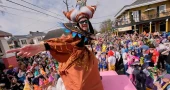
In New Orleans, another powerful tradition is practiced by Mardi Gras Indians — African Americans who create intricate suits adorned with beads and feathers. They parade through neighborhoods singing, dancing and drumming. This tradition dates back to at least the late 19th century and honors Native Americans who aided Black communities and escaped slaves. It also emerged during an era when segregation excluded Black residents from white-only parades.
9 months ago
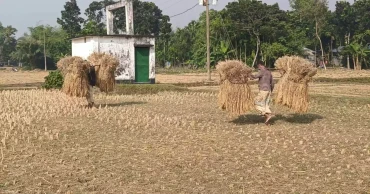
New harvest, no festival? Lalmonirhat's ‘Nabanna’ spirit slips into memory
Once a vibrant fixture of rural Bengali culture, the traditional ‘Nabanna Utsab’, the festival celebrating the first harvest, is quietly fading from many villages across Lalmonirhat, according to local residents.
With the end of the Bangla month of Hemanta and the touch of approaching winter, farmers across the district are busy harvesting Aman paddy.
Golden fields still stretch across the horizon, carrying the familiar scent of new grain, yet the festive celebration that once marked this season is rarely seen nowadays.
Villagers said that although the joy of harvesting remains, the communal spirit of sharing the first cooked rice from the new crop—a hallmark of the ‘Nabanna Utsab’ —has largely diminished.
“We heard from our parents how festive the day used to be. People would go to each other’s houses to eat the first rice. But now we hardly see such practices,”said Saiful Islam, an SSC student from Shialkhowa village in Kaliganj upazila.
Recalling the joy and celebrations of the past, 70-year-old farmer from Aditmari upazila, Shafique Mia said they were poorer 30 years ago, but the joy of the new harvest was greater.
“We used to make pitha, polao and share with neighbours after offering the first rice to the imams. Now income has increased, but happiness has decreased. The young generation doesn’t even know what ‘Nabanna’ really means,” he said.
Farmer Jomir Ali, drying paddy in the field, shared a similar memory. “We used to cook rice from the new crop and give the first plate to the imam of the mosque for blessings. We did doa and ate together. That tradition is almost gone now,” he said.
Read more: Continuous rain flattens half-ripe paddy in Lalmonirhat, farmers worried
Saleha Begum, another elderly villager, said people once respected tradition and valued togetherness.
10 months ago

Bangladesh’s colourful heritage takes centre‐stage at Riyadh’s Global Harmony festival
Bangladeshi expatriates, along with the Saudi audience, enjoyed a vibrant celebration of Bangladeshi heritage on Tuesday night (KSA time) as the ‘Bangladesh Culture’ segment of the Global Harmony festival lit up Al-Suwaidi Park with colorful cultural displays, music and dance performances.
The event, hosted by popular Bangladeshi actress Prarthana Fardin Dighi and Rabiul Haque Zaman, showcased the rich traditions, music, dance and cuisine of Bangladesh as part of Saudi Arabia’s Global Harmony initiative.
Thousands of expatriate Bangladeshis, along with some of their families, gathered to enjoy live performances and sing together, transforming the park into a sea of sounds and lights.
For many, it was an emotional and pride-filled night, a moment to reconnect with their roots and share their culture with the wider Saudi community, celebrating unity, friendship and the growing cultural ties between Bangladesh and the Kingdom.
“This is absolutely amazing. We remain busy, struggling every day here to keep our families smiling back home. This event is refreshing and a chance to share joy with friends,” Rumel, a Bangladeshi expatriate who attended with his friends, told UNB.
Actress Dighi said she would be hosting the Bangladesh Culture programmes until November 14.
Swedish envoy in Bangladesh on four-day rights mission
“I came here to host for the first time — a role I’ve never played before. It feels wonderful to be here, close to the Bangladeshi community. The audience is amazing. We are grateful to the Saudi authorities and the Ministry of Media,” she told UNB.
Sarry Shaaban, spokesperson for the Global Harmony committee, expressed his excitement at hosting one of the largest expatriate communities in Saudi Arabia as part of the initiative.
“We are thrilled to have the Bangladeshi community join us. This event will help Saudi audiences learn more about Bangladesh and its culture,” he said.
Sarry added that the programme is open to everyone.
“It’s free for all to attend and enjoy. For many, the Kingdom of Saudi Arabia is a second home — we’re happy to host them,” he said.
Other nations and regions to be featured in the event include Egypt (Nov. 15–17); the Levant (Nov. 18–20); Yemen (Nov. 21–28); Pakistan (Nov. 29–Dec. 1); Indonesia (Dec. 2–4); the Philippines (Dec. 5–8); Uganda (Dec. 9–10); Ethiopia (Dec. 11–13); and Sudan (Dec. 14–20).
The Global Harmony initiative was first launched in October 2024 to celebrate the diversity of the Kingdom’s residents.
South Korea committed to working with WFP on Rohingyas
Last year’s event celebrated the cultures of Bangladesh, India, Pakistan, Malaysia, Indonesia, Yemen, Syria, Palestine, Sri Lanka, Egypt, Lebanon, Jordan and the Philippines.
This year’s Bangladesh Culture Week features a diverse lineup of artistes, celebrities, and influencers from Bangladesh, including renowned singer Asif Akbar and actress Dighi, in a colorful showcase of the country’s cultural identity.
Packed with lively performances, traditional music and dance and authentic Bangladeshi cuisine, the celebration promises to be a spectacular display of Bangladesh’s rich heritage.
Artistes will present a variety of cultural and theatrical performances reflecting the nation’s artistic excellence.
Last year’s event featured legendary Bangladeshi rock icon Nagar Baul James, DJ Sonica, and popular singers Habib Wahid, Porshi, and Beauty Khan — with James’s first-ever performance in Riyadh being a major highlight.
The Global Harmony initiative continues to host a series of cultural weeks representing 14 countries over a span of 49 days.
The programme is part of the Kingdom’s broader efforts to promote intercultural dialogue and mutual understanding, reinforcing Riyadh’s position as a global hub for cultural and civilizational diversity.
MSF exchanges views with journalists in Dhaka
The Saudi Ministry of Media recently concluded the Indian Cultural Week, another installment of the Global Harmony 2 initiative, while the Bangladesh segment began on November 11.
The Indian Cultural Week attracted over 200,000 visitors and featured an array of artistic and cultural performances reflecting the deep-rooted ties between Saudi Arabia and India, while also celebrating Riyadh’s growing cultural diversity.
The week, organized under the Quality of Life Program supporting the goals of Saudi Vision 2030, brought together more than 100 Indian artistes who presented theatrical, artistic, and heritage performances showcasing India’s rich cultural identity.
Interactive pavilions displayed traditional arts, crafts, cuisine, and customs from different regions of India, drawing significant attention from diplomats, cultural figures, and large crowds of citizens, residents, and members of the Indian community.
The week concluded with energetic performances by Indian troupes that received enthusiastic applause, embodying the spirit of cultural exchange and mutual appreciation that the Kingdom seeks to promote.
10 months ago

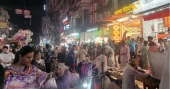
Eid Eve: Last-minute shopping frenzy in Dhaka's markets and footpaths
As the city prepares to welcome Eid, Dhaka's residents have immersed themselves in last-minute shopping.
From upscale shopping centres to bustling footpaths, the capital is teeming with eager shoppers making their final purchases.
A visit to various markets and street stalls across the city reveals a significant increase in the number of shoppers, particularly after sunset.
Despite having completed most of their Eid shopping, many have realised they still need to buy a few last-minute items, prompting another shopping spree.
Eid-ul-Fitr to be celebrated in Bangladesh on Monday
Aira Mumtaha, a resident of Shantinagar, came to Mouchak Market to buy a pair of earrings.
She said, "I thought I had finished all my shopping, but then I realised I hadn't bought earrings to match my dress. So I came out after Iftar, thinking it wouldn’t be too crowded. But the market is absolutely packed."
Parveen Akhter, who travelled from Motijheel to Anarkali Shopping Centre, is shopping for a lighter outfit for her daughter.
Extra fare collection, fines, and Vigilance Team activity at Mohakhali Bus Terminal on last day of Eid journey
"I bought a dress for my daughter at the start of Ramadan when the weather was cooler. But after these last two hot days, I decided to get her a thinner fabric dress. Since I’m already here, I’m also looking for a cotton scarf for myself," she shared.
Shopkeepers across the city confirm the overwhelming turnout of shoppers on Eid eve.
Many had anticipated a quieter evening due to the early holiday start this year, but the surge of customers since sunset proved otherwise.
Sabbir, a jewellery vendor at City Gold in Mouchak Market, noted, "Small accessories like earrings, rings, and nose pins are selling well. Many customers are matching their jewellery with their outfits."
5 congregational Eid prayers to be held at Baitul Mukarram
Another vendor, Shibli, highlighted the demand for household essentials: "It’s not just clothing—towels, tissues, and naphthalene are selling fast.
Many are also buying new bedsheets. Business has picked up significantly this Eid eve."
Across major shopping centres, women are also queuing up for traditional henna application, adding to the festive atmosphere. Sumaiya, waiting in line for henna, said, "There are different designs at different prices. The rush has been intense since the evening, and many will still be getting their henna done at midnight."
According to shop owners, markets will remain open until 2:00–2:30 am to accommodate the last-minute rush of customers.
Meanwhile, the city's footpaths see a larger crowd of male shoppers.
Shamim, purchasing jeans from a street vendor in Rampura, mentioned, "I have a night bus to my village, but my younger brother just called and asked me to bring jeans along with a shirt for him. So, here I am, making another last-minute purchase."
Another shopper, Liton, prioritised family over personal shopping. "I always wait until everyone in the family has finished their shopping before I buy anything for myself. Whatever money I have left isn’t enough for branded shirts, so I’m getting a good-quality one from a street vendor."
Chuadanga residents dread celebrating Eid-ul-Fitr amid scorching heat
Arman, after struggling to find his size at major shopping malls, resorted to street shopping. "I’ve been to Bashundhara and Jamuna shopping centres for two days but couldn’t find a shirt in my size. Most stock has been out for a week. So, I’ve come to the footpath to get one."
Mintu, a street vendor on Badda Link Road, shared insights into the importance of Eid eve for small traders.
"The real business for footpath vendors happens the day before Eid. Last Eid, I sold shirts and trousers worth Tk 50,000 on Chand Raat alone. This time, sales are going strong again."
As Dhaka’s residents make their final purchases, ensuring they are dressed their best for Eid, vendors too are eager to maximise profits before heading home to celebrate with their families.
1 year ago
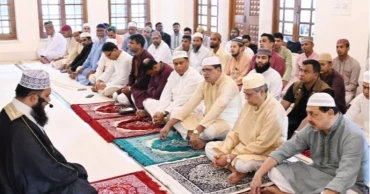
5 congregational Eid prayers to be held at Baitul Mukarram
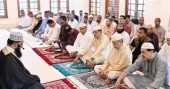
The government has announced a timetable for five congregational Eid prayers at Baitul Mukarram National Mosque on the occasion of Eid-ul-Fitr this year.
The first prayer is scheduled to be held at 7am, with the mosque’s Chief Imam Hafiz Mufti Maulana Muhibbullahil Baki in conduction, said a media release sent from Islamic Foundation on Sunday afternoon.
The second, third and fourth prayers will be held at 8am, 9am and 10am respectively while the last prayer is scheduled at 10:45am, reads it.
In case any designated Imam is unavailable, Maulana Md. Zakir Hossain, deputy director of the Islamic Foundation, will serve as the alternative Imam.
1 year ago

30 dead in India's Kumbh festival stampede
A tragic stampede at the Maha Kumbh festival in northern India claimed the lives of at least 30 people and left many others injured early Wednesday, according to police. The incident occurred as millions of Hindu pilgrims gathered for a ritual bath at the confluence of three rivers in Prayagraj.
Police official Vaibhav Krishna reported that 60 people sustained injuries and were taken to hospitals for treatment. The stampede took place on a particularly auspicious day in the six-week-long festival, with authorities estimating a turnout of 100 million devotees seeking spiritual purification through the holy dip.
According to Uttar Pradesh Chief Minister Yogi Adityanath, the chaos began when pilgrims attempted to bypass barricades set up for a procession of revered Hindu ascetics. These processions, a major attraction of the event, feature ash-covered sadhus making their way to the sacred waters.
Passenger plane catches fire at South Korean airport, all 176 people on board are evacuated
Despite the scale of the tragedy, Indian officials took over 16 hours to release casualty figures. Prime Minister Narendra Modi expressed his grief, calling the incident "deeply saddening" and offering condolences to the victims' families.
A witness named Sarojini told the Press Trust of India that the crowd suddenly became uncontrollable. "We were trapped with people pushing from all sides. Many fell, and there was no way to escape," she recounted.
Distraught relatives gathered outside a temporary hospital, anxiously searching for missing loved ones. The aftermath of the chaos was evident at the site, where personal belongings such as clothes, blankets, and bags lay scattered.
Despite police urging people to avoid the main confluence, millions of devotees continued arriving at the 4,000-hectare festival grounds. Adityanath assured that the situation was under control but acknowledged the overwhelming number of attendees. By 8 a.m. Wednesday, around 30 million people had already completed their ritual bath.
The Maha Kumbh festival, which occurs every 12 years, began on January 13, with an estimated 400 million expected to participate throughout its duration. So far, nearly 150 million people, including top officials like Defense Minister Rajnath Singh, Home Minister Amit Shah, and international celebrities like Coldplay’s Chris Martin, have visited the site.
12 rail passengers killed in India after jumping onto tracks in fire panic
A massive tent city has been set up to accommodate pilgrims, featuring roads, electricity, water facilities, 3,000 kitchens, and 11 hospitals. Authorities have deployed 50,000 security personnel and installed 2,500 surveillance cameras to monitor crowd movements and prevent disasters.
However, critics from opposition parties blamed the tragedy on mismanagement and alleged that VIP treatment for politicians and celebrities worsened crowd control issues. Opposition leader Rahul Gandhi urged the government to improve arrangements for ordinary devotees.
The Maha Kumbh festival is one of the most significant religious events for Hindus, who make up nearly 80% of India’s 1.4 billion population. The event is also politically important for Modi’s government, which emphasizes Hindu cultural heritage.
Stampedes have occurred at previous Maha Kumbh gatherings. In 2013, a similar tragedy at a Prayagraj train station left 40 pilgrims dead. More recently, in July, at least 116 people—mostly women and children—lost their lives in a stampede at a religious event in Uttar Pradesh’s Hathras district.
1 year ago

Durga Puja around the corner; 257 mandaps set up in Dhaka
Hindu community will celebrate Durga Puja, the largest religious festival of the community, at 257 mandaps in Dhaka city this year.
Durga Puja will begin on October 9 and end with the 'Bijoya Dashami' procession and immersion of the idols of goddess Durga in water bodies on October 13.
Puja mandaps have been installed at Dhakeshwari National Temple, Ramkrishna Mission and Ashram, Banani, Kalabagan, Shakharibazar, Siddheswari Kali Temple, Ramna Kali Temple, Jagannath Hall at Dhaka University and other temples at Farmgate, and the historic areas of Shakharibazar and Tantibazar in Old Dhaka.
The last minute preparations for the puja are going on in full swing, with artisans working to give finishing touch to the idols.
Buyers from the community are thronging city markets, branded shops and shopping malls to grab their best outfit.
Customers are gathering at traditional shops in Old Dhaka's Shakharibazar to buy essential items including shells, idol garments, bells, clay pots, earthen lamps, incense sticks, divine garlands, crowns, sarees, dhotis, panjabis, and various ornaments for the festival.
Artisans give finishing touch to idols ahead of Durga Puja
To prevent any untoward incidents during the Durga Puja celebrations, strict security measures have been taken nationwide. A central police control room will be set up at Dhakeshwari Temple compound to oversee the overall security of the mandaps in the capital.
Following a visit to the national temple on Saturday, Army Chief General Waker-uz-Zaman said, “Everyone in this country has equal rights. Each person will practice their own religion. Everything necessary will be done for this.”
He assured that the army will be present for security, encouraging attendees to visit the pavilions without fear. “We aim to create a enjoyable environment where everyone can celebrate the festival,” he said.
Over 212,192 members of Ansar and VDP will be deployed across 32,666 mandaps across the country.
Moreover, the Border Guard Bangladesh (BGB) members will remain vigilant.
2 years ago

Once a den of drug addicts, Ctg DC Park is now a kingdom of flowers
DC Park in Chattogram’s Fouzdarhat has become place of attraction for city dwellers for vibrant display of colourful flowers along the sea beach after the district administration developed the park inspired by Dubai's renowned Miracle Garden.
A month-long flower festival will begin at the park on Thursday (January 25, 2024) evening.The festival, organized for the second time, promises a delightful experience for visitors with a collection of 127 species of exotic flowers. In addition to the floral extravaganza, the event features added attractions such as kite flying, traditional sweets festival, boat exhibitions, art displays, and a music festival.
Read more: A festival of flowers in ChattogramOnce infamous as a drug den near the Fouzdarhat area on the Link Road in Chattogram city, DC Park was transformed into a 194-acre park by the district administration.The various species of flowers capture the attention of visitors, not just through their colours but also through the artistic arrangements.
2 years ago

The Enduring Lessons of Christmas: Embracing Kindness, Hope and Renewal
Christmas, celebrated worldwide, is more than just a festive occasion; it embodies profound teachings that resonate with millions. As we approach Christmas 2023, let us reflect on the invaluable lessons this sacred festival imparts, transcending mere celebration and highlighting values that enrich our lives and communities.
10 Lessons of Christmas
Love and Compassion
The essence of Christmas lies in Jesus' message of unconditional love and kindness. This festival urges us to extend our hearts in compassion and understanding towards everyone, especially those in need. It's a perfect opportunity to instill in young minds the importance of empathy, tolerance, and sharing. Christmas 2023 beckons us to embrace these virtues more than ever, fostering a world filled with kindness and care.
Read more: 5 Christmas Dinner Recipes for Bangladeshi Kitchen
Generosity and Giving
The tradition of exchanging gifts during Christmas symbolizes the spirit of generosity. It’s not confined to material presents but encompasses acts of kindness like inviting a lonely neighbor for a meal or donating to those less fortunate. Christmas 2023 is a reminder that the joy of giving is the essence of the festival, making the smallest gestures of kindness truly special.
2 years ago