BDR
Tarique vows to restore BDR name, says army won't be used for political interests
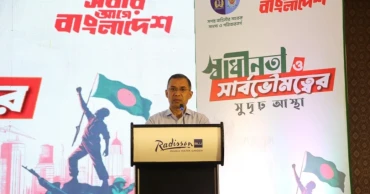
BNP Chairman Tarique Rahman on Saturday announced that his party would restore the name Bangladesh Rifles (BDR) if voted to power, saying the force’s historic identity linked to the Liberation War was unjustly removed after the 2009 Pilkhana tragedy.
“After the brutal massacre of army officers at BDR headquarters in Pilkhana in 2009, the fallen, defeated, fugitive and ousted fascist forces changed the name of the Bangladesh Rifles, an institution deeply linked to the memories of our Liberation War,” he said.
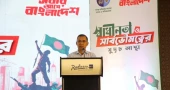
While addressing a views-exchange meeting with retired army officers and family members of those killed in the 2009 BDR mutiny at a city hotel, Tarique bemoaned that even the traditional uniform of the BDR was altered.
“I want to share a personal feeling with you today. If BNP is entrusted with the responsibility of running the state by the people’s verdict, we will restore the historic name of the Bangladesh Rifles, which carries the legacy of the Liberation War,” he said.
Tarique vows quick implementation of Teesta Master Plan if BNP forms govt
Tarique also said BNP plans to consult the army to declare February 25—the day of the Pilkhana massacre—as ‘Shaheed Sena Day’, ‘Army Martyrdom Day’ or a ‘National Mourning Day’, so that such a tragedy never occurs again.
The BNP Chairman said several recommendations have already been placed by senior retired army officers ahead of the meeting, including the formation of a National Security Council and reforms to certain provisions of the Army Act.
“I personally believe that all these recommendations are undoubtedly important. At this moment, I can say that if, by the grace of Allah, BNP is given the responsibility of running the country through the people’s verdict in the upcoming February 12 national election, we plan to form a committee comprising both retired and serving Army officers to implement the recommendations you have placed before us,” he said.
Based on the committee’s findings, Tarique said each recommendation will be carefully examined and implemented gradually with sincerity.
He reiterated BNP’s commitment to implement the ‘One Rank One Pay’ policy for retired members of the armed forces, saying the provision has already been included in the party’s election manifesto and will be implemented if the party is voted to power.
Nearly one million security personnel to guard Bangladesh elections
At the beginning of his speech, the BNP chief thanked the organisers for inviting him and his wife, Dr Zubaida Rahman, to the programme.
Referring to his close emotional bond with the Army, he said, “My wife and I truly feel a sense of nostalgia when we take part in discussions like this with you. We always consider the Army, and the armed forces as a whole, as an extended family.”
Referring to his emotional and close bond with the Army, Tarique said, “My wife and I truly feel a sense of nostalgia when we sit in a discussion like this with you. We consider the Army, or the armed forces as a whole, always as an extended family to us.”
He said the bond perhaps stemmed from his and his family’s upbringing in army cantonments.
“We lost our father at a very young age. But as I grew up, I saw that my late mother Begum Khaleda Zia had a deep sense of trust in and respect for the Army. She always believed that Bangladesh must have a strong Army to protect the country’s independence and sovereignty,” Tarique said.
Zaima goes door to door in Dhaka-17 campaigning for father
Tarique Rahman said that, as a son, he is proud of his father late President Ziaur Rahman, and believed that by declaring Bangladesh’s independence as an Army officer, he also made the Army proud.
“Just as I take pride in my father, I believe the democratic and freedom-loving people of Bangladesh are proud of Shaheed Zia as the proclaimer of independence and a valiant freedom fighter. I firmly believe that our family, and in the same way the Armed Forces of Bangladesh, also feel that pride,” he said.
Tarique Rahman noted that people regard the army as the most reliable guardian of the country’s independence and sovereignty, and warned that involving the army in non-core activities undermines its primary role.
Referring to the past 15 years, he said questions remain about how the army’s honour and role were affected during that period, including after the 2009 Pilkhana massacre, in which 74 people, including 57 army officers, were killed.
Tarique said during the period when the country fell under the grip of fascist and subservient forces, not only were democracy and citizens’ freedoms violated, but also the nation’s independence and sovereignty were also put at risk.
Agro-based industries key to improving farmers’ lives: Tarique
He said even after the planned massacre of army officers at the BDR headquarters in Pilkhana in February 2009, the Armed Forces themselves were unable to properly observe that tragic day, nor were they allowed to do so.
“The honour of the army cannot be restored by words. Honour is something that must be earned and upheld,” Tarique said.
The BNP Chairman categorically stated that the army will never be allowed to be used for political interests if BNP comes to power.
“BNP did not do this in the past, does not do it now, and will never do it in the future,” he said, adding that BNP always stands for Bangladesh and its sovereignty.
The BNP chief stressed that while the army should remain politically aware, it must never be absorbed into politics, urging officers to remain vigilant so that professionalism is not overshadowed by political interests.
The programme began with special prayers seeking eternal peace for the souls of Ziaur Rahman, Khaleda Zia and the martyrs of the armed forces.
Retired Major General Fazle Elahi Akbar delivered the welcome speech.
Earlier, Tarique Rahman greeted retired officers individually, walking around the venue and exchanging handshakes.
During the event, several retired officers spoke about alleged repression during the past 15 years, while Rakin Ahmed Bhuiyan, son of slain BDR Director General Major General Shakil Ahmed, also addressed the gathering.
Mirza Abbas warns of election engineering, alleges administrative bias
The programme was also attended by Dr Zubaida Rahman and senior retired army officials. Tarique Rahman later joined the retired officers for dinner.
8 months ago
BDR mutiny a planned conspiracy to destabilise Bangladesh: Inquiry Commission chief
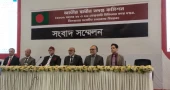
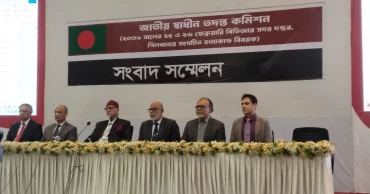
The 2009 BDR mutiny at Pilkhana headquarters, which took place on February 25–26, was a premeditated conspiracy aimed at destabilising Bangladesh, prolonging political power, and weakening the country’s security forces, said Major General (retd) Fazlur Rahman, head of the National Independent Inquiry Commission.
Fazlur Rahman made the remarks on Sunday evening (November 30) while briefing reporters at the commission’s office in Dhaka’s Science Lab area after submitting the investigation report to the Chief Adviser.
The commission found involvement of several influential political figures in the mutiny, with names of senior Awami League leaders surfacing during the probe.
Read more: Govt to ensure justice for deprived armed forces members: Chief Adviser
Those mentioned include former Prime Minister Sheikh Hasina, Barrister Fazle Noor Taposh, Sheikh Selim, Mirza Azam, Jahangir Kabir Nanak, Sahara Khatun, then Security Adviser Maj Gen (retd) Tarique Ahmed Siddique, former Army Chief Gen (retd) Moeen U Ahmed, and former DGFI Chief Maj Gen (retd) Akbar.
Discussing the causes of the mutiny, Fazlur Rahman cited multiple factors, including dissatisfaction with the Dal-Bhat programme and the creation of the BDR Shop, which significantly increased BDR personnel workloads.
He also noted opposition among some personnel to the presence of army officers within the force, along with internal crises within BDR.
“Fundamentally, the mutiny aimed to weaken the army and destabilise Bangladesh. The main reasons were to undermine the army, with neighbouring India seeking to destabilise the country. Extending the political tenure of the ruling Awami League was also among the motives. India was a beneficiary from the incident,” he said.
On reports of missing army officers, the commission found evidence supporting claims that five army officers disappeared after the mutiny.
BDR Mutiny: Probe body says Hasina had 'green signal' for entire incident
Fazlur Rahman said that RAB personnel were deployed at Pilkhana’s Gate 5 at the time but did not intervene, reportedly due to instructions from then RAB Additional Director General Col Reza Nur.
He stressed that RAB and police do not require special orders to act during such incidents.
On foreign involvement, he stated that the commission identified a “neighbouring country” linked to the incident, noting that Sheikh Hasina and her associates had taken refuge there.
He added that grievances tied to Operation Dal Bhat were reportedly used to mask the underlying objective of destabilising the country and weakening BDR.
Dhaka-Delhi ties won’t get stuck over Hasina issue: Foreign Adviser
The inquiry also highlighted that political decisions blocked army action during the mutiny, terming the absence of a military response a “major conspiracy.”
Witness accounts suggested participation from outsiders alongside BDR personnel, some affiliated with Awami League, Jubo League, and Chhatra League.
The commission said a group of 20–25 people entered the compound and later emerged with a procession of around 200.
Referring to intelligence lapses, Fazlur Rahman described them as “mountain-sized.”
Regarding former Army Chief Gen (retd) Moeen U Ahmed’s statement on not conducting an army operation during the mutiny, he said the former chief informed the commission online that intervention might provoke Indian involvement, warning, “they might not return to India like 1971.”
The investigation also found that 721 Indian nationals entered Bangladesh during the period, with 67 unaccounted for.
The commission recommended that the government trace them and seek explanations from India. Some perpetrators inside Pilkhana reportedly spoke in Hindi.
“If we fail to properly evaluate this incident, the country may face another BDR-like mutiny in the future. For national security, truth and corrective measures are essential,” Fazlur Rahman told journalists.
Read more: Sacked BDR men dispersed near Kakrail while marching to Jamuna
10 months ago
BDR Mutiny: Probe body says Hasina had 'green signal' for entire incident
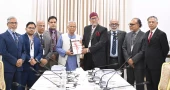
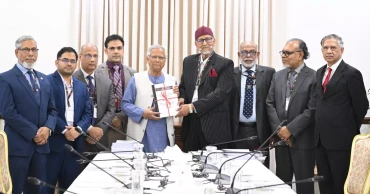
The Commission, formed to reinvestigate the 2009 BDR massacre, the brutal massacre committed in the name of BDR mutiny submitted its report to Chief Adviser Prof Muhammad Yunus on Sunday (November 30), noting that then PM Sheikh Hasina had a 'green signal' for the entire incident to take place while then MP Sheikh Fazle Noor Taposh played the role of the main coordinator behind.
Chief of the National Independent Investigation Commission Maj Gen (retd) ALM Fazlur Rahman, who was also former director general of BGB, and other members submitted the report to the Chief Adviser at the State Guest House Jamuna.
Major General Md Jahangir Kabir Talukder (retd), Brigadier General Md Saidur Rahman Bir Pratik (retd), Munshi Alauddin Al Azad, Dr M Akbar Ali, Associate Professor of the Department of Political Science, Dhaka University Md Shariful Islam, Assistant Professor of the Institute of Education and Research, Jagannath University Md. Shahnewaz Khan Chandan are the members of the commission.
Read more: Govt to ensure justice for deprived armed forces members: Chief Adviser
"The nation was in the dark about the BDR massacre for a long time. The nation will remember the role you played in uncovering the truth. On behalf of the nation, I thank you,” Prof Yunus said.
He said the nation had many questions about this most horrific incident in history and these questions will be answered through this work.
Prof Yunus said there are many lessons to be learned from this report. “It will be a valuable asset for the nation.”
Commission chief Fazlur Rahman said the highest professionalism has been maintained in the interest of making the investigation fair, impartial and error-free.
He said when they started the work, many signs of this incident 16 years ago had been destroyed and many people involved in this incident have gone abroad.
“We went through two processes. We called witnesses; we listened to some of them for up to 8 hours - as long as the individual wanted to say. We talked to those who were involved in the investigation. We collected their investigation reports and other elements,” Fazlur Rahman said.
He said through this investigation, answers have been sought for every question in the public mind about the BDR killings, an attempt has been made to uncover who had what role and why the army did not take action.
Fazlur Rahman said the investigation has found strong evidence of the direct involvement of external forces in the BDR killings and the direct involvement of the then ruling party Awami League.
Read more: BDR mutiny a planned conspiracy to destabilise Bangladesh: Inquiry Commission chief
Jahangir Kabir Talukder said about the commission’s findings that the commission has found some external and real reasons for this incident.
He said the killings were planned and the role of the main coordinator behind it was played by the then MP Sheikh Fazle Noor Taposh, according to the Chief Adviser’s press wing.
Jahangir said the local Awami League played a direct role in protecting those involved in the murder. They entered Peelkhana with a procession of 20-25 people and when they came out, there were more than two hundred people in that procession.
Jahangir said that Hasina had a 'green signal' for the entire incident to take place, according to the press wing.
Regarding the assessment of responsibility for the incident, Jahangir said that the responsibility for the incident lies with the then head of government and the army chief.
A decision has been made to resolve this incident politically. The police, RAB and intelligence agencies have also failed miserably.
Jahangir said that the role of some print and electronic media and some journalists during the incident was unprofessional.
He said that the exact names and information of the BDR members with whom Sheikh Hasina met at the State Guest House Jamuna (the then Prime Minister's residence) during the murder were not preserved.
The commission made several recommendations in its report so that such incidents can be avoided in the future and the victims of this incident get justice.
The meeting was attended by National Security Advisor Dr Khalilur Rahman, Special Assistant to the Chief Adviser on Defense and National Integration Development Lieutenant General (retd) Abdul Hafiz, and Home Secretary Nasimul Gani.
Read more: Sacked BDR men dispersed near Kakrail while marching to Jamuna
10 months ago
Sacked BDR men dispersed near Kakrail while marching to Jamuna
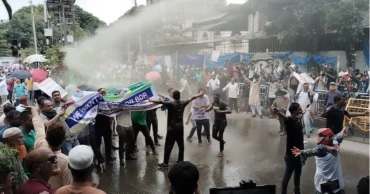
Police on Sunday dispersed a group of sacked Bangladesh Rifles (BDR) members as they attempted to march towards the Chief Adviser’s official residence ‘Jamuna’ in the capital with a three-point demand.
The former border guards, carrying a banner that read “We Want Justice for BDR Members,” gathered in front of the National Museum at Shahbagh around 11:00 am.
About half an hour later, they began marching towards Jamuna via Sheraton Crossing, but were blocked by police. They then turned back and moved towards Matsya Bhaban crossing.
At about 12:30 pm, the demonstrators reached Kakrail Mosque where police had set up another cordon. Law enforcement responded by deploying water cannons, blasting sound grenades and charging with batons, dispersing the crowd by around 1:00 pm.
Bangladesh’s population hits 175.7 million, majority in working-age group
“They tried to move towards Jamuna defying police's obstacles. We were compelled to use water cannon and sound grenades to disperse them,” officer-in-charge of Ramna Police Station Golam Faruq told UNB.
One protesting ex-BDR member said, “We want our jobs back and the innocent BDR members who are in jail must be freed.”
The demonstrators’ three demands are reinstatement to service, release of jailed members after the 2009 Pilkhana mutiny, and related relief measures.
1 year ago
Over 300 BDR members being freed on bail after 16 yrs
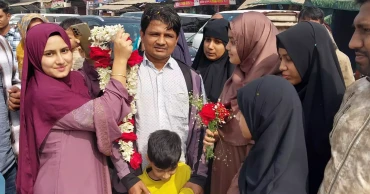
Over 300 members of Bangladesh Rifles (BDR) are being freed on bail after 16 years in jails in an explosive case over the BDR carnage at Dhaka’s Pilkhana.
The prisoners started coming out of Dhaka Central Jail in Keraniganj and Kashimpur Central Jail in Gazipur on Thursday morning.
Of them, 178 BDR members are set to be freed from Dhaka Central Jail and 126 from Kashimpur Central Jail.
Earlier on Sunday, Judge of Dhaka Special Tribunal-1 Md Ibrahim Mia granted the bail to the BDR members in the explosive case.
The court was set up temporarily inside the Dhaka Central Jail.
On Tuesday, the jail authorities disclosed the list of the convicts who secured bail.
The necessary documents for the bail were sent to both jails on Wednesday.
After completing legal procedures, the Dhaka Central Jail authority started releasing 178 prisoners. The rest will be freed later, said jailer AKM Masud.
The authority of Kashimpur Central Jail has released 38 inmates till 1am on Thursday.
Read: Awami League orchestrated BDR massacre for political gain: Shahidul Alam
1 year ago
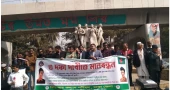
Human chain at DU demands release of innocent BDR members
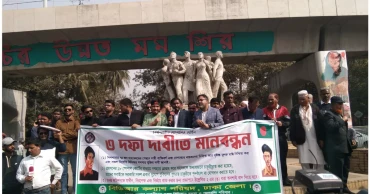
BDR Welfare Council of Dhaka district has organised a human chain at Dhaka University to press home their various demands including the release of innocent BDR members for their suspected involvement in Pilkhana massacre.
The human chain was formed at 11:30 am in front of the Raju Sculpture as part of a nationwide programme.
Their other key demands included identifying and ensuring exemplary punishment of those responsible for the brutal killing of 57 army officers and 74 others in Pilkhana massacre, reinstatement of jobs of those BDR members unjustly dismissed through 18 special courts, and restoration of their government benefits such as rations, salary allowances, and promotions.
They also demanded removal of Section 2 (e) of the notification to allow the investigation commission to work independently, impartially, and without fear.
Coordinator Mahin Sarker stated, "It is unfortunate that even after the 24th uprising, we still have to demand justice for the Pilkhana massacre. We have to stand at Shahbagh.. Their release of BDR members and the trial of the massacre must happen quickly."
VAT hike on mobile, internet services sparks protests
He announced that a larger gathering will be organised soon and urged all BDR members and their families to attend.
Earlier, on January 9, coordinator Mahin Sarker had declared a program for the BDR Welfare Council to organise human chains across the country from the Central Shaheed Minar.
1 year ago
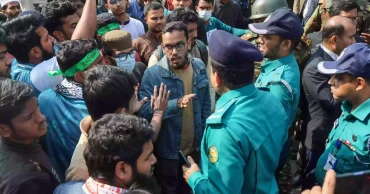
Alia Madrasa students block roads protesting court set-up on field
Students of Dhaka's Alia Madrasa and local residents have staged protests by blocking roads in the Bakshibazar area, objecting to the use of the madrasa’s field as a temporary court.
Witnesses and police said the protest began on Wednesday night and continued into Thursday morning, with demonstrators burning tyres and obstructing traffic.
A special temporary court had been set up on the madrasa grounds to conduct trials related to the 2009 Bangladesh Rifles (BDR) mutiny.
The students voiced strong opposition to this arrangement, which led to the blockade.
The demonstration disrupted vehicular movement on the road in front of the court and its surrounding areas, leading to severe congestion.
BPATC official’s death in road crash sparks protest in Savar
The protesters blocked access to the streets near the Dhaka Education Board and Bakshibazar intersection with bamboo barricades, halting traffic flow from Bakshibazar to Chawkbazar.
1 year ago
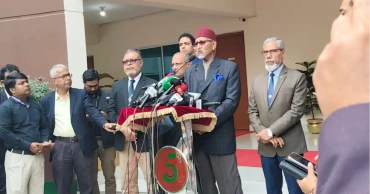
Commission to thoroughly investigate 2009 BDR mutiny: Fazlur Rahman
Chairman of the newly-formed National Independent Commission Major General (retd) ALM Fazlur Rahman has announced his commission's commitment to thoroughly investigate the BDR mutiny that took place on February 25, 2009.
"This is a national issue, an event of unprecedented magnitude. The scale of the tragedy is unparalleled, and we are committed to ensuring a comprehensive investigation into the events of that fateful day," he said while speaking after the commission's inaugural meeting at the Bangladesh Border Guard (BGB) headquarters in Dhaka.
BRTA offices to remain open on Saturdays
The commission's primary task is to uncover both domestic and foreign conspiracies surrounding the deadly incident at the Bangladesh Rifles (BDR-now BGB) headquarters in Pilkhana of the capital that left 74 people, including 57 army officials, dead.
The commission, which has been given a three-month timeframe, will adopt an impartial approach, striving to conduct the investigation without any external influence. "We will use our intellect and dedication to complete the investigation within the given period," the Commission chief assured.
Fazlur Rahman also promised to address the suffering of those affected by the mutiny. "We aim to address the plight of those who were killed, tortured, and deprived in the aftermath. With compassion and sincerity, we will endeavour to heal their wounds."
Admin cadres demand resignation of Public Admin Reform Commission
The Commission head outlined the logistical and security requirements essential for their work, including the provision of administrative facilities, office space, and transport arrangements.
The investigation into the 2009 mutiny is poised to uncover the full scope of the event's domestic and international implications, with the commission pledging a transparent and empathetic inquiry into one of Bangladesh's most tragic episodes.
1 year ago
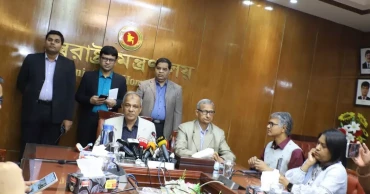
Committee to probe BDR killings will be formed in 5 working days: Home Adviser
An investigation committee to ensure justice in the Bangladesh Rifles (BDR) killings will be formed within the next five working days, said Home Affairs Adviser Lt Gen (retd) Md Jahangir Alam Chowdhury on Tuesday.
This committee will include retired judges, civil service, armed forces, and police personnel, he said.
He made the announcement at a special press briefing held at the home ministry's conference room, emphasizing the interim government’s commitment to justice and good governance.
Retired army officers demand exemplary punishment for perpetrators of BDR massacre
“The government is determined to re-investigate and ensure justice in the BDR killings. Since its formation, the interim government has been working toward this goal,” said the adviser.
He reiterated his consistent stance on the matter, saying, “I have been vocal about re-investigating the BDR killings from the very beginning, both as a former army member and as a concerned citizen.”
BDR families demand renaming of BGB, justice for mutiny victims
Addressing the timeline for submitting the investigation report, he said, “We will first collect names for the committee. This process may take some time, as not everyone is willing to join such committees. After finalizing the members, we will consult with them to determine the scope and timeline for the report.”
However, the exact number of members is yet to be finalized, though it is likely to be five, seven or nine, with more representation from the armed forces, he added.
On whether the committee would be headed by a judge or another official, the adviser said that the committee will be led by the most senior member.
BDR carnage to be reinvestigated: Home Adviser
He added that the format—whether it will be a committee or a commission—would be decided based on discussions after its formation.
When asked whether there is any confusion with the law ministry, the Home Affairs Adviser said, "No, there is no confusion with the law ministry. However, we will sit with the law adviser and take their opinions."
1 year ago

BDR mutiny case accused dies at DMCH
An accused in the BDR mutiny case died at Dhaka Medical College and Hospital on Tuesday, police said.
The deceased was identified as Md. Abed Ali, 57, son of late Masir Uddin. He was an accused in a case over 2009 BDR mutiny and an inmate of Dhaka Central Jail.
Read: BDR mutiny accused who was in Dhaka Central Jail dies
He was taken to DMCH on June 7 from jail after he fell sick and died in the medicine ward of the hospital at around 10:08am on Tuesday.
DMCH police outpost In-Charge Inspector Md Bacchu Miah said the body was kept at the hospital morgue for autopsy.
Also Read: Convict in BDR mutiny case dies at Kashimpur Jail
Seventy-four people, including 57 army officials, were killed in the mutiny in the capital's Pilkhana headquarters of the erstwhile Bangladesh Rifles (BDR) on February 25 and 26 in 2009.
A total of 58 cases, including one for murder and looting and the rest for mutiny, were filed in connection with the incident.
Also Read: Death row convict in BDR mutiny case dies at DMCH
Some 152 people were sentenced to death and 423 others to different jail terms in the case. Besides, 277 accused were acquitted.
3 years ago