Indian Ocean
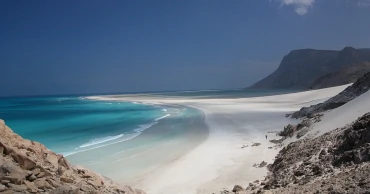
Yemeni Island Socotra: The Most Alien-Looking Place On Earth Drawing Global Wanderers
Strange, contorted trees stretch toward a sky so vast it feels unworldly. Bare, jagged cliffs rise from a stark, wind-blasted terrain that seems untouched by time or civilisation. Crystalline waters border bizarre landforms, creating a surreal contrast. Among the world’s many awe-inspiring locations, from Africa’s endless sands to North America’s ancient canyons. Few evoke such profound disbelief as this remote island. Long whispered about in niche travel circles, it now draws increasing global attention. The name? Socotra, locally known as Saqatri. Let’s uncover what's behind this alien-looking island in the Indian Ocean that draws modern explorers.
Geography of Socotra
Tucked between the Guardafui Channel and the Arabian Sea, Socotra forms the largest island in a six-island archipelago. While it falls under Yemen's political boundary, its proximity to Africa gives it a different geographic rhythm. Just 236 miles south of the Arabian Peninsula, this closeness shapes its distinct character.
This remote outpost stands among the most isolated continental landmasses on Earth. It parted ways with the ancient supercontinent of Gondwana millions of years ago. That deep-time isolation shaped its singular environment.
Read more: Chongqing, The 3D City: Chinese Megacity Looking Like AI-Generated
The island is renowned for its extraordinary biodiversity. Many species found here exist nowhere else on the planet, drawing scientific and ecological interest from across the globe. This exceptional natural wealth earned it UNESCO World Heritage status in 2008, marking it as a vital ecological treasure.
Unique Landscape and Discrete Demography
The distinctiveness of this ancient island lies in its terrain, with Socotra shaped over millennia by time, climate, and isolation. Towering limestone plateaus stretch across the island, rising above arid plains and wind-carved dunes. At the heart of it all, a central mountain range climbs to nearly 5,000 feet. It offers an imposing backdrop to an otherwise barren interior. The terrain breaks into elevations that shift with the landscape. Dry mountains and scattered vegetation tell a stark story of nature’s endurance.
This archipelago, over 25 million years old, balances contrasting features- coastal plains brushing against desert stretches, and rocky plateaus giving way to shrub-covered slopes. But what sets Socotra apart is its inimitable biological character. Nearly one-third of its plant species are endemic, including the most iconic locale- the Dragon’s Blood Tree. This umbrella-shaped marvel, known for its crimson resin, casts haunting silhouettes throughout the horizon, lending the landmass its surreal, alien quality.
Read more: Wales’s Stream in the Sky: World’s Tallest Navigable Aqueduct Pontcysyllte
Despite its remoteness, Socotra is home to a modest community of approximately 60,000 people. The Socotrans speak Soqotri, a pre-Arabic language that survives only here. Their cultural fabric, enriched by centuries of isolation, is preserved through an annual poetry competition.
1 year ago
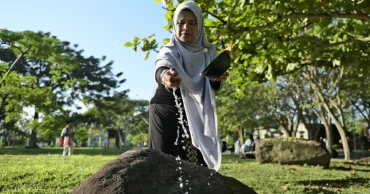
Prayers, tears mark 20 years of Indian Ocean tsunami that killed some 230,000 people
People gathered in prayer and visited mass graves in Indonesia’s Aceh province on Thursday to mark 20 years since the massive Indian Ocean tsunami hit the region in one of modern history’s worst natural disasters.
Many wept as they placed flowers at a mass grave in Ulee Lheue village, where more than 14,000 unidentified tsunami victims are buried. It is one of several mass graves in Banda Aceh, the capital of Indonesia’s northernmost province, which was one of the areas worst hit by a magnitude 9.1 earthquake and the massive tsunami it triggered.
“We miss them and we still don’t know where they are. All we know is that every year we visit the mass grave in Ulee Lhue and Siron,” said Muhamad Amirudin, who lost two of his children 20 years ago and has never found their bodies.
"This life is only temporary, so we do our best to be useful to others,” Amirudin, visiting the grave with his wife, said.
The powerful earthquake off the coast of the Indonesian island of Sumatra on Dec. 26, 2004, triggered a tsunami that killed around 230,000 people across a dozen countries, reaching as far as East Africa. Some 1.7 million people were displaced, mostly in the four worst-affected countries: Indonesia, Sri Lanka, India and Thailand.
More than 170,000 people died in Indonesia alone.
Even though 20 years have passed, survivors in Indonesia are still grieving the loved ones they lost to the giant wave that flattened buildings all the way to the provincial capital of Banda Aceh.
Hundreds of people gathered to pray at the Baiturrahman Mosque in downtown Banda Aceh. Sirens sounded across the city for three minutes to mark the time of the earthquake.
Read: Small tsunami waves splash ashore on remote Japanese islands
Infrastructure in Aceh has been rebuilt and is now more resilient than before the tsunami struck. Early warning systems have been installed in coastal areas to alert residents of incoming tsunamis, providing crucial time to seek safety.
The rebuilding efforts were made possible by the support of international donors and organizations, which contributed significant funds to help the region recover. Schools, hospitals, and essential infrastructure destroyed by the disaster have been reconstructed.
In Thailand, people gathered at a memorial ceremony in Ban Nam Khem, a small fishing village in Phang Nga province that bore the brunt of the devastating wave in the country.
The tsunami claimed the lives of over 8,000 people in Thailand, including many who remain missing, leaving a deep scar in the nation’s history. Nearly 400 bodies remain unclaimed.
Mourners shed tears and comforted each other as they laid flowers at the village’s tsunami memorial. Around 300 people joined a modest ceremony with Muslim, Christian and Buddhist prayers.
Urai Sirisuk said she avoids the seaside memorial park the rest of the year because the loss of her 4-year-old daughter still cuts deep every time she's reminded of it.
“I have this feeling that the sea has taken my child. I’m very angry with it. I can’t even put my foot in the water,” she said.
But, she said, “I still hear her voice in my ears, that she’s calling for me. I can’t abandon her. So I have to be here, for my child.”
In India, hundreds gathered at Marina beach in the southern city of Chennai in Tamil Nadu state. They poured milk into the sea to propitiate gods and offered flowers and prayers for the dead as drums beat in the background.
Read more:7.1 magnitude earthquake hits off southern Japan; tsunami advisory issued
According to official data, 10,749 people were killed in India, including nearly 7,000 people in Tamil Nadu alone.
“It has been 20 years since the tsunami,” said 69-year-old Sadayammal, who uses one name. “We are here to pay respects to the people who lost their lives.”
In Sri Lanka, survivors and relatives of tsunami victims gathered at the coastal village of Pereliya and laid flowers at a memorial that commemorates nearly 2,000 passengers who died when their train, the Queen of the Sea, was hit by the wave. Only a few dozen people are believed to have survived.
Anura Ranjith joined the mourners to pay respects to his younger sister, Anula Ranjani, and her 9-year-old daughter who were passengers on the train. Ranjith never heard from them after that day.
“I looked for them everywhere for years and still, no information about them. Their loss is a great sorrow and pain for me. I am still grieving,” he said.
Overall, more than 35,000 people died in Sri Lanka in the tsunami. People across the country observed two minutes of silence on Thursday in memory of those who lost their lives.
1 year ago

Two Decades After Tsunami, 'Baby 81' Embraces His Unique Identity
Rescued as an infant from the mud following the catastrophic Indian Ocean tsunami in 2004 and reunited with his parents after a dramatic legal battle, the boy once known as “Baby 81” is now 20 years old and aspires to pursue higher education.
Jayarasa Abilash’s journey has become a symbol of hope amid the devastation caused by one of modern history’s deadliest natural disasters. Sri Lanka alone lost over 35,000 lives, with many still unaccounted for.
At just 2 months old, Abilash was swept away by the tsunami in eastern Sri Lanka and later discovered by rescuers some distance from his home. Registered as patient number 81 at the hospital, he earned the moniker “Baby 81.”
Rare Whale Likely Died from Head Injuries: NZ Scientists
Murugupillai Jayarasa, Abilash's father, spent three days searching for his displaced family, possessing nothing but a pair of shorts. He first located his mother, then his wife, but their baby remained missing.
A nurse initially took the infant but returned him upon learning his parents were alive. However, the ordeal didn’t end there. Nine other families claimed the baby, prompting the hospital to demand proof before handing him over.
The case escalated to the police and eventually to court, which ordered a DNA test—a relatively new process in Sri Lanka at the time. Despite public calls for DNA testing, none of the other claimants followed through. A DNA test ultimately confirmed Abilash belonged to the Jayarasa family, reuniting them and attracting international media attention. The family even traveled to the U.S. for an interview.
Ancient genes pinpoint when humans and Neanderthals mixed and mingled
Now preparing for his final high school exams, Abilash dreams of studying information technology at university. Though classmates once teased him with nicknames like “Baby 81” or “tsunami baby,” causing embarrassment, he has since embraced his story.
Reflecting on his past struggles, Abilash recalled hiding from journalists revisiting his story each anniversary. His father reassured him, emphasizing his uniqueness.
As he matured, Abilash learned more about his experience and gradually shed his insecurities. Today, he humorously refers to “Baby 81” as his personal code word, joking that it’s the easiest way to find him online.
Jayarasa still vividly remembers those desperate days, even as other memories fade. However, the attention their story garnered also brought challenges. The family faced exclusion from relief programs under the assumption they had received funds during their U.S. trip. Gossip and jealousy further isolated them, leading to relocation.
In Nigeria's lithium boom, many mines are illegal and children do much of the work
Jayarasa hopes his son will remain thankful for their survival and use his experiences to assist others. Saving small sums from his hairdressing job, he built a memorial in their yard to honor tsunami victims when Abilash turned 12. The monument, featuring four cupped hands, serves as a daily reminder of loss and survival.
“Since many lives were lost and Abilash was spared, I felt compelled to create a memorial to honor those who passed,” Jayarasa explained.
1 year ago

Foreign Minister sees progress in efforts to free hijacked ship, crew members
Foreign Minister Hasan Mahmud on Thursday (March 28, 2024) said that there has been progress in the government’s efforts to free the Bangladeshi ship MV Abdullah, which was hijacked by Somali pirates in the Indian Ocean along with 23 sailors on board.
“Our aim is to rescue the sailors unharmed and at the same time rescue the ship. I just want to say that we have advanced much,” he told reporters at the Ministry of Foreign Affairs today.
Govt trying to free the hijacked ship and bring back crew members safely as soon as possible: Foreign Minister
Hasan Mahmud said they are in contact and are making multifaceted efforts to rescue the crew members.
Pirates make maiden contact with MV Abdullah’s owner
Regarding the reported food shortage on the ship, he said food shortage has never happened in the past when ships have been hijacked. “Hopefully it won’t happen in this case either.”
After 9 days of taking the Bangladeshi ship and holding 23 sailors hostage, Somali pirates contacted the owners.
Owner of hijacked vessel MV Abdullah doesn’t want armed operation
2 years ago

‘Indian Ocean is named after us; if we don't take action, who will?’: Indian Navy Chief
Indian Navy will take affirmative action to ensure there is safety and security in the Indian ocean, Admiral R Hari Kumar, Chief of Naval Staff, said on Saturday (March 23, 2024).
The Indian Navy is keeping a close watch on the hijacked Bangladeshi vessel MV Abdullah and it has been taken to Somalia, he said.
‘If money is not given, they will kill us’: Audio message of hijacked ship’s chief officer
He was speaking on the 100 days of the Indian Navy’s operations for anti-drone, anti-missile and anti-piracy attacks in the Gulf of Aden, Arabian Sea and Red Sea.
Earlier, there were 54-55 anti-piracy ships everyday and now it has gone up to 64-65.
Please pray, says hijacked ship Abdullah's chief engineer to his family
"The Indian Navy is very clear about its job. This is the Indian Ocean, named after us, and if we don't take action, then who will?" he said.
Govt in touch with international bodies to rescue hijacked Bangladeshi ship, its crew: FM
2 years ago

Held hostage by Somali pirates: Sailor Joy’s family demands urgent steps to free all crew members of MV Abdullah
The family of Joy Mahmud, Ordinary Seaman, who is among 23 crew members of a Bangladeshi cargo vessel, MV Abdullah – hijacked by a group of Somali pirates in the Indian Ocean on Tuesday (March 12, 2024) – is counting every moment in anxiety.
Joy, hailing from Salinagar village in Bagatipara upazila of Natore district, informed of his fate to his cousin Maruf over the phone after the Somali pirates took them as hostages.
Maruf said Joy asked him not to inform his parents about the incident but they came to know about it through public representatives and media.
Ziaur Rahman and Abida Begum, Joy’s parents, have not slept since hearing about the captivity of their only son.
They want the government and the ship authorities to take immediate action to rescue everyone on board, including their son.
Prime accused, 4 cohorts arrested over terrorist Ramzan killing in Jashore
Joy joined the ship as Ordinary Seaman on November 29 last year.
Among the 23 crew members, 11 hailed from Chattogram alone, two are from Noakhali and one each from Natore, Naogaon, Feni, Faridpur, Lakshmipur, Barishal, Netrakona, Sirajganj, Tangail and Khulna.
Earlier on Tuesday, the ship, carrying coal from Mozambique’s Maputo port to Al Hamriyah Port in the UAE, was attacked around noon.
MV Abdullah is owned by SR Shipping Lines – a sister company of Chattogram-based Kabir Steel and Rerolling Mill (KSRM) Group. All crew members are being held hostage by the pirates, said KSRM’s media adviser Mizanul Islam.
Muslims in 40 Chandpur villages start Ramadan fasting in accord with Saudi Arabia
The crew members are: Captain Mohammad Abdur Rashid, Chief Officer Mohammad Atikullah Khan, Second Officer Mazharul Islam Chowdhury, Third Officer Tarequl Islam, Deck Cadet Sabbir Hossain, Chief Engineer ASM Saiduzzaman, Second Officer Toufiqul Islam, Third Engineer Rokon Uddin, Fourth Engineer Tanvir Ahmed, Engine Cadet Ayub Khan, electrician Ibrahim Khalil, seaman Md Anwarul Haque, seaman Md Asifur Rahman, seaman Sazzad Hossain, seaman Joy Mahmud, seaman Nazmul Haque, seaman Ainul Haque, oiler Mohamamd Shamsuddin, Ali Hossain, fireman Mosharraf Hossain Shakil, chief cook Shafiqul Islam, general steward Nur Uddin, and fitter Saleh Ahmed.
KSRM owns 23 ships – all operating on international routes. In 2010, one of the ships, ‘MV Zahan Moni’, was hijacked and was later released by Somali pirates after providing ransom.
2 years ago

Bangladeshi vessel hijacked by Somali pirates: 11 among 23 crew members from Ctg
Eleven out of the 23 crew members of a Bangladeshi cargo vessel, MV Abdullah, that was hijacked by a group of Somali pirates in the Indian Ocean, are residents of Chattogram.
Earlier on Tuesday, the ship, carrying coal from Mozambique’s Maputo port to Al Hamriyah Port in the UAE, was attacked around noon.
MV Abdullah is owned by SR Shipping Lines – a sister company of Chattogram-based Kabir Steel and Rerolling Mill (KSRM) Group. All crew members are being held hostage by the pirates, said KSRM’s media adviser Mizanul Islam.
Bangladesh cargo vessel hijacked by Somali pirates in Indian Ocean
The crew members are: Captain Mohammad Abdur Rashid, Chief Officer Mohammad Atikullah Khan, Second Officer Mazharul Islam Chowdhury, Third Officer Tarequl Islam, Deck Cadet Sabbir Hossain, Chief Engineer ASM Saiduzzaman, Second Officer Toufiqul Islam, Third Engineer Rokon Uddin, Fourth Engineer Tanvir Ahmed, Engine Cadet Ayub Khan, electrician Ibrahim Khalil, seaman Md Anwarul Haque, seaman Md Asifur Rahman, seaman Sazzad Hossain, seaman Joy Mahmud, seaman Nazmul Haque, seaman Ainul Haque, oiler Mohamamd Shamsuddin, Ali Hossain, fireman Mosharraf Hossain Shakil, chief cook Shafiqul Islam, general steward Nur Uddin, and fitter Saleh Ahmed.
KSRM owns 23 ships – all operating on international routes.
In 2010, one of the ships, ‘MV Zahan Moni’, was hijacked and was later released by Somali pirates after providing ransom.
Read more: 11 crew swim ashore as water enters coal-laden cargo vessel in Pashur River
2 years ago
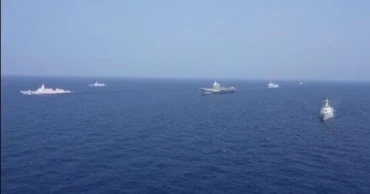
State media reports Chinese fishing boat sinks in Indian Ocean; 39 on board missing
State media reports that a Chinese fishing boat operating in the Indian Ocean has sunk and all 39 crew members on board are missing.
Broadcaster CCTV said the sinking happened around 3 a.m. Tuesday. The crew includes 17 from China, 17 from Indonesia and five from the Philippines, the report said.
Chinese leader Xi Jinping and Prime Minister Li Qiang have ordered Chinese diplomats abroad, as well as the agriculture and transportation ministries, to assist in the search for survivors.
The Lupenglaiyuanyu No. 8 was based in the eastern province of Shandong, operated by the Penglaiyingyu Co. Ltd.
Also read: Cement-laden vessel sinks in Barishal river
China is believed to operate the world’s largest fishing fleet. Many of them stay at sea for months or even years at a time, supported by Chinese state maritime security agencies and a broad network of support vessels.
No word was given on the cause of the sinking.
Recovery efforts are underway in Myanmar and Bangladesh after a powerful cyclone smashed into their coastlines, causing widespread destruction and at least 21 deaths, with hundreds of others believed missing.
Chinese squid fishing ships have been documented using wide nets to illegally catch already overfished tuna as part of a surge in unregulated activity in the Indian Ocean, according to a report released in 2021 by a Norway-based watchdog group that highlights growing concerns about the lack of international cooperation to protect marine species on the high seas.
The U.S. Coast Guard was also involved in a dangerous confrontation with Chinese vessels not far from Ecuador’s Galapagos Islands in 2022 during a mission to inspect the vessels for any signs of illegal, unreported or unregulated fishing.
3 years ago

6th Indian Ocean Conference in Dhaka: Bangladesh, India committed to an 'open, inclusive, rules based' IOR
The Indian Ocean Region (IOR) is no longer an idea based on "power equations", but rather a natural construct based on principles of “inclusivity, comradery, and multi-stakeholderism,” says a document related to the 6th Indian Ocean Conference being held in Dhaka on May 12, 13.
As two responsible states, Bangladesh and India are committed to ensure the rise of a “free, open, inclusive and rules based” IOR, according to the concept note of the conference.
The global order is rapidly evolving, power axis is shifting, and the complacency of the past is making way for greater confidence in future, the document reads.
The IOR has emerged as a microcosm of partnerships, collaborations, bilateral and multilateral dependence.
Also read: Indian Ocean Conference in Dhaka on May 12-13: Myanmar not invited
Mauritius President Prithvirajsing Roopun, minister- and state minister-level delegations from 25 countries including Indian External Affairs Minister S. Jaishankar will attend the conference.
Prime Minister Sheikh Hasina will inaugurate the conference at a Dhaka hotel on May 12. The Prime Minister will also host a dinner in honour of the guests.
The 6th edition of the conference is being organised by India Foundation in association with the Ministry of Foreign Affairs, Government of Bangladesh.
Home to the most promising economies, the most populous lands, and the most vulnerable islands, the Indian Ocean Region is a testimony to the multifaceted challenges impacting governance in the 21st century.
Read More: Bangladesh urges Indian Ocean nations to work together to promote blue economy
With a vast reserve of natural resources and supply chain trade routes, the IOR has become an integral part of global strategic thinking.
From Europe to America and Japan to South Korea, all major powers have aligned their global strategic outreach in line with the vision of developing a Free and Open Indo-Pacific Region (FOIP).
With a vision towards mutual growth, prosperity and strengthening of the international community, the 6th IOC will bring together stakeholder nations to discuss and deliberate on the theme of “Peace, Prosperity, and Partnership” for a resilient future.
In light of recent developments, the global community appreciates the expansion of resilience to go beyond economic strength and military might to include in its ambit the challenges posed by rapid climatic deterioration, and the exponential rise of disruptive technologies.
Read More: Ocean health needs proper regional, global attention: Dhaka
Peace
While the expanse of the IOR makes it a region of infinite potential, it is the same expanse that can lead to damages of unfathomable scale. The region today is faced with not just traditional challenges of security but also non-traditional challenges of biohazards, cyberwarfare, and maritime piracy. The after-effects of such a disruption are unimaginable.
Thus, maintaining peace in the region is of paramount importance to ensure the rise of a resilient future. Rise of a peaceful IOR on the principles of a rules-based order will chart a new agenda for prosperity and greater partnership in the region and beyond.
Prosperity
The IOR is pegged to rise as the most economically prosperous region of the century. It has the economies of scale, mass consumer market, and technical prowess to lead the world into an era of global affluence based on the ethos of sustainable development.
The region is home to 3 of the 5 fastest growing economies of the world, 64% of the global population, and 60% of the global GDP while also accounting for 40% of the world’s oil supply and 64% of oil trade.
Read More: President of Mauritius in Dhaka to attend 6th Indian Ocean Conference, bilateral programmes
As two stakeholder nations of the region, both India and Bangladesh have been traditional advocates of responsible growth and development while living in harmony with nature.
Pushing forth the ethos of a lifestyle based on sustainable development, taking climate conscious decisions ranks high on the prosperity agenda of the IOR.
Partnerships
One lesson that the pandemic taught the world is the importance of collaborative approach to working. Partnerships in the IOR will thus be more forward looking and constructive in their scope.
With greater innovation, ample opportunities are opening up for countries to collaborate in multiple formats on carbon planning and green financing, navigating technological hegemony, the development of the blue economy, the rise of alternate forms of financing, and collaboration on public healthcare and education.
Read More: Maritime cooperation in Indian Ocean increasingly important in current geopolitical landscape: Discussants
Foreign Minister Dr AK Abdul Momen said Bangladesh's partnership with countries in the Indian Ocean will become stronger through hosting the IOC.
External Affairs Minister of India Dr S. Jaishankar will deliver the keynote address of the evening alongside special addresses by the US Deputy Secretary of State, Wendy Sherman, and Vice President of Maldives Faisal Naseem.
The inaugural session will also be graced by the presence of Foreign Minister Dr Momen and Foreign Minister of Oman Sayyid Badr bin Hamad bin Hamood Albusaidi.
The Foreign Minister of Singapore Dr Vivian Balakrishnan will be represented by Dr Maliki Osman, Minister in the Prime Minister's Office and Second Minister of Foreign Affairs of Singapore.
Official delegations led by heads of states/governments, deputy heads, cabinet ministers, deputy ministers and senior officials from 27 countries and multilateral organisations will address the conference on May 13.
Read More: PM to inaugurate Indian Ocean Conference in Dhaka May 12
The Indian Ocean Conference (IOC) was started in 2016 and in the last six years it has emerged as the "flagship consultative forum" for countries in the region on regional affairs.
The conference endeavours to bring critical states and principal maritime partners of the region together on a common platform to deliberate upon the prospects of regional cooperation for Security and Growth for All in the Region (SAGAR).
The first edition of the Indian Ocean Conference was held in Singapore in 2016.
3 years ago

Indian Ocean Conference in Dhaka on May 12-13: Myanmar not invited
Bangladesh's partnership with countries in the Indian Ocean will become stronger through hosting the Indian Ocean Conference (IOC) in Dhaka on May 12-13, Foreign Minister Dr AK Abdul Momen said on Wednesday.
Mauritius President Prithvirajsing Roopun, minister and state minister-level delegation from 25 countries including Indian External Affairs Minister S. Jaishankar will attend the conference.
Briefing reporters at the Ministry of Foreign Affairs, Dr Momen also said around 150 foreign guests will participate in the conference including representatives from D8, SAARC and BIMSTEC.
The participating ministers will also visit Bangabandhu Memorial Museum at Dhanmondi 32 to pay respect to the Father of the Nation Bangabandhu Sheikh Mujibur Rahman.
State Minister for Foreign Affairs Md Shahriar Alam said Bangladesh maintains good relations with Mauritius and the relations will further strengthen through the visit of the country's president.
Responding to a question, Dr Momen said Myanmar was not invited to the conference.
Prime Minister Sheikh Hasina will inaugurate the conference at a Dhaka hotel on May 12. The Prime Minister will also host a dinner in honour of the guests.
The 6th edition of the conference is being organised by India Foundation in association with the Ministry of Foreign Affairs, Government of Bangladesh.
With the theme of “Peace, Prosperity and Partnership for a Resilient Future”, the conference would bring together a luminary gathering of key stakeholders to chart the roadmap for strengthening the Indian Ocean Region.
External Affairs Minister of India Dr S. Jaishankar will deliver the keynote address of the evening alongside special addresses by the Deputy Secretary of State of USA Wendy Sherman and Vice President of Maldives Faisal Naseem.
The inaugural session will also be graced by the presence of Foreign Minister Dr Momen and Foreign Minister of Oman Sayyid Badr bin Hamad bin Hamood Albusaidi.
The Foreign Minister of Singapore (Dr Vivian Balakrishnan) will be represented by Dr Maliki Osman, Minister in the Prime Ministers' Office and Second Minister of Foreign Affairs of Singapore.
Official delegations led by Heads of State/Government, Deputy Heads, Cabinet Ministers, Deputy Ministers and Senior Officials from 27 countries and multilateral organisations will address the conference on May 13.
The conference will also bring together a gathering of over 300 social and corporate leaders, policy practitioners, scholars, professionals and media personnel from over 40 countries.
The Indian Ocean Conference (IOC) was started in 2016 and in the last six years it has emerged as the "flagship consultative forum" for countries in the region on regional affairs.
The conference endeavours to bring critical states and principal maritime partners of the region together on a common platform to deliberate upon the prospects of regional cooperation for Security and Growth for All in the Region (SAGAR).
The first edition of the conference was held in Singapore in 2016.
It was attended by over 300 delegates from 22 countries including ministers, political leaders, diplomats, strategic thinkers, academics, and media.
3 years ago