Japan-US
US firebombing of Tokyo 80 years ago; survivors seek compensation
Eighty years ago, on March 10, 1945, the U.S. firebombing of Tokyo resulted in the deaths of over 100,000 people in a single night.
The attack, carried out using conventional bombs, devastated central Tokyo, leaving streets filled with charred bodies.
Nissan tests driverless cars on busy Japan city streets
The destruction was comparable to the atomic bombings later that year in August, yet, unlike those attacks, the Japanese government has not provided compensation to the victims, and the event has largely been overlooked or forgotten.
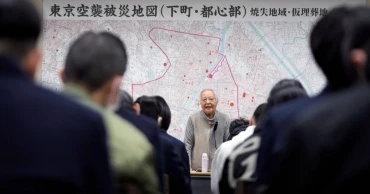
Elderly survivors are now making a final push to share their stories and seek both financial aid and formal recognition. Some are speaking out for the first time, hoping to pass on their lessons to the younger generation.
Shizuyo Takeuchi, aged 94, is determined to continue telling the story of what she witnessed when she was 14, speaking for those who perished.
On the night of the firebombing, hundreds of B-29 bombers dropped cluster bombs with sticky napalm on the densely packed wooden homes of Tokyo's "shitamachi" neighborhoods. Takeuchi and her family had lost their home in a previous bombing and were sheltering at a relative's house by the river. Her father’s decision to cross the river in the opposite direction from the crowds saved their lives. Takeuchi recalls walking through the night beneath a red sky, a memory that still makes her uneasy when she sees orange sunsets or hears sirens.
By morning, everything was reduced to ashes. She recalled seeing two blackened figures, one of which turned out to be a woman with her baby, who had died. “I was terribly shocked... but after seeing so many others, I became numb,” she said.
In total, more than 105,000 people died that night, with another million displaced. The death toll surpassed that of the atomic bombing of Nagasaki on August 9, 1945, but the firebombing has largely been overshadowed by the two atomic bombings, and the other firebombings across Japan have received even less attention.
The bombing occurred after Japan’s air and naval defenses collapsed, allowing U.S. bombers to strike the main islands. This came amid growing frustration in the U.S. over the length of the war and Japan's past military actions.
Ai Saotome, daughter of Katsumoto Saotome, a firebombing survivor and writer, has inherited her father’s extensive collection of notes, photos, and records from the bombing. Her father worked to raise awareness of the civilian deaths and advocate for peace. Saotome points out that younger generations are less aware of these events.
Her father’s writings, including books about the bombing, have inspired her to digitize and preserve the materials at the Center of the Tokyo Raids and War Damage, a museum her father opened in 2002. “Our generation may not know much about the survivors’ experiences, but it is our responsibility to record their stories,” she says. She hopes the documents will serve as a reminder in the future.
Despite the support offered to military veterans and survivors of the atomic bombings, civilian victims of the firebombings have received no compensation. A group of survivors has met to renew their demands for recognition and financial assistance, but their efforts have faced significant opposition. A proposed one-time payment of 500,000 yen ($3,380) has stalled in the Japanese government, and a court has rejected their claims for compensation, citing that citizens were expected to endure suffering during wartime.
“This year is our last chance,” said Yumi Yoshida, who lost her parents and sister in the bombing, reflecting on the 80th anniversary of Japan’s WWII defeat.
Japan fights a forest fire that has damaged dozens of homes and caused hundreds to evacuate
Reiko Muto, a former nurse, was in her uniform when the sirens rang on March 10, 1945. She rushed to the pediatric ward, where she helped transport infants to a basement shelter. As the raid continued, truckloads of severely burned victims arrived, many crying for water. The screams and the smell of burned skin haunted her for a long time.
After the war, she was relieved that the firebombings had ended. She completed her nursing studies and spent her career helping children and teenagers. “What we went through should never be repeated,” she said.
End/UNB/AP/MB
11 months ago

Japan, US to share China worry as ministers meet in Tokyo
Japan and the United States joined forces Tuesday to criticize China's “coercion and aggression" in Asia as senior ministers from both countries held their first in-person talks since President Joe Biden took office in January.
4 years ago