Success Story
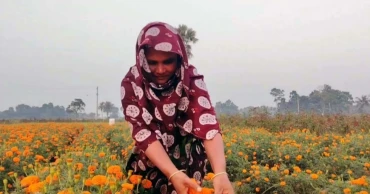
Jashore’s Gadkhali blooms with hope; flower business may cross Tk 400 crore
As winter settles in Jashore, Gadkhali, Bangladesh’s flower capital, bursts into vibrant blooms, drawing visitors and boosting both the local economy and tourism.
With the festive season approaching, including the New Year, flower growers and traders here are brimming with optimism for a flourishing season of sales.
Nestled in Jhikargachha upazila, Gadkhali and its surrounding villages—Panisara, Navaran and nearby areas—are now carpeted with blossoms, heralding the start of a vibrant flower season.
Business waiting to bloom in ‘Flower Capital’ Gadkhali
Farmers have already begun harvesting a rainbow of blooms, while traders rush to dispatch them across the country.
According to Agriculture Department officials, the region boasts around 7,000 flower growers cultivating approximately 1,200 hectares, of which nearly 650 hectares are dedicated to flowers.
Eleven varieties thrive here, from the elegant gladiolus and fragrant tuberose to roses, gerbera, marigold, gypsy, rodstick, calendula and chrysanthemums.
10 months ago
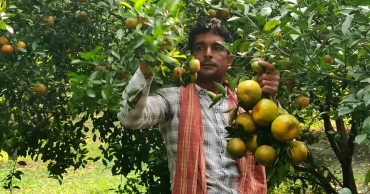
Chapainawabganj farmer sparks local excitement with amazing Chinese orange harvest
A quiet village in Chapainawabganj has become the centre of local curiosity and inspiration after an agricultural entrepreneur successfully cultivated Chinese oranges, an achievement many had believed impossible in Bangladesh.
Forty-one-year-old farmer Sayem Ali has drawn visitors from across the area, all eager to witness the clusters of bright, ripe oranges hanging heavily from the trees in his orchard.
The scene has created both excitement and a stir among villagers, who until now had only seen Chinese oranges in markets as imported fruit.
Sayem, who previously relied on mango farming, said he struggled to maintain a steady income from the crop.
Read more: The young entrepreneur who brought orange farming to Naogaon
His interest in Chinese oranges began when he noticed the fruit increasingly available in local markets.
Intrigued, he approached the local agriculture office for advice. With guidance and technical support from agricultural officials, he brought three bighas of land under cultivation in Baharam of Sadar Upazila in 2022.
The initial investment stood at Tk 1.5 lakh. Now, just a few years later, the orchard is teeming with fruit.
“I managed to recover my costs and even made a small profit from my first harvest in 2024,” Sayem said, adding, “But this year the trees are full. I’m selling the oranges at Tk 100 per kilogram, and after expenses, I expect to earn Tk 6 to 7 lakh.”
Read more: Youth's success in orange farming sparks an agricultural trend in Kurigram
Farm worker Anarul Islam, who has cared for the orchard since its early days, echoed the optimism.
“The harvest has been excellent. These oranges taste very good, and the demand is high. We don’t even need to take them to the market, as buyers come directly to the orchard,” he said.
Sayem’s success has quickly inspired others. Curious farmers and residents have been flocking to Baharam, many considering whether they too should switch to or start cultivating Chinese oranges.
Local resident Abdul Malek admitted he had never imagined the fruit could grow locally.
“We always thought Chinese oranges came from abroad. After visiting the orchard and speaking with the owner, I’m convinced it’s profitable. I plan to start cultivating them too, with support from the agriculture office,” he said.
Read more: Chuadanga farmers thrive as cauliflower yields hit new high
10 months ago
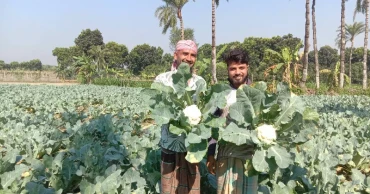
Chuadanga farmers thrive as cauliflower yields hit new high
As winter settles over Chuadanga, vast stretches of farmland have turned white — not with frost, but with the blooming heads of cauliflower that mark one of the district’s most profitable vegetable seasons in recent years.
The bumper yield, coupled with favourable market prices, has brought long-awaited smiles to the faces of farmers who suffered losses just a year ago.
Farmers said that they are spending Tk 30,000–35,000 per bigha and selling produce worth Tk 80,000 to Tk 1.3 lakh, earning profits of Tk 50,000–70,000 from each bigha of land.
Read more: Coloured cauliflower cultivation gains round in Naogaon
According to the Department of Agricultural Extension (DAE), the target for cauliflower cultivation in Chuadanga this year was set at 2,975 hectares.
Early Harvest, Early profit
Traders said that the price of cauliflower is higher this time compared to last time. Because it reached the market earlier, farmers are getting a good price.
Mohammad Tarikul Islam, a farmer from Gaidghat village in Sadar upazila of Chuadanga district, said he spent Tk 40,000 to cultivate cauliflower on two bighas of land.
“I sold it for 1.20 lakh. Last year I had a loss, but this time it has been fully recovered. If the prices stay this good, I will expand cultivation next year,” he said.
Read more: Jhenaidah farmers making good profit by cultivating off-season cauliflower, cabbage
Mohammad Hasanur Rahman, a farmer from Garabaria Baganpara, said he brought seven bighas of land under cauliflower cultivation. “I sold each bigha for 1.10 lakh. After expenses, there has been a profit of 60–70 thousand taka per bigha. Last year I sold it for 60–70 thousand, but this year the price has jumped by Tk 50,000.”
New Hope for Young Farmers
Among the new generation of growers is Mohammad Arafat, a student who manages his father’s farm. “I cultivated three bighas. One and half bighas of early cauliflower sold for Tk 1.25 lakh per bigha,” he said with pride.
“Regular cauliflower is now selling for Tk 80,000–90,000. Even after expenses, I will earn Tk 50,000–60,000 per bigha.”
Arafat’s story reflects a trend seen across the district—young people actively participating in vegetable cultivation, motivated by rising profits and growing demand.
Favourable Weather Fuels Success
Another local farmer, Mohammad Shahjan Ali, said favourable weather conditions helped ensure an excellent harvest.
Read more: Jashore emerges as Bangladesh’s winter vegetable seedling hub
“I sold cauliflower for Tk 1.2 lakh per bigha in advance. With production costs around Tk 30,000–35,000, I made Tk 60,000–70,000 in profit. Last year’s losses have been fully recovered this season,” he added.
Vibrant Market
The enthusiasm is not limited to farmers. Wholesalers are also finding strong business opportunities.
Moniruzzaman, a trader from Belghachi village in Sadar upazila of the district said demand for cauliflower is stronger than last year.
10 months ago

Onion seed cultivation: Faridpur couple become role models, farmers aim Tk 300 crore worth of production
In the Gobindapur area of Ambikapur union, Sadar upazila, Faridpur district, Lovely Akter and Imtiaz Mollah have transformed their fortunes and become a beacon of success in onion seed farming, locally referred to as “black gold”.
Starting with just two bighas of land, the couple has expanded their cultivation to 40 bighas, witnessing substantial economic growth that allowed them to construct a multi-storey building and continually invest in new land.
The duo, parents to a tenth grader and a fourth grader, embarked on this venture after observing the lucrative outcome of onion seed cultivation within their family post-marriage. After her marriage, she found that some family members among her in-laws were involved in onion seed cultivation and decided to join along with her husband in this endeavor. They earned good money in the first year and haven't looked back since, Lovely shared.
Onion prices fall by Tk30 per kg as seasonal supply rises in market
2 years ago

Chapainawabganj farmers reap benefits of bountiful summer onion harvest
In Chapainawabganj district, the abundant harvest of summer onions and favorable market prices have delighted local farmers. The successful cultivation of the N-53 variety has made this season particularly profitable.
The Department of Agriculture Extension (DAE) played a pivotal role in this success. They provided farmers with essential resources, including 1 kg of N-53 onion seeds, 20 kg of fertilizers (MoP and DAP), pesticides, and Tk 2,800 in cash for labor costs per bigha of land.
Habiganj admin sets limits on onions purchase by retailers and consumers
This comprehensive support was part of a government initiative benefiting 4,500 farmers. Additionally, the DAE offered crucial training, which contributed to the bumper yield.
During a visit to Ghorapakhia in the Sadar upazila, the scene was one of industriousness, with farmers diligently harvesting their crops. Sayem Ali, a local farmer, shared his experience: "I've grown onions before, but the N-53 variety has brought an unprecedented yield. I'm expecting to harvest 108 maunds per bigha and, with favorable weather, even 120 maunds." He further noted the profitable market prices, with one maund selling for Tk 2,200. Despite investing Tk 30,000 of his own funds, the returns have been encouraging. Sayem intends to continue with N-53 cultivation, irrespective of government incentives.
Govt directs to intensify field-level monitoring on onion prices
2 years ago

Youth's success in orange farming sparks an agricultural trend in Kurigram
A young entrepreneur in Kurigram's Sadar upazila is reaping the benefits of orange farming, exemplifying self-reliance after completing his education.
Abu Raihan Faruk, the enterprising youth, anticipates doubling his investment from selling a high-yield variety of oranges originating from China.
Raihan, who finished his studies three years ago, chose entrepreneurship over job hunting. He started to cultivate various local and foreign fruits like mango, orange and grapes on his six-acre farm two and a half years ago. Recognizing the high demand for oranges in the local market, he focused on expanding his orange cultivation.
Successful malta cultivation raises hope among farmers in Thakurgaon’s Ranishankail
Starting with a single plant of the Chinese orange variety acquired from Bogura district, Raihan successfully grew 100 orange trees through graft cutting in just one and a half years. Encouraged by this success, he invested in commercial cultivation by dedicating two bigha of land to orange farming with an investment of Tk 20,000.
Raihan found orange farming relatively hassle-free, requiring only compost fertilizer, pesticides, and anti-fungus spray for a healthy yield. He confidently expects to double his profits this year. He anticipates selling 15-20 maunds of oranges.
The potential revenue from his orange harvest is estimated at Tk 80,000. Raihan also highlights the significant demand for oranges in Bangladesh, which currently relies on imports. He believes that local commercial cultivation could meet domestic needs and eventually lead to exporting oranges.
Mohammad Kabir Hossain, a visitor to Raihan's orchard, is inspired by Raihan's success and plans to venture into orange farming himself. Biplab Kumar Mohonto, the deputy director of Kurigram's Department of Agriculture Extension (DAE), acknowledged the novelty of orange cultivation in the district and offered support to Raihan.
Returnee-migrant bets future on Malta farming in Rajshahi
Raihan's journey illustrates how innovative agricultural practices can transform the livelihoods of young entrepreneurs and potentially reshape the agricultural landscape of districts like Kurigram.
2 years ago

On a remote char in country's poorest district, watermelon cultivation transforms lives
Watermelon cultivation has started in the remote char area of the Brahmaputra River in Kurigram.
Although watermelon cultivation started on an experimental basis last year, the number of farmers signing up to the this time. The yield has also been as expected. Farmers are hoping for double the profit if there is no flood in advance this year.
However, if the government comes forward in marketing and banks provide loans with easy instalments, the misery of the people of the char area can be erased, or at least eased.
Also read: Rain, hailstorm worry Khulna watermelon growers
According to the Kurigram Department of Agricultural Extension, there are about 450 chars in 16 rivers in the district. There are about 45,000 hectares of cultivable land. Of these, farmers are starting cultivation on 35,000 hectares of land in 368 chars. Maize, watermelon, sweet pumpkin, cucumber and pepper have been cultivated in these char areas.
Last year, watermelon was cultivated on 50 acres of land in Char Bagua village of Hatia union of Ulipur upazila of the district. In the early floods, 40 acres of crops were submerged and damaged. Yet the farmers did not stop. This year watermelon has been cultivated on 34 hectares of land in the char.
Farmers have also started harvesting watermelons. Due to favorable weather conditions, the yield has also been as expected. As a result, they are hoping to make a good profit this time after overcoming last year's loss. However, the biggest obstacle to commercial cultivation in the char is marketing management. Besides, many farmers have left the land after being unable to cultivate these crops despite the desire, the banks not providing loans to the common farmers.
Read More: Floating vegetable farmers in Pirojpur devastated by low prices
Dashim Uddin of Bagua Char said three enterprising farmers have cultivated watermelon on 40 acres of land in this char. As a result of getting a large amount of loan from the bank, they have got the opportunity to cultivate on a large scale. Many farmers here have become interested in their farming, but they are not able to come forward due to economic reasons.
Abdur Sabur, who cultivated watermelon, said, “Although watermelon was cultivated on an experimental basis last year, the watermelon field was washed away in the early floods. This year, I have cultivated watermelon on 14 acres of land. It cost me Tk6-7 lakh. I hope to pick up 20,000 watermelons. This will earn me an additional income of Tk6-7 lakh. However, the problem here is marketing watermelon. Wholesalers come here and buy watermelons at a lower price. If we could take melons to the city and sell, we would have made more profits. More farmers would have come forward to cultivate watermelon.”
Read More: Bagerhat fruit farmer eyes foreign markets to expand thriving business
The farmer also said watermelon seeds should be sown at the beginning of the month of Paush. After four months, watermelon can be lifted in the middle of chaitra month. There are some precautions to be taken in watermelon cultivation. In the sand land, a hole of one and a half feet in the 10-inch by 10-inch square has to be given some loamy soil, dung fertilizer and DSP in the pit. Forty grams should be given in each pit. In this way, after keeping it for a week, three seeds are sown in a pit. In addition, regularly insecticides have to be sprayed to protect against the attack of insects and rats.
Abul Hossain Master, former chairman of Hatia Union, said at present, local entrepreneurs in the char area have become interested in cultivating various agricultural products. Due to economic problems, the rest of the farmers are unable to come forward. “Their misery would go away if banks and NGOs come forward.”
Additional Deputy Director (Crops) of Kurigram DAE, Md Azizul Islam, said watermelon cultivation has started in the district since last year. Watermelon has been cultivated on 22,000 hectares of land this year. There is a plan to set up a collection center in the char areas so that the farmers do not suffer for marketing.
Read More: Exporters want green signal for commercial cultivation of King Prawn
3 years ago

Working at brick kiln, Thakurgaon’s Raju still managed to score GPA 5 in HSC
Thakurgaon’s Raju Hossain’s life has always been a story of struggle with poverty. He had to work in a brick kiln to bear his education expenses. His sacrifice and hard work paid off, as the recently published HSC results gave him and his family a reason to celebrate. Concerns over his future still remain, however.
Raju passed with the highest grade, GPA 5, from humanities group. He appeared in the HSC exams from Ranisankail Degree College in Thakurgaon under Dinajpur Education Board.
“Though I should be celebrating, I’m actually very concerned right now. I have no idea how I would manage all of the necessary university expenses. I want to study law,” Raju said in a tensed voice.
Raju recalled always working and often having only one meal a day at times.
Also Read: Ramjan defies poverty with GPA-5 at HSC, but his university education uncertain
“I still didn’t lose hope and continued my studies,” the youth said.
After his HSC exam, he sought loans from an NGO to pay for his coaching class – for university admission – fees. However, he had to quit taking coaching classes because it was difficult to cover all the expenses with that amount.
Raju’s father Anwar Hossain is a van-puller, and his mother Nazma Begum works in a cold storage facility. Because of the family’s financial situation, Raju’s younger sibling had to drop out of school.
Raju began working various jobs in the hopes of improving his family’s financial situation. He worked as a van-puller in addition to working in a brick kiln.
Read More: HSC Results: Jashore Board secures highest pass rate & Dhaka excels in GPA 5
“My son suffered a lot. I’m overjoyed with his accomplishment. At the same time, I am concerned about how he will continue his studies,” Raju’s mother said.
Raju’s teacher, Ranisankail Degree College’s lecturer, Safikur Islam Alam said, as Raju had to work as a day labourer, he was not regular in classes.
“We are aware of his hardship. We are proud of him,” he said.
The teacher urged the local affluent people to come to Raju’s aid so that the bright student can continue his studies and fulfil his dream of studying law.
Read More: Physical constraint couldn’t deter Jashore girl to score GPA 5
Local Union Parishad chairman Abdul Bari said he was not aware of Raju’s case.
“I’m delighted to learn this. I will personally assist him with his educational expenses,” he said.
Sohel Sultan Zulkar Nain, UNO of Ranisankail, said the upazila administration will help Raju. “Raju has proven that if there’s a will, there’s a way. I will personally help him too.”
A total of 10,11, 987 examinees, out of 11,77, 387, passed the 2022 HSC exams under 11 education boards of the country.
Read More: GPA system in SSC, HSC under review: Secretary
Of them, 1,76,282 students secured the highest grade, GPA 5, this year.
3 years ago

Late Blooming Billionaires: Story of successful people who started late in life
More often than not, the story of entrepreneurship is associated with young people. It’s like a dream story of a fresh mind finding a magic idea that transforms the world around for the better. But how much of that has to be the case always? Truth is, there are numerous examples of people finding success late in life. Some even go beyond to outshine so much that they achieve almost legendary status. Here’s our take on 10 business icons who started late in life. These heroic people defined that age as nothing more than just a number.
Legendary entrepreneurs who started after 35
Ray Kroc
The word fast food and McDonalds goes so much hand in hand that in some parts of the world, they are almost inseparable. As the global leader in the fast-food chain, McDonald’s has brought a paradigm shift in the food culture across the globe. But the story of McDonald’s didn’t start until Ray Kroc was 51 years old.
From being a mixer salesman to founding a multi-billion-dollar food chain, it all started with Ray Kroc’s fascination with the McDonalds brother’s burgers. Kroc saw an immense opportunity in the California-based business. Using his several decades of sales expertise, Kroc turned McDonald's into what it is today. A global brand of 400,000 employees, an annual turnover of over 22 billion, and a name that’s close to every foodie's heart.
Read Some Inspiring Women Entrepreneurs in Bangladesh in Diverse Sectors
Reid Hoffman
The story of Reid Hoffman is of a chance entrepreneur. Being a Stanford graduate, he was well set to be an academician of Ivy league standards. However, he ended up at Apple computers as part of their eWorld project. This is where Hoffman first got an insight into the earliest version of social media. But he had to wait till 35 to achieve what he has created today.
Over the years, Hoffman worked on several social networking ventures. However, none of them saw the expected result. But based on his previous failures and a chance need for a professional networking opportunity, LinkedIn was born. Today Reid Hoffman is worth 3.2 billion dollars.
Read The World's 10 Self-made Youngest Billionaires in 2021
Stan Lee
Anyone who’s into movies has heard of Marvels. You don’t even have to be a movie fan to know about them, as they are one of the largest comic booksellers in the world. And it all started with the illustrations of a 39-year-old man back in 1961.
Stan Lee, together with Jack Kirby has created, what is now the epicenter of pop culture and superhero genre craze. Credited as the father of Marvel Comics, Stan Lee helped create a multi-billion-dollar empire that has achieved worldwide hype and recognition.
Read Mukesh Ambani no longer among world's top 10 richest billionaires
Chaleo Yoovidhya
We can guarantee you that this is the least known name on this list. But wait till you find out what he founded. Chaleo Yoovidhya was born in a poor farmer family and lived most of his life as a farmer. This was until he moved to Bangkok to start his own pharmaceutical company called TC Pharmaceuticals.
He specialized in a rejuvenating tonic drink. It wasn’t until he had a chance encounter with Australian businessman Dietrich Mateschitz that his life changed forever at the age of 61. Now you might be thinking what’s so fascinating about a tonic drink? Well, that’s because it's Redbull.
Read IT sector creating more billionaires in China: report
Henry Ford
Ford motors are known for their iconic cars which have impressed generations of customers. However, the start of the company wasn’t how you’d expect it to be.
Henry Ford ran away from home at the tender age of 16 and started working as a mechanist. His fascination with cars leads him to found Ford motors at the age of 40. What soon followed was automobile history. It was estimated that he had a net worth of near 200 billion dollars.
Read COVID-19 Enterprise Response Fund launched for entrepreneurs
Peter Thiel
Peter Thiel is another genius mind to come out of Stanford University. A graduate of law, Thiel didn’t enjoy much the legal works as he did as an investor. It's his innate passion and foresight in investing that made him into what he is today.
He was the co-founder of widely acclaimed payment gateway Paypal and served as its CEO until it was sold in 2002 to eBay. But his genius stroke was yet to be made until he invested in Facebook. Thiel is widely regarded as the first professional investor to invest in Facebook, a move that made him a billionaire over time.
Read F-commerce entrepreneurs rising significantly: Palak
Jack Ma
Jack Ma is the leading example that you don’t have to be tech-savvy to make it big as an entrepreneur. The story of Ma is a truly fascinating one, considering he failed his high school entrance exam twice and got rejected for different jobs over 30 times. It wasn’t until he was 35 when he founded “China Yellow Pages”, which saw rapid success.
However, that’s not where Ma’s story ends. He then went onto finding Alibaba, the global leader in B2B and B2C sales. Ma is currently worth over 28 billion dollars.
Read KOICA unveils multi-component cooperation aimed at youth entrepreneurship
Robert Noyce
Robert Noyce is another glaring example of a lesser-known founder of something so well known; it will have you rubbing your eyes. If you are reading this article from a windows laptop, it's almost certain that it's powered by Intel. And Robert Noyce was an intricate part of the foundation of Intel.
Coming from a humble background, Noyce worked on several ventures before stumbling upon Intel. He was 41 years old when he, along with Gordon Moore founded Intel back in 1968. He was estimated to be worth over 3.8 billion dollars.
Read Humayun bats for women entrepreneurs at SME Foundation event
Donald Fisher
The story of Donald Fisher is an interesting one. It was the summer of 69 when Donald went through a little clothing crisis of not being able to find a pair of jeans to fit him. His wife Doris Fischer reluctantly decided to take the matter into her own hands and made a pair for her husband.
What followed from there on was a complete takeover of the fashion market and GAP became what it is today, a multi-billion-dollar fashion line. Donald was 40 when he decided to start GAP along with his wife as the co-founder.
Read Covid: A catalyst for women entrepreneurship in Bangladesh!
Harland David Sanders
Most prominently known as Colonel Sanders, this man had nothing to do with the military. What he did, however, shaped the modern food industry alongside McDonald’s. After a series of misfortunes, Sanders found himself selling fried chicken in a service store in Kentucky using a secret recipe that he devised himself. After the place burned down in a fire accident, Sanders moved to a nearby motel to start his restaurant.
And that was how the global brand of KFC was born. Today they serve in over 18 thousand restaurants across 118 different countries. What's truly fascinating about all this is that Colonel Sanders was 62 years old when he founded KFC. A true example of glorious late achievements.
Read Energy Investment: Entrepreneurs want arrangements for easier partnership with foreign companies
Bottom Line
So far, we have mentioned some highly successful people who started their business or company late in life. These entrepreneurs are the shining example that you don’t need much beyond will and dedication to make it big. So, if you are thinking of giving up on your ideas, think again. Who knows, you might also become a late-blooming success story.
Read Greatest Business Movies for Entrepreneurs: Inspiration to Start Something New
5 years ago
.jpg)
3 Bangladeshi women make it to list of top 100 Asian scientists
Three Bangladeshi scientists, all of them women, have made it to the list of "best and brightest" 100 Asian scientists for their contribution to research.
International Centre for Diarrhoeal Disease Research Bangladesh's Dr Firdausi Qadri, Model Livestock Advancement Foundation's Dr Salma Sultana, and Bangladesh University of Engineering and Technology's Professor Saima Subrina have been included in the sixth edition of the list published by Singapore-based magazine Asian Scientist.
Read Legendary Women in Bangladesh with Pioneering Contribution in Diverse Fields
Scientists from China, India, Malaysia, Singapore, Japan, South Korea, the Philippines, Hong Kong, Sri Lanka, Indonesia, Thailand and Vietnam have also secured a place on the prestigious list.
Researchers and inventors from across a range of scientific disciplines have been picked based on their role in tackling this year's key challenges, including Covid-19 and climate change, said Asian Scientist.
Read 2 Bangladeshi women named in BBC 100 Women 2020 list
All three Bangladeshi scientists previously received an international award for their leadership and role in effective discovery.
Dr Firdausi, an emeritus scientist at icddr,b, won the L'Oréal-Unesco for Women in Science Award 2020 for her work on understanding and preventing infectious diseases affecting children in developing countries and advocacy for early diagnosis and global vaccination.
Read Bangladeshi young medical scientist shines in Japan
Dr Salma, the founder of Model Livestock Advancement Foundation, previously won the Norman E Borlaug Award 2020 for field research and application by the World Food Prize Foundation for her work with Bangladeshi small-scale farmers – namely her efforts involving veterinary outreach, treatment, and education.
Professor Samia received the OWSD-Elsevier Foundation Award 2020 for Early-Career Women Scientists in the Developing World for her research on the properties and uses of nanomaterials.
Read Women continue making amazing contributions in STEM fields.
5 years ago