BTMA
BTMA threatens shutdown of all spinning mills over duty-free yarn imports
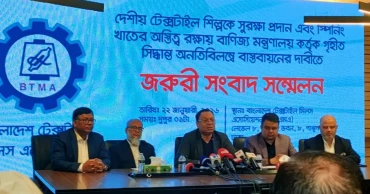
Bangladesh Textile Mills Association (BTMA) on Thursday threatened to shut down all spinning mills across the country from February 1 if the government does not withdraw duty-free import facilities for certain categories of cotton yarn.
BTMA President Showkat Aziz Russell issued the ultimatum at a press conference held at the association’s office in Dhaka.
The association is demanding the immediate suspension of bond facilities on the import of 10–30 count cotton yarn, arguing that the measure is essential to protect the local spinning industry from what it describes as unfair competition.
11 more institutions inc. banks, municipal bodies join BIDA’s One-Stop Service portal
The dispute centres on the National Board of Revenue’s (NBR) bond facility, which allows export-oriented industries to import raw materials duty-free on the condition that the finished products are exported.
According to the BTMA, this policy is severely undermining local spinning mills, particularly those producing 10–30 count yarns.
Highlighting the urgency of the issue, the BTMA said the government must implement the Commerce Ministry’s recommendation to withdraw the facility within the current month.
Russell clarified that withdrawing the duty-free facility should not be confused with the imposition of a new tariff. Importers, he said, would still be able to claim duty drawbacks from the government under existing rules.
The demand follows a recent recommendation by the Bangladesh Trade and Tariff Commission (BTTC), which advised the Commerce Ministry to suspend the bond facility for 10–30 count cotton yarn.
Proposed amendments to Bank Company Act faces fierce opposition from BAB
Local millers say 10–30 count yarn is a core product of the domestic spinning sector, and the continued influx of duty-free imported yarn of the same count is making local production economically unsustainable.
Earlier, the Commerce Ministry formally recommended to the NBR that the bond facility be suspended to safeguard domestic investment and ensure a level playing field for local textile manufacturers.
8 months ago
Textile industry seeks immediate withdrawal of 2% AIT; threatens cotton import halt
Bangladesh's vital textile sector is teetering on the brink of crisis, with industry leaders vehemently protesting a newly imposed 2 percent Advance Income Tax (AIT) on imported cotton and an increased specific tax on locally produced yarn.
"We cannot bear this additional tax burden," said BTMA President Shawkat Aziz Russell during an emergency press conference held at Gulshan Club on Saturday, highlighting a confluence of challenges already plaguing the industry.
BTMA Directors Khurshed Alam, Abdullah Al-Mamun, Saleuzzama Khan, Badsha Mia, and Mohammad Ayub, along with former President of the Cotton Association Hossain Mahmud, Home Textile Association representative, and BKMEA Vice President Amor Powder, were present at the press conference.
The Bangladesh Textile Mills Association (BTMA) has taken a drastic measure, halting the release of cotton containers from ports and is urging the government to immediately revoke these ‘self-destructive’ policies.
The BTMA leaders raised alarm without the immediate withdrawal of the 2 percent AIT and a reduction of the specific VAT on yarn from Tk 5.0 per kg, domestic textile factories face imminent closure.
Strong hatchery, skilled workforce vital for sustainable growth of poultry sector
He cited soaring bank interest rates (up to 15-16 percent), higher corporate taxes and persistent uncertainty regarding gas and electricity supplies as critical factors undermining their operations.
They also highlighted that this AIT policy will be benefited the neighbour country export yarn to Bangladesh as they (Indian traders) getting incentive to export yarn.
The association emphasised the urgent need to protect local industries and safeguard employment.
They argued that while the government may view these measures as revenue-generating, they will, in reality, plunge the textile sector into deeper distress, ultimately harming the national economy.
The new impositions come at a time when the textile sector is already reeling from a multitude of issues, including:
· Abnormal increases in gas and electricity prices
· Significant reductions in cash incentives for exports
· Uninterrupted energy supply shortages
· Persistent currency devaluation
Garment exports to non-traditional markets mark 6.79pc increase in July-May
Compounding these woes, the Finance Ordinance 2025 for the fiscal year 2025-26 has further exacerbated the situation by increasing the specific tax on locally produced cotton yarn and yarn mixed with artificial and other fibers from Tk 3 to Tk 5 per kilogram at the production stage.
This particular move is expected to severely impact the domestic spinning sector.
1 year ago
BTMA seeks duty-free access to US market for its cotton-based products
The Bangladesh Textile Mills Association (BTMA) has called for duty-free access to the United States market for ready-made garment (RMG) products manufactured using US cotton.
In a recent letter to Gary Adams, President and CEO of the National Cotton Council of America (NCCA), BTMA President Showkat Aziz Russell requested support in securing zero-duty access for such products.
A copy of the letter was also shared with Eric Geelan, Political Counsellor at the US Embassy in Dhaka.
Russell urged the permanent withdrawal of the current 37 percent tariff imposed on Bangladeshi garments under the US counter-tariff regime, highlighting that this would foster mutual trade benefits.
Bangladesh needs secure cotton sources to maintain export flow, avoid trade war risks: Experts
He said granting duty-free access would not only benefit Bangladesh’s RMG sector but also boost US cotton exports.
In 2024, Bangladesh imported approximately $270 million worth of US cotton, accounting for around 12 percent of its total cotton imports.
Russell expressed optimism that this figure could increase four- to fivefold in the near future.
The appeal comes shortly after the US administration, in a 9 April announcement, temporarily suspended additional tariffs for 90 days for 75 countries, including Bangladesh.
Russell said, “This 90-day period has created an important opportunity for strategic diplomacy and negotiations,” while urging for a permanent lifting of additional duties.
As part of its strategy to deepen the use of US cotton, BTMA is planning to set up a central warehouse in Bangladesh dedicated to storing US cotton, which would then be used for exports to the US and other international markets.
The BTMA President reiterated the government’s commitment to strengthening bilateral trade ties with the United States.
To that end, a 12–13 member BTMA delegation is scheduled to visit the US soon, aiming to engage in high-level discussions with American policymakers and private sector representatives to advance the issues raised in the letter.
1 year ago
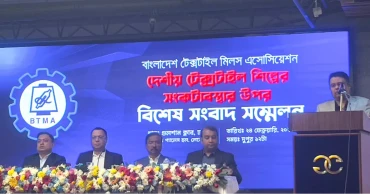
Indian dumping: BTMA urges immediate steps to stop importing yarn through land ports
The leaders of Bangladesh Textile Mills Association (BTMA) have alleged that Indian textile mills are dumping yarn and fabrics in the Bangladesh market to destroy the domestic textile industries.
They said that the Indian government is conspiring to destroy the textile sector in Bangladesh, under the guise of various types of subsidies and assistance to Indian factories.
BTMA President Shawkat Aziz Russell made this allegation at a special press conference organized at the Crystal Palace of the Gulshan Club in the capital on Monday.
Indian mills have emerged as a threat to the Bangladeshi industry through smuggling routes and land ports by selling yarn and fabrics at prices lower than the cost of production.
“If this continues, our textile sector will also fall victim to the consequences of ruined jute mills,” he alleged.
Bangladesh Bank sets Ramadan transaction times for banks
The BTMA President said, “We have already appealed to the government to stop importing yarn through land ports and impose anti-dumping duty on Indian yarn.”
“They have taken our jute industry and now they have started dragging it with textiles and ready-made garments.”
He said the government cannot take decisions as quickly as other countries can. "My government hesitates until after the industry is destroyed," he added.
Russel requested that imports through land ports be stopped until the capacity of our land ports is built to prevent false declarations of yarn.
He demanded that this interim government take the initiative in investigating the dumping of Indian mills.
“Despite increasing the export of ready-made garments, on the other hand, imports are increasing through false declarations through land port, and our yarn is not being sold," he complained.
“During the previous BNP government, yarn imports through land ports were stopped, but when the Awami League government came to power, it was resumed and we complained and stopped it and demanded that yarn and fabrics be imported through sea ports only,” said president of BTMA.
The BTMA president said that local mills have stored yarn worth taka 8-10 thousand crore as India is exporting yarn to Bangladesh at a lower price than the Indian market.
BTMA vice-president Saleudh Zaman Khan Jitu alleged that India is state-sponsoring dumping by offering a subsidy of Rs 11 per kg of yarn.
Stock market rises, turnover surpasses Tk 500 crore again
He said that Bangladesh's ready-made garment factories are not getting the benefit of buying yarn at a lower price, which is going to the buyer at the end of the day.
Md. Saleudh Zaman Khan (Jitu) said that due to the gas crisis, the domestic mills can produce at only 50-60 percent of capacity.
He demanded that the increased gas price be reduced to below Tk20 by reversing the weight and average cost of gas.
Engineer Rajib Haider Munna raised questions that in whose interest is LNG import being encouraged by storing gas underground?
He mentioned that the textile and ready-made garment industry cannot survive by importing LNG.
Threatening to surrender the factory keys at the BERC hearing, he said that it would not be possible to run the factory for Tk70, so they would surrender the factory keys on the day of the hearing.
To encourage investment, BTMA Vice President Md. Abul Kalam demanded that bank interest rates be brought down to single digits and fixed for the next 3 years to survive the industries.
1 year ago

Govt urged to allow export-oriented factories to run during lockdown
Bangladesh Textile Mills Association (BTMA) Director Syed Nurul Islam on Saturday urged the government to allow the factories in textiles, garments and accessories sectors to run strictly maintaining health guidelines during the lockdown.
Islam, also a director of the Federation of Bangladesh Chambers of Commerce and Industry (FBCCI), said such decision to keep factories operational during lockdown will help the export-oriented sector of the country continue their struggle to sustain amid the Covid-19 situation.
Otherwise, he said, the government’s stimulus package or support will go in vain.
Also read: Bangladesh again breaks daily Covid death record with 77
The Chairman and CEO of Well Group of Industries made the request in a message sent to media on Saturday.
He said if the factories are allowed to operate with strict health guidelines in place, over five million of male and female workers will be able to survive.
The government has decided to put the country under a strict lockdown for a week from April 14 amid a growing number of Covid-19 cases.
Also read: Worsening Covid crisis: Bangladesh resorting to full lockdown
Seventy-seven people died from Covid-19 during 24 hours (till 8am Saturday), according to the Directorate General of Health Services (DGHS).
This is the highest number of deaths due to Covid-19 recorded in a day so far in the country while the number of daily deaths on April 8 was 74.
5 years ago