Prosecution
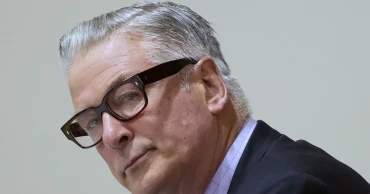
Alec Baldwin sues for malicious prosecution after 'Rust' set shooting case dismissed
Actor Alec Baldwin has filed a civil lawsuit for malicious prosecution and civil rights violations in the fatal shooting of a cinematographer on the set of the Western movie “Rust.”
The lawsuit was filed Thursday at state district court in Santa Fe, where a judge in July dismissed a charge of involuntary manslaughter against Baldwin in the death of cinematographer Halyna Hutchins.
Baldwin also alleges defamation in the suit, saying that prosecutors and investigators intentionally mishandled evidence as they pursued the case.
Defendants named in the lawsuit include special prosecutor Kari Morrissey and Santa Fe District Attorney Mary Carmack-Altwies, along with three investigators from the Santa Fe County sheriff's office and the county board of commissioners.
“Defendants sought at every turn to scapegoat Baldwin for the acts and omissions of others, regardless of the evidence or the law,” the lawsuit states. It also says prosecutors and investigators targeted Baldwin for professional or political gain.
Hutchins died shortly after being wounded during a rehearsal for the movie “Rust” in October 2021 at a film-set ranch on the outskirts of Santa Fe, New Mexico.
Baldwin, the lead actor and co-producer, was pointing a pistol at Hutchins when it discharged, killing Hutchins and wounding director Joel Souza. Baldwin has said he pulled back the hammer — but not the trigger — and the revolver fired.
Baldwin’s trial was upended by revelations that ammunition was brought into the Santa Fe County sheriff’s office in March by a man who said it could be related to Hutchins’ killing. Prosecutors said they deemed the ammo unrelated and unimportant, while Baldwin’s lawyers say investigators “buried” the evidence in a separate case folder and filed a successful motion to dismiss.
Morrissey said she learned more than a year ago that Baldwin was considering a lawsuit.
Read: Ben Affleck to Tom Hanks: Which stars face threats from raging LA wildfires?
“In October 2023 the prosecution team became aware that Mr. Baldwin intended to file a retaliatory civil lawsuit," she told The Associated Press in a text message Thursday. "We look forward to our day in court.”
Carmack-Altwies and the Santa Fe sheriff’s office did not immediately respond to requests for comment. Baldwin's lawsuit argues that prosecutors should not be afforded immunity in their official roles.
The state attorney general declined to pursue and appeal the dismissal on behalf of prosecutors, closing out the case in December.
Separately, the shooting led to an involuntary manslaughter conviction at trial last year against movie weapons supervisor Hannah Gutierrez-Reed. She is serving out a maximum sentence of 1 1/2 years at a state penitentiary.
The tort claim by Baldwin also takes aim at a special prosecutor who initially oversaw the investigation, while seeking unspecified punitive damages, compensatory damages, attorneys' fees and interest.
It adds to a thicket of post-trial litigation, even as Baldwin has returned to comic appearances on "Saturday Night Live" with plans in the works for a family reality TV show with wife Hilaria and seven children.
Read more: National Board of Review Awards hold space for ‘Wicked’
The parents and younger sister of Hutchins have sued Baldwin and other producers of “Rust" in New Mexico state court. A settlement has been reached in a lawsuit by Hutchins widower and son.
1 year ago
.jpg)
Prosecutor: Chauvin ‘had to know’ Floyd’s life was in danger
Officer Derek Chauvin “had to know” he was squeezing the life out of George Floyd as the Black man cried out over and over that he couldn’t breathe and finally fell silent, a prosecutor told jurors Monday as closing arguments began at Chauvin’s murder trial.
“Use your common sense. Believe your eyes. What you saw, you saw,” Steve Schleicher said, referring to the excruciating bystander video of Floyd pinned to the pavement with Chauvin’s knee on or close to his neck last May for up to 9 minutes, 29 seconds, as bystanders yelled at the white officer to get off.
Closing arguments began with Minneapolis on edge against a repeat of the violence that erupted in the city and around the U.S. last spring over Floyd’s death.
The defense contends the 46-year-old Floyd died of underlying heart disease and his illegal use of fentanyl and methamphetamine.
Replaying portions of the bystander video and other footage as he made his case, Schleicher dismissed some of the defense theories as “nonsense,” saying Chauvin’s pressure on Floyd killed him by constricting his breathing.
He rejected the drug overdose argument, the contention that police were distracted by what they saw as hostile onlookers, the notion that Floyd had “superhuman” strength from a state of agitation known as excited delirium, and the suggestion that Floyd suffered carbon monoxide poisoning from auto exhaust.
The prosecutor sarcastically referred to the idea that it was heart disease that killed Floyd as an “amazing coincidence.”
“Is that common sense or is that nonsense?” Schleicher asked the racially diverse jury.
Schleicher described how Chauvin ignored Floyd’s cries that he couldn’t breathe, and continued to kneel on Floyd after he stopped drawing breath and had no pulse — even after the ambulance arrived.
Floyd was “just a man, lying on the pavement, being pressed upon, desperately crying out. A grown man crying out for his mother. A human being,” Schleicher said. He said Chauvin “heard him, but he just didn’t listen.”
Chauvin was “on top of him for 9 minutes and 29 seconds and he had to know,” Schleicher said. “He had to know.”
The prosecutor said Floyd “was not a threat to anyone.”
“He wasn’t trying to hurt anyone. He wasn’t trying to do anything to anyone. Facing George Floyd that day that did not require one ounce of courage. And none was shown on that day. No courage was required,” Schleicher said. “All that was required was a little compassion and none was shown on that day.”
Chauvin lawyer Eric Nelson was expected to deliver the defense closing argument later in the day.
Chauvin, wearing a light gray suit with a blue shirt and blue tie, focused on taking notes during the prosecution’s arguments, only occasionally raising his eyes from his notepad. An unidentified woman occupied the single seat set aside in the pandemic-spaced courtroom for a Chauvin supporter.
Also read: Court weighs allowing courtroom cameras in George Floyd case
Floyd’s brother Philonise represented the family in court, as he often has throughout the trial.
Schleicher quickly got to the heart of the case — whether Chauvin’s actions were those of a reasonable officer in similar circumstances — saying a reasonable officer with Chauvin’s training and experience should have known a handcuffed Floyd did not pose a risk to officers.
He said Floyd, who was arrested on suspicion of passing a counterfeit $20 bill for a pack of cigarettes at a corner market, was terrified of being put into the tiny backseat of the squad car when he struggled with officers. The prosecutor played video of Floyd being pulled out of the car and forced to the ground — noting that he was on his knees and said thank you
“A reasonable officer should’ve recognized Floyd wasn’t trying to escape. … The problem was the back of the car. Just like George Floyd tried to explain over and over,” the prosecutor said.
He also noted that Chauvin was required to use his training to provide medical care to Floyd but ignored bystanders, rebuffed help from an off-duty fire department paramedic and rejected a suggestion from another officer to roll Floyd onto his side.
Several witnesses, including one for the defense, said Floyd might have lived if CPR had been administered as soon as he lost a pulse.
“He could have listened to the bystanders. He could have listened to fellow officers. He could have listened to his own training. He knew better. He just didn’t do better,” said Schleicher, adding that even a 9-year-old bystander knew it was dangerous.
“Conscious indifference, indifference. Do you want to know what indifference is and sounds like?” Schleicher asked before playing a video of Chauvin replying, “Uh-huh” several times as Floyd cries out.
The prosecution took about an hour and 45 minutes to make its case, with Schleicher ending his argument by saying: “This wasn’t policing. This was murder. The defendant is guilty of all three counts. All of them. And there is no excuse.”
The anonymous jury will deliberate in a downtown courthouse surrounded by concrete barriers and razor wire, in an anxious city heavily fortified by National Guard members and just days after fresh outrage erupted over the police killing of a 20-year-old Black man in a nearby suburb. Some businesses boarded up their storefronts with plywood.
A few protesters gathered outside the courthouse Monday as light snowflakes blew in the wind. “No breaths. No pulse. 3 1/2 minutes. Chauvin didn’t let up/get up,” read one protester’s sign.
Also read: George Floyd’s death: Judge dismisses 1 charge against ex-cop
Chauvin, 45, is charged with second-degree murder, third-degree murder and second-degree manslaughter. All three charges require the jury to conclude that Chauvin’s actions were a “substantial causal factor” in Floyd’s death — and that his use of force was unreasonable.
To convict Chauvin of second-degree murder, Prosecutors don’t have to prove the Chauvin intended to harm Floyd, only that he deliberately applied force, which resulted in harm.
Second-degree intentional murder carries up to 40 years in prison, third-degree murder 25 years, and second-degree manslaughter 10 years. Sentencing guidelines call for far less time, including 12 1/2 years on either murder count.
5 years ago