international film
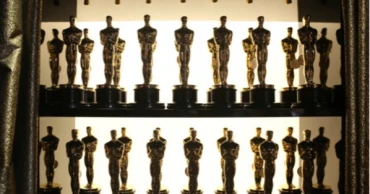
Oscars body sets AI rules, expands international film eligibility for 2027 awards
The Academy of Motion Picture Arts and Sciences has, for the first time, introduced rules addressing the use of artificial intelligence in films for the 2027 Oscars, while also expanding eligibility for international entries.
Announcing updated guidelines on Friday, the Academy said AI tools will not be banned but stressed that human creativity must remain central to any film’s eligibility.
Under the new rules, the use of AI “neither helps nor harms” a film’s chances of getting nominated. However, voters will consider how much human input was involved in the creative process when selecting nominees and winners.
“Humans have to be at the center of the creative process,” said Lynette Howell Taylor, adding that the organisation will continue reviewing its approach as technology evolves.
In acting categories, only performances clearly carried out by human actors, with their consent, will be eligible. The Academy said it will review cases involving AI-generated performances individually.
The rules are stricter for writing categories, stating that screenplays must be written by humans to qualify.
Academy CEO Bill Kramer said the updates reflect ongoing changes in filmmaking and the growing influence of AI across the industry.
The Academy also announced major reforms to the international feature film category, which has long faced criticism over fairness and political influence.
Films that win top awards at major festivals — including the Palme d’Or at Cannes Film Festival, the Golden Lion at Venice Film Festival and key prizes at Toronto International Film Festival — will now be eligible for Oscar consideration even if they are not officially submitted by their home countries.
Additional qualifying festivals include Berlin International Film Festival, Busan International Film Festival and Sundance Film Festival.
This change means films like ‘It Was Just an Accident’ by Iranian director Jafar Panahi could qualify based on festival success rather than national selection.
The Academy also said international films will now be recognised by their titles rather than the countries submitting them, with awards presented directly to filmmakers. Directors’ names will be included on Oscar plaques.
In another change, actors will now be allowed to receive multiple nominations in the same acting category for different performances in the same year, aligning with rules already applied in other categories.
The organisation also clarified rules for original songs, saying tracks used in end credits must begin before the credits roll and overlap with at least the final 15 seconds of the film to qualify.
Officials said the updates are part of ongoing efforts to modernise the Oscars and reflect the increasingly global and technology-driven film industry.
5 months ago

Antiwar ‘All Quiet’ wins the Oscar for international film
The war movie that abhors war has won an Oscar for best international film, along with three other statues.
“All Quiet on the Western Front,” starring Felix Kammerer and directed and co-written by Edward Berger, earned nine nominations, including best picture.
It also won for cinematography, production design and original score Sunday night.
“I think it might feel incredible but I don’t quite know yet because I haven’t processed it yet,” Berger said backstage. “I'm a little bit on autopilot.”
Also Read: 'Everything' wins best picture, is everywhere at Oscars
Berger was joined onstage by Kammerer as well as others involved in the film.
“This was your first movie and you carried us on your shoulders as it was nothing,” he told the 27-year-old Austrian actor. “Without you, none of us would be here.”
The Netflix film is based on the classic 1929 novel of the same name by Erich Maria Remarque. Set during World War I, it follows the life of a young German soldier who enlists in the army with his friends. But the realities of war shatter his hopes of becoming a hero and he focuses on his own survival.
“We tried to make a film about our past, about our responsibility in Germany and with our history,” Berger said. “Our urge was to talk about our guilt and our shame that we’ve brought and the terror that the two wars have caused in the world. Hopefully, at some point we will stop making the same mistakes in the future.”
The German-language film doesn't hew exactly to Remarque's novel. Instead, it deviates into political issues against the backdrop of the war. It premiered last year, when Russia invaded Ukraine in the biggest military conflict in Europe since World War II, lending an unexpected relevancy to the movie.
“It's absolutely terrible,” cinematography winner James Friend said of the war in Ukraine. “It's a lesson that we can just sort of learn from really.”
"All Quiet on the Western Front” won seven BAFTA trophies, including best film.
Berger said he was happy, proud and grateful that Hollywood embraced the movie.
“I think we do have a little bit of an inferiority complex as German moviemakers because we feel like a small country with less stars and less visibility as opposed to England and America,” he said. “I hope this gives me and a few others a bit of confidence to say, ‘Let’s just do it, let’s just do our movies.’”
The original American movie starring Lew Ayres debuted in 1930 and won Oscars for best picture and best director.
It was later made into a television movie starring Richard Thomas and Ernest Borgnine, winning an Emmy and a Golden Globe.
“All Quiet on the Western Front” beat out “Argentina, 1985” from Argentina, “Close” from Belgium, “EO” from Poland and “The Quiet Girl” from Ireland.
3 years ago
.jpg)
‘Another Round’ wins best international film at the Oscars
After his film “Another Round” won the best international feature Oscar, director Thomas Vinterberg wiped away tears while dedicating part of his acceptance speech to his late daughter who died a couple years ago.
“We ended up making this movie for her, as her monument,” a tearful Vinterberg said from the stage at Union Station in Los Angeles on Sunday night.
Vinterberg said his daughter, Ida, died in a highway accident four days into the project. He said his daughter shared her excitement about film’s story with him in a letter after she read the script a couple months before filming the movie. He added that she was supposed to be a part of the project.
“So Ida, this is a miracle that just happened,” he continued. “You are a part of this miracle. ... This one is for you.”
“Another Round” is the fourth time a film from Denmark has won in the category. The last was “In a Better World” in 2010.
Also read: Is this an ‘Asterisk Oscars’ or a sign of things to come?
The film stars Mads Mikkelsen as one of a group of Danish school teachers who attempted to stay slightly drunk all day to break out of their malaise.
“This is a film about letting go of control in life as I lost control of my own,” he said.
Before Vinterberg accepted the award, he skipped onto the stage with excitement. He called his wife for being the “angel” of the project and thanked several others including his children and the film’s co-writer Tobias Lindholm.
“This is beyond anything I could ever imagine,” Vinterberg said. “Except this is something I’ve always imagined.”
Also read: Oscar nominations Monday could belong to 'Mank' and Netflix
Vinterberg was also nominated for best director, but lost to Chloé Zhao in the category on Sunday night.
Vinterberg became internationally popular as the co-founder of the filmmaking movement called Dogme 95. He started the movement in 1995 with fellow Danish director Lars von Trier.
5 years ago