Foreign Affairs
Bangladesh seeks greater French investment in sectors
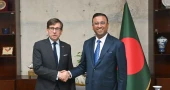
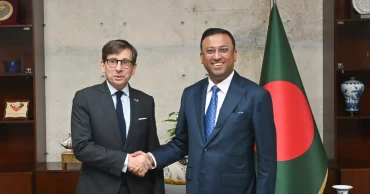
State Minister for Foreign Affairs Humaiun Kobir on Thursday encouraged greater French investment in Bangladesh and highlighted the potential for enhanced cooperation in promising sectors, including infrastructure, renewable energy, space, technology and pharmaceuticals.
He also underscored the importance of creating greater opportunities for legal and regular labour mobility between Bangladesh and France.
The issues were discussed when Ambassador of France to Bangladesh Jean-Marc Séré-Charlet paid a courtesy call on the State Minister at the Ministry.
The State Minister reaffirmed Bangladesh’s zero-tolerance policy towards irregular migration and human trafficking and expressed Bangladesh’s readiness to work closely with France in addressing these challenges.
The Ambassador congratulated the State Minister on his assumption of office and exchanged views on ways to further strengthen the longstanding friendship and partnership between Bangladesh and France.
The State Minister appreciated France’s continued engagement with Bangladesh, including its support for Bangladesh’s socio-economic development, democratic transition and institutional strengthening.
He emphasised Bangladesh’s interest in further engagment in areas of mutual interest, particularly trade and investment, defence, aviation, education, culture, and human capital development.
They also exchanged views on the priorities and expectations from the upcoming United Nations General Assembly (UNGA).
Both sides also discussed on regional and global issues, including climate change and multilateral engagement reiterating their commitment to working together in international fora.
Ambassador Séré-Charlet reaffirmed France’s readiness to enhance cooperation across all areas of mutual interest. He appreciated the Government’s efforts towards democratic reforms and expressed France’s interest in working closely with Bangladesh.
Humaiun Kobir appreciated the France’s continued humanitarian support for the 1.3 million Rohingyas sheltered in Bangladesh.
Both sides also expressed their readiness to work together for their safe, voluntary and dignified repatriation.
Both sides expressed confidence that continued engagement and enhanced cooperation would provide further momentum to Bangladesh-France relations.
25 days ago
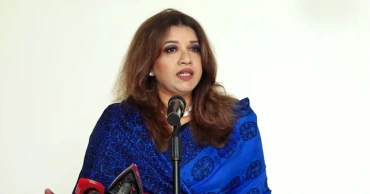
Efforts to continue until convicts brought back from India: Shama Obaed
State Minister for Foreign Affairs Shama Obaed Islam on Wednesday said Bangladesh will take all necessary legal and diplomatic steps under existing laws to bring back convicted fugitives including former prime minister Sheikh Hasina and those sentenced to death in the latest verdict.
She said the Foreign Ministry would initiate the required process with the Indian government once it officially receives all necessary documents related to the verdict delivered on Tuesday.
“Look, this is an ongoing process. I should not and do not wish to comment on the legal aspects,” she told reporters at the Ministry of Foreign Affairs.
The International Crimes Tribunal (ICT) on Tuesday sentenced seven people including Awami League General Secretary Obaidul Quader to death for their roles in suppressing the July 2024 mass uprising through incitement, provocation, attacks and killings.
Regarding the Foreign Ministry's responsibility, Shama said, “We are taking and will continue to take all necessary steps under existing laws to extradite convicted criminals, including the former Prime Minister of the fascist government and those sentenced yesterday (Sept 15).”
She said efforts are underway under the extradition treaty to bring back the former home minister, the former prime minister and the killers of martyr Hadi, who are currently detained in India. “Official correspondence is being exchanged,” she said.
“Since the verdict was delivered just yesterday (Sept 15), once we officially receive all the necessary paperwork, we will contact the Indian government through due process to take whatever steps are required,” said the State Minister.
The government will certainly take all legal measures needed to bring the accused back to face justice, she added.
Asked whether Bangladesh has received any response from India to its earlier letter seeking the extradition of former home minister Asaduzzaman Khan Kamal, Shama said diplomatic communication is ongoing. “We have not yet received a definitive answer from India,” she said.
“However, from what we understand, they may have their own internal legal procedures to follow, and they are carrying out that process. These efforts will continue until we successfully bring them back to Bangladeshi soil,” she added.
Indian media outlet The Print claimed that India has not yet given its approval to Bangladesh for the appointment of Asad Alam Siam as Dhaka’s next High Commissioner at New Delhi though the process to appoint new High Commissioners and Ambassadors by Dhaka for various foreign postings began in July.
Asked about media reports in Bangladesh and India, Shama urged the media not to publish such reports without official confirmation.
“I would request everyone not to pay heed to or publish such news reports until an official statement or concrete information is issued by either the Bangladesh Ministry of Foreign Affairs or the Government of India,” she said.
On an inter-ministerial meeting held on Tuesday regarding Bangladeshis travelling abroad with forged documents and false information, the State Minister said the government is working to streamline the migration process for the large number of Bangladeshis living abroad.
“Ever since the Bangladesh Nationalist Party (BNP) formed the government, we have been working on how to streamline and consolidate the migration process for the vast number of Bangladeshi citizens living abroad,” she said.
The State Minister noted that the Ministry of Foreign Affairs had already taken several initiatives, including opening a dedicated Migration Wing.
25 days ago
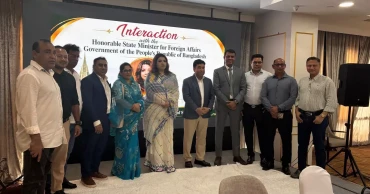
Bangladesh open for investment from all countries: Shama Obaed
State Minister for Foreign Affairs Shama Obaed Islam has emphasised the importance of economic diplomacy in expanding trade and attracting investment, saying the government has been working to create a more investment-friendly environment in Bangladesh.
"Bangladesh is open for investment from all over the globe," she said, encouraging Bangladeshi businesspeople abroad to explore investment opportunities in the country.
Shama Obaed said Singapore, as a major global business hub, had significant potential to invest in Bangladesh and contribute to employment generation.
The State Minister made the remarks while exchanging views with Bangladeshi businesspeople and professionals in Singapore on Monday.
The event was organised by the Bangladesh Chamber of Singapore. Members of the Bangladesh business community, professionals and migrant workers attended the event, said the Ministry of Foreign Affairs.
At the outset, businesspeople and entrepreneurs from the Chamber briefed the State Minister on their ongoing businesses, opportunities and challenges.
They also focused on expanding trade, commerce and investment opportunities, promoting skilled and unskilled migration, and further strengthening Bangladesh-Singapore economic relations.
The President of the Bangladesh Business Chamber of Singapore briefed the State Minister on the organisation's activities.
He highlighted the Chamber's role in promoting business relations and facilitating exchanges and visits between Bangladesh and Singapore.
The State Minister informed the participants that the Cabinet had recently approved a bill related to investment in Bangladesh.
She said a separate wing had been created in the Foreign Ministry to coordinate with relevant stakeholders in the government and private sectors to resolve issues related to manpower migration, trade, commerce and investment.
Shama Obaed mentioned initiatives in renewable energy, artificial intelligence, technology, pharmaceuticals, ICT, education and Technical and Vocational Education and Training (TVET).
She said Bangladesh has a trade deficit with Singapore and stressed the need to diversify exports to the country.
The State Minister also emphasised the importance of research, innovation and appropriate policy support for developing new export sectors.
Referring to the jute sector, she said jute and jute-based products could be lucrative commodities to trade in a market like Singapore.
She also urged the establishment of a joint Bangladesh-Singapore Chamber comprising businesspeople, entrepreneurs and investors from both countries.
She said the joint chamber could play a crucial role in promoting trade and investment and further expanding business cooperation between Bangladesh and Singapore.
Members of the business community shared a number of proposals, identifying data centres as a potential area for investment in Bangladesh.
They also highlighted the potential benefits of a Free Trade Agreement (FTA) between Bangladesh and Singapore.
The business representatives said Bangladeshi companies in the steel, shipbuilding and ship recycling sectors could benefit from duty-free access to the Singapore market under an FTA.
They proposed organising roadshows to showcase Bangladeshi products in Singapore.
They also suggested establishing a one-stop service for Singaporean investors, simplifying the process of opening bank accounts, organising business workshops and arranging trade fairs.
Representatives from a wide range of professions also attended the session.
They included doctors, engineers, shipbuilding workers, service sector employees, logistics and transport workers, construction workers and IT professionals.
The participants identified elderly caregiving as a promising sector for future employment opportunities for Bangladeshi workers in Singapore.
They suggested that a bilateral agreement could help develop cooperation in this area.
They also proposed arranging some treatment in Bangladesh at a much lower cost than in Singapore and initiating cooperation between hospitals in Bangladesh and Singapore under a government-to-government (G2G) framework.
The participants raised concerns about the high costs faced by aspiring migrant workers, saying exploitation by some recruiting agencies was responsible for the high migration costs in Singapore.
They suggested engaging former migrant workers as trainers at training centres in Bangladesh and introducing affordable training courses for work permit holders in Singapore.
The State Minister assured them that the government has been working to bring the recruitment process under a transparent system to reduce exploitation and migration costs.
The participants also called for diversification of Bangladesh's overseas employment market.
They suggested reducing dependence on traditional sectors such as construction and logistics and exploring areas such as IT, data analysis, cybersecurity and artificial intelligence.
They said Singapore's service sectors offer significant opportunities for skilled foreign professionals.
Responding to the proposals, the State Minister said the government is reviewing opportunities in the TVET sector.
She said the government is continuing discussions with relevant ministries and stakeholders to expand employment opportunities for Bangladeshi workers.
The two interaction sessions provided a platform for direct engagement with the business community and Bangladeshi professionals, including migrant workers, in Singapore.
The discussions focused on expanding investment and trade, increasing skilled employment opportunities, improving migration governance and further strengthening the economic partnership between Bangladesh and Singapore.
Following the discussions, the State Minister requested the participants to formally submit their proposals in writing so that appropriate measures could be taken involving relevant ministries and government organisations to address the challenges.
She assured that the government is committed to working for the betterment of expatriate Bangladeshis living around the world, including Singapore.
2 months ago
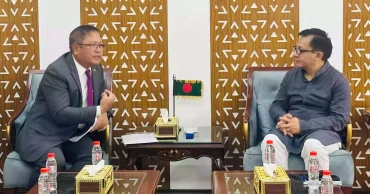
Muktadir, Myanmar envoy discuss boosting trade, Rohingya repatriation
Commerce Minister Khandakar Abdul Muktadir and Myanmar Ambassador to Bangladesh Kyaw Soe Moe on Sunday discussed ways to expand bilateral trade, strengthen shipping connectivity and expedite the safe return of forcibly displaced Rohingyas.
During a meeting at the Ministry of Commerce, the two sides discussed expanding bilateral trade, increasing exports and imports, strengthening maritime transport links, importing liquefied natural gas (LNG) and creating greater opportunities for mutual investment.
The minister said Bangladesh remains committed to strengthening relations with neighbouring countries based on mutual respect, trust and economic cooperation.
He said issues relating to trade, transport, investment and border connectivity that involve other ministries will be reviewed through inter-ministerial coordination.
Muktadir said the geographical proximity of Bangladesh and Myanmar and existing opportunities could be utilised to significantly increase bilateral trade.
"Bangladesh and Myanmar will work together to make the economic relationship more meaningful and dynamic after resolving issues of mutual interest through dialogue," he said.
Ambassador Kyaw Soe Moe expressed Myanmar's interest in increasing bilateral trade and said resuming the long-suspended border trade will benefit businesses and people in both countries.
He suggested that, if necessary, border trade could initially be resumed on a limited or temporary basis.
The meeting also explored opportunities to increase trade in agricultural and fisheries products, rice, pharmaceuticals and frozen food, while stressing the importance of strengthening business-to-business (B2B) engagement.
The issue of the safe, voluntary, sustainable and dignified repatriation of the forcibly displaced Rohingya population sheltered in Bangladesh also featured prominently in the discussions.
The Myanmar ambassador said the verification process of the repatriation lists submitted by Bangladesh is ongoing and that initiatives will be taken to move forward with repatriation once the security situation and conditions on the ground become favourable.
The Bangladesh side emphasised the need to create conditions conducive to an early repatriation and called for effective and visible progress on the issue.
Both sides agreed to hold regular institutional dialogues and meetings of the Joint Committee, and also discussed holding the next joint meeting in Bangladesh.
The meeting further underscored the importance of establishing direct maritime and shipping links between the two countries and finalising a proposed agreement on the matter at the earliest.
Both sides expressed optimism that direct shipping connectivity will reduce transportation costs and transit time while significantly boosting bilateral trade.
Both sides expressed their commitment to elevating bilateral trade, investment, connectivity and regional cooperation to a new level.
Commerce Secretary Md Ataur Rahman Khan, Additional Secretary (FTA) Ayesha Akther, and Myanmar Embassy Counsellor Myat Lwin were also present at the meeting.
2 months ago
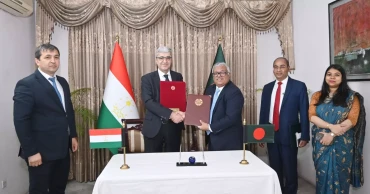
Bangladesh, Tajikistan discuss cooperation in mineral resources; ways to strengthen ties
Bangladesh and Tajikistan have discussed possible cooperation in the mineral resources including benefiting from Tajikistan’s vast reserves and expertise in gold, aluminum, zinc, copper, lead, and silver.
On bilateral trade, investment, and economic cooperation between the countries, both sides agreed to encourage more private sector interactions and exchanges of business delegations to realize the potential.
The two countries vowed to strengthen bilateral relations during the first-ever Foreign Office Consultations (FOC) held in Dhaka on July 8.
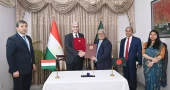
The two sides signed a MoU on Foreign Office Consultation to institutionalize the regular consultation mechanism before the meeting.
Ambassador Asad Alam Siam, Foreign Secretary of Bangladesh and Idibek Kalandar, Deputy Minister of Foreign Affairs of Tajikistan led their respective delegations during the meeting.
Both sides attached high priority to recalibrating and expanding the relations between Bangladesh and Tajikistan.
They stressed further deepening the political cohesion and proposed organizing reciprocal visits of Foreign Ministers.
They discussed exploring the formation of a Bangladesh-Tajikistan Parliamentary Friendship Group to enhance regular interaction among the parliamentarians.
Bangladesh highlighted the Tajik delegation on Bangladesh's global leadership in key manufacturing sectors, including Ready-Made Garments (RMG), jute and jute products, and pharmaceutical industry.
It invited Tajik investors to explore the investment friendly climate in Special Economic Zones in Bangladesh and proposed the formation of a Joint Working Group (JWC) on Trade and Economic Cooperation, signing a MoU between the apex chambers of the two countries and invited an exploratory mission of the Tajik private sector.
The two countries also discussed more people to people bridge including cooperation in education and sports, exchanges of students, youths, tourists, and cultural troupes and employment opportunities for highly skilled and semi-skilled professional workforce from Bangladesh to Tajikistan.
The delegations also discussed and agreed to conclude at the earliest a few other bilateral instruments regarding cooperation in areas such as trade and economic cooperation, cultural cooperation, visa waiver for diplomatic and official passport holders, tourism promotion, avoidance of double taxation, promotion and protection of investments, and cooperation in the fields of industries.
Both Bangladesh and Tajikistan agreed to deepen regional and global coordination and to reaffirm the close coordination and mutual support across international platforms, including the UN and the OIC.
Bangladesh expressed gratitude to Tajikistan for its support for Bangladesh’s candidature for the Presidency of the 81st United Nations General Assembly (UNGA), said the Ministry of Foreign Affairs.
They also exchanged views on critical regional and global developments, recognizing the strategic positions connecting South and Central Asia as a unique opportunity to promote stability and inter-regional connectivity.
The delegations noted that the inaugural consultation has laid a solid foundation for the future engagements in different areas of cooperation between the two brotherly countries.
They decided to hold the second round of Foreign Office Consultations in Dushanbe at a mutually convenient schedule.
On the sideline of the consultation, the two countries also signed a MoU on the collaboration between the diplomatic training institutes of the two countries.
The Rector of the Foreign Service Academy, Ambassador Muhammad Abdul Muhith, and the Tajik Deputy Foreign Minister signed the MoU.
3 months ago
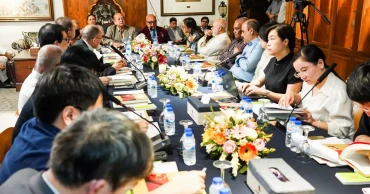
Dhaka-Beijing ties poised for greater opportunities in next 50 years, scholars from both countries say
Noting that the story of Bangladesh-China relations extends far beyond the fifty years of formal diplomatic ties, scholars from both countries at a book launching-cum-seminar have said the next fifty years promise even greater opportunities for both nations and for the wider region with vision, patience, and continued cooperation.
Ahead of Prime Minister Tarique Rahman’s scheduled visit to China later this month, the experts highlighted that understanding history is essential for shaping the future and that the friendship between Bangladesh and China, nurtured over generations, remains a bridge connecting civilizations, economies, and people.
China supports Bangladesh’s development: Mirza Fakhrul
The event marking the formal launching of a book titled “50 Years of Bangladesh-China Relations: Achievements, Challenges & Prospects” was held in city’s Baridhara on Friday evening as part of the Cosmos Dialogue hosted by Cosmos Foundation, the philanthropic arm of the Cosmos Group.
The seminar was chaired by renowned scholar and Cosmos Foundation President Dr Iftekhar Ahmed Chowdhury while Catherine Grace Gardner Khan made the formal announcement of the event with her brief remarks.
The book is co-edited by Cosmos Foundation Chairman Enayetullah Khan and Professor Imtiaz Ahmed.
3 months ago

Mango Diplomacy: Bangladesh shares mangoes in Nepal to strengthen friendship
The Bangladesh Embassy in Kathmandu has shared some of the finest Bangladeshi mangoes with friends across Nepal under this year’s “Season’s Best Compliments” initiative as a diplomatic gesture of goodwill and friendship.
More than 1,750 kilograms of premium-quality Bangladeshi mangoes were presented to Nepali dignitaries, senior government officials, ambassadors and members of the diplomatic corps in Kathmandu, business leaders, civil society representatives, and close friends and well-wishers of Bangladesh and its people.
The Embassy team delivered mango packs to more than 360 esteemed recipients, including the President of Nepal, the Speaker, and members of the Council of Ministers, according to a media release issued on Friday.
The mangoes, freshly harvested from two orchards in Chapai Nawabganj, also known as the mango capital of Bangladesh, were carefully transported to Nepal via Banglabandha Port, Fulbari Land Port (Siliguri border), and Kakarbhitta Port to ensure quality and freshness upon arrival.
The consignment featured the celebrated Khirshapat variety, a GI-certified mango widely regarded as one of the most flavorful varieties in the Indian subcontinent.
The initiative reflects the enduring friendship and close people-to-people ties between Bangladesh and Nepal, said the Bangladesh Embassy in Kathmandu.
The gesture symbolises the warmth, goodwill, and spirit of diplomacy that continue to strengthen bilateral relations between the two friendly nations.
The Embassy of Bangladesh expressed its sincere appreciation to all those who contributed to making this unique “Mango Diplomacy” initiative in Nepal a grand success.
3 months ago
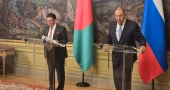
Dhaka, Moscow discuss trade, energy, investment cooperation
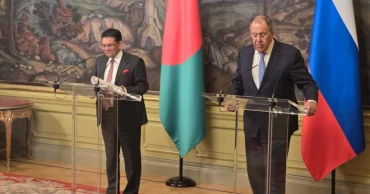
Bangladesh and Russia on Monday discussed ways to further strengthen cooperation in energy, trade and investment, while reviewing the current status and future prospects of bilateral relations.
Foreign Minister Dr Khalilur Rahman held talks with Russian Foreign Minister Sergey Lavrov in Moscow, during which the two sides also exchanged views on regional and international issues, a senior official told UNB.
Rooppur nuclear power plant to provide up to 10% of Bangladesh’s total electricity generation: Russia
The Foreign Minister is on a three-day visit to Russia at the invitation of his Russian counterpart.
Following the bilateral talks, the two Foreign Ministers addressed a joint media briefing. This marks Dr Khalilur’s first visit to Russia in his current capacity.
Dr Khalilur arrived in Moscow on Sunday, according to a senior official at the Ministry of Foreign Affairs.
Prime Minister’s Foreign Affairs Adviser Humayun Kabir is accompanying the Foreign Minister on the visit.
Bangladesh Ambassador to Russia Md Nazrul Islam received the delegation at the airport.
Ahead of the visit, Russia described the construction of Bangladesh’s first nuclear power plant at Rooppur as the flagship project of bilateral cooperation, noting that the facility is expected to generate up to 10 percent of the country’s total electricity once fully operational.
The Russian side said the project has laid the foundation for Bangladesh’s nuclear energy sector and contributed to the training of qualified national personnel.
The first unit of the plant was commissioned on April 28, while the second unit could also be launched later this year.
Highlighting broader energy cooperation, Russia noted that its expertise in conventional energy remains in high demand in Bangladesh. Between 2012 and 2023, Gazprom International Limited, a subsidiary of PJSC Gazprom, drilled and completed turnkey projects for around 20 wells in Bangladeshi gas fields.
The Russian side also pointed to opportunities for expanding cooperation in education.
The previous meeting between the two foreign ministers took place in September 2023 during Lavrov’s working visit to Dhaka.
The current visit also includes meetings with the leadership of the Federation Council of the Federal Assembly of the Russian Federation.
Describing Bangladesh as a longstanding partner in South Asia, Russia recalled that it was among the first countries to recognize Bangladesh’s independence in 1972 and subsequently provided significant political and economic support.
Between 1972 and 1974, Soviet naval forces assisted in clearing mines and sunken vessels from Chattogram port and its surrounding waters.
According to the Russian side, political dialogue between the two countries has continued steadily, with contacts maintained at various levels, including the highest leadership.
Following the resumption of Bangladesh’s Parliament earlier this year, contacts between the legislative bodies of the two countries are also expected.
The two countries continue to cooperate closely within the United Nations, its specialized agencies and other multilateral forums.
Bilateral trade has consistently exceeded US$2 billion annually in recent years. Russia’s key exports to Bangladesh include industrial equipment, mineral fertilizers and wheat, while Bangladesh exports ready-made garments and seafood to Russia.
The Intergovernmental Russian-Bangladesh Commission on Trade, Economic, Scientific and Technical Cooperation remains the principal mechanism for advancing bilateral economic ties. The commission has held four meetings to date, with the most recent taking place virtually on March 15, 2023.
For the 2025-26 academic year, Russia has allocated 185 scholarships for Bangladeshi students under its federally funded education programme.
4 months ago
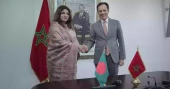
Bangladesh keen to deepen its engagement with African nations: Shama Obaed
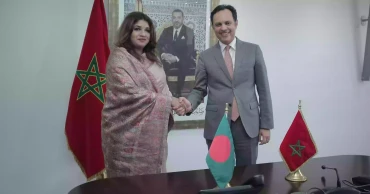
State Minister for Foreign Affairs Shama Obaed Islam has said Bangladesh is keen to deepen its engagement with African nations and elevate its partnership with Morocco to a new horizon of cooperation, shared prosperity and strategic opportunity.
She made the remarks during her meeting with Nasser Bourita, Morocco’s Minister of Foreign Affairs, African Cooperation and Moroccan Expatriates in Rabat on May 19.
The two leaders highlighted the importance of sustained high-level exchanges in advancing political relations.
State Minister Shama Obaed is currently on an official visit to Morocco to attend the Second Ministerial Conference on Peacekeeping in a Francophone Environment, scheduled to be held in Rabat today (May 20), said the Ministry of Foreign Affairs.
The State Minister fondly recalled the historic visit of Shaheed President Ziaur Rahman to Morocco in 1980 and expressed appreciation for Morocco’s gracious gesture of honouring the nation by naming an avenue in Rabat after him.
Both leaders reaffirmed their commitment to consolidating Bangladesh-Morocco ties across diverse sectors, including trade and investment, textiles, pharmaceuticals, ceramics, sports, culture, agriculture, education, women empowerment, shipbuilding and people-to-people connectivity, alongside stronger multilateral collaboration.
They also agreed to convene the next round of Foreign Office Consultations at the earliest in Dhaka to assess ongoing cooperation and explore new areas of mutual interest.
The State Minister extended an invitation to the Moroccan Foreign Minister to visit Bangladesh at a mutually convenient time.
4 months ago
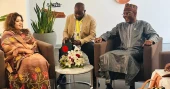
Bangladesh eyes broader bilateral engagements with African countries unlocking full potential
State Minister for Foreign Affairs Shama Obaed Islam has emphasised that although Bangladesh and African countries collaborate extensively in multilateral settings, there is a pressing need to establish regular bilateral political consultations.
She said such initiatives would further deepen mutual understanding and help unlock the full potential of partnerships across a wide range of sectors.
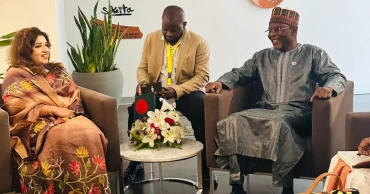
The State Minister held a series of bilateral meetings in Dakar, Senegal on Tuesday on the margins of the “Dakar International Forum on Peace and Security in Africa”, reinforcing Bangladesh’s growing engagement with African nations under the leadership of Prime Minister Tarique Rahman.
Her discussions with African counterparts opened new avenues for partnership, revitalised diplomatic ties and underscored a shared commitment to expanding cooperation across multiple sectors, said the Ministry of Foreign Affairs.
In her bilateral meeting with Morissanda Kouyaté, Minister of Foreign Affairs of Guinea, both leaders agreed to strengthen collaboration in agriculture, particularly contract farming, alongside enhancing trade and investment through increased business-to-business exchanges.
They identified mineral resources, garments and textiles and pharmaceuticals as promising sectors for future cooperation, said the Ministry of Foreign Affairs.
During her bilateral meeting with The Gambia’s Foreign Minister Sering Modou Njie, the State Minister expressed appreciation for The Gambia’s continued support in addressing the Rohingya crisis, including its case against Myanmar at the International Court of Justice.
The Gambian Minister commended Bangladesh’s contributions to UN peacekeeping missions.
Both sides emphasised strengthening cooperation in multilateral forums such as the OIC, while expanding engagement in sectors, including trade, defence, technology, agriculture, culture and sports.
In a separate bilateral meeting with Abdoulaye Diop, Foreign Minister of Mali, discussions focused on boosting trade and investment, particularly in agriculture, pharmaceuticals, ready-made garments, jute, cotton and leather.
Mali’s Foreign Minister expressed gratitude for Bangladesh’s significant role in peacekeeping operations in Mali.
Both parties also agreed to deepen cooperation within the Non-Aligned Movement and advance the interests of the Global South.
The State Minister also met Bakary Yaou Sangaré, Minister of Foreign Affairs, Cooperation and Nigeriens Abroad of Niger, where discussions centered on strengthening business linkages, expanding trade and enhancing people-to-people connectivity.
Opportunities for collaboration in education, vocational training, agriculture, healthcare, information technology and mineral resources were explored.
In her meeting with Esmeralda Bravo Conde da Silva Mendonça, Secretary of State for Foreign Affairs of Angola, both the highlighted the importance of enhancing cooperation in trade, investment, pharmaceuticals, ready-made garments, jute and energy.
They also emphasized the early finalisation of a Memorandum of Understanding on Foreign Office Consultations and discussed collaboration on women’s empowerment, democracy, peace and security, alongside mutual support in international forums.
Additionally, Richard Michaels, Deputy Assistant Secretary of State of the US met the State Minister when the later described the United States as a steadfast partner in promoting democracy, strengthening institutions and advancing human rights.
Sadia Faizunnesa, Bangladesh’s Ambassador to Morocco and Ambassador-designate to Senegal, accompanied the State Minister during the meetings.
5 months ago