Chandpur
Chandpur fishery ghat falls silent as 22-day hilsa ban begins
The usually bustling Borostation fishery ghat in Chandpur fell eerily silent on Thursday as a 22-day fishing ban came into effect to protect mother hilsa during their breeding season, leaving the district’s largest fish landing centre and the adjoining Meghna River virtually deserted.22-day hilsa fishing ban begins in Chandpur
A 22-day ban on fishing in a 70-km sanctuary of the Padma-Meghna rivers in Chandpur began on Thursday to protect mother hilsa during their breeding season.
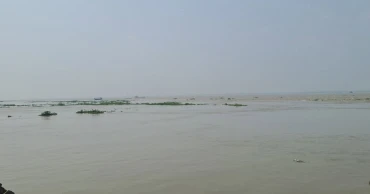
On the first day of the ban, no fishing boats were seen in the Meghna River or at the century-old Borostation fish landing centre in the town.
During a visit to the Borostation area, the confluence of three rivers, Tilabari and the launch terminal around 11:30am to noon, the river was found almost completely empty, with no fishing boats visible as far as the eye could see.
Members of the district fishermen’s organisation were seen travelling on a trawler and using loudspeakers to raise awareness among fishermen about the ban.
The usually busy Borostation fish landing centre was also deserted, with an unusual silence prevailing there.
The area remained active until around 11:30pm on Wednesday, the night before the ban came into effect.
All ice factories in the district have also been closed for the 22-day period on the instructions of the administration, according to the district taskforce.
4 days ago
Three killed in Chandpur bus-truck collision
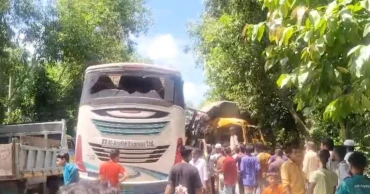
Three people were killed and at least 18 others injured in a head-on collision between a bus and a sand-laden truck at Baniyacho in Shahrashti upazila of Chandpur on Tuesday morning.
All three deceased were men but their identities could not immediately be confirmed, said Additional Superintendent of Police of Chandpur Lutfor Rahman.
The accident occurred around 8am when the Al-Arafah Paribahan bus was trying to overtake another vehicle and collided with the truck coming from the opposite direction, said witnesses.
Officer-in-Charge of Shahrashti Police Station Mir Mahbubur Rahman said Noakhali-to-Jashore-bound Al-Arafah Paribahan bus collided head-on with the sand-laden truck coming from the opposite direction.
The front portions of both vehicles were badly mangled in the collision, leaving several bus passengers trapped inside.
The injured were taken to Shahrashti Upazila Health Complex.
Aklima Akter, health and family planning officer of Shahrashti Upazila, told UNB that 18 injured people were brought to the hospital from the accident site.
"They were given emergency treatment. Three of them were in critical condition and were referred to Cumilla Medical College Hospital after receiving initial treatment," she said.
The remaining injured are undergoing treatment at the hospital, she added.
OC Mir Mahbubur Rahman said three bodies have so far been recovered from the scene and rescue operation is still underway.
2 months ago
Man gets life in prison for raping minor girl in Chandpur
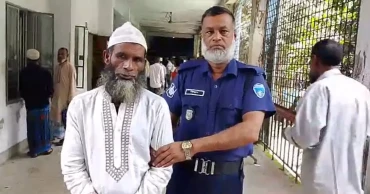
A Chandpur tribunal on Wednesday sentenced a 50-year-old man to life imprisonment for raping a minor girl in back in 2021.
The convict was identified as Md Arun Bhuiyan, son of late Abdul Kadir Bhuiyan of Gojra Bhuiyan Bari under Matlab Uttar upazila.
Children Violence Suppression Tribunal Judge Md Rezaul Karim delivered the verdict in the presence of the convict, who was also fined Tk 50,000.
According to the prosecution, the seven-year-old girl went to a crop field near her house with her brother to guard seedbeds on July 9, 2021.
After a while, her brother left her sitting beside the field and went home to have food. Taking advantage of his absence, the accused raped the child.
Later, the victim narrated the ordeal to her grandmother as her parents were in Dhaka for medical treatment on that day.
Upon returning home on July 14, the victim's father filed a case at Matlab Uttar Police Station in this regard.
The accused was arrested on July 15.
Following the investigation, police submitted a charge sheet to the court on October 20 of the same year.
2 months ago
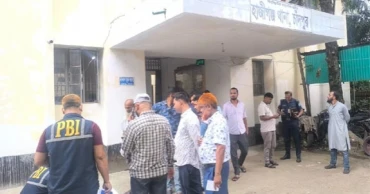
Man missing found dead in Chandpur hotel
A 65-year-old man who had been missing since June 8 has been found dead in a residential hotel in Hajiganj upazila of Chandpur district.
The deceased was identified as Md Ilias Kazi, son of late Adam Ali Kazi of Kazi Bari in Faridganj upazila.
Police recovered the body from a room at Matrimaya Residential Hotel after breaking open the door on Saturday afternoon.
According to family members, Ilias Kazi had been missing since June 8. The family filed a general diary at Faridganj Police Station on June 12 in this regard.
Vitim’s son Mahdi Hasan Kazi said they learned through social media on Saturday that an unidentified body was recovered in Hajiganj. The family later went to the police station and identified the deceased as Ilias Kazi.
Faruk Hossain Liton, owner of Matrimaya Residential Hotel, said Ilias checked in at the hotel on the evening of June 12. When repeated knocks on the door his room went unanswered until around 2:30pm the following day, hotel authorities informed the police.
Police and Fire Service personnel arrived at the scene and broke open the door only to find him dead.
Officer-in-Charge of Hajiganj Police Station Mohammad Abdul Mannan said police initially suspect that Ilias Kazi may have died after consuming pesticide, though the exact cause of death will be determined following an autopsy.
3 months ago
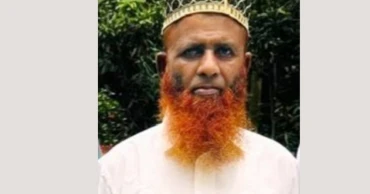
Hospital employee killed in Chandpur road accident
A hospital employee was killed after being run over by a bus in Hajiganj upazila of Chandpur on Sunday morning.
The deceased was identified as Billal Hossain, 48, a security guard at Doctors City Scan Hospital in Hajiganj and son of late Saheb Ali Bhuiyan of Muragaon village in Shahrasti upazila of the district.
The accident occurred around 8:00am in front of Monir Filling Station at Toragarh on the Chandpur-Cumilla regional highway.
According to police and witnesses, a “Boogdad Paribahan” ran over Billal on the wrong side while trying to overtake another bus, leaving him dead on the spot.
Following the incident, the drivers and supervisors of the two buses reportedly fled the scene, leaving the vehicles behind.
Officer-in-Charge of Hajiganj Police Station Abdul Mannan said they seized both the buses involved in the incident.
4 months ago
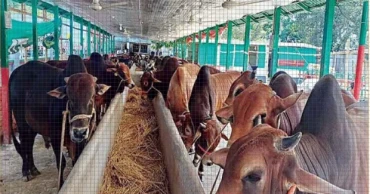
Chandpur farmers pin hopes on fair prices as 66,000 sacrificial animals ready
Cattle markets in Chandpur are bustling with activity ahead of Eid-ul-Azha as farmers prepare more than 66,000 sacrificial animals for sale, hoping to secure fair prices during the peak trading season.
Despite strong preparations, many farmers remain concerned about market volatility and the possible influx of cattle from a neighboring country, which they fear could affect prices.
According to the Department of Livestock Services, Chandpur district currently has 66,098 sacrificial animals ready for sale against an estimated demand of around 75,000, leaving a shortfall of about 9,000animals.
Officials, however, said the gap would likely be filled by small-scale seasonal traders and farmers from remote char areas and neighboring districts.
District Livestock Officer Dr Jyotirmoy Bhowmik said there would be no shortage of sacrificial animals this year.
“We have sufficient local production and the remaining demand will be met by marginal farmers and seasonal traders. We expect a smooth supply during Eid,” he told UNB.
The ready animals include 27,346 bulls, 8,366 oxen, 10,571 cows, 23 buffaloes, 19,346 goats and 446 sheep.
Visits to major cattle markets including Sofarmali, Bagadi Chourasta, Puranbazar and Bakila in Haziganj revealed that cattle trade have already gained momentum.
Buyers said cattle prices this year are slightly higher than last year.
“Prices have increased compared to previous years, especially for healthy local bulls,” said Abu Sayeed, a cattle buyer in Chandpur town.
Traders were seen bringing truckloads of cattle from Faridpur and northern districts to local markets, although buyers appeared to prefer locally raised cattle.
According to livestock officials, around 4,155 entrepreneurs — mostly young farmers — are involved in raising sacrificial animals across Chandpur’s eight upazilas. Nearly 300 temporary and permanent cattle markets have been set up in the district ahead of Eid.
Many farmers said they purchased young bulls several months ago and raised them using locally produced feed such as grass, straw, oil cake and bran.
While small and medium-sized cattle are mainly sold in local markets, larger bulls are increasingly marketed online.
During a visit at several farms, workers were seen caring for cattle that are expected to be sold within the next week.
Despite their preparations, many farmers expressed anxiety over market prices.
“If Indian cattle do not enter the market in large numbers, we hope to get good prices this year,” said farmer Khaled Khan from Nanupur village in Sadar upazila.
Khaled, who has been involved in cattle farming for two decades, said he has prepared several bulls for Eid, with prices ranging between Tk 90,000 and Tk 1.2 lakh.
Another farmer, Ahmed Ali from Ghashipur village, said he has 32 cattle in his farm including seven bulls raised entirely on local feed.
Some farmers are targeting high-end buyers with premium bulls.
Nargis Begum of Hamankardi village in Maishadi union has prepared three large bulls aged between three and five years.
Among them is a bull named “Raja Babu,” for which she is seeking Tk 12 lakh. Another bull, “Hamankardi King,” is priced at Tk 10 lakh, while the smallest one is expected to sell for around Tk 5 lakh.
Farm worker Md Moslem said the animals were raised naturally without artificial fattening methods.
“We fed them local grass, straw and bran. We are taking special care of them every day,” he said.
Many buyers expressed more interest in locally farmed cattle, citing concerns about chemical fattening practices sometimes used by outside traders.
“People in the city now prefer cattle raised by local farmers because they trust the quality more,” said Abdul Barek, a resident of Chandpur town.
To ensure smooth trading during Eid, the livestock department officials said mobile teams, including veterinary surgeons, will monitor cattle markets, resolve disputes and check counterfeit currency duringtransactions.
4 months ago
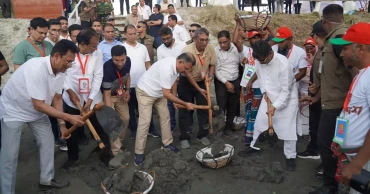
PM launches re-excavation of ‘Bishwa Khal’ in Chandpur
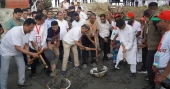
Prime Minister Tarique Rahman on Saturday inaugurated the re-excavation programme of ‘Bishwa Khal’ in Chandpur as part of a nationwide initiative to re-excavate rivers, canals and water bodies aimed at protecting the environment and strengthening climate resilience.
The Prime Minister inaugurated the re-excavation work by cutting soil with a spade around 4:30pm at Ghosher Haat adjacent to Kumarduli village under Shahmahmudpur union of Sadar upazila.
He later planted a neem sapling on the bank of the canal.
Bishwa Khal is a long canal stretching from the Dakatiya River through Ghosher Haat to the border area of Matlab South upazila.
At the inauguration programme, emphasis was placed on conserving water bodies, ensuring natural water flow and taking long-term measures to tackle the adverse impacts of climate change.
Earlier, the Prime Minister inaugurated the re-excavation work on historic Khorddo Khal in Shahrasti upazila of the district, 48 years after his late father excavated it.
After travelling by road from Dhaka, he reached the canal re-excavation site at Waruk Bazar in Tamta South union around 2:40pm and formally launched the programme by unveiling a plaque.
Later, Tarique Rahman stepped down beside the canal and cut soil with a spade to mark the beginning of the work.
He later planted a tree sapling on the bank of the canal.
Khorddo Khal was originally excavated in 1978 under the initiative of former President Ziaur Rahman. After 48 years, the canal is being re-excavated under the initiative of his son – Prime Minister Tarique Rahman.
4 months ago
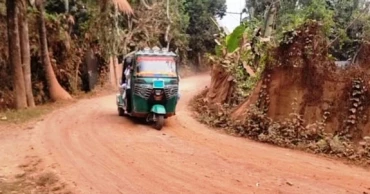
Residents suffer as carpeting work on Chandpur road stalled for 18 months
Carpeting work on nearly five kilometres of the Laokora Muktijoddha Road in Hajiganj upazila of Chandpur has remained stalled for around 18 months due to alleged negligence by the contractor, causing severe hardship for thousands of residents in at least 12 villages.
According to locals, the 5.5-kilometre road stretching from Uaruk Station on the Chandpur-Cumilla highway to Laokora Bottoli is considered a vital communication route in the area.
The road serves as the main transport link for nearly 200,000 people living in 12 villages across the border areas of Hajiganj, Kachua and Shahrasti upazilas.
The road renovation project, worth around Tk 1.5 crore, was awarded in December 2024 to Ivy Construction.
Later, the project was reportedly handed over on a sub-contract basis to Afzal Traders, another contracting firm based in Chandpur.
Rahmat Ullah, a Union Parishad member of Laokora village, said the development and renovation of the road is crucial for local residents.
He alleged that the road has remained dug up for more than a year and that repeated communications with the contractor have yielded no visible progress.
The UP member urged the district and upazila administrations to take immediate steps to resolve the issue.
Local residents, including Bablu Patwary and Abdul Jalil, said patients, pregnant women, elderly people and commuters are enduring immense suffering due to the unfinished roadwork.
They said travelling on the road becomes even more hazardous at night.
Auto-rickshaw driver Ibrahim said excessive dust from the damaged road leaves drivers and passengers covered in dirt and causes daily inconvenience.
CNG-run auto-rickshaw drivers Nabir Hossain and Khorshed Mia said their vehicles are being damaged frequently due to the poor road condition.
Local school teacher Faraz Hossain Bhuiyan said excessive dust has forced people to wear masks while travelling on the road.
He added that people of all ages, from children to the elderly, are suffering from respiratory and other health complications.
Md Tahsinul Hossain Mukul, Assistant Engineer of the Chandpur office of the Local Government Engineering Department, said the contractor has been warned several times in writing.
He said a letter has also been sent to seize the contractor’s bank security as a penalty.
Mukul added that if the contractor fails to resume work by June, penalties will be imposed and the renovation of the road will be completed through a fresh tender process.
Officials of Ivy Construction for their version could not be reached over the phone.
5 months ago
Two women die of electrocution in two upazilas of Chandpur
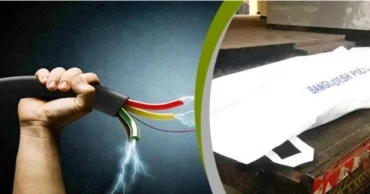
Two women, including a five-month pregnant housewife, died in separate electrocution incidents in Hajiganj and Matlab South upazilas of Chandpur on Friday.
The deceased were Sumaiya Akter (22), wife of auto-rickshaw driver Sharif Hossain Munshi, who died after being electrocuted at Kuruli Munshi Bari in Barakul West Union around noon, and schoolgirl Istrat Jahan Ima,15, resident of Naogaon village under Upadhi North Union in Matlab South upazila.
Locals said Sumaiya was charging her husband’s battery-run auto-rickshaw when she suddenly came into contact with live electricity and was critically injured. She fell to the ground after receiving the shock. Hearing her screams, family members rushed her to Hajiganj Upazila Health Complex, where on-duty doctors declared her dead.
Hajiganj Police Station Sub-Inspector Abu Sayeem said the body was taken into police custody.
The deceased’s husband Sharif Hossain said his wife was five months pregnant.
Md Abdul Jabbar, Officer-in-Charge(OC) of Hajiganj Police Station, said the body was handed over without post-mortem following a written request as there was no complaint from the family.
On the other hand, Naogaon School headteacher Shibir Ahmed said Ima was a class VII student and a meritorious pupil. Her mother Ruma Akter works abroad, while her father works in Chattogram. She used to live at her maternal grandfather’s house for studies.
Police and family sources said that at noon, on the request of her grandfather Tajul Islam, Ima climbed onto the roof using a ladder to clean accumulated leaves. At that time, she came into contact with a live electric wire passing over the roof, which had earlier become electrified due to a damaged wire. Unaware of the danger, she fell to the ground after a severe electric shock and sustained critical injuries.
She was rushed to Matlab Upazila Health Complex, where on-duty doctor Arif Hossain declared her dead.
Hafizur Rahman Manik, Matlab South Police Station Officer-in-Charge (OC), said an unnatural death case has been filed and the body was sent to Chandpur Sadar Hospital for autopsy.
5 months ago

Expat’s wife found dead in Chandpur toilet
Police recovered the throat-slit body of a woman from her home in Faridgonj upazila of Chandpur on Thursday.
The deceased was identified as Nurjahan Begum, 50, wife of Kuwait expatriate Abul Kalam.
She was a mother of four children.
The incident occurred around noon at Bhaterhrod village under Rupsha North Union of Faridgonj upazila.
3 of a family suffer burn injuries in blast from ‘gas leak’ in Chandpur
Family members found Nurjahan's throat-slit body inside the toilet of her house.
She was taken to the Faridgonj Upazila Health Complex, where doctors declared her dead.
Her college-going daughter Nur Sultana Tanha said she had gone to college in the morning as usual.
When she returned home at noon, she found the main door locked.
After getting no response, she went to a relative’s house nearby. Later, she came back and saw the door open.
She then found her mother inside the toilet with her throat cut.
Mother, son die from electrocution in Chandpur
Local Union Parishad member Khorshed Alam said Nurjahan had taken loans from several NGOs and owed a large amount of money.
He said NGO workers often visited her house demanding repayment and some had come in the morning as well, though he could not name any organisation.
Police Inspector Md Emdadul Haque of Faridgonj Police Station said police recovered the body from the health complex at around 3 pm.
He said there were deep cut marks on the victim’s throat.
“Legal action is underway. No case has been filed and no arrests have been made yet,” he added.
7 months ago