urbanisation
PM pledges affordable housing for all, planned urbanisation
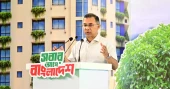
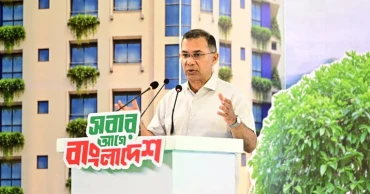
Prime Minister Tarique Rahman on Monday said his government is working to ensure safe, affordable and sustainable housing for all citizens while pursuing planned and decentralised urban development across the country.
“Livable, affordable, environmentally friendly and safe housing with basic services for all, or universal housing, is a fundamental constitutional right of citizens. The government is firmly committed to ensuring and safeguarding this right,” he said.
The prime minister made the remarks while addressing a discussion marking World Habitat Day 2026 at the Bangladesh-China Friendship Conference Centre.
The Ministry of Housing and Public Works organised the programme under the theme “Universal Housing, Sustainable Urbanisation.”
The prime minister said ensuring planned urbanisation and housing facilities for low- and lower-middle-income people is one of the government’s electoral commitments.
He said the government is taking steps to prepare master plans for city corporations and districts across the country to ensure planned urban development.
“Ensuring planned urbanisation and housing facilities for people with limited incomes is one of our government’s major electoral commitments,” Tarique said.
He said housing should not be viewed merely as a physical structure, but as a comprehensive living environment involving safe drinking water, uninterrupted electricity, improved sanitation, public transport, better road management, education and healthcare facilities, adequate employment opportunities and a safe environment for a dignified life.
“It is now a necessity not only to provide housing for citizens but also to ensure that such housing is safe and sustainable,” Tarique added.
The Prime Minister acknowledged that ensuring such housing for all citizens is more difficult in a densely populated country like Bangladesh than in developed countries.
“Yet, if we want to survive with dignity in a competitive world, we must move forward by facing every challenge and keeping pace with the rest of the world,” he said.
Pressure on cities
The prime minister said population pressure is continuously increasing in cities, towns and urban centres across Bangladesh, with Dhaka now being “overpopulated” by any standard.
He said other major cities are also facing similar pressures, making the concept of universal housing and sustainable urbanisation particularly important for Bangladesh.
Tarique Rahman, however, noted that implementing these goals is not as easy as articulating them, particularly given the country’s existing realities.
The government, Tarique said, is nevertheless taking steps to address the challenges and implement its plans.
Master plans, secondary townships
The prime minister said the government is working to reduce population pressure on urban areas by improving fast, affordable and safe connectivity between Dhaka and other cities and the rest of the country.
At the same time, the government is working to improve civic amenities in rural areas so that better facilities outside cities can help reduce pressure on urban centres, he said.
Tarique said development in Bangladesh was concentrated around Dhaka and a few major cities in the past.
The government now wants to bring every region into the mainstream of national development and promote decentralised and balanced urban and regional development, he said.
“Our goal is not to concentrate urban development in one particular place. Rather, we want balanced and decentralised urban and regional development so that development spreads across all areas,” Tarique said.
He said the Ministry of Housing and Public Works is working on a nationwide planning initiative as well as a plan to develop secondary townships around Dhaka.
The prime minister said new development authorities have already been established in Sylhet, Mymensingh, Barishal, Cumilla, Rangpur and Narayanganj, which would help facilitate planned urbanisation in those areas.
He expressed the hope that these initiatives would contribute to achieving Sustainable Development Goal 11, which calls for inclusive, safe, resilient and sustainable cities and communities.
“It will take time, but we will be able to achieve it gradually, InshaAllah,” he said.
Environment at centre of housing plans
Tarique said environmental protection was a major consideration in the government’s plans for liveable housing and urban development.
He said the government had set a target of planting 250 million trees across the country over the next five years.
The Prime Minister also stressed the need for effective waste management in Dhaka and other city corporations and districts, saying the government was working to properly manage the growing volume of waste generated by people’s daily activities.
He said population pressure and rapid urbanisation had made proper waste management increasingly important for protecting the environment.
Public-private cooperation needed
Tarique said tackling the housing crisis in urban areas would be difficult for the government alone and called for coordinated participation by major entrepreneurs and stakeholders in the housing sector.
He said private-sector stakeholders could play an important role in addressing the housing challenges and ensuring affordable, environmentally friendly and safe housing with basic services.
The government, Tarique said, is also working on block-based housing schemes, area-based parks and playgrounds, and designated industrial zones as part of its broader urban planning efforts.
The prime minister expressed confidence that the government would gradually implement its plans and make safe housing for all a reality for the citizens of Bangladesh.
He wished success for the World Habitat Day 2026 programmes and formally declared their inauguration.
Environment, Forest and Climate Change Minister Abdul Awal Mintoo, Housing and Public Works Minister Zakaria Taher Sumon, State Minister for Housing and Public Works Ahmad Sohel Manzur, ministry secretary Md Obaidur Rahman and UN Resident Coordinator in Bangladesh Ms Carol Flore-Smerecznia, among others, addressed the programme.
Before joining the programme, the prime minister planted a Swarna Champa on the premises of the conference centre.
The Prime Minister also inaugurated a three-day housing fair at the Bangladesh-China Friendship Conference Centre after attending the discussion programme.
Various organisations from the housing and construction sectors, along with different departments and agencies under the Ministry of Housing and Public Works, are participating in the fair.
The prime minister visited different stalls at the fair and later signed the visitors’ book.
World Habitat Day is also being observed across all divisions and districts of the country through various programmes, including publication of a souvenir, special discussions on television and radio, and displaying banners, posters and festoons at important locations.
Since 1986, World Habitat Day has been observed in Bangladesh and countries around the world.
At the programme, a special documentary on World Habitat Day 2026 was screened and the prime minister unveiled a souvenir marking the day.
12 days ago

Vanishing winged visitors: Beanibazar sees sharp decline in migratory birds
Once a vibrant sanctuary for migratory birds, Sylhet’s Beanibazar is now witnessing a worrying decline in its seasonal avian guests.
The wetlands, rivers, canals and reservoirs that once echoed with the calls and songs of birds from distant lands have fallen eerily silent.
A decade ago, the skies and waters of Beanibazar were alive with the vibrant hues and melodies of migratory birds, creating a mesmerising spectacle. Today, however, the scene is starkly different.
Changing Landscape
The rapid pace of urbanisation, widespread deforestation and excessive use of pesticides have significantly altered the natural habitats that once welcomed these birds.
The consequences are visible in the diminishing number of winged visitors that once made the region their temporary home during winter.
Local residents recall a time when birds such as magpies, parrots, doves, crows and cuckoos were a common sight, flitting through the trees, fields, and courtyards.
The intricately woven nests of Babui birds on palm leaves once stood as a testament to nature’s exquisite craftsmanship. Today, such scenes are fading into memory.
Even the well-known bird sanctuaries in the upazila have lost their charm.
The once-thriving Muria Haor, a major wetland that used to host thousands of migratory birds, now sees only a fraction of its former visitors.
Decline in guest birds at Jahangirnagar University: A growing concern for biodiversity
Poaching Problem
Despite legal protections, illegal poaching continues to exacerbate the decline.
Locals allege that hunters use chemicals and traps to capture birds, further threatening their populations.
Without stringent enforcement of conservation laws, this unlawful practice remains a major concern.
Dr. Mohammad Mobin Hai, Upazila Livestock Officer, attributes the decline to urbanisation, deforestation, pollution, climate change, and habitat loss.
Dr. Shamim Hossain, Upazila Livestock Extension Officer, points out that the destruction of forests has drastically reduced safe nesting areas for birds.
Meanwhile, Lokman Hakim, Upazila Agriculture Officer, highlights the dwindling food sources as another critical factor.
Bigger Picture: A Global Crisis
Beanibazar’s struggle is not an isolated case. A recent United Nations report reveals that 44% of migratory species worldwide are experiencing population declines, with one in five at risk of extinction.
According to data from the International Union for Conservation of Nature (IUCN), around 14% of the world’s migratory birds—134 out of 960 species—are under threat.
1,200 trapped birds rescued, freed in Bagerhat
The findings underscore the impact of habitat destruction, urban expansion, agricultural development, and climate change on migratory species. Climate shifts, in particular, are disrupting migration patterns, forcing birds to alter their traditional routes or perish in the process.
Call for Conservation
The silence of Beanibazar’s once-vibrant bird sanctuaries serves as a sobering reminder of nature’s fragile balance. Without urgent conservation efforts, the seasonal spectacle of migratory birds may soon become a tale of the past. Protecting wetlands, enforcing anti-poaching laws, and restoring lost habitats could be the key to reversing this decline.
As the region grapples with these challenges, the question remains: will Beanibazar’s skies once again fill with the fluttering wings of its lost visitors, or will their absence become permanent?
1 year ago
Govt takes big urbanisation schemes for major cities
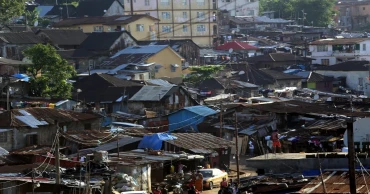
Different development authorities in big cities including the capital, Dhaka, are working on a consolidated plan to deal with rapid urbanisation.
According to a document seen by UNB, the city development authorities are finalising plans for better housing, management of parks and water bodies, elimination of traffic congestion and waterlogging.
The preparation of the Detailed Area Plan (DAP) by Rajdhani Unnayan Kartripokkho (Rajuk) for the periods from 2016 to 2035 is at the final stage, it says.
An earthquake vulnerability assessment for the buildings in in Dhaka city is also going on under the Urban Resilience Project, it says.
A study project titled "Preparation of Chattogram Metropolitan Master Plan (2020-2041)" is being implemented by Chattogram Development Authority.
Rajshahi Development Authority has prepared a master plan to be implemented in four stages over 20 years.
Besides, the drafting of the ‘Urban and Regional Planning Act’ is underway, aimed at planned urbanisation across the country.
In Dhaka, excavation and development of a 100-foot-wide canal on both sides of Kuril-Purbachal Link Road and a 12.3-km, 14-lane road are being constructed, which includes 5 intersections, 13 arch bridges and 4 underpasses and widening of 6 bridges.
Read: Mega projects won’t affect the economy: PM
Besides, construction of a 6.18-km road with 4 bridges, spanning from Notun Bazar area of Dhaka to the Balu River along Madani Avenue is going on under Rajuk.
The document says cleaning and re-excavation of 35 canals are underway in Chattogram to help relieve the city from waterlogging.
Construction of a 16.50-km flyover from Lalkhanbazar to Shah Amanat Airport in Chattogram is also underway.
In addition, the construction of 15.20-km ring road project to reduce traffic congestion in Chattogram city is nearing completion.
The use of modern and eco-friendly blocks, as an alternative to bricks, is being encouraged by the government to ensure sustainable development, according to the official papers.
It says that work is underway to build a pilot plant for making eco-friendly ‘Autoclave Aerated Concrete Panel’.
As a result, it is expected that the implementation of the government’s policy of reducing the use of bricks to zero by 2025 will be accelerated.
In addition, steps have been taken for ensuring the use of rapid building construction technology in line with the construction engineering followed in the developed world, preferring high-rise buildings to ensure optimal use of land.
Read: A roadmap needed for debt repayment of 20 mega projects: Debapriya
The plan also envisages making the construction industry modern and sustainable through the maximum use of local materials, technologies and skilled manpower.
It is bringing old government buildings under earthquake resistance system (seismic retrofitting) according to the needs and importance.
The plan will also make all government buildings environment-friendly, energy-efficient and rich with green technologies by minimising the use of fossil fuels and increasing the use of renewable energy, the document says.
4 years ago
.jpg)
Climate change affects increasing urbanisation: Study
Air density of Dhaka’s two of the most marginalised low-income slums is four to five times higher above the permission limit of Bangladesh for 24 hours.
As a result, residents suffer with air pollution induced diseases like laryngeal problems, asthma and bronchial problems.
A study report published Wednesday titled “Urban Localized Pollution in the Context of Climate Change” revealed such information during its virtual launching and discussion event.
According to the study report, the major source of indoor air pollution in both the marginalise areas are earthen stoves for cooking, using biomass as fuel. Women are the most severely affected by air pollution as they are exposed to smoke for long stretches of time during cooking.
The study was carried out in two large slums of Dhaka South City Corporation (DSCC) – Dholpur Citypolli slum and Dhaka Match Colony, Shyampur.
It focused on four issues- water supply, sanitation, indoor air pollution, and solid waste management.
These low-income settlements are surrounded by many air polluting industries like steel mills, plastic factory, melamine factory, and brick kiln among others.
Read: Leaders' Summit on Climate: Dhaka optimistic about $100 billion fund
The research was conducted under ‘The Featuring Green Earth Project’, which is jointly implemented by Plan International Bangladesh, Bangladesh Youth Environmental Initiative (BYEI) and Population Services and Training Center (PSTC).
The project initiated the research in collaboration with the Department of Urban and Regional Planning (URP), BUET and International Centre for Climate Change and Development (ICCCAD).
The study was carried out from December 2020 to January 2021 and followed a mixed methodology involving both qualitative and quantitative data.
Professor Afsana Haque, Department of Urban and Regional Planning (URP), BUET and Sarder Shafiqul Alam, Coordinator, ICCCAD shared the research findings in the event.
Mentioning a study report of UNICEF, Afsana Haque said, there are about 4 million people dwelling in 5,000 slums where meeting the basic needs and services is a huge challenge for this population, climate change has made their reality more complex.
Under this research, Center for Atmospheric Pollution Studies (CAPS), Stamford University Bangladesh tested water and air of the research areas.
The air quality report of CAPS team reveals that PM2.5 and PM10 are found four to five times higher above the permissible limit of Bangladesh standard for 24 hours (116.96 µg/m3 and 164.71 µg/m3 in Dholpur and 83.96 µg/m3 and 155.50 µg/m3 in Dhaka Match Colony respectively).
According to the national guideline of Bangladesh, the standard is 2.5 µg/m3 and 10 µg/m3.
The water test report of CAPS reveals that the sample water is contaminated with foreign particles exceeding standard limits in both the study areas.
They found E. Coli (seven or more) and ‘uncountable colonies of total coliform’ in the water. The Biological Oxygen Demand (BOD5) and Chlorine concentration have been reported excessive in the study areas.
5 years ago