NATO summit
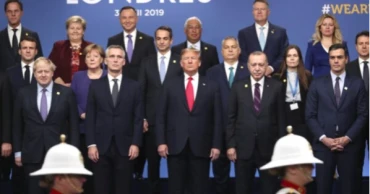
Nato summit overshadowed by Trump as leaders focus on defence spending
Nato summits typically aim to present a united front, and next week's gathering in The Hague will be no different—though behind the scenes, the spotlight is firmly on one man: Donald Trump.
Newly appointed Secretary General Mark Rutte has carefully orchestrated the two-day event to ensure there are no confrontations with the alliance’s most influential member, the United States.
A key focus will be a renewed pledge from European members to boost defence spending, aligning with President Trump’s longstanding demand—a message he has delivered consistently since his first term, when he publicly chastised allies for falling short and claimed they owed the US “massive amounts of money.”
Geneva hosts talks on Iran-Israel conflict
Though Trump is only one of 32 leaders attending, his presence has shaped the entire agenda. The main deliberations have been condensed to just three hours, and the final summit declaration trimmed to five paragraphs—reportedly due to Trump’s preferences.
The Netherlands is hosting what will be the most expensive Nato summit to date, with Dutch authorities deploying an unprecedented security operation costing €183.4 million.
Trump’s scepticism of multilateral organisations, including Nato, remains unchanged. His America First policy continues to clash with many European leaders on key issues such as trade, Russia, and the conflict in the Middle East.
Rutte, known for his good rapport with Trump, has worked behind the scenes to offer the US president a policy win. The summit’s streamlined format, some say, is partly designed to suit Trump’s aversion to lengthy meetings. But the real benefit, analysts argue, is that it limits opportunities for divisions to become visible.
“Trump likes to be the star of the show,” says Ed Arnold of the defence think tank Rusi, who expects the former president to take credit for pushing European allies to act.
While several US presidents have urged Nato countries to contribute more to defence, Trump has arguably been more effective than most. Kurt Volker, a former US ambassador to Nato, acknowledges that not all European governments appreciated Trump’s confrontational approach—especially his demand that allies raise defence spending to 5% of GDP. Nonetheless, some have conceded that the pressure had a necessary impact. “We needed to do this, even if it’s unfortunate that it took such a kick in the pants,” Volker says.
A few countries, particularly those close to Russia like Poland, Estonia and Lithuania, are now aiming for that 5% mark. But for others, even the previously agreed 2% remains out of reach. To reconcile these gaps, Rutte has proposed a compromise: increasing core defence spending to 3.5% of GDP, with an additional 1.5% earmarked for defence-related expenditures.
However, critics warn the broad definition of “defence-related” spending—potentially including infrastructure like bridges and roads—opens the door to “creative accounting.” Arnold notes that the flexibility could dilute the seriousness of the target.
Even if the new spending goals are adopted, many nations may not have the political will or resources to meet them by 2032 or 2035. Spain’s prime minister has already pushed back, calling the targets unrealistic and counterproductive. In the UK, Labour leader Sir Keir Starmer has not committed to a timeline, though the British government’s Nato-centric defence stance means he will likely support the framework.
Israel and Iran exchange new strikes as US weighs military role, diplomatic efforts intensify
The pressure for higher defence spending isn't just about appeasing the US—it aligns with Nato’s classified war plans, which outline responses to a potential Russian attack. Rutte has warned that Moscow could strike a Nato member within five years. In a recent speech, he detailed the alliance’s urgent needs: a 400% increase in air and missile defences, thousands more tanks and vehicles, and millions of artillery shells.
Many member states, including the UK, fall short of these capability commitments. Sweden is doubling its army, and Germany plans to increase its military personnel by 60,000. US Army Europe head General Christopher Donahue recently stressed the need to reinforce Poland and Lithuania near Russia’s Kaliningrad enclave, admitting Nato’s current defences are insufficient.
Despite the focus on Russia, the summit is expected to sidestep direct debate on the Ukraine war—reflecting deep transatlantic differences. “Under Trump, the US does not see Ukrainian security as essential to European security but our European allies do,” says Volker.
Trump has previously undermined Nato unity by engaging with Vladimir Putin and delaying military aid to Ukraine. According to Arnold, potentially divisive issues have been stripped from the agenda, including a much-anticipated review of Nato’s Russia strategy.
Ukrainian President Volodymyr Zelensky will attend the summit dinner but has not been invited to participate in the main North Atlantic Council sessions.
As Rutte prepares to chair his first summit as secretary general, he hopes for a smooth event. But with Trump’s views diverging from much of the alliance—especially on Russia—the outcome remains uncertain.
#Source: BBC
1 year ago
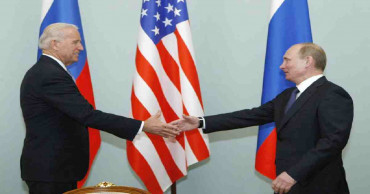
Face to face: June summit for Biden, Putin as tensions rise
President Joe Biden and Russia’s Vladimir Putin agreed Tuesday to meet next month in Geneva, a face-to-face encounter the White House hopes will help bring some predictability to a fraught relationship that’s only worsened in the first months of the Democratic administration.
The June 16 summit is being tacked on to the end of Biden’s first international trip as president: He’ll also visit Britain for a meeting of Group of Seven world leaders and attend a NATO summit in Brussels.
The agenda is expected to include discussion of Russian action in neighboring Ukraine, this week’s forced diversion of a Lithuania-bound flight by Russian-ally Belarus, efforts by both nations to stem the coronavirus pandemic and more. White House press secretary Jen Psaki said no preconditions were set for the meeting.
The White House is setting low expectations for the meeting. It isn’t expected to lead to any major breakthroughs — let alone the sort of reset of U.S.-Russian relations pursued by Biden’s old boss, Barack Obama, or the curious bonhomie of the Donald Trump-Putin relationship.
Read:White House, Kremlin aim for Biden-Putin summit in Geneva
Instead, officials say Biden — who as a candidate and early in his presidency has warned that he expects the relationship to remain complicated —- is looking to find some common ground with his adversary on the path forward.
The Kremlin, for its part, said the presidents will discuss “the current state and prospects of Russian-U.S. relations, strategic stability issues and the acute problems on the international agenda, including interaction in dealing with the coronavirus pandemic and settlement of regional conflicts.”
Biden first proposed the summit in a call with Putin in April as his administration prepared to levy a second round of sanctions against Russian officials during his young presidency. And the U.S. levied more sanctions last week on Russian companies and ships for their work on a European natural gas pipeline called Nord Stream 2. U.S. officials say the pipeline threatens European energy security, heightens Russia’s influence and poses risks to Ukraine and Poland in bypassing both countries.
The White House has repeatedly said it is seeking a “stable and predictable” relationship with the Russians. At the same time, it has called out Putin on allegations that the Russians interfered in last year’s U.S. presidential election and that the Kremlin was behind the SolarWinds hacking campaign in which Russian hackers infected widely used software with malicious code, enabling them to access the networks of at least nine U.S. agencies.
The Biden administration has also criticized Russia for the arrest and jailing of opposition leader Alexei Navalny and publicly acknowledged that it has low to moderate confidence that Russian agents were offering bounties to the Taliban to attack U.S. troops in Afghanistan.
Geneva with its bucolic vistas of the Mont Blanc peak — the highest in Western Europe — and a reputation as both a hub for international institutions and an icon of Switzerland’s much ballyhooed neutrality offers an intriguing backdrop for the summit.
The city last hosted American and Russian leaders in 1985, when President Ronald Reagan met Mikhail Gorbachev — a summit considered short on substance but critical in fostering what would become mostly friendly relations between the two men through their tenures.
The Biden administration announced sanctions in March against several mid-level and senior Russian officials, along with more than a dozen businesses and other entities, over a nearly fatal nerve-agent attack on Navalny in August 2020 and his subsequent jailing. Navalny returned to Russia days before Biden’s Jan. 20 inauguration and was quickly arrested.
Read:Putin points finger at US after Biden’s ‘killer’ remark
Last month, the administration announced it was expelling 10 Russian diplomats and sanctioning dozens of Russia companies and individuals in response to the SolarWinds and election interference allegations.
But even as Biden moved forward with the latest round of sanctions, he acknowledged that he held back on taking tougher action — an attempt to send the message to Putin that he still held hope that the U.S. and Russia could come to an understanding for the rules of the game in their adversarial relationship.
Sen. Ben Sasse, a Nebraska Republican, criticized Biden’s decision to meet with Putin as “weak.” He raised concerns about Russia’s treatment of Navalny and tepid response to Belarusian President Alexander Lukashenko, a Putin ally whose country this week ordered the diversion of a Greece-to-Lithuania commercial flight in order to arrest a dissident journalist.
The senator also criticized Biden for sparing ally Germany sanctions over Nord Stream 2, adamantly opposed by U.S. lawmakers on both sides of the aisle.
“We’re rewarding Putin with a summit?” Sasse said. “Instead of treating Putin like a gangster who fears his own people, we’re giving him his treasured Nord Stream 2 pipeline and legitimizing his actions with a summit.”
Biden in a brief exchange with reporters Tuesday afternoon defended the decision to waive sanctions against Germany for the pipeline. He noted that it is nearly complete and that punishing an ally would have been “counterproductive.”
Meanwhile, German Chancellor Angela Merkel welcomed news of the summit. “Diplomacy only has a chance if you talk to each other,” Merkel said.
During his campaign for the White House, Biden described Russia as the “biggest threat” to U.S. security and alliances, and he disparaged Trump for his cozy relationship with Putin.
Read:Biden directs US to mitigate financial risk from climate
Trump avoided direct confrontation with Putin and often sought to play down the Russian leader’s malign actions. Their sole summit, held in July 2018 in Helsinki, was marked by Trump’s refusal to side with U.S. intelligence agencies over Putin’s denials of Russian interference in the 2016 election.
Weeks into his presidency, Biden said in an address before State Department employees that he told Putin in their first call “that the days of the United States rolling over in the face of Russia’s aggressive actions...are over.”
In March, Biden in an ABC News interview responded affirmatively when asked by interviewer George Stephanopoulos whether he thought Putin was “a killer.”
Kremlin spokesman Dmitry Peskov said that Biden’s comment demonstrated he “definitely does not want to improve relations” with Russia.
5 years ago