Bangladesh-Malaysia
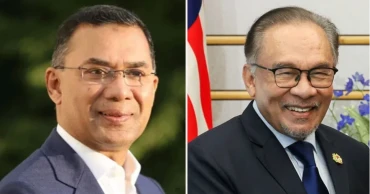
Malaysian PM calls Tarique, congratulates him on landslide victory
Prime Minister of Malaysia Anwar Ibrahim on Friday telephoned Prime Minister Tarique Rahman and congratulated him on assuming office following a landslide election victory.
“Malaysian Prime Minister Anwar Ibrahim called Tarique Rahman around 3pm and warmly congratulated him on becoming the Prime Minister and on the massive election victory,” Prime Minister’s Press Secretary Saleh Shibly told UNB.
During the conversation, Anwar Ibrahim also conveyed Malaysia’s interest in working closely on various bilateral issues.
Congratulating Tarique, Anwar Ibrahim hopes for 'renewed energy' in Malaysia-Bangladesh ties
Tarique Rahman thanked his Malaysian counterpart for the call and reaffirmed his commitment to advancing cooperation for the development and prosperity of both nations.
Bangladesh Nationalist Party (BNP) secured a two-thirds majority in the February-12 national election and formed the government on February 17, with Tarique Rahman being the Prime Minister.
8 months ago

Bangladesh, Malaysia begin Joint Working Group meeting on legal labour migration
The third Joint Working Group (JWG) meeting between Bangladesh and Malaysia on safe labour migration and labour market cooperation began on Wednesday at a city hotel, aiming to resume formal labour recruitment.
High-level government representatives from both countries are attending the two-day meeting which is expected to end with a formal declaration paving the way for the resumption of legal labour migration from Bangladesh to Malaysia.
A seven-member Malaysian delegation, led by Dr Mohd Shaharin bin Umar, Deputy Secretary-General of Malaysia's Ministry of Human Resources, is participating in the meeting.
Dr Lutfie Siddique, Special Envoy of the Chief Adviser on International Affairs, and Dr Neamat Ullah Bhuiyan, Senior Secretary at the Ministry of Expatriates’ Welfare and Overseas Employment are repsenting the Bangladesh side.
Senior officials from the ministry are also attending.
Speaking to reporters after the inaugural session, Dr Lutfie Siddique said nearly 8,000 workers—who completed all procedures but could not migrate due to the labour market closure last year—will be sent to Malaysia under government arrangements through BOESL.
He noted that while Bangladesh has many recruiting agencies, the Malaysian government prefers to work with a limited number to ensure greater transparency.
Discussions are ongoing to streamline and monitor the recruitment process more effectively.
Balat Brothers, Ashta Feed sign animal protein export deal
Dr Siddique also said Malaysia is considering introducing multiple-entry visas for Bangladeshi workers, a move that signals the country’s commitment to transparent and regulated labour recruitment.
Meeting sources highlighted the risks faced by workers who attempt to migrate illegally, including arrest, legal complications, and imprisonment in Malaysia.
Both sides reaffirmed their commitment to curbing illegal migration and ensuring a safe, legal process for workers.
Earlier on May 14, a delegation from the Ministry of Expatriates’ Welfare and Overseas Employment, including Adviser Dr Asif Nazrul, Dr Lutfie Siddique, Dr Neamat Ullah Bhuiyan, and Deputy Secretary Sarwar Alam, held a joint meeting with Malaysian ministers in Putrajaya.
Former BAIRA Secretary General Ali Haider Chowdhury stressed the need to prioritise workers’ safety, job security, and affordable migration costs.
BAIRA leader Mobarak Ullah Shimul said previous labour recruitment initiatives followed government-to-government agreements and legal channels, rejecting allegations of human trafficking as unfounded and detrimental to bilateral ties.
Another BAIRA official, speaking on condition of anonymity, alleged that a faction within the association is obstructing government efforts to reopen the Malaysian labour market due to its involvement in illegal recruitment.
He emphasised the need to end such practices, which he said damage Bangladesh’s reputation and Malaysia’s international image.
1 year ago
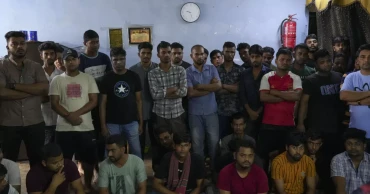
Bangladeshi workers in Malaysia demand unpaid wages after factory closure
Nearly 280 Bangladeshi migrant workers in Malaysia are demanding unpaid wages and other compensation amounting to hundreds of thousands of dollars after their employer, a plastic parts manufacturer supplying major Japanese brands, shut down its operations.
Kawaguchi Manufacturing, based in Port Klang — Malaysia’s largest port — allegedly withheld wages for up to eight months before closing late last year, leaving workers stranded and financially burdened.
The affected workers have filed formal complaints both in Malaysia and in Bangladesh.
The situation has strained relations between the two countries and exposed the exploitative practices of a handful of recruitment agencies and intermediaries controlling labor migration.
Bangladesh’s expatriate welfare adviser Asif Nazrul met with Malaysian Home Minister Steven Sim Chee Keong in Kuala Lumpur last week.
Abuse Allegations and Debt Traps
A Malaysian labor tribunal ordered Kawaguchi to pay over 3 million ringgit (approx. $694,000) in back wages, but workers have only received 251,000 ringgit ($58,101) so far.
Many have taken on new jobs but remain mired in debt after borrowing heavily to finance their migration.
The workers allege they were made to work 24-hour shifts without breaks or holidays, received no overtime, and had their passports confiscated.
They also reported living in overcrowded, inadequate housing and facing delays in visa renewals.
Following the closure in December, prompted by companies like Sony and Panasonic suspending their orders, many workers say they were forcibly relocated by Malaysian officials to new factories 360 kilometers away.
Migrant workers dying on Saudi worksites ahead of World Cup: HRW
Some were housed in unsanitary shipping containers.
Around 80 workers were assigned to palm oil plantations but refused the work.
Eventually, most returned to Port Klang seeking alternative employment and struggling to manage growing debt.
It reportedly took three months for them to receive permission to change jobs legally.
Kawaguchi and Malaysia's labor department have not responded to media requests for comment.
Personal Struggles and Broader Impact
Md Kabir Hossain, 19, said he borrowed over $4,000 to migrate from Rangpur, Bangladesh, in November 2023 after his family’s textile shop failed. As the family’s sole earner, he defaulted on a loan and could no longer send money home. “I am constantly worried about what will happen to my family,” he said.
Another worker, Parvez Azam, said, “If this goes on, we’ll die here.”
Across Southeast Asia, labor-intensive industries such as manufacturing, construction, and plantations depend heavily on migrant labor from countries like Bangladesh, Nepal, and Myanmar. Bangladeshis often end up in the most hazardous and lowest-paying roles.
According to the International Labor Organization, the migration cost from Bangladesh to Malaysia is among the world’s highest.
Although the official recruitment fee is $650, Kawaguchi’s workers say they paid close to $5,000, plunging many into debt bondage.
A 2024 study revealed that over 70% of Bangladeshi workers in Malaysia spend at least half their wages on repaying loans. Nearly all reported being misled about wages and facing labor exploitation.
Corporate Responsibility and Compensation Efforts
Three of Kawaguchi’s former clients — Panasonic, Sony, and Daikin — agreed to collectively reimburse about $1.3 million in recruitment fees. However, this does not cover interest rates on loans, which can reach 30%, and many workers have already defaulted on payments.
Labor rights advocate Andy Hall said the workers are in a desperate situation, vulnerable to worsening exploitation.
Daikin, which accounted for only 1%–2% of Kawaguchi’s orders, has reached a settlement with the workers. Panasonic said it is reimbursing recruitment costs proportionally and had attempted to help Kawaguchi correct labor violations before severing ties. Sony stated it terminated its relationship with Kawaguchi after the supplier failed to meet required labor standards.
The workers continue to seek redress. U.S.-based attorney Terry Collingsworth, representing them, is in talks with Sony and Panasonic.
In a letter dated January 16, he urged the companies to honor their public commitments to address human rights abuses in their supply chains.
1 year ago

Bangladesh warns against fraudulent recruitment of female workers to Malaysia
The Bangladesh High Commission in Malaysia has issued a warning regarding fraudulent activities involving the illegal recruitment of Bangladeshi female workers to Malaysia.
In a statement on Friday, the high commission clarified that currently, there is no agreement or memorandum of understanding (MoU) between the Bangladesh government and Malaysia for the recruitment of female workers.
In addition, the high commission has received reports that an organised group of fraudsters is bringing Bangladeshi women to Malaysia on tourist or other types of visas, falsely promising employment opportunities. Such activities not only pose financial and psychological risks to the affected workers but may also harm Bangladesh's image in Malaysia, it said.
BGB-BSF talks in New Delhi on Feb 17-20
The high commission urged Bangladeshi women not to travel to Malaysia for general employment until a formal agreement is signed between the two governments.
1 year ago

Hasina gifts high quality mangoes to Malaysian King, PM
Prime Minister Sheikh Hasina has sent high quality Bangladeshi mangoes for King Yang Di Pertuan Agong of Malaysia and Prime Minister Ismail Sabri as gift.
Read: PM Hasina sends mangoes to Indian President, PM as gift
On behalf of the King and Prime Minister of Malaysia, the Istana Negara and the officials of the Prime Minister's Office received the mangoes respectively.
Under the supervision of Bangladesh High Commission in Kuala Lumpur, 1,000 kgs of mangoes were also sent to the ministers of various important ministries, heads of political parties, high-ranking government officials, businesspeople, media personnel, heads, and deputy heads of various diplomatic missions.
The gift from the Prime Minister is a manifestation of the existing brotherly relations between Bangladesh and Malaysia, said the High Commission.
The High Commission hoped that this initiative will further strengthen the bilateral relations between the two countries as well as help in promoting Bangladeshi mangoes and agricultural products as a potential item in Malaysia.
4 years ago
.jpg)
FBCCI president for more market research to boost trade with Malaysia
Federation of Bangladesh Chambers of Commerce and Industries (FBCCI) President Md. Jashim Uddin has laid emphasis on doing more market research and evaluation on export diversification to deal with the Malaysian market.
He made the suggestion when Bangladesh-Malaysia Chamber of Commerce & Industry (BMCCI) President Raquib Mohammad Fakhrul along with the Board of Directors met him at his office.
The BMCCI President submitted some important points in a memorandum to the FBCCI President for consideration.
Also read: Bangladesh to gain new commercial facilities post-LDC graduation: FBCCI
He proposed to undertake an initiative to sign Free Trade Agreement (FTA) with Malaysia by ensuring Bangladesh’s interest which has been a long pending issue.
He also talked about promoting relocation of Malaysian sun-set Industries to Bangladesh, to make close connectivity between Chattogram and Penang Port; to organize events on Trade & Investment opportunity in Bangladesh on a regular basis.
The FBCCI President assured of providing all possible support for development of trade and investment opportunities between Bangladesh and Malaysia.
He thanked the BMCCI leaders for their appreciable role in promoting bi-lateral relationships between the two countries.
Also read: Bengal Group’s Jashim Uddin elected FBCCI president
He proposed to sitting again together with FBCCI, BMCCI and other concern stakeholders with all required data to discuss more and precisely on proposed FTA between Bangladesh and Malaysia.
FBCCI Vice President Md. Habib Ullah Dawn, Director Syed Moazzem Hossain and Director Syed Almas Kabir took part enthusiastically.
5 years ago