parliamentary committee
Jamuna Fertiliser produced for only 3 days in 2 years amid gas shortage
Jamuna Fertiliser Factory produced fertiliser for only three days over the past two years due to gas shortages, while production at Ashuganj Fertiliser Factory has remained suspended for 19 months.
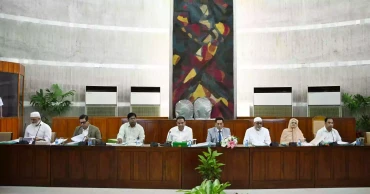
The issue was discussed at a meeting of the Parliamentary Standing Committee on Public Undertakings at the Jatiya Sangsad Bhaban on Wednesday, with Chief Whip and committee chairman Nurul Islam Moni in the chair.
The committee recommended taking necessary measures to increase domestic fertiliser production, reduce dependence on imports, ease fertiliser shortages and cut costs.
The committee reviewed the activities of Bangladesh Chemical Industries Corporation (BCIC) and its affiliated companies, as well as those of Bangladesh Agricultural Development Corporation (BADC).
The meeting also discussed the production, storage and distribution of chemical fertilisers by BCIC and BADC.
The committee sought information on the ministry’s future plans for paid-off fertiliser factories and reopening closed fertiliser plants.
It recommended increasing the production capacity of old fertiliser factories through modernisation.
The committee also recommended taking necessary measures to make Bangladesh self-sufficient in seed production in line with the Prime Minister’s directives.
It suggested reviewing measures to cancel the licences of dealers who create artificial shortages of fertiliser.
The committee further recommended introducing a digital real-time monitoring system to ensure proper fertiliser supply-chain management.
It also asked BADC to present detailed information at its next meeting on its future plans to increase food production in line with population growth.
10 days ago

Parliamentary committee recommends 3-month fuel reserve, energy diversification
A special parliamentary committee has recommended expanding Bangladesh's strategic fuel reserves to ensure a minimum three-month storage capacity and diversifying import sources to strengthen the country's energy security.
The recommendations were presented in Parliament on Sunday by Power and Energy Minister Iqbal Hassan Mahmood through a report prepared by the special committee formed on April 26 to suggest measures for addressing the country's energy situation.
The 10-member committee comprised five lawmakers from the ruling party and five from the opposition.
According to the report, the committee held two meetings and observed that the recent energy situation should serve as an important warning for Bangladesh.
While the current challenges have been managed successfully, the committee stressed that long-term energy security would require structural reforms, infrastructure development, diversification of energy sources and the adoption of an integrated national energy strategy.
Among its key recommendations, the committee called for the full automation of the fuel supply system and the introduction of digital monitoring mechanisms.
It also urged the government to strengthen legal measures to prevent illegal stockpiling and smuggling of fuel products.
The report recommended increasing the use of alternative energy sources, including liquefied natural gas (LNG) and renewable energy.
It further emphasised the need for the swift implementation of major energy infrastructure projects including the Dhaka-Chattogram pipeline, the Single Point Mooring (SPM) project and the Eastern Refinery Limited Unit-2 (ERL-2).
The committee also suggested intensifying public awareness campaigns on energy conservation and conducting a study on allowing private-sector entities, alongside the Bangladesh Petroleum Corporation (BPC), to import fuel products.
In addition, it recommended making rooftop solar panel installations mandatory and strengthening monitoring by the relevant ministries to ensure that installed systems remain operational.
Measures to reduce system losses and comprehensive planning for electricity generation from oil, gas, coal, solar and wind sources were also proposed.
The report noted that opposition members of the committee submitted 10 separate recommendations all of which were included in the document.
The opposition MPs proposed that future forecasts of electricity and energy demand should be conducted by independent experts free from political influence.
It cautioned against exaggerated demand projections and argued that there may be no immediate need to further expand the country's installed power generation capacity.
The opposition members also recommended maximising the use of coal due to its cost advantages, increasing domestic gas supply, accelerating energy exploration activities and prioritising gas-based electricity generation over expensive imported gas.
Other proposals included undertaking workover operations at existing gas wells to boost production, prioritising quickly productive wells, strengthening energy import and refining infrastructure, and expanding solar power generation.
To manage energy shortages, the opposition MPs suggested reducing the use of government vehicles and ensuring maximum utilisation of vehicle seating capacity.
It also called for the formulation of a strategic roadmap for sustainable energy and electricity supply through consultations with experts, institutions and opposition parties.
Furthermore, the opposition MPs recommended diversifying the country's energy mix to reduce excessive dependence on any single energy source while maintaining environmental sustainability.
4 months ago
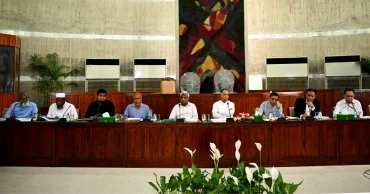
Shortage of storage capacity, disruption to shipment schedules due to Iran War behind fuel crisis
Inadequate fuel storage capacity and irregular shipment schedules caused by global conflicts have been identified as the primary drivers behind the recent energy crisis in Bangladesh.
The Ministry of Power, Energy, and Mineral Resources shared these findings on Sunday during a meeting with a special parliamentary committee formed to address the country's ongoing energy situation.
The committee, however, expressed satisfaction with the emergency measures taken by the ministry to stabilize the sector.
The meeting was held at the Parliament with the committee's chairman, Minister for Power, Energy and Mineral Resources Iqbal Hasan Mahmud, in the chair.
Sources within the committee revealed that the ministry presented a detailed report on the fuel sector's current status.
The ministry admitted that Bangladesh currently lacks the infrastructure required to maintain a buffer stock large enough to withstand several months of supply disruptions.
While the fuel import process was intended to be seamless, the ministry explained that global geopolitical tensions and conflicts have caused fuel-carrying vessels to arrive irregularly.
This unpredictability led to a depletion of existing reserves, triggering public panic. The ministry noted that once panic spread, the sudden spike in demand made it nearly impossible to maintain a steady supply with the existing logistics.
The special committee recommended that the ministry take immediate steps to ensure an uninterrupted import chain.
Members also inquired about long-term plans to expand storage facilities to prevent similar "panic-buying" scenarios in the future.
Speaking to reporters after the meeting, committee member Md. Abdul Baten stated that while the initial discussions were productive, the committee has sought a more comprehensive report based on specific queries raised by members.
"We have provided several suggestions and asked tough questions. The ministry is expected to present a follow-up report in the next meeting," Baten said.
He added, "However, we are satisfied with the immediate steps taken to mitigate the current situation. We have been assured that there is no risk of an immediate fuel shortage now, and precautionary measures are in place for the coming months."
The special committee includes State Minister for Power, Energy and Mineral Resources Anindya Islam Amit, Whip A.B.M. Ashraf Uddin (Nizan), Whip Miah Nuruddin Ahammed (Apu), Moinul Islam Khan, Md. Nurul Islam, Md. Abdul Baten, Md. Abul Hasnat (Hasnat Abdullah), and Mohammed Abul Hasan.
A press release from the Parliament Secretariat confirmed that the committee plans to hold further meetings to finalize its recommendations before submitting a formal report to the House.
5 months ago
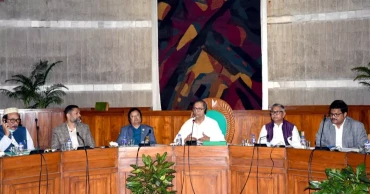
Parliamentary Committee suggests reopening of Sonamasjid land port for immigration
The Parliamentary Standing Committee on Shipping Ministry recommended the government to reopen the immigration services at Sonamasjid land port in Chapainawabganj, which has remained suspended for nearly three years.
The parliamentary watchdog made the recommendation at its 51st meeting held at the Jatiya Sangsad Bhaban with its chairman Maj. (Retd.) Rafiqul Islam, Bir Uttam in the chair, said a press release.
Read more: Parliament reconstitutes six standing committees
The people of the country’s northwestern region are facing problems in travelling to India through Sonamasjid-Mehandipur route as the immigration services in Sonamasjid land port was shut on March 15, 2020 amid the global outbreak of Covid-19 pandemic, but hasn’t opened yet.
Now the travellers need to cross a long way to enter India through the Benapole immigration check post, which cost them extra money and time.
Besides, the committee suggested the ministry to connect the Payra port with Dhaka and other river ports for conducting commercial activities, and collect the necessary number of dredgers to protect the navigability of the river channels to this end.
The parliamentary body put emphasis on saving energy and use of solar systems in the land ports.
It also recommended resolving the border related problems through discussions with the Foreign Affairs Ministry.
Read more: Parliamentary committee gets 2 more months to review media employees bill
Committee members Mazaharul Hoque Prodhan (Panchagarh-1), Ranajit Kumar Roy (Jashore-4), Mahfuzur Rahaman (Chattogram-3), Dr. Shamil Uddin Ahmed Shimul (Chapainawabganj-1) and SM Shahjada (Patuakhali-3) attended the meeting.
3 years ago

Parliamentary committee gets 2 more months to review media employees bill
The Parliamentary Standing Committee on Information and Broadcast on Monday got another 60 days to examine the much-talked-about Mass Media Employees (Services Conditions) Bill 2022.
Chairman of the Committee Hasanul Huq Inu sought the time in Parliament and the House approved.
On March 28 of this year, Information and Broadcast Minister Hasan Mahmud placed the Bill and it was sent to the parliamentary standing committee on the respective ministry for scrutiny of the proposed law.
According to the source, the Standing Committee did not sit for a meeting till now.
Various journalists organisations and owners associations have opposed many sections of the proposed law.
The wages and benefits of journalists, employees and press workers, artists of broadcast, online, and print media outlets would be fixed under the proposed law.
As per the Bill, journalists will be regarded as media professionals, not as workers.
The wage board will be applicable for journalists and employees of all the media outlets, including print and electronic, as per the Bill.
According to the Bill, the minimum working hours for media employees will be 48 hours in a week, while the casual leave will be 15 days instead of 10 days and the earned leave will be 100 days instead of 60 days annually.
If anybody works beyond the stipulated time, he or she will be entitled to overtime pay.
Besides, the festival leave will be 10 days in a year, recreation leave will be 15 days after every three years, and the maternity leave will be six months in place of the existing eight weeks.
READ: Parliamentary committee wants expert officials as project heads
If anyone or organisation violates the provisions of the Bill, s/he will be fined Tk 50,000-Tk 5 lakh.
The government will be able to cancel the license or registration of the media. The owners of media outlets will also face punishment for violation of the law.
If anyone or any organisation violates the provisions of the Bill, he/she will face monetary fine or imprisonment, the Cabinet secretary said.
Once the new law is passed in parliament, jobs of media employees will no longer be regulated under the labour law.
Currently, journalists and employees of media houses are regarded as “workers” under the labour law.
Once the law is passed, they will be regarded as media personnel, not workers.
According to the proposed law, a wage board will be formed for the media personnel.
The wage board will fix salaries and allowances of media personnel in line with the salary scale of the government employees and it will be applicable to the owners of all media outlets.
Every media house will have a provident fund which will be applicable to a new employee after one year in service instead of two years. An employee will contribute 8 to 10 percent of his basic salary, currently 7 percent, and an equal amount will be deposited in the fund by the owner of the media house, the proposed law states.
4 years ago

73 varieties of rice developed in 13 years
Seventy-three varieties of rice were developed in the country in the last 13 years, according to the information placed at the meeting of a parliamentary committee on Tuesday.
The 21st meeting of the Parliamentary Standing Committee on Agriculture Ministry held with its chairman Matia Chowdhury in the chair at the Jatiya Sangsad Bhaban, said a press release.
Read:Commerce ministry seeks BTTC report before raising edible oil price
Out of the newly developed varieties, the parliamentary body recommended the government to motivate the production of ‘BRRI Dhan 96,’ ‘Bangabandhu Dhan 100,’ ‘BRRI Dhan 101’ and ‘BRRI Dhan 102’ variant rice across the country.
The committee suggested reaching paddy seeds to farmers and spread the concept of higher production at lower cost among the peasants.
Read:Veggies’ price soars due to untimely rains & intermediaries: Agriculture secy
The parliamentary watchdog recommended putting importance on motivating farmers to boost production using quality seeds of crops to meet the food demand.
Committee members Agriculture Minister Dr Muhammad Abdur Razzaque, Md. Emad Uddin Pk, Md. Mamunur Rashid Kiron, Anwarul Abedin Khan, Umme Kulsum Smriti and Hosne Ara attended the meeting.
4 years ago

PM’s intervention sought over JS body’s suggestion on female officials in FF guard of honour
Jatiya Samajtantrik Dal MP Shirin Akhter on Tuesday demanded intervention of Prime Minister Sheikh Hasina to prevent the implementation of the recommendation of a parliamentary committee to exclude women officers during 'Guard of Honour' given to the freedom fighters after their death.
"I am surprised, shocked and upset, my colleagues have made such recommendations," she said while speaking on a point of order in parliament.
Read: Menon comes down hard on recommendation against female UNOs attending guard of honour for FFs
She said that as per the Constitution of the country there can be no discrimination between men and women.
"We are stunned when this happens in that country," Shirin Akhter, also general secretary of Jasod said.
Leader of the House and Prime Minister Sheikh Hasina was present in Parliament at the time.
Read:MP Shahiduzzaman made chief of parliamentary standing committee on Law Ministry
The parliamentary standing committee on Liberation War Affairs ministry on June 13 recommended taking necessary measures to find alternatives to a female upazila nirbahi officer's presence during the guard of honour given to valiant freedom fighters after their deaths.
Speaking on this issue, Shirin Akhter said that the parliamentary committee has argued that since women cannot take part in the namaz-e-janaza, they cannot give guard of honor to the valiant freedom fighters.
Read: Hajj Management Bill passed to deal with irregularities
Shirin argued that janaza and guard of honor are not the same thing.
"Such recommendation has come from the pro-liberation forces at a time when radicalism is growing across the country. I seek the intervention of the Prime Minister so that such an unwanted decision is not implemented,” she added.
5 years ago