ACC
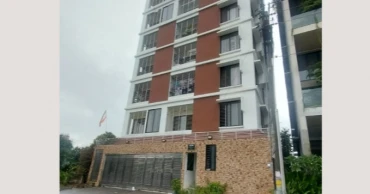
ACC conducts raid on ex-NTMC chief Ziaul Ahsan's residence
The Anti-Corruption Commission (ACC) on Monday raided the eight-storey residence of former National Telecommunication Monitoring Centre (NTMC) Director General and dismissed Major General Ziaul Ahsan at Jalsiri in the capital.
An ACC team led by Deputy Director Md Hafizul Islam conducted the drive in compliance with a court order, said ACC Deputy Director Md Akhtarul Islam.
Detailed information will be provided after the operation concludes, he said.
On January 27, the court appointed deputy commissioners concerned and the Public Works Department (PWD) as receivers to oversee, manage and maintain the attached immovable properties belonging to Ziaul Ahsan and persons linked to his interests.
Earlier, ACC Deputy Director and investigating officer Md Hafizul Islam applied to the court seeking the appointment of receivers to ensure the proper maintenance of the attached properties.
Following the application, Dhaka Metropolitan Senior Special Judge Md Sabbir Faiz issued the order on January 27.
According to ACC, Ziaul Ahsan obtained citizenship of Antigua and Barbuda in 2017 and he and his family paid US$200,000 to two Malaysian entities as part of the citizenship process.
Ziaul Ahsan illegally invested approximately US$1.35 million in five-year bonds issued by Antigua and Barbuda, it said.
2 months ago
ACC files 2 cases against ex-Jessore-1 MP Sheikh Afil Uddin, wife
The Anti-Corruption Commission (ACC) on Sunday filed two separate cases against former Jessore-1 MP Sheikh Afil Uddin and his wife Tahera Sobha, accusing them of amassing wealth worth about Tk 62.31 crore.
The cases were lodged at the ACC’s Dhaka Integrated District Office by Assistant Director Syed Maidul Islam, ACC Deputy Director Aktarul Islam told UNB.
According to the first case, investigators found assets worth Tk 45.43 crore in Sheikh Afil Uddin’s name, including immovable properties valued at Tk 1.47 crore and movable assets worth Tk 43.91 crore.
ACC to file case over Tk 1,325cr loan scam involving Bashundhara Group, National Bank officials
His lawful income was only Tk 7.60 crore, leaving unexplained wealth of Tk 46.26 crore.
In the second case, Tahera Sobha was accused of acquiring illegal assets.
Investigators found her movable and immovable properties valued at Tk 18.55 crore.
Including expenditures, her total assets stood at Tk 19.23 crore, while her lawful income was Tk 3.18 crore, leaving unexplained wealth of Tk 16.05 crore.
Besides, the ACC issued asset disclosure notices to the couple’s three sons — Sheikh Kutubuddin, Sheikh Tamim Uddin, and Afnan Uddin — after finding evidence of suspicious assets worth around Tk 50 million in their names.
Case against 8 NHA officials over allocation of luxury flats for 2 ACC commissioners
7 months ago

Complaints lodged with ACC over ‘irregularities’ in foreign concession deals at Ctg port
Three complaints have been filed with the Anti-Corruption Commission(ACC), seeking an investigation into alleged irregularities and corruption in leasing key terminals of the Chattogram Port to foreign companies under concession agreements.
Md Al Amin Hossain, spokesperson of civil society organisation Deshpremik Nagorik Samaj and its co-spokesperson Mohammad Ibrahim Khalil Chowdhury submitted the complaints on Sunday.
According to the complaints, several profitable terminals of the port were leased or planned to be leased to foreign companies through opaque processes involving non-disclosure agreements, raising concerns over transparency, abuse of power and possible commission-based dealings.
They alleged that Chattogram Port Chairman SM Moniruzzaman, Bangladesh Investment Development Authority (BIDA) Chairman Ashik Chowdhury, former chief adviser’s special envoy for international affairs Lutfe Siddiqi and former shipping adviser Sakhawat Hossain made hurried attempts to lease the New Mooring Container Terminal to UAE-based DP World under a concession deal.
They also claimed that lobbying efforts to revive the move have recently resumed.
The complaint said that on November 17, 2025, a 48-year concession agreement was signed with Denmark-based APM Terminals for Laldia Terminal.
On the same day, a 22-year concession deal was signed with Switzerland-based Medlog SA for Pangaon Terminal in Keraniganj.
The complainants alleged that the agreements were finalised with unusual speed and kept under non-disclosure agreements, raising questions about accountability and public disclosure.
HC clears way for deal with foreign operator for New Mooring terminal
They claimed that the absence of open international tenders and the handover of strategically important state assets to selected foreign firms have created strong suspicions of corruption and commission trading.
If implemented, the New Mooring Terminal lease could involve transactions worth huge sums, potentially leading to large-scale commission payments, the complainants said
Chattogram Port is the lifeline of the national economy and any secret deal or irregularity is unacceptable when national interest, economic security and sovereignty are at stake, they said.
They urged the ACC to conduct an impartial and transparent investigation.
They demanded a probe into alleged abuse of power, bribery and commission trading against the individuals concerned, scrutiny of domestic and overseas bank accounts and financial transactions if needed, and the imposition of travel bans during the investigation to prevent evidence tampering or attempts to flee.
Deshpremik Nagorik Samaj expressed the hope that the Anti-Corruption Commission would take prompt and effective action to safeguard state assets.
7 months ago
Travel ban imposed on former CJ Khairul Haque, eight others
A Dhaka court on Monday imposed a travel ban on former Chief Justice ABM Khairul Haque and eight others in a case over the alleged illegal acquisition of a residential plot.
Dhaka Metropolitan Sessions Judge Md Sabbir Faiz passed the order following an application filed by the Anti-Corruption Commission (ACC), court bench assistant Md Riaz Hossain said.
The other accused are former RAJUK chairman Engineer Md Nurul Huda; RAJUK members AIM Golam Kibria (Finance and Estate), Md Abu Bakar Sikder, Md Anwarul Islam Sikder (Planning), Akhtar Hossain Bhuiyan (Estate), M Mahbubul Alam (Development), and Nazmul Hai (Administration and Land).
Read More: ACC files cases against former Bhandaria Upazila chairman, his wife
Earlier on Monday, ACC Assistant Director Afnan Jannat Keya filed the application seeking the travel ban.
According to the ACC, a case was filed on August 6 last year against Khairul Haque and the others for allegedly obtaining a 10-katha plot by providing false information.
8 months ago
ACC files cases against former Bhandaria Upazila chairman, his wife
The Anti-Corruption Commission (ACC) on Thursday filed two cases against former Bhandaria Upazila Parishad Chairman Mirajul Islam and his wife Shamima Akhter on charges of acquiring wealth beyond their known sources of income and money laundering.
The cases were filed with the ACC Integrated District Office in Pirojpur in the morning.
Assistant Director of ACC Mohammad Monirul Islam filed the cases as complainant, while the investigations are being supervised by Deputy Director Md Aminul Islam of the ACC’s Integrated District Office, Pirojpur.
Read More: Freedom Fighter quota abuse: ACC to sue 12 PSC officials, 9 others
The ACC said Md Mirajul Islam, 48, served as chairman of Bhandaria Upazila Parishad and is also proprietor of Ifti ETCL (Pvt) Ltd, Ifti Enterprise and South Bangla Trade International.
The ACC found that Mirajul Islam acquired around TK 87crore immovable properties, including land, houses, flats and shops, worth Tk 36 crore 74 lakh along with movable assets worth Tk 50 crore 61lakh including bank savings, business capital, company shares and nine vehicles.
His total movable and immovable assets stood at Tk 87 crore 34 lakh while his family expenditure was calculated at Tk 29 crore 50 lakh. Thus, including family expenditure, his total assets amounted to Tk 116 croe 83 lakh, whereas his acceptable income was found to be only Tk 17 crore 71lakh. No liabilities were found in his name.
The ACC alleged that Mirajul Islam illegally acquired assets worth Tk 99 crore 13 lakh beyond his known sources of income, an offence punishable under Section 27(1) of the ACC Act, 2004.
The ACC further alleged that he embezzled government funds and deposited proceeds of crime amounting to 2691 crore in accounts across nine banks.
Read More: ACC arrests son of former PSC driver over Tk 3.25cr illegal wealth
Of the amount, Tk 26,79 crore was transferred, converted and layered through multiple bank branches to conceal the source of the illicit funds, constituting money laundering under Sections 4(2) and 4(3) of the Money Laundering Prevention Act, 2012.
Allegations against Shamima Akhter
The ACC also filed a separate case against Mirajul Islam’s wife, Shamima Akhter, proprietor of Mess’s Shimu Enterprise, on similar charges.
According to the case statement, Shamima is a licensed contractor who participated in tenders of the Local Government Engineering Department (LGED).
The ACC alleged that she received work orders but embezzled government funds without executing the projects. It found that she acquired immovable assets worth Tk 32 crore, including family expenditure, against an acceptable income of Tk 7 crore 9 lakh. No liabilities were found in her name.
Read More: ACC sues 8 over fake certificates, embezzlement at Forest Research Institute
The ACC alleged that she acquired assets worth around Tk 24 crore beyond her known sources of income, punishable under Section 27(1) of the ACC Act, 2004.
Besides, the ACC said analysis of her Brac Bank account revealed deposits of Tk 122 crore 75 lakh , believed to be proceeds of crime.
Of this amount, Tk 122 crore 39 lakh was transferred, converted and layered through banking channels to conceal the illegal source, constituting offences under Sections 4(2) and 4(3) of the Money Laundering Prevention Act, 2012.
The ACC said eight more cases had earlier been filed against the couple over allegations of embezzlement of nearly Tk 1000 crore by receiving work orders from LGED under contractor firms and misappropriating funds without executing development projects. Those cases are currently under investigation.
8 months ago

ACC arrests son of former PSC driver over Tk 3.25cr illegal wealth
The Anti-Corruption Commission (ACC) on Tuesday (January 20, 2026) arrested Syed Sohanur Rahman Siam, son of former Bangladesh Public Service Commission (PSC) driver Syed Abed Ali Jibon, on charges of amassing illegal assets worth around Tk 3.25 crore.
ACC Public Relations Officer Md Akterul Islam confirmed the arrest.
Earlier, on January 5, 2025, the ACC filed three separate cases against Syed Abed Ali Jibon, his wife Shahrin Akhter Shilpi, and their son Syed Sohanur Rahman Siam, accusing them of acquiring illegal assets worth Tk 5.37 crore and engaging in suspicious financial transactions amounting to nearly Tk 45 crore. Siam was shown arrested in connection with that case on Tuesday.
Read More: ACC in no position to investigate info on candidates' affidavits
According to the case statements, Abed Ali Jibon allegedly conducted suspicious transactions totaling Tk 41.29 crore through 12 bank accounts, depositing Tk 20.88 crore and withdrawing Tk 20.41 crore. Investigators also found evidence that he acquired assets worth Tk 3.70 crore beyond known sources of income.
His wife, Shahrin Akhter Shilpi, has been accused of possessing illegal assets worth Tk 1.26 crore. She allegedly carried out suspicious transactions totaling Tk 3.56 crore through two bank accounts.
Meanwhile, their son and former Chhatra League leader Syed Sohanur Rahman Siam has been accused of acquiring assets worth Tk 3. 3 crore from undisclosed sources.
The ACC brought charges under Section 27(1) of the Anti-Corruption Commission Act, 2004, and Sections 4(2) and 4(3) of the Money Laundering Prevention Act, 2012, for concealing, converting, transferring, and handing over illegally obtained money and assets derived from corruption and bribery.
Read More: ACC files two cases against former CMP CT unit officer, wife and sisters over Tk61.19cr illicit wealth
In July 2024, the Criminal Investigation Department (CID) of police arrested 17 people, including former PSC chairman’s driver Abed Ali, in connection with the leakage of PSC question papers. Following the incident, the ACC launched an investigation into his assets.
Sources said Abed Ali had previously been dismissed from service in 2014 after allegations of question paper leakage were proven. He was found directly involved in an incident during a written examination for the post of Assistant Maintenance Engineer under the Ministry of Information and Communication Technology, where a candidate was caught red-handed with illegal answers to examination questions.
Once working as a porter, Abed Ali later learned to drive and joined the PSC. Over time, he allegedly amassed huge wealth through involvement in question paper leakage syndicates and emerged as an industrialist in his locality.
Earlier, Abed Ali and his son Sohanur Rahman were also arrested for alleged involvement in a question paper leakage ring linked to recruitment examinations for the post of Sub-Assistant Engineer of Bangladesh Railway.
Read more: Hasnat slams Public Admin Ministry; NCP submits 15-point proposal to PSC
8 months ago

ACC to file case against JP leader Ranga over Tk 1.7cr nomination trade in 2018
The Anti-Corruption Commission (ACC) found evidence that former State Minister for Rural Development and Cooperatives and Jatiya Party Presidium Member and former Secretary General Moshiur Rahman Rangha received bribes worth Tk 1.7 crore in exchange for facilitating the payers' participation in the 11th Jatiya Sangsad election, held in 2018.
Based on the findings, the ACC has decided to file a case against Ranga and former Kurigram-2 MP Panir Uddin Ahmed, who allegedly paid the bribe to secure the opportunity to contest the election.
The decision to file the case was taken on Monday (January 19) at the ACC headquarters, ACC Director General Md Akhtar Hossain said.
Read More: JP distributes nomination forms for 6 constituencies in Dinajpur
According to the inquiry report, despite having no business relationship, Ranga allegedly accepted the amount as a bribe from Panir Uddin Ahmed by creating an opportunity for him to take part in the 12th parliamentary election.
The investigation further revealed that Panir Uddin Ahmed is the proprietor of Jalil Biri Factory and Haque Special (transport business). On October 30, 2018, Tk 20 lakh was transferred from Panir Uddin Ahmed’s account under the name of Haque Special at Islami Bank Bangladesh Limited’s Kurigram branch to Ranga’s account at the bank’s Rangpur branch.
In addition, in November 2018, Panir Uddin Ahmed deposited Tk 1.5 crore in four instalments from Sonali Bank Limited’s Kurigram branch into Ranga’s account at Sonali Bank’s Jatiya Sangsad Bhaban branch.
Read More: JP workers' gathering foiled by police action in Kakrail
In this way, a total of Tk 17 million (1.7 crore)was allegedly given as bribe. The accused reportedly attempted to conceal the money through transfer, handover, conversion and transactions.
The acts constitute punishable offences under Sections 161, 165 and 109 of the Penal Code, Section 5(2) of the Prevention of Corruption Act, 1947, and Sections 4(2) and 4(3) of the Money Laundering Prevention Act, 2012, the ACC said.
The commission has therefore decided to lodge a case against the accused.
8 months ago
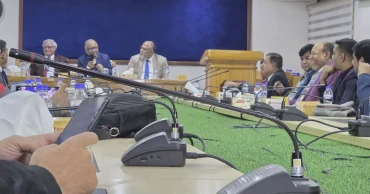
ACC to rigorously scrutinise affidavits of all election candidates: Dr Momen
The Anti-Corruption Commission (ACC) has begun closely examining the election affidavits of all candidates participating in the 13th national parliamentary election, ACC Chairman Dr Mohammad Abdul Momen said on Monday (January 05, 2026).
“The asset declarations submitted by the candidates would be thoroughly scrutinised to identify any inconsistencies or suspicious information,” he said while addressing a views-exchange meeting with the newly elected committee of Reporters Against Corruption (RAC) at the ACC headquarters in the capital as the chief guest.
Dr Momen said the commission would independently scrutinise candidates’ affidavits, request the Election Commission to flag any suspicious assets, and, if necessary, prioritise this task over other activities.
He also urged journalists to play an active role by analysing and verifying affidavit information and bringing credible findings to public attention.
No election campaign before symbol allocation: EC to parities
Responding to a question about the newly-enacted law, Dr Momen reiterated the ACC’s zero-tolerance stance against corruption.
“Our position is very clear—there will be no compromise with corruption. If any provision in the new law suggests compromise, we will maintain our previous stance and, if necessary, discuss the matter with the government,” he said.
Speaking at the meeting, ACC Commissioner (Investigation) Mia Muhammad Ali Akbar Azizi said the commission would assist judges by presenting strong and credible evidence to prove corruption cases.
Under the law, he said, the ACC has the authority to take into cognisance verified information published in newspapers and urged journalists to ensure their reports are fact-based and properly verified rather than based on hearsay.
ACC Commissioner (Investigation) Brigadier General (retd) Hafiz Ahsan Farid said the ACC and RAC are closely intertwined in the fight against corruption.
“If RAC closes its eyes for a day, the ACC will become blind for a week,” he said, adding that RAC’s credibility is not only its own honour but also the honour of the ACC.
Election disruption attempts to be met with iron hand: Home Adviser
The meeting began with a welcome address by ACC Secretary Mohammad Khaled Rahim.
RAC President Shafi Uddin Ahmed and General Secretary Tabarul Haque spoke on behalf of the organisation, pledging to work as partners of the ACC in anti-corruption efforts.
Former RAC President Alauddin Arif also addressed the meeting.
The event, moderated by ACC Director General (Prevention) Md Akhtar Hossain, was attended, among others, by senior ACC officials, members of the newly elected RAC executive committee and other RAC members.
9 months ago

BRTA tops corruption list among public service offices: BBS survey
The Bangladesh Road Transport Authority (BRTA) has been identified as the most corruption-prone public service office in the country, according to the Citizen Perception Survey (CPS) 2025, released by the Bangladesh Bureau of Statistics (BBS).
The survey found that 63.29 percent of citizens who sought services from BRTA experienced corruption. BRTA was followed by law enforcement agencies (57.96 percent) and passport offices (57.45 percent) on the corruption list.
The report was unveiled on Wednesday at the BBS auditorium in Agargaon, Dhaka.
According to the survey, 31.67 percent of respondents admitted to having paid bribes directly while receiving government services in the past 12 months.
Read more: BRTA chairman wants to see accident-free roads
The rate of bribery was significantly higher among men (38.62 percent) compared to women (22.71 percent). An overwhelming 98.48 percent of respondents reported paying bribes in cash.
BBS conducted the nationwide CPS between February 6 and 23, 2025, covering 64 districts. Data were collected through interviews with 84,807 respondents aged 18 and above (39,894 men and 44,913 women) from 45,888 households across 1,920 Primary Sampling Units (PSUs).
The findings show that 63.29 percent of respondents who interacted with BRTA officials admitted to paying bribes to receive services, making it the most corruption-prone government office among those surveyed, while the least bribery was recorded in government and autonomous banks and insurance offices (2.98 percent), public educational institutions (2.94 percent), and the Anti-Corruption Commission (ACC) itself, which stood at 1.99 percent.
Law enforcement agencies ranked second, where 61.94 percent of service recipients said they had to pay bribes. This was followed by the passport office at 57.45 percent and the land registry (cadastre) office at 54.92 percent, highlighting persistent corruption in citizen-facing and documentation-related services.
Read more: Road crashes claim 380 lives in July: BRTA
More than half of the respondents also reported bribery in interactions with judges, magistrates, prosecutors and other legal officials (53.77 percent), and the land record, acquisition and settlement offices (51.40 percent).
At the mid-range, bribery was reported by 44.68 percent of respondents dealing with accounts offices, while customs, excise, and VAT offices recorded 35.37 percent. Local government offices at the union parishad, pourashava, and upazila levels stood at 32.91 percent, followed by district and upazila election offices at 26.04 percent.
Lower levels of bribery were reported in social security and welfare offices (19.20 percent) and public utility services such as electricity, water and gas (18.41 percent). Interactions with elected local government representatives (14.94 percent) and income tax or revenue offices (14.08 percent) showed relatively lower but still notable corruption.
Bribery incidence was lowest in the district and upazila administration (11.33 percent), agricultural offices (9.07 percent), and among public healthcare providers, including doctors and nurses (8.05 percent). Only 7.91 percent reported bribery involving elected Members of Parliament.
The data underscore deep-rooted governance challenges, particularly in transport, law enforcement and land-related services, where citizens’ dependence on officials continues to fuel informal payments despite ongoing reform efforts.
The survey assessed progress on six indicators of Sustainable Development Goal (SDG) 16, based on citizens’ perceptions and experiences related to security, good governance, quality of public services, corruption, access to justice, and discrimination.
Read more: CNG drivers block road outside BRTA prompting Mohakhali-Uttara tailback
Nationally, the average household size was four members, with 81.97 percent male-headed households and 18.03 percent female-headed households.
On security, 84.81 percent of citizens reported feeling safe walking alone in their neighbourhoods after sunset while the sense of safety was lower among women (80.67 percent) compared to men (89.53 percent). The feeling of safety inside one’s home after dark was higher at 92.54 percent.
In terms of governance, only 27.24 percent of citizens believed they could influence government decisions, while this figure dropped to 21.99 percent regarding political decision-making.
Nationally, about 24.62 percent of respondents felt that the country’s political system is inclusive and responsive, with little difference between rural (24.47 percent) and urban (24.91 percent) areas.
Regarding public service delivery over the past year, 47.12 percent of respondents accessed government health services, while 40.93 percent reported that at least one of their children attended a government primary or secondary school.
Besides, 73.77 percent sought other government services such as identity cards or civil registration.
Satisfaction levels varied across services: 72.69 percent for healthcare, 81.56 percent for primary education, 78.18 percent for secondary education, and 66.91 percent for other government services.
The survey also found that 16.16 percent of citizens experienced disputes or conflicts in the past two years.
Among them, 83.60 percent had access to some form of dispute resolution, either formal (such as courts) or informal (such as community leaders). Of these, 41.34 percent used formal institutions, while 68.96 percent relied on informal mechanisms.
On discrimination, 19.31 percent of respondents reported experiencing some form of discrimination.
Read more: BRTA provides financial assistance to families of road crash victims in Joypurhat
The main bases were socio-economic status (6.82 percent) and gender (4.47 percent). Incidents occurred most frequently within families (49.72 percent), in public transport or open spaces (34.82 percent), and at workplaces (24.85 percent). Only 5.37 percent of victims reported such incidents to the authorities.
9 months ago

BNP ready to lead fresh drive against corruption: Tarique
BNP Acting Chairman Tarique Rahman on Tuesday (December 09, 2025) said his party is ready to lead a fresh strong and comprehensive drive against corruption if voted to power as graft has become deeply rooted in Bangladesh and continues to disrupt the daily lives of millions of people.
“Fighting corruption will be an uphill battle after years of systemic abuse. But Bangladesh’s own history proves progress is possible. With commitment, discipline, and public support, meaningful reform can return. If entrusted by the people, BNP is prepared to lead that charge, once again,” he said in a post on his verified Facebook page, marking International Anti-Corruption Day.
Tarique said corruption now affects every part of life--from graduates seeking jobs on merit, to farmers waiting for services, young families struggling for healthcare and education, and entrepreneurs paying extra just to keep their businesses running.
Read more: Tarique warns BNP of ‘something terrible’ if unity falters
“From food prices to school quality to road safety, corruption cripple’s daily life for millions,” he wrote.
The BNP leader mentioned that early governance reforms under President Ziaur Rahman prioritised administrative discipline, clean public service and economic liberalisation that reduced bottlenecks and discretionary power.
Later, he said the administrations of Prime Minister Khaleda Zia modernised institutions through procurement rules, financial administration laws, strengthened audits, and clearer oversight mechanisms.
Tarique pointed to the formation of the Anti-Corruption Commission (ACC) in 2004 as a “major milestone”, replacing the Bureau of Anti-Corruption and enabling independent investigation and prosecution in line with global standards “Development partners such as the World Bank and ADB recognised this as a significant step toward accountability.”
Read more: Tarique slams Jamaat for ‘propaganda’ against BNP echoing Awami League
“Despite reservations about Transparency International Bangladesh’s (TIB) methodology at the time, even they reported improved CPI performance: Bangladesh’s score rose from 1.2 in 2002 to 1.7 in 2005. Transparency International’s Global Corruption Barometer (2003) found that 66% of citizens felt corruption had decreased. These gains reflected reforms that strengthened clarity, reduced discretion, and expanded oversight,” he observed.
Tarique said BNP takes pride in reforms made in those years, including stronger financial governance, improved treasury systems, tighter budgets, better audits, and early anti-money-laundering and banking regulations, competitive procurement rules, expansion of media and telecom sectors, and early digitisation and decentralisation efforts that reduced bureaucratic discretion.
“The record speaks for itself: BNP is the only party so far to make sustained progress in reducing corruption,” he claimed.
Outlining the party’s future agenda, he said BNP plans to ensure complete institutional independence for the judiciary, ACC, election bodies, public service and law enforcement, introduce open procurement and real-time audits, modernise policing, prosecution and case management, expand e-governance, protect whistleblowers, strengthen ethics and civic education, and closely monitor public spending through independent audits and stronger parliamentary oversight.
Read more: ‘Religion card’ no longer fooling citizens, says Salahuddin
10 months ago