business leaders

Policy reforms, ethical business key to competitiveness after LDC graduation: Business leaders
Analysts and business leaders on Thursday said comprehensive policy reforms, stronger institutional efficiency and an uncompromising commitment to ethical business practices are crucial for Bangladesh to sustain its competitiveness in the post-LDC graduation era.
The observations came at a high-level discussion titled “Business Climate in Bangladesh: Issues and Challenges of Ethical Practice”, jointly organised by the Federation of Bangladesh Chambers of Commerce and Industry (FBCCI) and the International Business Forum of Bangladesh (IBFB) at the FBCCI office in Motijheel.
Presenting the keynote paper, Dr Khondaker Golam Moazzem, Research Director of the Centre for Policy Dialogue (CPD), called for urgent ‘business process re-engineering’ to lower the cost of doing business and enhance the efficiency of government agencies.
Read More: Top business leaders meet Tarique Rahman, discuss economy, jobs
He said streamlining core services such as licensing, registration and customs clearance must go hand in hand with strengthening integrity and accountability among public officials to remove systemic bottlenecks.
During the open discussion, business leaders said creating a genuinely investment-friendly environment requires swift implementation of digitalisation, automation and a fully functional single window system to ensure transparency and predictability.
IBFB Director M S Siddiqui noted that several existing regulatory frameworks remain misaligned with ease-of-doing-business objectives, which can deter both domestic and foreign investment.
Responding to the concerns, Anti-Corruption Commission (ACC) Secretary Mohammad Kaled Rahim acknowledged procedural complexities in the system but reiterated the commission’s commitment to simplifying processes.
He urged members of the business community to report specific instances of harassment or irregularities to the authorities.
Foreign Secretary Dr Md Nazrul Islam said the interim government has already initiated complex institutional reforms, but emphasised that broad-based “behavioural reform” across both public and private sectors has now become a critical priority.
Read More: Govt signs deal with ‘Shukrishi’ to develop agri-business entrepreneurship
IBFB President Lutfunnisa Saudia Khan said ethical business practices are the foundation of inclusive growth and a stronger global image for Bangladesh.
She stressed that collective responsibility, transparency and continuous dialogue are as important as legal frameworks in addressing the challenges faced by entrepreneurs.
FBCCI Administrator Md Abdur Rahim Khan assured participants that the private sector’s recommendations would be formally conveyed to the government.
He also urged entrepreneurs to uphold responsible and ethical business conduct.
Former FBCCI directors, general body members, FBCCI Secretary General Md Alamgir, Head of FBCCI International Affairs Wing Md Zafar Iqbal, Adviser of FBCCI Safety Council Brig Gen (retd) Abu Nayeem Md Shahidullah, along with leaders from IBFB and various chambers and trade associations attended the event.
8 months ago
LDC graduation: Business leaders urge BNP to seek 3-year deferment
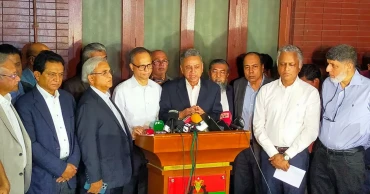
Top business leaders in a meeting with BNP on Sunday voiced their concerns about the immediate impact of graduating from Least Developed Country (LDC) status and advocated for a three-year deferment.
“We have heard from the business community about the advantages and disadvantages. From this, it is quite clear that moving towards LDC graduation at this moment will not be helpful for Bangladesh’s present and future trade, business, and investment,” said BNP Standing Committee member Amir Khosru Mahmud Chowdhury after the meeting.
He said the statistics presented by the previous Awami League government in the context of LDC graduation have now come under question.
“Taking everything into account—Bangladesh’s future, economy, investment, business, and trade—if we truly want to keep moving forward towards the vision of a new Bangladesh, then at this moment LDC graduation needs to be put on hold,” the BNP leader said.
He mentioned that the business leaders discussed with them the necessity of deferring LDC graduation for now.
Khosru, who attended the meeting, said the business leaders also suggested that the government should formally write to the United Nations on this issue—clearly stating whether Bangladesh is genuinely ready for graduation at this stage.
He said the interim government needs to send a letter to the UN so that its representatives can come to Bangladesh and directly assess the ground reality of the country’s readiness.
Earlier, an 11-member business delegation, led by BGMEA President Mahmud Hasan Khan Babu, met BNP Secretary General Mirza Fakhrul Islam Alamgir at the party chairperson’s Gulshan office around 5pm.
After nearly the hour-long meeting, Amir Khosru and Mahmud Hasan Khan Babu talked to reporters about the outcome.
Other members of the business delegation included Tapan Chowdhury, AK Azad, Syed Nasim Manzur, Kamran Tanvirur Rahman, Ahsan Khan Chowdhury, Taskeen Ahmed, Mohammad Hatem, Fazlee Shamim Ehsan, and Dr Rashid Ahmed Hossaini.
Khosru said that almost all the leaders of Bangladesh’s business community, who drive the country’s economy, met Fakhrul and mainly discussed two issues—LDC graduation and the labour issue.
BNP’s Rizvi accuses Jamaat of trying to build ‘state within the state’
1 year ago

Business leaders urge six-year extension for Bangladesh’s LDC graduation
Business leaders on Thursday called for extending Bangladesh’s graduation time from the Least Developed Country (LDC) category by six years, warning that moving ahead with the transition next year would be a ‘mistake’ which may harm the country’s private sector.
Speaking at a seminar titled ‘LDC Graduation: Some Options for Bangladesh’ organised by the International Chamber of Commerce, Bangladesh (ICCB), they said the country is not yet prepared for the shift.
In his opening remarks, ICCB President Mahbubur Rahman said Bangladesh still lacks preparations for LDC graduation for weak capacity in free trade negotiations, limited export diversification, shortage of skilled human resources in industries, insufficient foreign investment inflow, inadequate institutional capacity and the absence of climate resilience.
Bangladesh moves toward LDC graduation amid concern over preparedness
“Moving ahead without addressing these issues will only expose the economy to serious risks,” he warned.
The ICCB president pointed out that the first blow of graduation would come from tariff hikes and losing Generalised System of Preferences (GSP) and other trade benefits could shrink exports by 6–14 percent.
Sanya Reid Smith, Legal Adviser and Researcher at the Third World Network, presented the keynote paper, pointing out that several countries, despite being eligible, postponed their LDC graduation.
Sanya said Angola withdrew from the process just a week before its scheduled graduation, while Myanmar, set to graduate in 2024, chose not to proceed.
President of the Bangladesh Association of Pharmaceutical Industries (BAPI) Abdul Muktadir said the pharmaceutical sector is already under pressure, with 30 percent of the top 100 companies struggling to survive.
Without current patent exemptions, the prices of essential medicines would skyrocket after graduation — for example, the hepatitis B vaccine, now costing a few hundred taka, could rise to USD 1000, Sanya said.
CA Prof Yunus seeks quick, coordinated actions for LDC graduation
He alleged that the BAPI already holds a list of medicines likely to be affected, along with their expected post-graduation prices, yet has shown no interest in engaging with industry stakeholders.
“The pharmaceutical industry now earns USD 3 billion annually from exports; with proper attention, this could be doubled,” he said.
Bangladesh Garment Manufacturers and Exporters Association (BGMEA) President Mahmud Hasan Khan Babu said the country will graduate eventually, but not now, stressing the need for more preparation. “If we proceed without addressing the current crisis in the energy sector, the garment industry will face a collapse,” Babu warned.
While reserves have grown and there are sufficient dollars to import LNG, Bangladesh lacks the capacity to import enough of it, he said. Deep-sea ports, essential for easing LNG imports, are still not ready, he added.
Leather goods and footwear exporters echoed similar concerns.
Syed Nasim Manzur, President of the Leather goods and Footwear Manufacturers and Exporters Association of Bangladesh (LFMEAB), described graduation before six years as ‘suicidal’ for the country.
He urged the government to wait until 2032, citing growing competitiveness challenges in the global market and high shipping costs that neighbouring countries do not face.
President of the Dhaka Chamber of Commerce and Industry (DCCI) Taskeen Ahmed said 90 percent of the country’s exports come from pharmaceuticals, garments, and leather — sectors whose leaders are unanimously calling for a six-year delay.
“If the government has a better proposal, it should discuss it with businesses,” he added.
Supporting the call, Executive Director of the South Asian Network on Economic Modeling (SANEM) Selim Raihan stressed the need for coordination among the government, bureaucrats, and businesses.
He suggested Bangladesh also align with Nepal, which is scheduled to graduate next year.
“Other than the banking sector, no significant reforms have taken place in the economy,” he said, adding that many recommendations from the White Paper Committee have been ignored.
Without reforms, graduation could jeopardise free trade agreements and investment opportunities.
Centre for Policy Dialogue (CPD) Executive Director Fahmida Khatun said Bangladesh’s progress toward LDC graduation has been driven more by political considerations than economic readiness.
She warned that an agenda of political success alone would not ensure positive outcomes without adequate preparation.
Bangladesh is set to graduate from LDC status on November 24, 2026.
Once it does, the country will lose tariff and patent-related privileges currently enjoyed as an LDC.
Both business leaders and economists stressed the importance of completing necessary preparations before making the transition.
1 year ago
Top business leaders urge BERC to reject proposal on raising gas price
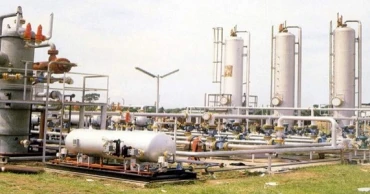
Some top 15 business leaders on Monday jointly appealed to the Bangladesh Energy Regulatory Commission (BERC) to turn town the proposal of Petrobangla and six other gas distribution companies to raise the gas price for additional load and new connections.
The business leaders include Bangladesh Textile Mills Association (BTMA) Shawkat Aziz Russel, former FBCCI president Mir Nasir Hossain, BGMEA administrator Anwar Hossain, BCI president Anwar-ul-Alam Chowdhury Parvez, MCCI President Kamran T Rahman, DCCI president Taskin Ahmed, BKMEA President Mohammad Hatem, LFMEAB President Syed Nasim Manjur, BCMEA President Mainul Islam Shawpan, BPGMEA President Shamim Ahmed, managing director of City Group Md Hasan and chairman of Uttara Motors Corporation Md Matiur Rahman.
The business leaders referring to the BERC’s recent hearing on the issue said that raising gas price for any particular group of consumers will create discrimination among the industries which is contrary to the country’s constitution as well as the BERC Act.
They said instead of raising gas price, the BERC should take measures to reduce the 13 percent system loss.
CAB demands postponement of gas price hike hearing
It said that the country’s business community has been in a great dilemma following the move by the Petrobangla and its six distribution companies to raise the gas price for additional load and new connections.
If the gas price is raised by any means it will have a negative impact on the overall business as private enterprises contribute 90 percent to the country’s economy, said the business leaders.
1 year ago

44 business leaders selected to get CIP cards
The government of Bangladesh will honour 44 business leaders with Commercially Important Person (CIP) cards this year for their outstanding contributions to the economy of the country in 2021.
Of them, six will get the award in the National Council for Industrial Development (NCID) category, 20 in large industry (production) category, 5 in large industry (services) category, 10 in medium industry (production) category, 2 in small industry (production) category and 1 in micro industry category, according to a media release signed by Mohammad Mahmudul Hasan, senior information officer of the Industries ministry.
Read more: CIP cards awarding: Businesses should prepare to compete in post-graduation period-Tipu Munshi
Agriculture Minister Dr Abdur Razzaque will hand over the CIP cards to the businesspersons for their respective companies at a ceremony scheduled to be held on May 22 at Hotel InterContinental Dhaka, as the chief guest.
Moreover, State Minister for Industries Kamal Ahmed Majumdar, Cabinet Secretary Md Mahbubur Rahman and FBCCI President Md Jashim Uddin will attend as special guests at the event with Industries Secretary Zakia Sultana in the chair.
The CIPs will be able to use VIP lounges at all the airports in the country, receive visa assistance from embassies as well as their family members will also be given priority in booking cabins at public hospitals.
Read more: Govt honours 178 businesspersons with CIP status
They will also get passes to enter the Bangladesh Secretariat without hindrance, participate in different national programmes and will be given priority in booking tickets for air, railway, and waterways on business trips.
3 years ago
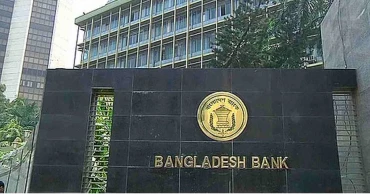
Business leaders oppose withdrawal of interest cap for sake of investment
The country's business leaders have urged against lifting the cap on interest rate arguing that it will affect investment.
They also agreed with the Bangladesh Bank governor who insists that it is not the right time to lift the limit.
Speaking at a conference here on Thursday BB Governor Abdur Rouf Talukder said they are waiting for a good time to withdraw the interest cap.
Md Jasim Uddin, president of Federation of Bangladesh Chambers of Commerce and Industry (FBCCI) opposed any increase in the rate.
"If the interest rate suddenly increases, the investors will plunge into trouble. The manufacturing sector investors need to sell their products in a competitive global market, he said on Friday.
Read more: BB extends tenure of relaxed ‘risk-weighted’ funding in new investment
He told UNB that the interest rate is still high in Bangladesh compared with many other competitive countries, which will have to be taken into consideration before raising the interest rate.
Executive president of the Bangladesh Knitwear Manufacturers Association (BKMEA) Mohammad Hatem said entrepreneurs are suffering losses due to the gas crisis. In this situation increasing interest rate will not be investment friendly.
He said Bangladesh has to decide whether it wants to bring in investment or not. Higher interest rate will create uncertainty in many sectors, already suffering from the pandemic and the Russia-Ukraine war.
The issue of the interest cap came up Thursday in the opening session of a three-day annual development conference organised by the Bangladesh Institute of Development Studies (BIDS) at a city hotel.
Read more: BB revises cluster credit guidelines to boost small enterprises
Speaking at the event BB governor informed that the central bank has already relaxed the interest rate on consumer loans.
Regarding the foreign currency exchange rate, Rouf said the BB will allow the market force to determine it.
3 years ago

Quader blasts business leaders for breaking their promise
Awami League General Secretary Obaidul Quader on Sunday said business people have failed to keep their promise of reopening the export oriented factories only with workers available in Dhaka and its adjoining areas during the ongoing lockdown.
At a briefing at his residence Quader said "The business leaders had promised to start the factories with the workers who are residing near the workplaces. But in reality many factory owners have sent notices to the workers to quickly return to work."
The short notice has prompted workers’ hurried return to the capital city in thousands ignoring all Covid health protocols for fear of losing jobs, he said. This might aggravate the surging pandemic situation in the country, he feared.
Read: AL shows zero tolerance to intruders in the party, says Quader
He said the government decided to allow the export-oriented industries to open at the request of the business people.
Accordingly, the mainly the garment factories reopened Monday (Aug. 1), even though the current lockdown would continue until Aug. 5.
Caught off-guard by the decision thousands of workers, who had gone to village homes along with their family members on Eid holidays, began returning to Dhaka either by foot or by rickshaw vans, trawlers, goods-laden pickup truck in the absence of public transport.
Read: No political harassment in the country, says Obaidul Quader
In a last moment decision the government allowed public transport to operate only until Saturday noon to facilitate the workers' return to work.
5 years ago