Labour migration

Bangladesh, Malaysia begin Joint Working Group meeting on legal labour migration
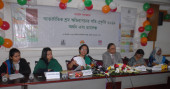
The third Joint Working Group (JWG) meeting between Bangladesh and Malaysia on safe labour migration and labour market cooperation began on Wednesday at a city hotel, aiming to resume formal labour recruitment.
High-level government representatives from both countries are attending the two-day meeting which is expected to end with a formal declaration paving the way for the resumption of legal labour migration from Bangladesh to Malaysia.
A seven-member Malaysian delegation, led by Dr Mohd Shaharin bin Umar, Deputy Secretary-General of Malaysia's Ministry of Human Resources, is participating in the meeting.
Dr Lutfie Siddique, Special Envoy of the Chief Adviser on International Affairs, and Dr Neamat Ullah Bhuiyan, Senior Secretary at the Ministry of Expatriates’ Welfare and Overseas Employment are repsenting the Bangladesh side.
Senior officials from the ministry are also attending.
Speaking to reporters after the inaugural session, Dr Lutfie Siddique said nearly 8,000 workers—who completed all procedures but could not migrate due to the labour market closure last year—will be sent to Malaysia under government arrangements through BOESL.
He noted that while Bangladesh has many recruiting agencies, the Malaysian government prefers to work with a limited number to ensure greater transparency.
Discussions are ongoing to streamline and monitor the recruitment process more effectively.
Balat Brothers, Ashta Feed sign animal protein export deal
Dr Siddique also said Malaysia is considering introducing multiple-entry visas for Bangladeshi workers, a move that signals the country’s commitment to transparent and regulated labour recruitment.
Meeting sources highlighted the risks faced by workers who attempt to migrate illegally, including arrest, legal complications, and imprisonment in Malaysia.
Both sides reaffirmed their commitment to curbing illegal migration and ensuring a safe, legal process for workers.
Earlier on May 14, a delegation from the Ministry of Expatriates’ Welfare and Overseas Employment, including Adviser Dr Asif Nazrul, Dr Lutfie Siddique, Dr Neamat Ullah Bhuiyan, and Deputy Secretary Sarwar Alam, held a joint meeting with Malaysian ministers in Putrajaya.
Former BAIRA Secretary General Ali Haider Chowdhury stressed the need to prioritise workers’ safety, job security, and affordable migration costs.
BAIRA leader Mobarak Ullah Shimul said previous labour recruitment initiatives followed government-to-government agreements and legal channels, rejecting allegations of human trafficking as unfounded and detrimental to bilateral ties.
Another BAIRA official, speaking on condition of anonymity, alleged that a faction within the association is obstructing government efforts to reopen the Malaysian labour market due to its involvement in illegal recruitment.
He emphasised the need to end such practices, which he said damage Bangladesh’s reputation and Malaysia’s international image.
1 year ago
Migrant workers’ rights: UN expert for monitoring recruitment process
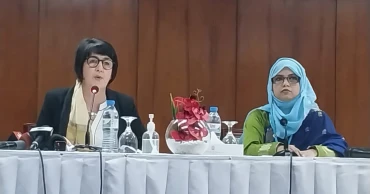
UN Special Rapporteur Siobhan Mullally has sought urgent attention on monitoring situation in countries receiving migrant workers to ensure protection of their rights.
“There is a lot of attention being given to labour migration. We need much more focused attention on ensuring opportunities for women and ensuring protection of their rights as workers,” she told reporters at a press conference held in a Dhaka hotel on Wednesday afternoon.
Read more: Record number of Bangladesh workers left for S Korea Tuesday
Mullally laid emphasis on stronger monitoring in all stages of the recruitment process – who are making job offers, what is happening on arrival, what about their protection and the monetary issues.
The UN expert said absolutely it should not be at the cost of experiencing serious human rights violations.
“More efforts are needed to regulate and hold accountable recruitment agencies and intermediaries who exploit migrant workers in vulnerable situations through high recruitment fees and deceptive job offers,” Mullally said.
Migrant women domestic workers are particularly at risk of trafficking for domestic servitude and suffer horrific abuses due to many gaps in protection and enforcement of workers’ rights, she said.
She said there are steps that can be taken to improve those conditions to expand safe and regular opportunities for women with access to additional training.
The UN expert said receiving countries have obligation under the international laws and it is absolutely critical that women migrant workers continue to have opportunities for employment without discrimination.
Mullally said it is essential that the serious human rights abuses that they see in some recipient countries are addressed.
Particularly with regards to abuses of domestic workers, she said, these are very serious abuses. “Yes, that has been an ongoing priority area of work.”
The UN Special Rapporteur assessed the human rights issue of trafficking in persons during her official visit to Bangladesh from October 31 to November 9, 2022.
Read more: Lucrative Libyan market open again for Bangladeshis, but only 15 agencies running the show
She paid particular attention to the main challenges to ensuring the human rights of victims, and effective prevention of trafficking.
A major concern was the risk of trafficking in the labour migration context, as well as risks faced by refugees, asylum seekers and stateless persons.
Trafficking for purposes of sexual exploitation and concerns in relation to child trafficking for all forms of exploitation were also examined, as will climate-related displacement and increased risks for those directly affected, particularly women and girls in rural areas, and indigenous peoples.
The Special Rapporteur travelled to Cox’s Bazar and Sylhet. She met representatives of government agencies, as well as UN officials, law enforcement bodies, members of civil society organisations and survivors.
The Special Rapporteur will present a comprehensive report of her visit to the UN Human Rights Council in June 2023.
3 years ago

‘Bangladesh’s labour migration sector needs revamping’
Bangladesh urgently needs to produce skilled migrant workers through reskilling and up-skilling considering the long-term development of the country.
5 years ago
176 more workers deported from Saudi Arabia
Some 176 more Bangladeshi workers have been sent back to the country from Saudi Arabia.
6 years ago
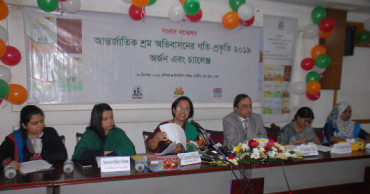
Labour migration sees fall by 10 pc in 2019: Report
Despite increased inflow of remittance in 2019, labour migration from Bangladesh has declined by about 10 percent compared to the previous year, says a new study.
6 years ago