Jhenaidah
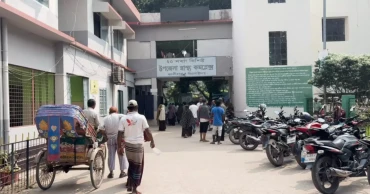
4 killed, 5 injured in Jhenaidah, Kushtia road crashes
Four people were killed and five others injured in separate road crashes in Jhenaidah and Kushtia districts on Thursday.
In Kushtia, two people, including a woman, were killed and another was injured when a bus hit a van on the Kushtia-Meherpur road in front of Amtala Madrassah in Mirpur upazila around 10 am.
The deceased were identified as Quamrul Islam, a van puller and son of Abdus Sattar of Mirpur upazila, and Bhanumoti, 55, wife of Hashem Ali of Sadar upazila.
Shahidul Islam, Officer-in-Charge of Mirpur Police Station, said the accident occurred when a Meherpur-bound bus of ‘Shyamoli Paribahan’ crashed into the van, leaving one dead on the spot and two others injured.
The injured van puller and Hasina, daughter of the deceased Bhanumoti, were taken to Mirpur Upazila Health Complex, where doctors declared Quamrul dead.
Hasina was referred to Kushtia 250-bed General Hospital as her condition deteriorated.
In Jhenaidah, two people, including a municipality officer, were killed and four others injured in separate road crashes in Kaliganj and Maheshpur upazilas of the district on Thursday.
In Kaliganj upazila, ASM Abdus Samad, 48, an officer of Kaliganj municipality, was killed when a Kushtia-bound bus of ‘Rupsha Paribahan’ from Khulna hit his motorbike in front of the upaizla sub-registry office while he was heading to his workplace, said Julficker Ali, Officer-in-Charge of Kaliganj Police Station.
In Maheshpur upazila, Mamun Hossain, 32, a battery-run van puller, was killed and four others were injured when the van carrying five people overturned after being hit by a sand-laden tractor in front of Kullagacha Madrassah in the upazila.
The injured were taken to a local hospital and given first aid, said Azad Rahman, Officer-in-Charge of Maheshpur Police Station.
9 days ago
Solar irrigation brings savings, extra income to Jhenaidah farmers
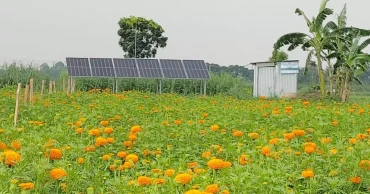
Amid rising fuel and electricity costs, solar-powered irrigation pumps are helping farmers in Jhenaidah reduce irrigation costs while earning additional income by selling surplus water to other farmers.
According to local sources, 106 solar-powered irrigation pumps have so far been installed in Moheshpur, Kotchandpur and Sadar upazilas of the district. Of these, 32 are located in Moheshpur.
The installations include 34 pumps supported by AID Foundation, seven by the Bangladesh Agricultural Development Corporation (BADC) and 65 by Wave Foundation, while a number of smaller solar irrigation systems have also been installed in different areas.
The Rural Reconstruction Foundation (RRF) is implementing the environment-friendly initiative through its “SMART” project, funded by the World Bank with technical assistance from the Palli Karma-Sahayak Foundation (PKSF).
Solar panels are also being installed at the individual level with support from Infrastructure Development Company Limited (IDCOL).
Solar power takes root among flower growers
Solar-powered irrigation has received a particularly positive response among flower growers in the border areas of Maheshpur.
Gafur Mia, a flower grower in the area, said he no longer has to worry about fuel or electricity after installing a solar irrigation pump.
“After irrigating my own land, I sell the surplus water to neighbouring farmers, which provides me with additional income,” he said.
Farmer Sadikul Rahman, from the same area, established a solar irrigation project with a combination of project loans and grants.
He now irrigates his own farmland and provides commercial irrigation services to another 15 bighas of land in the surrounding area.
13 days ago
Woman crushed under wheels of train in Jhenaidah
A 37-year-old woman was crushed under the wheels of a train at Mobarakganj rail station in Kaliganj upazila of Jhenaidah district on Saturday.
The deceased was identified as Rabeya Khatun, daughter of Iqbal Hossain of Khilkhet in the capital.
Rabeya went to Jhenaidah to visit her aunt’s house.
Mostafizur Rahman, Station master of Mobarakganj rail station, said when Rabeya tried to board a Khulna-bound ‘Kopotakkho Express’ train from Rajshahi at the eleventh hour she slipped and fell on the track around 8 am, leaving her seriously injured.
On information, a firefighting unit rushed to the spot and rescued her.
Later, she died on way to Jashore Medical College and Hospital around 11 am.
14 days ago
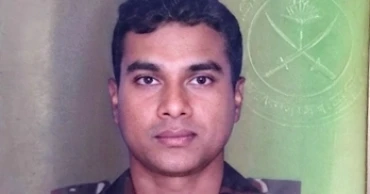
Army man, wife killed as bus runs over motorcycle in Jhenaidah
An army man and his wife were killed when a bus ran over their motorcycle on the bypass road in Jhenaidah municipality on Wednesday morning.
The deceased were Lance Corporal Sohel Kazi, who was serving with 12 Bengal of the Bangladesh Army, and his wife Jannatul Ferdous Tuli, 25.
The accident occurred at about 10:20 am in the Gas Depot area of the Bhutiaragati bypass, eyewitness Mohirul Islam said.
He said a Khulna-bound Garai Paribahan bus hit the motorcycle in front of the gas depot. Tuli fell under the wheels of the bus and died on the spot.
Rescue workers from Jhenaidah Fire Service and Civil Defence rescued Sohel, who was critically injured, and took him to Jhenaidah Sadar Hospital.
As his condition deteriorated, he was transferred to the Combined Military Hospital (CMH) in Jashore, where the duty doctor declared him dead.
Sohel was the son of Mahbub Kazi of Kalagachi village under Kalia upazila in Narail.
He had recently been transferred from the Bangladesh Military Academy (BMA) in Bhatiari to Bogura Cantonment and was on leave before joining his new posting.
Tuli was the daughter of Md Bulu Mandal of Goraganj Bardah village in Shailkupa upazila of Jhenaidah.
Family members said the couple had been travelling to Tuli's parents' home.
Their two daughters, five-year-old Khadijatul Muntaha and three-year-old Ayesha Binte, had already gone to their maternal grandparents' house and were waiting for their parents.
Confirming the deaths, Jhenaidah Sadar Police Station Officer-in-Charge Asaduzzaman said the bus had been seized and kept in police custody.
"The bodies were kept at the Jhenaidah Sadar Hospital morgue, and legal proceedings are under way," he said.
1 month ago
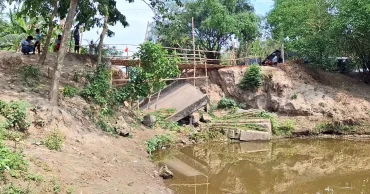
Collapsed bridge in Jhenaidah leaves thousands stranded for months
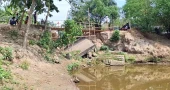
Traffic movement has remained suspended for the past nine months after a 45-year-old bridge collapsed in Kumrabaria and Maharajpur areas under Sadar upazila of Jhenaidah, causing severe public suffering.
Although the bridge collapsed around nine months ago reconstruction work has yet to begin, said locals.
Local people have have built a temporary bamboo footbridge at their own initiative which has now become risky for use.
Local Union Parishad Chairman Khurshid Alami Mia said the road connecting Kumrabaria and Maharajpur unions locally known as Bishoykhali GC–Nagarbathaan GC via Defolbari road was constructed about 45 years ago.
The bridge over a canal under the Ganges-Kobadak (GK) irrigation project was built by the Local Government Engineering Department (LGED) in the Bhabanipur-Defolbari area.Kumrabaria Union Parishad Chairman Sirajul Islam said the bridge collapsed in 2025 due to heavy rainfall and strong water currents.
“Despite repeated appeals by local representatives to the authorities concerned, no reconstruction work has been undertaken so far, increasing the sufferings of commuters, transport operators and goods carriers.”A recent visit to the area found that the bridge deck has collapsed and now lies in the middle of the canal. A makeshift bamboo footbridge has been installed in its place by local residents but it has already become shaky and unsafe, halting movement of auto-rickshaws, vans and motorcycles.
Local resident Rahat Hossain said, “The bridge collapsed nine months ago. We informed various authorities multiple times but no solution has been provided. No one can say when the bridge will be rebuilt. All types of vehicles have stopped using this road.”
School student Sumaiya Khatun said they used to cross the bridge daily to attend school. “After it collapsed last year a bamboo bridge was built. Now it is also on the verge of collapse. It feels very risky to cross it, especially with a bicycle. If it breaks down, going to school will become even more difficult,” she added.
Truck driver Alfaz Ali said they used the bridge to transport goods between markets in Kumrabaria and Maharajpur unions. “Since the bridge collapsed, movement on this road has stopped, causing immense suffering to transport workers,” he said.
Sadar Upazila Executive Engineer Md Abul Kalam Azad said the road is an important link between the two unions and previously had two bridges both of which were very old. “One of the bridges has already been reconstructed. For the collapsed one, we have sent two separate project proposals to the authorities concerned. We hope the project will be approved soon after which construction work will begin,” he added.
5 months ago

2 farmers killed in Jhenaidah lightning strikes
Two farmers died and four others were injured in lightning strikes at Kharibaria village of Shailkupa upazila on Saturday afternoon.
The deceased were Apu Biswas ,20, son of Prakash Biswas of Kharibaria, and Shushil Biswas 40, son of Sushil Biswas of Laxmipur village.
The four injured farmers were immediately taken to Shailkupa Upazila Health Complex for treatment.
Shailkupa police station Officer-in-Charge Humayun Kabir Molla said the victims were working in the field when lightning struck them.
Dr. Ehtesham Shahid, a physician of the hospital, said the injured suffered severe burns.
6 months ago
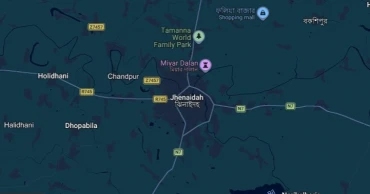
Father disowns son over BCL involvement
A father on Monday in Jhenaidah has formally disowned his son for involvement in banned Bangladesh Chhatra League (BCL) activities, the youth wing of the Awami League.
The declaration was made through an affidavit submitted at the Jhenaidah District Notary Public office.
According to the affidavit, businessman Md. Abu Zafar (48) of Aruakandi village in Porahati Union, Jhenaidah Sadar, declared his son Md. Nahid Hasan Shobuj (24) as a disowned child. Shobuj currently serves as the joint general secretary of BCL Jhenaidah Government Keshabchandra College branch.
Abu Zafar stated that his son has long been living a disobedient and reckless life, staying separately from the family and acting on his own will. He also criticized Shobuj for continuing to participate in BCL activities even after the organization was banned on August 5, 2024.
In particular, he mentioned an incident on February 21, when Shobuj hoisted the party flag at the abandoned Jhenaidah District Awami League office, a video of which went viral on social media, causing embarrassment to the family.
The affidavit further clarified that Shobuj’s income, responsibilities, and actions will have no connection with his father or any other family members. The family will not bear responsibility for any of his misconduct, and all legal and blood relations with the family are considered severed.
Abu Zafar said, I do not want my son to engage in any activities against the country’s laws and policies. Despite repeated warnings, he did not reform, leaving me with no choice but to take this difficult decision.
The legal process was completed through Jhenaidah District Judge Court lawyer Md. Sadatur Rahman Hadi.
Efforts to reach Chhatra League leader Nahid Hasan Shobuj for comment were unsuccessful, as his phone remained unanswered.
7 months ago
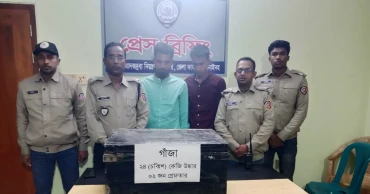
Two held with 24kg hemp in Jhenaidah
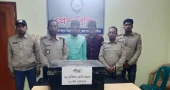
Members of the Department of Narcotics Control (DNC) seized 24 Kgs of hemp and arrested two alleged drug traders during a raid in Jhenaidah on Wednesday afternoon.
The raid was conducted at Kalalaxmipur area of Sadar upazila targeting a Purbaasha Paribahan vehicle.
The arrestees were Abul Kalam Azad, son of Lal Mia of Sundarpur village in Kaliganj upazila, and Hossain Monir, son of Shariful Biswas of Garabaria village in Maheshpur upazila.
Deputy Director of DNC Jhenaidah Sheikh Md Hasem Ali said tipped-off, a total of 44 packets containing 24kg hemp were recovered.
A case has been filed under the Narcotics Control Act with the police station concerned,
The arrestees were sent to court after initial interrogation while the seized drugs handed over to the police station, officials added.
7 months ago
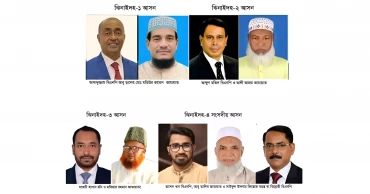
Jamaat wins 3 Jhenaidah seats, BNP’s Asaduzzaman secures lone constituency
Jamaat-e-Islami has won three of the four parliamentary seats in Jhenaidah district, while BNP secured one seat, according to unofficial results announced early Friday.
Abdullah Al Masud, Returning Officer and Deputy Commissioner of Jhenaidah, announced the results around 1am after vote counting ended in a peaceful environment.
In Jhenaidah-1, former Attorney General and BNP candidate Advocate Md Asaduzzaman was unofficially elected with 173,381 votes. His nearest rival, Jamaat candidate Motiur Rahman, received 57,055 votes.
In Jhenaidah-2, Jamaat candidate Ali Azam Md Abu Bakar won the seat with 131,865 votes, defeating BNP candidate Abdul Majid, who secured 105,664 votes.
In Jhenaidah-3, Jamaat’s Motiar Rahman was unofficially elected with 175,857 votes. His closest rival, BNP candidate Mehedi Hasan Rony, got 149,857 votes.
In Jhenaidah-4, Jamaat candidate Abu Talib won with 105,999 votes. Expelled BNP leader Saiful Islam Firoz secured 77,104 votes, while BNP-nominated candidate Rashed Khan came third with 56,224 votes.
BNP’s Asaduzzaman unofficially wins Jhenaidah-1 by huge margin
District Election Officer Abul Hossain said polling in all four constituencies was held in a peaceful and festive atmosphere.
Supporters of the Jamaat-led alliance gathered at the Deputy Commissioner’s office and celebrated as results from different centres were announced.
7 months ago

Jhenaidah reels from 301 suicides in one year, women bear the brunt
Jhenaidah has been rocked by a disturbing surge in suicides, with 301 people taking their own lives in 2025, laying bare deep-rooted mental health challenges, intense social pressures and gaps in public safety.
Women account for a disproportionate share of the deaths, heightening concerns over their vulnerability, according to official data.
Of the total cases, 182 people hanged themselves, while 119 died after consuming poison.
Abdur Rahman, Chief Executive Officer of Rural Development Center (RDC), a human rights organisation based in Maheshpur, revealed the statistics.
In 2025, he said, 168 women and 133 men committed suicide in the district. In comparison, 319 people killed themselves in 2024—152 men and 167 women. In 2023, the total was 328, and in 2022, it was 323.
A statistical analysis shows that the number of suicides in 2025 has slightly decreased compared to the last four years.
Jhenaidah Sadar recorded the highest number with 79 cases, followed by Shailkupa, 67, Maheshpur, 46, Harinakunda and Kaliganj (43 each), and Kotchandpur, 23.
Of those who hanged themselves, 109 were women and 73 were men, while among those who consumed poison, 57 were women and 62 were men.
The statistics were compiled using multiple sources, including monthly reports from the Jhenaidah Civil Surgeon's Office and the Deputy Commissioner’s Office.
Over the past four years, a total of 1,271 people committed suicide in the district, with women making up a relatively higher proportion of the victims.
Maheshpur Upazila Health and Family Planning Officer Dr Helena Akter Nipa said women are more prone to suicide due to emotional vulnerability.
She cited social factors such as drug addiction, unemployment, mental health issues, family conflicts, failed relationships, extramarital affairs and poverty as contributing causes.
In this regard, Kazir Nazir Uddin, chairman of Sadhuhati Union under Jhenaidah Sadar Upazila, told UNB that suicide has become a serious problem in the district.
He said people are very emotionally sensitive and often take their own lives over minor issues.
Although the district administration is holding awareness meetings in the union, the number of suicides has not reduced significantly, Nazir said, adding that the situation is slightly better than last year.
“Suicidal incidents could be reduced to some extent if strong family bonds and religious values were developed in every household,” he added.
Deputy Commissioner (DC) of the district Abdullah Al Masud emphasised the media’s responsible role in suicide prevention.
Businessman takes own life with licensed gun in Jhenaidah
“Suicidal incidents must be reported carefully to avoid inciting others. Expanding counseling services is crucial, as timely psychological support can help individuals in crisis,” he said.
DC Masud pointed out that the district administration has continued field-level awareness activities to prevent suicide and urged people from all walks of life to participate in these efforts.
8 months ago