Sylhet
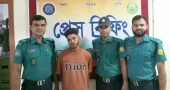
Youth held in Sylhet over “derogatory Facebook posts” about PM Tarique
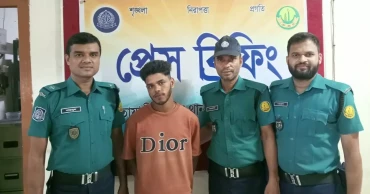
Police have detained a youth Sylhet city over allegations of posting abusive and derogatory remarks about Prime Minister Tarique Rahman on Facebook.
The detainee was identified as Mehedi Ahmed, 21, a resident of Noagaon Sadipur area under Kotwali Police Station in Sylhet city.
According to police sources, a team led by Sub-Inspector Shimul Chowdhury of Kotwali Police Station conducted a raid at Mehedi’s residence on Friday night and detained him.
Police said Mehedi had been using obscene and offensive language against Tarique Rahman in Facebook posts for a long time.
Following a complaint filed with the police station, he was identified with the help of information technology and subsequently detained, police said.
Kotwali Police Station Officer-in-Charge Mainul Zakir Chowdhury said a person has been detained over allegations of making derogatory remarks on Facebook about the Prime Minister.
“He is being questioned. Legal proceedings are underway,” he said.
29 days ago
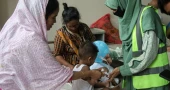
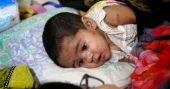
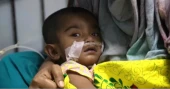
Two more die with measles symptoms in Sylhet; division's toll reaches 116
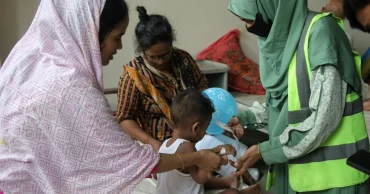
Two more children have died with measles symptoms in Sylhet Division in the 24 hours until this morning, raising the total confirmed and suspected measles-related deaths to 116, the Divisional Health Department said on Monday.
The two six-month-old children, Rezwan Ahmed and Ibrahim, died at Sylhet MAG Osmani Medical College Hospital. One was from Jagannathpur upazila and the other from Sunamganj Sadar upazila in Sunamganj district.
Meanwhile, 93 new patients with measles symptoms or suspected measles were admitted to hospitals across the division during the same period.
Of them, 45 were admitted to Shaheed Shamsuddin Ahmed Hospital, 37 to Sylhet MAG Osmani Medical College Hospital, seven to Moulvibazar Sadar Hospital, two to Ragib-Rabeya Medical College Hospital and two to North East Medical College Hospital.
Currently, 254 patients with suspected measles are undergoing treatment at different hospitals in the division.
According to the latest report of the Divisional Health Department, 116 people have died from confirmed or suspected measles so far this year. Of them, six were confirmed measles cases, while 110 died with suspected measles.
Since January 1, a total of 706 confirmed measles cases have been recorded in Sylhet Division.
2 months ago

NCP convoy now comes under attack in Sylhet
A convoy carrying leaders of the National Citizen Party (NCP), including its Chief Organiser (Northern Region) Sarjis Alam, came under attack in Golapganj upazila of Sylhet district on Thursday, leaving one vehicle damaged.
The incident took place around 2:45pm as the convoy was heading to Kanaighat after attending a programme at the Golapganj municipality auditorium with families of those killed during the July 2024 mass uprising.
However, there was no report of any injury in the incident.
NCP files police complaint over Habiganj attack
According to witnesses, a group of miscreants attacked the convoy in front of Noor Mansion near the municipality gate, shattering the rear glass of one of the vehicles.
Sarjis later alleged in a Facebook post that the attackers were activists of the BNP.
Local sources said a group of youths, believed to be activists of Jatiyatabadi Chhatra Dal (JCD), surrounded the convoy and chanted slogans such as "fake, fake" and "NCP is fake."
According to party sources, Sarjis and other central NCP leaders travelled to Golapganj earlier in the day to exchange views with families of those killed during the July movement.
JCD activists reportedly gathered in the Golapganj Chowmuhani area before the convoy arrived and shouted slogans against the party.
The same slogans were chanted as the NCP leaders left the municipality auditorium after the programme, witnesses said.
At one stage, several people allegedly rushed towards the convoy and bricks were thrown at one of the vehicles.
Police later dispersed the crowd and escorted the NCP leaders out of Golapganj safely, said Officer-in-Charge of Golapganj Police Station Mohammad Sabed Ali.
"The NCP leaders left Golapganj safely," he said.
The incident comes two days after NCP leaders came under attack in Habiganj allegedly by JCD activists during a July march programme.
The party announced a protest programme for Wednesday, but its central leaders' convoy reportedly faced repeated police obstruction in Sreemangal of Moulvibazar and Bahubal of Habiganj while travelling to the district amid Section 144.
2 months ago

Five platoons of BGB deployed in Sylhet
Five platoons of Border Guard Bangladesh (BGB) have been deployed in five upazilas of Sylhet ahead of the National Citizen Party's (NCP) July marches and rallies.
Sylhet Additional Superintendent of Police (Crime and Operations) Zakir Hossain told reporters that BGB members have been deployed in 5 upazilas- Osmaninagar, Jaintapur, Kanaighat, Gowainghat and Companiganj.
On Thursday, the party will hold a march and rally in Kanaighat at 3pm and another in Osmaninagar at 7pm.
On Friday, the programmes will be held in Companiganj at 3pm, Gowainghat at 5pm and Jaintapur at 7pm.
Earlier, the Home Ministry asked the district administration to deploy BGB personnel in the five upazilas to maintain law and order.
Sylhet Assistant Superintendent of Police (Media) Samrat Talukder said adequate police personnel both in uniform and plainclothes would be deployed in the five upazilas to maintain discipline during the NCP programmes.
On Thursday, NCP will hold an exchange of views with members of the families of martyrs in Golapganj at 11am. Central leaders of the party will attend the programme.
2 months ago

Youth stabbed dead in Sylhet
A young man was stabbed to death allegedly by his cousin following an argument over watching a FIFA World Cup football match in Zakiganj upazila of Sylhet district on Thursday.
The deceased was identified as Alam Ahmed, 28, son of Wasir Ali of Lamar village in the upazila.
Muhammad Abdur Razzak, Officer-in-Charge of Zakiganj Police Station, said an altercation was ensued between Alam and his cousin Pervez Ahmed, 32, while watching a football match of FIFA World Cup early Thursday.
At one stage, Pervez hit Alam with sharp weapon, leaving him injured and fled away.
Later, he was taken to Zakiganj Upazila Health Complex where the doctors declared him dead.
On information, police arrested Pervez from Madarkhal village.
3 months ago
Sylhet records another suspected measles death
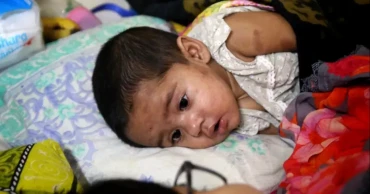
Another child has died showing symptoms of measles at MAG Osmani Medical College Hospital in Sylhet in last 24 hours till Monday morning, health officials said.
The deceased was a 17-month-old child from Madhabpur upazila of Habiganj district.
With this, the total number of deaths linked to measles and symptoms in Sylhet division has risen to 66.
Of them, four deaths were confirmed as measles, while the rest were recorded as suspected cases, the Sylhet Divisional Office of the Directorate General of Health said on Monday.
According to Sylhet Divisional Office, 55 new patients with measles-like symptoms were admitted to hospitals in the division during the same period, bringing total patients to 270.
Besides, laboratory tests confirmed three new measles cases in the last 24 hours.
Meanwhile, across Bangladesh, seven more children with measles-like symptoms died in the 24 hours until 8:00 am on Sunday.
This brings the total number of confirmed and suspected measles-related deaths in the country to 620, according to health authorities.
4 months ago
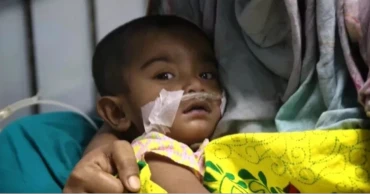
Another child dies with measles-like symptoms in Sylhet
A child has died with symptoms consistent with measles in Sylhet in the past 24 hours till Friday morning, raising the death toll linked to the outbreak in the division to 58 this year.
The information was confirmed on Friday morning by Dr Md Mahbubul Alam, director of the Sylhet divisional office of the Directorate General of Health Services (DGHS).
According to the divisional health office, the latest victim was a nine-month-old child named Arim from Chhatak upazila of Sunamganj district. The child died at Sylhet MAG Osmani Medical College Hospital.
It said a total of 205 patients with measles-like symptoms are currently undergoing treatment at various hospitals across the Sylhet division.
Although no new laboratory-confirmed measles cases were reported during the period, 18 suspected patients were admitted to different hospitals over the past 24 hours.
According to the DGHS data, 165 laboratory-confirmed measles cases have been detected in the division between January 1 and May 29 this year.
Of them, the highest number – 86 cases – was reported in Sunamganj district, followed by 42 in Sylhet, 21 in Habiganj and 16 in Moulvibazar.
4 months ago
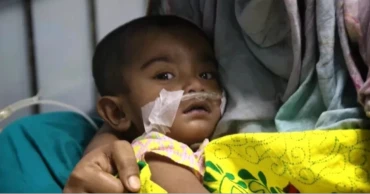
3 more die from measles-like symptoms in Sylhet
Three more children died in Sylhet showing symptoms of measles in the past 24 hours, raising the death toll in the division to 55.
Of the deceased, one was from Doarabazar in Sunamganj (14 months old), one from Sylhet Sadar (8 months old) and one from Moulvibazar Sadar (4 months old).
One of the children died at Dr Shahid Shamsuddin Ahmed Hospital in Sylhet, while two others died at MAG Osmani Medical College Hospital, according to the latest report from the Sylhet Divisional Office of the Directorate General of Health Services.
Officials said the total number of deaths from measles and measles-like symptoms in the Sylhet division has reached 55 as of Monday morning.
Of these, four were confirmed measles deaths, while the rest were reported with similar symptoms.
Sources said 58 new patients were admitted to various hospitals in Sylhet with measles or measles-like symptoms in the past 24 hours.
A total of 270 patients are currently undergoing treatment in different hospitals in the division.
Meanwhile, five more children tested positive for measles in laboratory tests in the past 24 hours in the division.
4 months ago
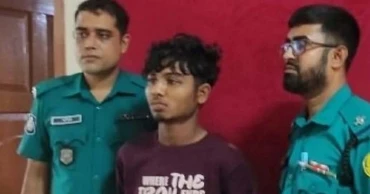
RAB man stabbed dead by ‘drug dealer’ in Sylhet
A member of Rapid Action Battalion (RAB) was stabbed to death allegedly by a drug dealer in the Keane Bridge area of Sylhet city on Friday afternoon.
The deceased was identified as Emon Acharya, a RAB-9 member. Police arrested the accused identified as Asadul Alam Bappi after the incident.
According to RAB-9 sources, Emon Acharya was injured around 12:00pm when Bappi stabbed him during an operation.
He was taken to Sylhet MAG Osmani Medical College Hospital where doctors declared him dead.
Additional Deputy Commissioner (Media) of Sylhet Metropolitan Police Mohammad Manjurul Alam said a group of people was involved in drug consumption and selling near the Keane Bridge when police chased them. The suspects fled the scene.
He said RAB member Emon, who was in plainclothes, tried to catch one of the suspects.
However, the accused stabbed him in his desperate attempt to flee, leaving the RAB man injured.
After the attack, the suspect reportedly fled and later took a child hostage at knifepoint inside a house in the Topkhana area.
Police later arrested him from there, Manjurul said.
4 months ago
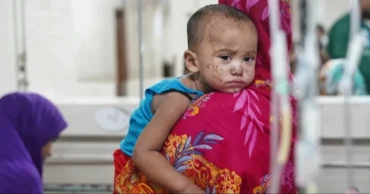
Sylhet sees highest single-day toll as 5 children die with measles-like symptoms
Five more children have died in Sylhet in the last 24 hours showing symptoms of measles, taking the death toll in the Sylhet division to 47, officials said on Friday morning.
They said this is the highest number of deaths recorded in a single day in the division from measles-like symptoms.
Of the deceased, two died at Sylhet MAG Osmani Medical College Hospital, two at Shaheed Shamsuddin Ahmed Hospital, and one at Sunamganj Sadar Hospital.
A total of 283 patients with measles symptoms are currently receiving treatment in different hospitals across the division.
Although no new lab-confirmed cases were reported in the last 24 hours, 74 suspected patients were admitted to hospitals.
Director General of Health Services data shows that 158 laboratory-confirmed measles cases have been recorded in the division between January 1 and May 22 this year.
Officials said four of the deceased children were confirmed measles patients, while the rest were suspected cases.
Meanwhile, 20 intensive care unit (ICU) beds have been prepared at Sylhet MAG Osmani Medical College Hospital and 14 at Shaheed Shamsuddin Ahmed Hospital to treat severe cases.
4 months ago