class
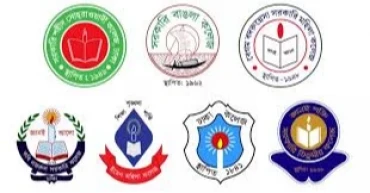
Proposed university for Dhaka’s 7 colleges to offer 40% online, 60% in-person classes
The proposed ‘Dhaka Central University’ for seven government colleges will hold 40 percent of the classes online and the remaining 60 percent in person.
“It will be an interdisciplinary and hybrid university where 40 percent of the classes will be held online and 60 percent in-person. All examinations will be conducted in person,” said Md Mojibur Rahman, Additional Secretary (routine charge) of the Secondary and Higher Education Division, at a press conference at the Secretariat on Monday.
Students of seven colleges withdraw protest proprammes
The briefing was arranged to inform the media about the progress in establishing the proposed university for the seven colleges.
Mojibur Rahman said all the students will study non-major courses during the first four semesters.
In the next four semesters, they will take major courses based on their chosen discipline.
“Students will be allowed to change their discipline at the beginning of the fifth semester if they meet certain conditions but campus transfers will not be permitted,” he said.
The academic and research activities will be organised based on four schools, spread across the seven colleges.
· School of Science: Dhaka College, Eden Mohila College, Begum Badrunnesa Government Women’s College
· School of Arts and Humanities: Government Titumir College
· School of Business: Government Titumir College
· School of Law and Justice: Kabi Nazrul Government College and Government Shaheed Suhrawardy College
The main campus of the proposed university will be set up at a centrally convenient location, Mojibur Rahman said.
He said the colleges will continue offering higher secondary education, and education cadre officers will remain posted there.
Once the university is fully operational teachers for the tertiary level will be appointed following university recruitment standards, he said.
Students of DU and seven colleges clash
The ordinance for establishing the new university is expected to be issued within this year and the upcoming admission process will follow the existing procedures.
The Additional Secretary said the proposed university’s academic and administrative affairs will be governed by an academic council, a senate, and a syndicate.
The university will appoint a proctor along with one male and one female deputy proctor at each of the seven colleges, making a total of 14 deputy proctors.
Five of the seven colleges will continue operating higher secondary sections.
Undergraduate and higher secondary students will share campus facilities through a time, space, and resource-sharing model, he said.
“All students will receive laptops and essential accessories in their first year and arrangements will be made to provide low-cost internet services,” he added.
When asked about the status of current teachers, UGC member Prof Tanzimuddin Khan said, “The fundamental nature of the colleges will remain unchanged. They will continue as colleges, and existing teachers will remain in their posts under the current structure. Once the university is fully functional, its academic structure will be separate from the colleges. University teachers will be appointed through standard university recruitment processes. Eligible college teachers may apply and join the university through the existing process if they wish.”
The seven colleges—Dhaka College, Eden Mohila College, Begum Badrunnesa Government Women’s College, Government Titumir College, Government Shaheed Suhrawardy College, Kabi Nazrul Government College, and Government Bangla College—were affiliated with the National University in 1992.
In 2017, to address academic and administrative challenges under the National University, the colleges were affiliated with Dhaka University.
Later, students demanded that the affiliation be revoked due to worsening problems and instead called for a new independent university to govern the colleges.
On October 24 last year, a committee was formed to evaluate the students’ demands.
A high-level expert committee recommended the formation of a university for the seven colleges and submitted a proposal to the Ministry of Education.
University Grants Commission Chairman Prof SMA Faiz, interim administrator of the seven colleges and Dhaka College Principal Prof. AKM Elias were, among others, present at the press conference.
1 year ago

21st February: Is it about everyone or a particular class ?
It’s generally held that Ekushey February is the mother moment of Bangladesh history. It is celebrated nationally to produce the cultural meta imagination of state building called Shaheed Dibash. It;s as much a cultural event as it’s a memorial to the national identity surge that ultimately birthed Bangladesh as the Bengali state.
And that is also seen as a fitting rebuttal to the other nationalist surge which supposedly birthed the previous state seeking aspiration, the Muslim state of Pakistan. Mingled into all this is the collateralization of political domination through culture. Politics in most if not all spaces look for the legitimacy that will push it from the realm of political sociology to that of political theology.
In that process, Ekushey has become the Big Bang of our state making theology of history. Why and how did that happen?
A long history of political claims
The class origins of cultural movements are less studied in our world. Over time, such movements are deified and in the process placed outside scrutiny. Cultural events therefore are seen as a fundamental phenomenon that ultimately ends with claims and credit of state making. This has also been the case of Ekushey. But who did it and why is not asked.
As a sacred issue, it becomes a historical trigger beyond question and remains less examined. Ekushey signifies the primary marker that became the trigger of history which in turn produced 1971. In the end, the claim of 1952 is actually about who owns the state that 1971 gave birth to. Cultural identity is used to describe qualifications regarding the ownership of the state.
State ownership qualifications
State identity markers are multiple and sourced from all dimensions of society. They are from race, ethnicity, language, faith, territory, class clusters etc. Every person carries several of these markers so it becomes a contest of proving which marker is dominant historically hence has the right to claim ownership or dominance.
One purpose of single markers is their unifying role in a nation-state making project. It’s necessary to unite them under one meta banner of uncontested "sacred" identity markers ignoring or diminishing other markers. This has been observed in South Asian history consistently. Establishing a “nation-state” exclusive to one identity allows effective denial of diversity and rights of others even when the demand for a state began with resistance to denial.
Hence the culturalization of politics has become a very important exercise as it defines controlling political state management schemes. Thus they are not "cultural" in its commonly understood sense but act as an aid of political control of a class or group.
Cultural processes have no objective of controlling but its political users do. The process of amalgamating both cultural and political is therefore critical to achieve this. Ekushey as the ultimate national icon fulfills those objectives.
Socio economics of state making identities
Such icons have dominant and subsidiary characteristics. Their proximity to the socio-economic space is important in understanding the semiotics of the event and its purpose. Ekushey also needs to be interpreted by tracing its location, participants and ultimate iconization.
Ekushey is a dominantly a protest movement that began in the Dhaka city as a reaction to the marginalization of Bengali in state institutions and economic accessing system including civil service exams. Its leadership came from the elite educated minority. This narrative established the dominant identity defining the aspired for state. It was this class’s main issue but was projected as the meta national issue of all. Bengali identity was projected as the dominant construction of the national liberation movement and described as the prime marker. In the process the bearers of the elite “salariat” class became prime interpreters of the state objective as well.
Language loyalty meant discarding religious identity. Pakistan was considered "Islamic" and Bangladesh was considered "Bengali" hence it was projected as a either or situation. In reality, putting two identities from different baskets made little sense but it was not a cultural issue but political. So it became a vehicle for state making nationalism. That both were present in Bangladeshis were ignored for the moment in striving for state making by the middle class Ekushe based leadership.
1971 politics of state making
1971 shows that the most robust resistance to Pakistan came from the peasantry who had little to do with cultural markers like language and religion as they were dominated by agriculture not formal state institution based official employment or urban cultural activities. They had little education so language mattered even less. They, to put it mildly, were not “Bengali nationalists” They had no discernible socio-economic stake in the language issue.
Current research shows that the peasantry interprets the world differently from the middle class and produces and follows their own historical streams. What is also clear is that a state is not a monolithic interest or identity driven project but one which encapsulates many ideas and identities. If that is so, the search for the nature of the state and its actual identity must continue instead of settling for a single class’s version of history, culture and more importantly politics.
Read more: Research is vital to preserve, revitalise and develop mother languages: PM
3 years ago

School days shortened for Ramadan
Secondary and higher secondary educational institutes will remain open till April 20 with two weekly holidays, authorities said on Monday amid demand that educational institutions be closed for Ramadan.
The decision was taken at a ministerial meeting on Monday, MA Khair, Public Relations Officer of the Education Ministry told UNB.
READ: Govt primary schools to remain open till 20th Ramadan: Minister
The two weekly holidays will be on Friday and Saturday, he said.
Earlier the ministry requested secondary and higher secondary institutions to continue in-person classes till April 26 to make up for the academic losses of Covid-19 situation.
4 years ago

JU follows suit as Covid bites education once again
The Jahangirnagar University authorities on Friday announced suspension of all offline activities till February 6, in light of the latest surge in Covid-19 cases across the country.
However, online classes will be held and the dormitories will remain open during this period.
The decision came from an administrative meeting of the university.
READ: Jahangirnagar University students attacked
All educational activities like classes, tutorial, assignment and presentation will continue through online till further order but the final examinations will remain postponed.
Fresh dates will be communicated later on for those who have routine exams.
READ: Cumilla, Jahangirnagar university students protest DU student’s rape
If the situation does not become normal by this period, the final exams will be completed by applying online policy, it added.
4 years ago