Education Minister
Blue economy can become key driver of Bangladesh’s future economy: Education Minister
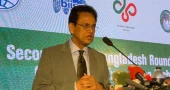
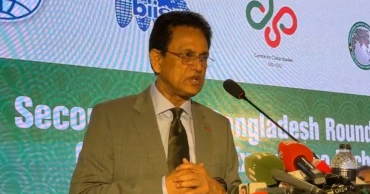
Education Minister Dr ANM Ehsanul Hoque Milon on Monday said blue economy could emerge as a key sector of Bangladesh’s future economy and it has a huge scope for research, education and resource development.
He also said the government has planned to establish a university specialising in the blue economy, where Bangladesh and China could work together, the minister said at the second China-Bangladesh Administrative Experience Exchange Roundtable held at a hotel in the capital.
The event was jointly organised by the University of Dhaka’s Centre for China Studies and the Shanghai Institutes for International Studies.
Milon said friendship between Bangladesh and China has continued for a long time and has never stopped. “Whether it is sunny, cloudy, windy, rainy or stormy, the relationship with China goes on and on. The continuation of this effort is going on now.”
He said China was once highly populated and its population became a resource for the country, contributing to its present position in the global economic sector.
“We also have a large population but no resources, we feel it. But if we compare with China, yes, of course, we can see and we can go ahead and we can see our future through the resource. Number one resource is population,” he said.
He said this is the time to reap the demographic dividend.“The other resource is the blue economy,” he said.
Milon said Bangladesh has an exclusive zone of 200 nautical miles and a continental shelf extending to about 560 kilometres/nautical miles, describing the area as part of the country where resources are available.
The minister said Chinese experts, professors and researchers are now looking into the sector, and the blue economy is one of the important sectors for research and education in Bangladesh.
He said Prime Minister Tarique Rahman is also talking about the issue.
Turning to human resources, Milon said developing human capital is another major resource and the most important area for Bangladesh. “This population should be converted into manpower,” he said.
He said young people and working people constitute nearly 65 percent of the country’s population, while Bangladesh has a population of about 180 million.
He said Bangladesh is in an advantageous position as more people are dying and fewer people are being born in Western countries, while Bangladesh has the opposite demographic trend, with more people being born and fewer people dying.
“This is our main resource,” he said, adding that the world is now facing population scarcity, particularly in the Western world, while China’s population is also not growing at the same rate in accordance with its development.
“We must address, we must address this sector. And here we are now to address this sector,” he said.
He said Prime Minister Tarique Rahman has committed to providing further budgetary support to the education sector. “This year I received 2 percent of net GDP. And he wishes to contribute up to 5 percent of GDP,” he said.
Calling it a huge amount of the budget, the minister questioned where the additional allocation should be invested.
He thanked the Chinese government for extending ideas and research cooperation with Bangladesh in the two specific sectors, blue economy and disaster management, prevention and reduction.
Milon said Bangladesh needs to build a long-term bridge of friendship with China and expressed the view that the bridge could be built through education.
“We need to build a bridge, the friendship long term with China and I believe this bridge could be built through education, only education and only education,” he said.
He said such cooperation would prolong the friendship between the two countries.
19 days ago
Ex-minister Nowfel’s house vandalised in Ctg
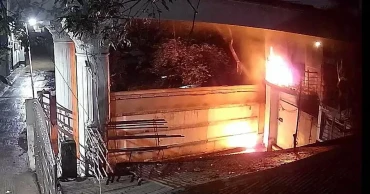
The residence of former Education Minister Mohibul Hassan Chowdhoury Nowfel in the Sholashahar area of Chattogram city was vandalised and an arson was made early Friday, reportedly following his participation in a press conference in New Delhi, which was also joined by former Prime Minister Sheikh Hasina.
The attack took place around 2:00am when unidentified miscreants vandalised the house at Chashma Hill.
The house is the family residence of late former Chattogram mayor ABM Mohiuddin Chowdhury. Following the fall of the Awami League government on August 5, 2024, the family members left the house, which has remained unoccupied except for security personnel.
Locals said several people came to the house, vandalised it and attempted to set it on fire. At one point, a fire broke out in a pipeline in front of the house after a petrol bomb was thrown. When locals arrived at the scene, the attackers fled.
On information, firefighters and police rushed to the spot and brought the fire under control.
Additional police were deployed in the area following the incident.
Officer-in-Charge of Panchlaish Police Station Md Zahedul Islam said police received information about the attack around 2:00am and immediately went to the scene. “We are investigating the incident,” he said.
On August 5, former Prime Minister Sheikh Hasina, who is currently staying in India, spoke virtually at a press conference in New Delhi, which was attended by Nowfel.
Locals believe the attack on Nowfel’s residence may have been linked to his participation in the press conference.
2 months ago
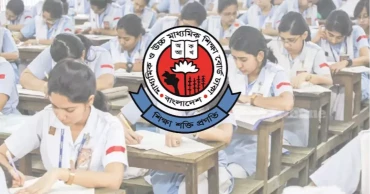
Chattogram Board’s suspended HSC exams to resume July 27: Education Minister
The Higher Secondary Certificate (HSC) examinations under the Chattogram Education Board which were postponed due to flood and inclement weather will resume on July 27, said Education Minister Dr. ANM Ehsanul Hoque Milon on Thursday.
A fresh schedule for the postponed examinations is being prepared and will be published soon, he said while talking to reporters at Secretariat.
"We are giving utmost importance to ensuring that no student's education or future is affected due to natural disasters or inclement weather," he said.
The postponed examinations would be completed within the stipulated timeframe while necessary arrangements are also being made for students who could not attend the examinations because of exceptional circumstances, said the minister.
Due to heavy rainfall and flooding, the HSC and equivalent examinations scheduled for July 8 were postponed in five districts under the Chattogram Education Board. As the situation worsened, all examinations were subsequently suspended until 16 July.
Later, the examinations in those five districts under the Chattogram Education Board were postponed indefinitely.
2 months ago
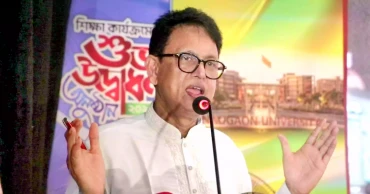
Trolling will not divert govt from its responsibilities: Education Minister
Education Minister Dr ANM Ehsanul Hoque Milon on Saturday said the government would not be distracted from its responsibilities by trolling or criticism, asserting that its priority is to ensure quality education for the nation.
"Those who trolled me are not examinees. We did not see students from institutions like City College, Ideal College or Viqarunnisa taking part in the movement. A group of people tried to create havoc by misleading others," he said.
"Whatever the trolling or criticism, no one will be able to divert us from our responsibilities.
He made the remarks while addressing the inauguration ceremony of academic activities at Naogaon University as the chief guest at the Naogaon Sadar Upazila Auditorium.
Earlier, he unveiled the nameplate of the university's temporary campus in the city's Barunkandi area.
Referring to his previous tenure as state minister for education during the 2001-2006 BNP-led government, Milon said he had then served under former prime minister Begum Khaleda Zia and is now serving under Tarique Rahman.
"How can anyone think I would be instructed to tolerate wrongdoing? Certainly not. Everyone should remain committed to their duties. We must continue education and improve its quality," he said.
Explaining the recent decision to delay the Higher Secondary Certificate (HSC) examination by one hour in Cumilla due to waterlogging, the minister said the step had been taken on humanitarian grounds in the interest of examinees.
He also urged the media to act responsibly in preventing the spread of rumours about question paper leaks and criticised misleading campaigns on social media regarding the examination system.
"Without examinations, it is not possible to properly assess merit or award certificates," he said.
Describing Naogaon University's journey as a new opportunity for higher education, the minister said academic activities had begun with 80 students and that initiatives would be taken to shift the university to its permanent campus as soon as possible.
He also stressed the need to establish an international-standard School of Agriculture at the university to meet local demands.
The programme was chaired by Naogaon University Vice-Chancellor Prof Dr Md Hasanath Ali.
Local Government, Rural Development and Cooperatives State Minister Mir Shahe Alam, University Grants Commission (UGC) Chairman Prof Dr Mamun Ahmed, UGC member Prof Dr Abdullah Al Mamun, Rajshahi University Vice-Chancellor Prof Dr Faridul Islam, National University Vice-Chancellor Dr ASM Amanullah, Directorate of Secondary and Higher Education Director Prof Dr Khan Moinuddin Al Mahmud Sohel, lawmakers from Naogaon-2, Naogaon-3, Naogaon-4, Naogaon-5 and Naogaon-6 constituencies, Deputy Commissioner Mohammad Saiful Islam and Superintendent of Police Mohammad Tarikul Islam, among others, attended the event.
Naogaon University was established in 2023. In December 2025, the UGC approved the opening of two departments- Law, and Accounting and Information Systems.
Student admissions for the 2025-26 academic session have already been completed, and academic activities officially began with Saturday's inauguration.
2 months ago
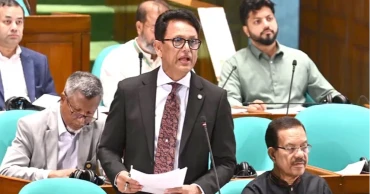
Students who missed HSC exams over adverse weather to get another chance: Education Minister
Education Minister Dr A N M Ehsanul Haque Milon on Wednesday announced that HSC examinees who were unable to attend examinations due to adverse weather or other unavoidable reasons will be allowed to sit for the missed papers.
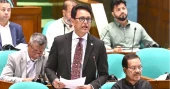
Making a statement in Parliament under Rule 300, the minister said the special arrangement has been made considering the importance of the HSC examination in students' academic lives.
He said a total of 12, 70,583 candidates are taking the HSC and equivalent examinations this year at 2,697 examination centres across the country.
The minister said examinations have already been postponed in five districts under the Chattogram Education Board- Chattogram, Cox's Bazar, Khagrachhari, Rangamati and Bandarban due to heavy rainfall and adverse weather condition.
He added that apart from tChattogram Education Board, some candidates in Dhaka and several other districts were also unable to sit scheduled examinations because of inclement weather and various unavoidable circumstances.
"Candidates who could not participate in any subject of the ongoing HSC and equivalent examinations due to adverse weather or other unavoidable reasons will be allowed to sit those examinations on the same date and at the same time fixed by the Education Ministry for the already postponed examinations under the Chattogram Education Board," the minister told Parliament.
He said the examinations would be held using identical question papers for the relevant subjects.
The minister also updated Parliament on the controversy surrounding the Physics First Paper examination.
He said the officials responsible for preparing the erroneous question paper have already been suspended .
Reiterating the government's assurance to examinees, Milon said all candidates would receive full marks for Questions 6 and 7 of the Physics First Paper, where errors were identified.
He said the government remained committed to ensuring that no student would be affected because of mistakes in the examination process or circumstances beyond their control.
2 months ago
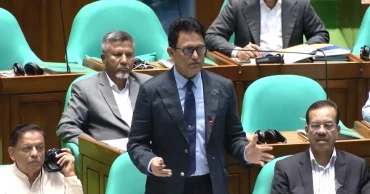
Govt may hold re-examinations for flood-hit HSC examinees: Education Minister
Education Minister Dr A N M Ehsanul Hoque Milon on Tuesday said the government may arrange re-examinations if Higher Secondary Certificate (HSC) examinees were unable to sit their exams due to flood or administrative shortcomings.
"These students are our future. Under no circumstances can we deprive them of their rights, and we will not do so," he said replying to a supplementary question from Jamaat-e-Islami MP Md Shafiqul Islam, elected from Patuakhali 2 in Parliament.
He said the Education Ministry has been maintaining continuous monitoring of examination centres across the country throughout the monsoon season.
The minister said whenever floodwater entered an examination centre, local administrations were instructed to shift the venue immediately to ensure that candidates could take their exams without disruption.
"So far, only one college, Cumilla Government College, has presented a significant challenge after its grounds were inundated," the minister said, adding that in a handful of other cases where water entered examination centres authorities promptly relocated the venues and ensured that students received the necessary facilities.
Milon said the government remains deeply concerned about the examinations and is determined to ensure that no student is deprived because of the natural disaster.
He said if any student was unable to sit an examination due to administrative shortcomings after floodwater entered an educational institution, the government would review the matter and could arrange a re-examination if necessary.
"We have already adopted such a measure under the Chattogram Education Board and that option remains available," he told Parliament.
The minister urged students to return to their studies, assuring them that the government was even more concerned than they were about conducting the examinations properly despite the disaster.
He reiterated that provisions exist to hold re-examinations wherever mistakes or shortcomings prevented candidates from taking their tests.
2 months ago
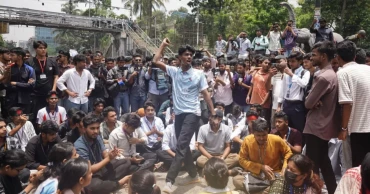
HSC examinees block roads in Dhaka, demand suspension of exams amid floods
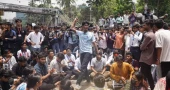
A section of Higher Secondary Certificate (HSC) examinees staged demonstrations and blocked roads in parts of the capital on Tuesday, demanding the resignation of Education Minister Dr. A N M Ehsanul Haque Milon over the continuation of examinations amid adverse weather and alleged errors in question papers.
The protesters began demonstrations around 11:30am at Science Laboratory intersection and almost simultaneously in Uttara, causing major disruptions to traffic and suffering for commuters.
Earlier, a group of examinees announced blockades at several locations including Science Laboratory intersection, Shahbagh, Uttara and Mirpur through a social media platform named “Shikkharthi Oikya” (Student Unity), demanding the minister’s resignation.
2 months ago
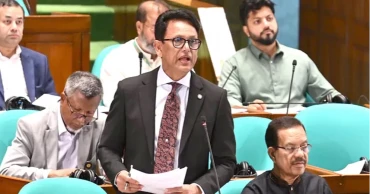
Milon places bill to clean up exams, targeting question leaks and other offences
Education Minister Dr A N M Ehsanul Hoque Milon on Sunday placed the The Public Examinations (Offences) (Amendment) Bill, 2026 in Parliament, aiming to strengthen legal measures against question paper leaks, cheating, fake certificates and technology-driven examination offences.
The bill was subsequently sent to the relevant parliamentary scrutiny committee for detailed examination, with the committee asked to submit its report within the next three working days.
According to the objective of the Bill placed before the House, the existing The Public Examinations (Offences) Act, 1980 was enacted about 45 years ago to prevent malpractice in public examinations, including cheating, question leaks, fabrication of certificates and other irregularities.
However, the Bill observed that the widespread use of technology and the growing trend of committing examination-related crimes through digital means have rendered several provisions of the existing law outdated.
The proposed amendment seeks to ensure a fair and malpractice-free examination environment by bringing offences committed through digital systems and online platforms within the legal framework.
The draft law received policy approval from the Cabinet on April 2, 2026. Following Cabinet directives, the draft underwent several rounds of revision, vetting and further amendments by the Legislative and Parliamentary Affairs Division and the Cabinet Division before receiving final Cabinet approval on June 18.
One of the key features of the proposed legislation is the inclusion and definition of the term “Digital Manipulation” to cover unauthorised access to examination databases through cybercrime, as well as any form of digital tampering.
The bill proposes a maximum punishment of five years’ imprisonment and fines for those found guilty of digital manipulation.
It also provides for stricter penalties and financial sanctions against individuals or groups involved in organised examination fraud or the formation of criminal networks to facilitate such offences.
The government said the amendment has become urgently necessary to address emerging challenges in safeguarding the integrity of public examinations in the digital age.
3 months ago
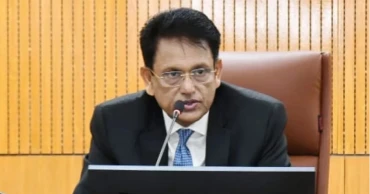
Govt aims to clear teachers' retirement benefit backlog in six months: Minister
Education Minister Dr ANM Ehsanul Hoque Milon on Sunday said the government is committed to ensuring the prompt payment of retirement and welfare benefits to retired teachers and employees of private educational institutions, aiming to clear the existing backlog within six months once the required funds are allocated.
Responding to a question from Bangladesh Jamaat-e-Islami MP Md Abdul Wares (Gaibandha-5) in Parliament, the minister said around 67,000 applications for retirement benefits are currently pending with the Non-Government Teacher Employee Retirement Benefits Board.
He said each retired teacher or employee receives an average retirement benefit of about Tk 13 lakh.
According to Milon, settling all pending applications requires approximately Tk 8,710 crore, while the retirement fund currently holds only around Tk 1,300 crore, leaving a shortfall of nearly Tk 7,410 crore.
He also informed the House that about 45,000 applications have remained pending with the Non-Government Teachers and Employee Welfare Trust since August 2023 to June 21, 2026.
The minister said clearing those applications will require a one-off allocation of around Tk 3,150 crore.
He said the government has already initiated measures to address the financial crisis facing both the retirement benefits board and the welfare trust by arranging the necessary budgetary allocation.
Milon said several administrative reforms have also been undertaken to speed up the settlement process, including reactivating the software system, increasing manpower, expanding online services and introducing direct payments to teachers' and employees' bank accounts through the iBAS++ financial management system.
"If the necessary funds are allocated, it will be possible to dispose of all currently pending retirement benefit applications within six months," he told Parliament.
The minister added that the government's long-term objective is to ensure that retired teachers and employees of private schools, colleges and madrasahs receive their retirement and welfare benefits within three to six months after retirement.
In his question, Abdul Wares highlighted the prolonged suffering of retired teachers of private schools, colleges and madrasahs who have been waiting for years to receive their retirement benefits, and asked whether the government will ensure payments within three to six months of retirement.
3 months ago
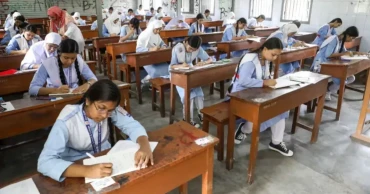
SSC exams to begin on Jan 7, HSC on June 6 next year: Education Minister
Secondary School Certificate (SSC) and equivalent examinations will begin on January 7 while Higher Secondary Certificate (HSC) and its equivalent examinations will start on June 6 from next year.
Education Minister ANM Ehsanul Hoque Milon disclosed the schedule of the public examinations at a press conference on Thursday.
SSC and its equivalent examinations will be concluded on February 6 while HSC and its equivalent examinations will end on July 13, next year, he said.
“The SSC and HSC examinations are extremely important. Approximately 20 lakh students appear in SSC and equivalent examinations and 20 lakh in HSC and equivalent examinations. The education and future of these 40 lakh students are extremely important,” he said.
“We are trying to synchronise the system in a way that gradually closes the gap where students lose nearly a year waiting for the SSC examinations and another year waiting for the HSC examinations. We are considering December as the end of the academic year and the examination month and we have been moving forward accordingly,” said the minister.
This year, the HSC examinations will begin from July 2, he said.
Asked when the results would be published, the minister said, “In 2001, I fixed the timeframe at two months. No one would be allowed to delay the results by even a single day beyond that. That practice is still being followed.”
However, as the system has now become more advanced, the timeframe will be shortened further, not extended, he said.
“I have made it clear in my remarks that we do not want to keep any gap between the publication of results and the admission process. We want students to get admitted immediately after the results are published,” he said.
4 months ago