cargo ship
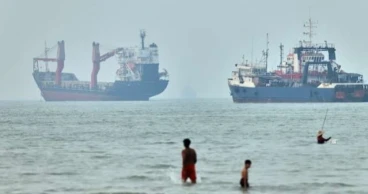
Cargo ship reports being hit in Strait of Hormuz as US, Iran differ over talks
A cargo ship reported being hit by a projectile in the Strait of Hormuz off Oman, while the United States and Iran gave conflicting accounts of whether they were holding talks to end the war.
The United Kingdom Maritime Trade Operations Center (UKMTO) said the ship reported being “hit by an unknown projectile” at around 2am local time while sailing about 37 kilometres northeast of Al Khasab in Oman.
The agency did not provide details about the vessel, including its flag or the cargo it was carrying.
Al Khasab is located at the tip of the Arabian Peninsula, which extends into the Strait of Hormuz. The strategic waterway connects the Persian Gulf with the Gulf of Oman and is a key route for global oil and gas shipments.
Before the war, about one-fifth of the world’s oil and natural gas passed through the strait. The waterway has effectively been closed to commercial shipping since Iran began attacks on vessels after the war started in February. The United States has also imposed a blockade on Iranian ports in the area.
US and Iran give different accounts of talksUS President Donald Trump said Monday that Washington and Tehran had resumed talks aimed at ending the conflict.
However, Iran rejected the claim.
Iranian Foreign Ministry spokesperson Esmail Baghaei said no negotiations were taking place with the United States. He said Tehran was only holding discussions with Oman, mainly about creating a safe route for navigation through the Strait of Hormuz.
Trump had said a day earlier that he called off major strikes he had threatened against Iran after being urged to do so by Gulf allies Qatar, Saudi Arabia and the United Arab Emirates.
“Whether Iran wants to admit it or not, we are, in fact, talking,” Trump said.
He also expressed frustration with Iran, claiming that Tehran had sought talks despite publicly denying that negotiations were taking place.
“Iranian Leadership is unbelievably duplicitous!” Trump wrote on Truth Social.
He said Iran had requested a meeting and that talks had begun, with more meetings expected soon, while Tehran was publicly saying that it was not negotiating with Washington and was dealing only with Oman.
2 months ago
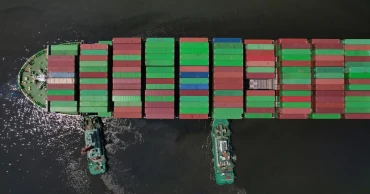
Iran war raises fears of bunker fuel shortage, higher shipping costs
The global shipping industry is facing growing concerns over fuel shortages after the war involving Iran disrupted supplies of bunker fuel, the heavy oil used to power most cargo ships.
The closure of the Strait of Hormuz, a key route for Middle Eastern oil exports, has sharply reduced supplies of bunker fuel to Asia, particularly to Singapore, the world’s largest refuelling hub for ships.
Bunker fuel is a thick, low-grade oil left over after crude oil is refined. Although dirtier than fuels used in cars and aircraft, it remains essential to global trade, helping transport around 80 percent of goods traded worldwide by sea.
Industry experts warn that a prolonged shortage could significantly increase shipping costs, push up consumer prices and hurt businesses around the world.
The impact is being felt most strongly in Asia, which depends heavily on Middle Eastern oil. Fuel reserves in Singapore are shrinking while prices continue to rise.
According to commodity analysts, bunker fuel prices in Singapore have surged from around $500 per metric ton before the conflict to more than $800 in early May.
Shipping companies are trying to cope by slowing vessel speeds, adjusting schedules and exploring ships that can use alternative fuels.
However, analysts say some smaller companies may struggle to survive if the crisis continues.
Henning Gloystein of consultancy Eurasia Group said the disruption will eventually spread beyond Asia and affect supply chains worldwide.
Asia adopts emergency energy measures
Countries across Asia have responded by increasing coal use, buying more oil from Russia and reconsidering nuclear power projects.
The region is bracing for further challenges as fuel stocks decline and government subsidies become harder to maintain.
More than half of global seaborne trade passed through Asian ports in 2024, according to the United Nations, meaning disruptions in the region could have worldwide consequences.
Higher costs likely to reach consumers
Shipping firms are absorbing most of the extra costs for now, but analysts say these increases are likely to be passed on to customers.
The European Federation for Transport and Environment estimates that the war is costing the global shipping industry about 340 million euros, or nearly $400 million, each day.
Risk consultancy Aon said bunker fuel shortages typically affect shipping costs faster than many other market pressures.
As transport costs rise, prices of goods ranging from food and electronics to clothing could also increase.
Consumers in Singapore are already feeling the impact, with ferry operators raising fares and cruise companies adding fuel surcharges.
Alternative fuels gain momentum
The crisis is also increasing interest in greener fuels such as liquefied natural gas (LNG).
Wärtsilä CEO Håkan Agnevall said rising fossil fuel prices are making cleaner alternatives more financially attractive.
The Caravel Group CEO Angad Banga said about one-third of the ships currently under construction under its management will be capable of using both conventional bunker fuel and alternatives such as LNG.
Although infrastructure for LNG-powered ships is still limited, industry leaders say investment is growing and progress is being made.
Banga said ship owners are increasingly willing to invest in fuel-flexible vessels, as the ability to switch fuels has become more valuable amid ongoing market uncertainty.
4 months ago
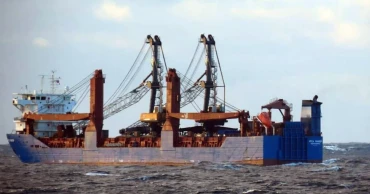
Russian cargo ship sinks in the Mediterranean, 2 crew missing
A Russian cargo ship sank in the Mediterranean Sea between Spain and Algeria, leaving two crew members missing, Spain's maritime rescue agency and the Russian Foreign Ministry said Tuesday.
Fourteen of the Ursa Major's crew were rescued uninjured from a lifeboat and transferred to Spain, the agency said. The Russian ministry said the ship started sinking following an explosion in the engine room.
The vessel was owned by SK-Yug, a subsidiary of the Russian shipping and logistics company Oboronlogistika, which was established under Russia's defense ministry and placed under U.S. and European Union sanctions for its ties to Russia's military.
Spanish authorities said there were empty containers and two cranes on board. They did not confirm the cause of the accident.
In a statement on Dec. 20, Oboronlogistika said the cargo ship was headed to Russia’s far eastern city of Vladivostok carrying two cranes for the port weighing 380 tons each. Ursa Major had left St. Petersburg 12 days ago, Russian state news agency Ria Novosti said.
Spanish authorities said they received an alert around 1 p.m. Monday when the vessel was roughly 57 nautical miles (106 kilometers) from Almería in southeastern Spain. The maritime rescue agency contacted a ship nearby that reported poor weather conditions, a lifeboat in the water and the Ursa Major listing.
Read: UAE stresses on security of eastern Mediterranean, Arab regions
Authorities said a Russian warship arrived later Monday to oversee rescue operations, and the 142-meter (466-foot) cargo vessel sank around midnight. The Russian embassy in Spain told RIA Novosti it was investigating the accident and was in contact with local authorities.
Ursa Major was in the western Mediterranean at the same time as Sparta — another Russian cargo ship under U.S. sanctions — whose destination as reported Tuesday was Port Said in Egypt, according to ship-spotting platform MarineTraffic.com.
It’s not unusual for Russian ships going from St. Petersburg to Vladivostok to transit through the Mediterranean and the Suez Canal. With global warming, the Northern Sea Route via Russia’s Arctic is increasingly traversed year-round, but most ships still choose the southern route in winter.
Spanish maritime rescue units remained in the area Tuesday to monitor for pollution and remove any floating objects that could be dangerous for navigation, authorities said.
1 year ago

Cargo ship carrying 600 tons of stones sinks in Pashur
A cargo ship with 600 tons of stones on board sank in the River Pashur in Bagerhat's Mongla early Thursday, port authorities said.
All the 10 crew members on board were rescued by another cargo vessel, the Mongla Port Authority added.
The ship MV Master Didar, heading towards Khulna, sank near anchorage area Harbaia-3 around 12am, after it began to take on water and tilt to one side, Captain Md Shahin Mzaid, harbour master of Mongla Port, said.
Read more: 13 trawlers sink in Bay in Cox’s Bazar 13 trawlers sink in Bay in Cox’s Bazar
A certificate of a survey of Master Didar, which a ship needs to operate as a commercial vessel, expired. Also, no effort to salvage the ship was seen till the filing of this report.
The ship owner has been sent a letter to salvage the ship within 15 days and an explanation was sought for operating it without a fitness certificate, Captain Md Shahin said.
3 years ago

Cargo ship docks at Chattogram port with over 52,000 tonnes of Ukrainian wheat
A Liberian cargo ship carrying 52,500 tonnes of wheat from Ukraine has docked at Chattogram port for the first time since the start of the Russia-Ukraine war.
Magnum Fortune arrived at the outer anchorage of the port on Wednesday evening, Abdul Quader, food controller (storage and movement) of Chattogram division, told UNB Thursday.
The cargo ship will move to the silo jetty for releasing the food grain after the testing of samples, he added.
Read: Cargo vessel carrying Indian transit container arrives in Chattogram port
The government bought the wheat under its government-to-government (G2G) agreements with Russia and Ukraine after India turned down Bangladesh's request for wheat import.
Earlier, as part of the agreements, Bangladesh already received more than one lakh tonnes of wheat from Russia in two shipments.
3 years ago
.jpg)
Emirati-flagged cargo ship sinks in Persian Gulf off Iran
An Emirati-flagged cargo ship, longer than a soccer field, sank in stormy seas off Iran’s southern coast in the Persian Gulf on Thursday, authorities said. Rescuers were trying to account for all of the vessel’s 30 crew members.
Capt. Nizar Qaddoura, operations manager of the company that owns the ship, told The Associated Press that the Al Salmy 6 encountered treacherous weather. The choppy waters forced the vessel to list at a precarious angle and within hours fully submerged the ship.
Emergency workers dispatched from Iran successfully saved 16 crew members, Qaddoura said, and civilian ships had been asked to help with the rescue efforts. Another 11 survivors made it into life rafts, while one person was plucked and saved from the water by a nearby tanker. Two crew members were still bobbing in the sea, he said.
The crew consisted of nationals from Sudan, India, Pakistan, Uganda, Tanzania and Ethiopia, Qaddoura said. The ship had been bound for the port of Umm Qasr, in southern Iraq, carrying cars and other cargo. It had left Dubai days earlier.
Also read: Bangladeshi migrants among 43 missing as boat sinks off Tunisia
The ship’s owners, the Dubai-based Salem Al Makrani Cargo company, specializes in car freighters.
The vessel capsized some 50 kilometers (30 miles) off the coast of Asaluyeh, in southern Iran, the state-run IRNA news agency reported. The search-and-rescue operation was complicated by bad weather, the report added, and was continuing.
Iranian media released images and footage of the ship, flipping over on its side after being rocked by waves, that matched with previous images of the Al Salmy 6, a roll-on, roll-off carrier — so named because automobiles can drive on and off.
The U.S. Navy’s 5th Fleet, which patrols in the Mideast, did not immediately respond to a request for comment about the incident.
Crucial oil and cargo shipping lanes flow past Iran through the Strait of Hormuz, delivering energy supplies from the oil-rich Gulf Arab states to the rest of the world.
Vessels sinking and other accidents remain rare in the busy waters. But dust and sand storms, gale-force winds and other poor weather typically sweeps across the region as seasons change from the chilly winter to sizzling summer.
Also read: Coal-laden vessel sinks in Pashur river
Severe weather began to pound the Persian Gulf on Wednesday, the state-run Iran Meteorological Organization reported, bringing wind gusts in excess of 70 kph (40 mph) and high waves to Iran’s Bushehr province. The agency issued a “red alert” this week, warning of disruption to maritime activities in the gulf and damage to offshore facilities through Saturday.
4 years ago