rmg
Apparel exports to US decline 8.53% in Jan-Feb amid regional competition
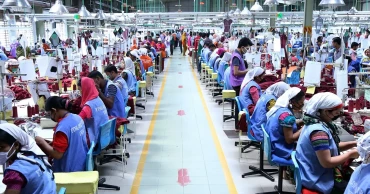
Bangladesh's readymade garment (RMG) exports to the United States – its single largest export destination – faced a setback in early 2026, recording an 8.53 percent decline in January and February, compared to the same period in 2025.
According to the latest data from the Office of Textiles and Apparel (OTEXA) of the US Department of Commerce, the downturn was marked by a "double blow" of falling prices and reduced shipment volumes. Unit prices for Bangladeshi apparel dropped by 2.47 percent, while the overall export volume (measured in square meter equivalents) fell by 6.21 percent.
The decline in Bangladesh's exports reflects a broader contraction in the US apparel import market, which saw a total decline of 13.47 percent in early 2026. Analysts suggest that high inflation, shifting consumer spending patterns, and inventory adjustments by major US retailers have contributed to this global slowdown.
Despite the overall market slump, Bangladesh’s regional rivals—Vietnam and Cambodia—managed to post positive growth, signaling intensifying competition for market share. During the same period, Vietnam’s exports to the US grew by 2.86 percent, while Cambodia recorded a significant surge of 18.43 percent.
While traditional competitors are gaining ground, China’s massive decline in the US market continues to create a strategic opening. US fashion companies are accelerating their "China Plus One" sourcing strategies due to geopolitical tensions and trade barriers.
Industry experts believe that if Bangladesh can improve its efficiency and diversify its product range, it can capture a larger portion of the vacuum left by China.
Mohiuddin Rubel, Former Director of the Bangladesh Garment Manufacturers and Exporters Association (BGMEA) and Additional Managing Director of Denim Expert Ltd, noted that the current trend highlights the vulnerability of relying solely on basic, low-margin products.
"The decline in both volume and unit price is a signal that we must pivot towards high-value-added products and improve our lead times," Rubel said.
"While the overall US market is shrinking, the growth of Cambodia and Vietnam shows that buyers are shifting orders to destinations that offer better logistical efficiency or tariff advantages,” he said.
1 day ago
Two RMG factories shut in Ashulia, affecting 4,000 workers
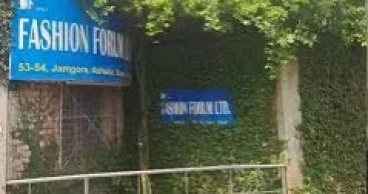
Authorities of two ready-made garment (RMG) factories in Ashulia declared an indefinite shutdown on Wednesday, leaving around 4,000 workers in uncertainty.
The owners hung closure notices at the main gates of the factories in the morning, preventing workers from entering the premises.
According to workers, the factories—Fashion Forum Ltd in Jamgora area and JA Apparels in Kuturia—were shut down following recent labour unrest. Workers arriving at the factories in the morning found the gates closed and attempted to stage protests but were dispersed by police.
Workers alleged that the factories were closed without clearing their dues, leaving thousands of employees in distress.
Later, the workers staged a human chain programme in the area, demanding reopening of the factories and payment of their wages and benefits.
Additional police have been deployed in front of the factories to avoid any untoward situation.
Ashulia Industrial Police-1 Superintendent Mominul Islam said discussions are underway with the factory authorities to reopen the units. Extra police have been deployed to maintain law and order, he added.
4 days ago
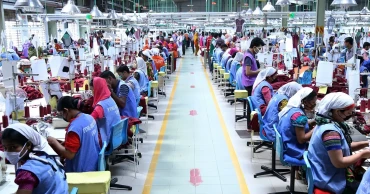
RMG exports down 3.7% in first 8 months of fiscal
Bangladesh's Readymade Garment (RMG) exports recorded a 3.73 percent year-on-year decline, totaling US$ 25.80 billion during the July–February period of the current fiscal year 2025–26.
According to the latest data from the Export Promotion Bureau (EPB), the sector—the backbone of the country’s export earnings—is facing a downward trend across several key markets compared to the same period in the previous fiscal.
The European Union (EU) remains the largest destination for Bangladeshi apparel, accounting for nearly half 49.18 percent of total RMG exports.
However, earnings from the EU fell by 5.49 percent, dropping to US$ 12.69 billion.
The United States, the second-largest market for Bangladesh, also saw a slight contraction. Exports to the USA reached US$ 5.03 billion, representing a 0.74 percent decrease year-on-year.
Bucking the general downward trend, exports to the United Kingdom and Canada showed resilient growth:
United Kingdom: Exports rose by 1.22 percent to reach US$ 2.97 billion.
Canada: Recorded a growth of 3.08 percent, with export earnings standing at US$ 871.58 million.
Earnings from non-traditional markets took a hit, declining by 6.34 percent to US$ 4.24 billion. These markets now hold a 16.44 percent share of the total RMG export basket.
In terms of product categories, both major segments saw a decline.
Knitwear recorded a 4.56 percent decrease, while Woven Garments posted a 2.79 percent decrease.
Mohiuddin Rubel, Additional Managing Director of Denim Expert Ltd. and former Director of BGMEA, noted that the overall performance reflects the ongoing global economic shifts and their subsequent impact on consumer demand in traditional strongholds.
25 days ago
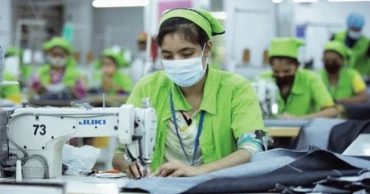
Bangladesh Bank to provide special loans for RMG workers’ wages
Bangladesh Bank on Tuesday instructed commercial banks to offer special term loans to export-oriented industries to ensure timely payment of workers’ wages for February 2026.
The central bank issued a circular citing both global and domestic economic pressures that have strained liquidity and production capacity in the country’s export sector.
According to Banking Regulation and Policy Department (BRPD) of Bangladesh Bank, the initiative aims to maintain production momentum and support export growth despite falling orders and delayed shipments.
Under the directive, banks can provide term loans to “active” export-oriented units beyond their existing working capital limits.
The loan amount cannot exceed the average of the last three months’ wages and allowances paid by the respective factory.
Loans will carry prevailing market-based interest rates, with no additional fees, profit charges, or commissions.
Repayment must be made in equal monthly or quarterly installments within a maximum of one year including a three-month grace period.
Bangladesh Bank defined “export-oriented” industries as those exporting at least 80 percent of their total production.
To be considered “active,” an industry must have regularly paid workers’ salaries from November 2025 to January 2026.
Eligibility must be certified by trade bodies such as the Bangladesh Garment Manufacturers and Exporters Association (BGMEA) or the Bangladesh Knitwear Manufacturers and Exporters Association (BKMEA).
To ensure transparency and prevent fund diversion, the circular mandates that the loan amount be credited directly to the bank or Mobile Financial Service (MFS) accounts of the workers, with no cash disbursement through factory management.
1 month ago
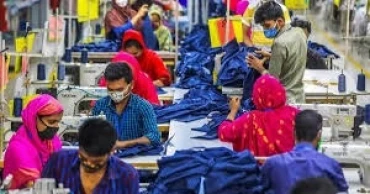
Two more Bangladeshi garment factories achieve prestigious ‘Green’ certification
Bangladesh’s RMG sector has reached a new milestone in eco-friendly industrialization as two more garment factories have earned the prestigious Leadership in Energy and Environmental Design (LEED) certification from the U.S. Green Building Council (USGBC).
With these new additions, the total number of LEED-certified garment factories in Bangladesh has risen to 275, further solidifying the country’s position as a global leader in sustainable manufacturing.
The two newly certified factories, both located in Gazipur, have demonstrated excellence in environmental safety and resource efficiency:
MNR Sweaters Ltd, located in Braidachala, Sreepur, achieved the highest ‘Platinum’ rating with a score of 85 under the 'Existing Building' category.
Fashion Floor BD Ltd, located in Godarchala, Telihati, secured a ‘Gold’ certification with a score of 71 under the 'New Construction' category.
The Bangladesh Garment Manufacturers and Exporters Association (BGMEA) highlighted that out of the 275 certified factories, 116 hold the ‘Platinum’ rating and 140 are ‘Gold’ certified. Notably, Bangladesh now dominates the global landscape by hosting 70 of the world’s top 100 highest-rated green factories.
RMG exports down 2.4% y-on-y in first 7 months of fiscal
Industry experts attribute this success to advanced measures in energy saving, water management, and waste reduction.
Mohiuddin Rubel, former Director of BGMEA and Additional Managing Director of Denim Expert Ltd, stated that this continuous streak of certifications keeps Bangladesh’s RMG industry ahead in the competitive global market.
"This trend of sustainable industrialization will be instrumental in boosting future exports and establishing Bangladesh as a responsible and long-term supplier in the global fashion supply chain," experts noted.
1 month ago
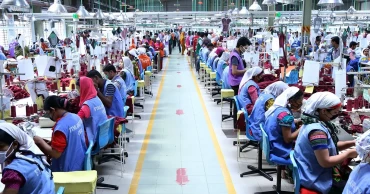
RMG exports down 2.4% y-on-y in first 7 months of fiscal
Bangladesh’s readymade garment (RMG) exports declined by 2.43 percent year-on-year to US$22.98 billion during July–January of fiscal year 2025–26, according to the latest country-wise export data published by the Export Promotion Bureau (EPB).
The European Union (EU) remained the country’s largest export destination for RMG, accounting for 49.35 percent of total exports in the category. Export earnings from the EU stood at US$11.34 billion, marking a 3.98 percent year-on-year decline, said former BGMEA director Mohiuddin Rubel on Monday.
The United States retained its position as the second-largest market. RMG exports to the USA amounted to US$4.47 billion, representing 19.46 percent of total RMG exports, with a marginal year-on-year decrease of 0.03 percent.
According to EPB data, Bangladesh’s total RMG exports to the United States from February 2025 to January 2026 reached US$7,544.34 million. During this period, total national RMG exports stood at US$38,775.15 million, with the US market accounting for 19.46 percent of the total.
Exports to Canada and the United Kingdom posted positive growth during the period. RMG exports to Canada amounted to US$784.17 million, accounting for a 3.41 percent share and showing 4.42 percent year-on-year growth. Exports to the United Kingdom reached US$2.62 billion, representing an 11.38 percent share with 2.55 percent growth.
Exports to non-traditional markets stood at US$3.77 billion, accounting for 16.40 percent of total RMG exports, though registering a 4.99 percent year-on-year decline.
In terms of product categories, the knitwear segment recorded a 3.13 percent decrease in exports, while the woven segment saw a 1.60 percent decline during the period.
1 month ago
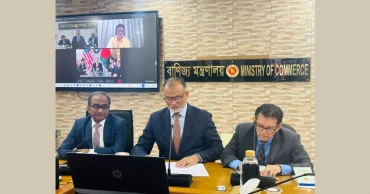
Agreement grants zero tariff access for Bangladeshi RMG using American cotton into US market
Bangladesh and the United States on Monday signed an agreement whereby the US committed to establishing a mechanism for certain textile and apparel goods from Bangladesh using American cotton and man-made fibres to enjoy zero tariff entry into the lucrative US market.
At the same time, the agreement reduces the 'Reciprocal Tariff' rate for all other goods between the two nations to 19%. It was originally set at 37 percent and later reduced to 20 percent in August last year.
On the Bangladesh side, the signatories were Commerce Adviser Sheikh Bashir Uddin and National Security Adviser Khalilur Rahman, and on US side Ambassador Jamieson Greer, US Trade Representative. Negotiations on the agreement spanned over nine months since April last year.
"The agreement marks a historically new level in our bilateral economic and trade relations. It will provide substantially enhanced access of Bangladesh and the US to each other's respective markets," said Commerce Adviser Sheikh Bashir Uddin, who led the Bangladesh side.
"The reduction of reciprocal tariff from 20 percent to 19 percent will grant further advantage to our exporters, while zero reciprocal tariff on specific textile and apparel exports from Bangladesh will give substantially added impetus to our garments sector," said NSA Rahman, who was the lead negotiator of Bangladesh.
The agreement was approved by the Council of Advisers today (Monday) and will be operational once notifications are issued by the two sides.
Present during the signing were Commerce Secretary of Bangladesh Mahbubur Rahman and Assistant US trade Representative Brendan Lynch.
1 month ago

Garment industry leaders warn tariffs on yarn may worsen crisis
Leaders of the country’s apparel trade bodies, Bangladesh Garment Manufacturers and Exporters Association (BGMEA) and Bangladesh Knitwear Manufacturers and Exporters Association (BKMEA), on Monday strongly opposed recent recommendations to restrict yarn imports.
They said any attempt to force the purchase of local yarn through tariff barriers would undermine the global competitiveness of the garment industry and disrupt its integrated supply chain.
The leaders expressed their concern at an emergency press conference at a Dhaka hotel.
Selim Rahman, acting president of BGMEA, said exporters prefer local yarn if its price matches the global market but imposing new tariffs or restrictions to support local mills would create a crisis.
“If local yarn is available at global market rates, we will not import. But trying to force local yarn sales artificially is not a solution. It will only worsen the crisis,” he said.
He urged the government to support the textile sector through cash incentives, reliable energy supply, and favourable tax and interest rates instead of imposing duties on yarn imports.
He warned that BGMEA might take ‘tough measures’ if these concerns are ignored.
Mohammad Hatem, president of BKMEA, said price differences between local and imported yarn have always existed but the situation worsened after the reduction of cash incentives.
He criticised the Commerce Ministry for recommending restrictions on blended and man-made fiber (MMF) yarn, pointing out that local production in these categories is still insufficient. “If you stop yarn imports artificially and people start importing finished fabric instead, what will you do?” Hatem asked.
The BKMEA leader also raised concerns over the shrinking Export Development Fund (EDF) which has been cut from $7 billion to $2 billion under IMF conditions.
He said many businesses still cannot access the remaining funds.
Garment accessories sector posts record $7.45bn export earnings in FY25: BGAPMEA
Hatem expressed frustration over the lack of support from the financial sector.
Highlighting regional competition, he noted that India continues to provide strong incentives to its textile and apparel sectors despite graduating from LDC status.
He questioned why Bangladesh cannot implement similar support to sustain its top-earning export sector during this transition period.
2 months ago
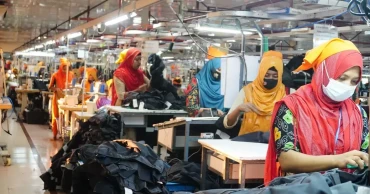
Bangladesh's garment exports to Europe exceed €18 billion, growing over 7.5%
The European Union’s apparel import market witnessed a significant reshuffling in 2025, as Bangladesh’s exports to the bloc climbed to €18.06 billion despite a broader trend of falling unit prices and aggressive competition from China.
According to the latest Eurostat data for the period of January to November 2025, the EU's total apparel imports grew by 3.93 percent, reaching a total value of €82.94 billion. While the market saw a robust 11.60 percent increase in volume, the average unit price for garments fell by 6.88%, signaling a highly competitive, price-sensitive environment for global suppliers.
Bangladesh, the EU's second-largest apparel supplier, saw its export value rise from €16.78 billion in 2024 to €18.06 billion in the first eleven months of 2025—a growth of 7.65 percent. This value growth was largely volume-driven, with an 11.26 percent increase in the quantity of goods shipped, even as the country faced a 3.25 percent decrease in unit prices.
However, data from the end of the period suggests a cooling trend. A comparison between November 2024 and November 2025 reveals a sharp 10.87% drop in export value and a 12.27% decline in unit prices, highlighting the mounting pressure on Bangladeshi manufacturers to lower costs.
Garment accessories sector posts record $7.45bn export earnings in FY25: BGAPMEA
The report highlights a strategic pivot by China. Facing ongoing challenges in the United States market, China has intensified its focus on Europe. Chinese apparel exports to the EU reached €24.42 billion, marking a 6.55 percent growth in value. Most notably, China saw a massive 15.73 percent surge in export volume, supported by a 7.93 percent reduction in unit prices.
The sourcing landscape across Asia showed varying results.
Vietnam recorded a healthy 10.10 percent growth, reaching €4.02 billion. Unlike its neighbors, Vietnam saw a 4.19 percent increase in unit price, likely reflecting a shift toward higher-value garments.
Turkey struggled significantly, facing an 11.31 percent decline in exports to the EU, totaling €7.66 billion.
India, Pakistan, and Cambodia all showed substantial growth rates, contributing to the overall volume surge in the European market.
Global demand crunch pinches RMG, exports stagnant in first 5 months of fiscal at $16bn
"The data reflects a complex environment where volume is up, but margins are being squeezed," noted Mohiuddin Rubel, Managing Director of Bangladesh Apparel Exchange Ltd.
"While Bangladesh remains a key player, the aggressive pricing strategies from competitors like China and the recent dip in November figures suggest that staying competitive will require a careful balance of volume and value-addition," he said.
2 months ago
Garment accessories sector posts record $7.45bn export earnings in FY25: BGAPMEA
Bangladesh Garments Accessories and Packaging Manufacturers and Exporters Association (BGAPMEA) on Wednesday announced a record export earning of $7.45 billion in the 2024-25 fiscal year, with around $1 billion coming from direct exports.
The figures were unveiled at the inaugural ceremony of the 15th GAPEXPO which opened at the International Convention City Bashundhara (ICCB) in the capital.
The four-day trade show will run until January 17.
BNP Standing Committee Member Amir Khosru Mahmud Chowdhury, National Board of Revenue (NBR) Chairman Abdur Rahman Khan, BGMEA Acting President Selim Rahman, BKMEA President Mohammad Hatem and Bangladesh Association of Banks (BAB) Chairman Abdul Hai Sarker, among others, attended the opening ceremony.
Industry leaders said the accessories and packaging sector has become a backbone of the country’s primary export earner, the ready-made garment (RMG) industry.
They noted that the sector currently employs more than 700,000 people and that BGAPMEA now represents over 2,000 member factories.
Association officials said Bangladesh has made major progress in import substitution.
Previously, sourcing accessories from abroad involved high costs and long lead times but the local industry is now capable of meeting the entire internal demand of the export sector, they said.
Garment sector hits green milestone with record 38 LEED certifications in 2025
The organisers also underscored the importance of the government’s ‘Product of the Year’ initiative, which provides policy support and incentives to promising sectors.
BGAPMEA welcomed the government’s decision to declare paper packaging products as the “Product of the Year” for 2026, calling it a historic milestone that is expected to attract fresh domestic and foreign investment, promote sustainable industrial growth, create new jobs and further boost export earnings.
2 months ago