Local-Business

Remittances cross $13 billion in first 5 months of fiscal
Bangladesh received its highest monthly remittance inflow of the current fiscal year FY 2025-26, crossing US $2.88 billion November.
This substantial inflow translates to an average daily remittance of approximately $96.3 million. In the five month of the current fiscal year Bangladeshi expatriates sent $13.03 billion remittance while it was $11.7 billion in the previous fiscal year.
According to updated data released by the Bangladesh Bank on Monday, the remittance flow in November saw a significant increase of 31.37 percent compared to the previous month of October.
The total remittance figure for November stands at $2.88. Of this amount, state-owned banks received $587.76 million as remittance, specialized banks handled $298.95 million, and the largest share, around $2.0 billion, came through private banks. Foreign banks accounted for the remaining $5.94 million.
The central bank also provided a weekly breakdown, showing consistent high flow throughout the month, with the largest weekly amount of $768.48 million arriving between November 9 and 15, and the smallest being $43.18 million on November 1st.
The November figure significantly surpasses the inflows of the preceding months of the current fiscal year: October saw $2.56 billion, September recorded $2.68 billion, while August and July inflows were $2.42 billion and $2.47 billion, respectively.
This robust performance follows the record-breaking remittance year of FY2024-25, where expatriates sent $30.32 billion, marking the highest annual inflow in the country's history so far.
3 months ago
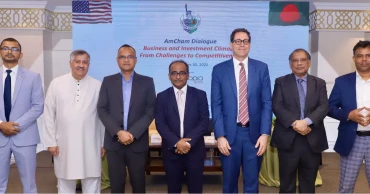
AmCham dialogue stresses urgent reforms to boost investment competitiveness
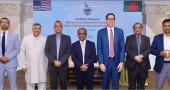
The American Chamber of Commerce in Bangladesh (AmCham) hosted a high-level dialogue, calling for immediate and sustained government-private sector collaboration to enhance the country’s business and investment climate.
The event, titled “Bangladesh’s Business and Investment Climate: From Challenges to Competitiveness,” was held in a hotel in Dhaka on Sunday (November 30), according to a press release.
Participants from both the private sector and key government agencies stressed that improving the business environment is an immediate national priority. The discussion centered on transforming current challenges into competitive advantages for both local and foreign investors.
Top priorities highlighted during the dialogue included: Logistics efficiency, The need for better operational effectiveness in transport and supply chains.
Customs Processes: Achieving smoother and faster clearance procedures.
Regulatory Predictability:Ensuring greater certainty in rules and regulations for long-term planning.
Energy Security: Addressing vulnerabilities to ensure a reliable energy supply for industries.
Policy Continuity: Maintaining stable long-term policies to sustain investor confidence.
Digital Trade Facilitation: Leveraging technology to streamline cross-border commerce.
Recycling Incentives: Introducing specific policy support for the reuse and recycling industries.
The session saw significant participation from the government, signaling its commitment to reform. Mahbubur Rahman, Secretary, Ministry of Commerce, attended as the chief guest, leading a senior delegation.
The dialogue brought together senior representatives from crucial government bodies, including the Ministries of Industries, Foreign Affairs, Finance, ICT, the National Board of Revenue (NBR), the Bangladesh Investment Development Authority (BIDA), among others. This multi-agency presence underscored the collective need for stronger coordination among government agencies to improve global competitiveness.
Reflecting the continued importance of bilateral trade relations, Paul Frost, Commercial Counselor, US Embassy, Dhaka, also attended the program.
The event featured prominent business leaders and AmCham members, including Moinul Huq, Country Manager, Citi NA, and Rashed Mujib Noman, Managing Director, Augmedix Bangladesh. The event was moderated by Chowdhury Kaiser Mohammad Riyadh, Executive Director, AmCham, and also saw the presence of Betopia Group’s Founder & Group CEO, Muhammad Monir Hossain.
The participants unanimously agreed that sustained government–private sector collaboration is essential to achieving Bangladesh's long-term economic goals and positioning the country as a major investment hub.
3 months ago

Bangladesh Bank clears path to liquidate nine troubled NBFIs
Bangladesh Bank has approved the liquidation of nine non-banking financial institutions (NBFIs) after years of irregularities, mismanagement and failure to return depositors’ funds, marking one of the largest clean-ups of the sector to date.
The central bank’s Board of Directors signed off on the move at a meeting on November 30, allowing regulators to begin the formal process under the Bank Resolution Ordinance 2025, according to officials familiar with the decision.
“The board has approved the issue. The central bank will now scrutinise and finalise which institutions will be liquidated,” an executive director of Bangladesh Bank told UNB on Monday.
The institutions identified for potential closure are Peoples Leasing and Financial Services (PLFS), International Leasing and Financial Services, Aviva Finance, FAS Finance and Investment, Fareast Finance and Investment, Bangladesh Industrial Finance Company (BIFC), Premier Leasing and Finance, GSP Finance Company and Prime Finance and Investment Limited.
The initial shortlist was drawn up based on key indicators such as persistent failure to repay depositors, soaring non-performing loans and severe capital shortfalls. Regulators will now determine the final liquidation framework for each entity, the official added.
Central bank sources estimate the government may need to inject around Tk 9,000 crore to absorb losses and settle depositor claims, with priority given to small savers.
Although the liquidation move is being executed under the 2025 ordinance, Bangladesh Bank is also pursuing licence revocations under the Finance Company Act 2023.
Out of 35 NBFIs currently operating in Bangladesh, the central bank has designated 20 as distressed.
The nine institutions were issued notices on May 22 but failed to provide satisfactory responses within the deadline, prompting the regulator to advance toward dissolution.
3 months ago
Bangladesh Bank extends Tk8000 crore Sukuk term for five years
The term for the first Bangladesh Government Investment Sukuk, valued at Tk8,000 crore, which was issued against the "Safe Water Supply Across the Country" project, has been extended by an additional five years.
Bangladesh Bank in a press release on Sunday informed this information.
The five-year Sukuk was originally set to mature on December 29, 2025. Following this new decision, the bond’s next maturity date will be December 29, 2030.
The decision to extend the term was made to protect the interests of the Sukuk holders and ensure adherence to Shariah principles. The extension was based on the recommendation of the Shariah Advisory Committee, formed under Bangladesh Bank's Debt Management Department, and the approval of the government's Cash and Debt Management Committee (CDMC).
All necessary ancillary documents for the extension were approved during a meeting of the Shariah Advisory Committee held at Bangladesh Bank's Head Office on Sunday (November 30).
For the extended period, the government will provide a total of Tk3,804 crore as rent for the use of the leased Sukuk assets.
While the calculated annual rental rate is set at 9.51 percent, the current effective rate stands at 4.69 percent. Investors will receive this rent proportionally on a semi-annual basis.
During the extended term, investors have the choice to either retain their Sukuk holdings or opt for encashment.
Any investor who chooses not to continue their investment beyond the original term can submit an application through their respective banks to the ‘Special Purpose Vehicle’– Islamic Securities Section (Debt Management Department) of Bangladesh Bank.
These investors will be able to liquidate their Sukuk on the original maturity date of December 29, 2025.
Bangladesh Bank stated that detailed instructions regarding the encashment process will be communicated to the concerned parties shortly.
3 months ago

Remittance surges to $2.68 billion in 29 days of November
Bangladesh has recorded a substantial inflow of remittances, totaling US $2.68 billion in the first 29 days of November, according to an updated report released by the Bangladesh Bank (BB) on Sunday.
The strong performance brings the cumulative remittance sent by overseas Bangladeshi workers for the current fiscal year FY 2025-26 to $12.83 billion (July to November 29, 2025).
The daily average remittance inflow for the first 22 days of November stands at approximately $92.44 million.
The central bank's updated figures provide a breakdown of how the $2.83 billion. Of which private sector banks received $1.87 billion, state own banks $516.94 million, specialize banks $279.57 million and foreign banks $5.55 million.
The $12.83$ billion cumulative figures for FY 2025-26 represents a notable 15.8 percent growth July to November 29, 2025, compared to the corresponding period in the previous fiscal year (FY 2024-25), during which $11.09$ billion was received.
Bangladesh Bank's data highlights a consistent and strong flow of remittances in recent months. In July expatriates sent $2.48 billion remittance, August $2.42 billion, September $2.68 billion, October $2.56 billion,
The sustained high remittance flow is a crucial factor supporting the country's foreign exchange reserves and providing stability to the economy.
3 months ago

NAMSS Motors announces special discount on electric bikes for journalists
NAMSS Motors Limited, the sole official distributor of China’s leading e-vehicle brand Huaihai scooters in Bangladesh, has announced special discounts for journalists on its electric bike lineup.
Director of the company Mokammel Hossain Evan announced the discount offer during the Family Day event of the Dhaka University Mass Communication and Journalism Alumni Association (DUMCJAA) held recently at Narayanganj’s Zinda Park.
“Media professionals play a vital role in promoting eco-friendly technologies and raising public awareness. They work under constant challenges, and this special offer is meant to acknowledge their contribution while encouraging the use of electric vehicles,” Evan said.
Under the scheme, journalists will receive cashback on three popular EV models— Tk 6,000 on the Sparky, Tk 5,000 on the E-Thunder, and Tk 4,000 on the EcoRide.
According to NAMSS Motors, all working journalists are eligible for the discount upon presenting a valid press ID and proof of membership from any registered journalist association.
Huaihai Global, an international brand with 47 years of experience, currently exports two- and three-wheel EVs to more than 120 countries.
In Bangladesh, NAMSS Motors serves as the exclusive distributor, operating assembly, sales, and after-sales services across 41 districts. The company aims to make electric vehicles an affordable, eco-friendly, and reliable mode of transport for the masses.
3 months ago
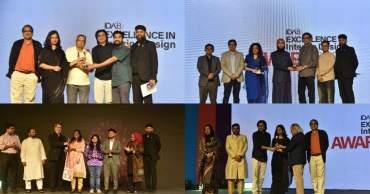
First-Ever national recognition for Interior Designers : “IDAB Excellence in Interior Design Award 2024” Conferred
The Interior Designers Association of Bangladesh (IDAB) on Saturday organized the prestigious “IDAB Excellence in Interior Design Award 2024” to highlight and honor the excellence of the country’s interior design profession for the first time in Bangladesh in four award categories.
The grand award ceremony took place this evening at Hotel InterContinental, Dhaka with the presence of leading consultants from the architecture and interior design sectors, award recipients, and institution heads.
In the opening address, IDAB President Syed Kamrul Ahsan stated that Bangladesh’s interior design landscape is expanding rapidly, integrating creativity, modern design thinking, and local heritage to reach international standards.
Award Committee Chairman Shafiul Islam delivered a presentation on the competition’s objectives, evaluation framework, and judging criteria while Jury board representative and eminent interior designer Nasreen Zameer also shared her remarks. Special guest speakers included the President of the Institute of Architects Bangladesh (IAB), Architect Dr. Abu Sayeed M Ahmed; Chief Architect of the Department of Architecture, Md. Asifur Rahman Bhuiya; and Head of the Department of Architecture at BUET, Dr. S M Najmul Imam.
The event’s Chief Guest, renowned architect Shamsul Wares, emphasized the importance of advancing the creativity of young designers on the global stage and stressed the need for structured growth of the industry.
This year’s competition featured four categories—Residence, Corporate, Hospitality, and Retail—and the awards were presented by distinguished guests including Architect Shamsul Wares, IDAB President Syed Quamrul Ahsan, Architect Dr. Abu Sayeed M Ahmed, Dr. S M Najmul Imam of BUET, Rubana Sadia Alam of Shanto-Mariam University, Dr. MD. NAWROSE FATEMI of APU, Dr. Masudur Rahman of Southeast University, Masud Parvez Country Director of Gasdom, Ismail Hossain of Swish, KSM Minhaj, CEO of Asian Paints, and Rashedur Rahman the Managing Director of Marble De Carrara (Pvt.) Ltd., Md. Naimul Hossain Khan CEO of Wood Tech Recognitions across the categories were: Residence Category—First Prize Sarawat Iqbal Tesha, Monon Bin Yunus, Rajib Ahmed, Second Prize Sued Mahmud Hossain, Rafid Reasad and MD. Sibat Ahnaf, Third Prize Erena Khan Mumu; Corporate Category—First Prize Architect Daniel Haque, Second Prize Architect Nazirur Islam, Third Prize Sarawat Iqbal Tesha, Monon Bin Yunus and Rajib Ahmed; Hospitality Category—First Prize Architect Fatiha Polin, Second Prize Rafia Mariam Ahmed, Third Prize Khan Zahidul Islam; and Retail Category—First Prize Architect Mahmudul Anwar Riyaad, Second Prize Farheen Alia, Third Prize Rafia Mariam Ahmed.
The event concluded with a captivating musical performance by the popular Bangladeshi band “Joler Gaan,” followed by a formal dinner.
3 months ago
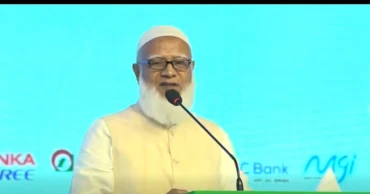
Sustainable political and social climate a primary requirement to attract investment: Jamaat Ameer
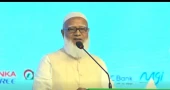
Jamaat-e-Islami Ameer Dr Shafiqur Rahman on Saturday stated that a sustainable political and social atmosphere in Bangladesh is the primary requirement for both foreign and domestic investors.
Shafiqur made the remarks at the third session of the Bangladesh Economic Summit 2025, organised by Bangla Daily Bonik Barta, at a hotel in Dhaka. He presided over the session titled "Fairness in the Economy." The editor of Bonik Barta Dewan Hanif Muhammad moderated the session.
He shared that his discussions with foreign and local entrepreneurs reveal that despite incentives like cheaper labour, tax exemption facilities, and profit assurance, investors remain hesitant due to a lack of trust regarding the guarantee of security.
The Jamaat Ameer said that many countries are ready to invest once a peaceful political and social environment is restored, but entrepreneurs are simultaneously seeking corruption-free government services, arguing that corruption is significantly keeping the country backward for investment.
Criticizing the current tax system, Dr. Shafiqur pointed out that both the rich and the poor contribute to the economy, stating, "Even a beggar pays tax when he buys something from a shop. A newborn baby also pays tax when someone purchases a product for the child."
He further claimed that the non-citizen-friendly tax system often leads to harassment by tax officials. Rahman asserted that the economy cannot move forward unless fairness and equal opportunity are ensured for all, which requires skilled and honest individuals in every service sector.
Dr. Shafiqur called for a reform of the education system, shifting it from being "certificate based to work and skilled based."
He also highlighted that the burden of repaying foreign loans is shared equally by all citizens, from babies to the elderly, which underscores the need for an economic system rooted in fairness. The inequality, corruption, and lack of proper planning, he noted, are preventing Bangladesh's human resources from becoming a true national asset.
He specifically mentioned the issue of brain drain, where talented Bangladeshis settle abroad because they feel their skills are not valued in their own country.
The Jamaat ameer identified three priority areas for national progress: a reformed education system to produce skilled manpower, strong action against corruption at all levels, and justice for all.
He concluded that ensuring these three areas will stabilize society and allow the country to move forward, emphasizing that real change demands a firm commitment.
Md. Shafiullah, a retired senior secretary and Jamaat finance wing leader, also presented the organization’s financial sector work plans should they be able to form the next government through the national election.
3 months ago
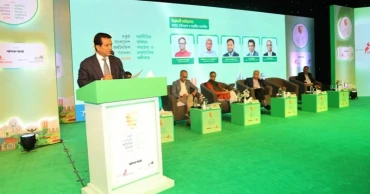
14 lakh now jobless due to stalled industrialisation: A.K. Azad at economic conference
Industrial stagnation and shrinking private investment have caused 14 lakh people to lose jobs, leaving them “wandering on the streets without employment,” Ha-Meem Group Managing Director and former FBCCI president A.K. Azad said on Saturday.
Speaking at the opening session of the Bangladesh Economic Conference 2025 at Hotel Sonargaon in the capital, he said the country is failing to create new jobs despite the growing labour force. The event was organised by Bonik Barta.
“Every year, 30 lakh people enter the job market. Of them, 1.2 lakh are recruited in government and semi-government agencies, 8 lakh go abroad, and 10 lakh get jobs in the private sector. The rest remain unemployed. But new employment is not being generated as expected, which is pushing unemployment further up,” he added.
Referring to Bangladesh Bank’s bulletin published on November 23, Azad said the country’s GDP growth was 4.22 per cent last year, which is expected to decline to 3.97 per cent this year. He also pointed to rising classified loans, noting that although the central bank reports the figure at 24 per cent, “the actual number is much higher.”
“To pay dividends to shareholders, many banks engage in window dressing. If loans are classified, the money has to be provisioned, which reduces their profits. If we consider the real figure to be around 35 per cent, we must find out where the money went and who took it. We expect the next government to investigate and bring those responsible under the law,” he said.
Azad criticised the strict contractionary monetary policy implemented by the central bank governor, saying higher interest rates have severely squeezed the private sector. “We received only 6 percent credit (credit growth). Industrialization is in a very bad state. Capital machinery imports fell last year, and this year they declined a further 26 per cent,” he added.
The former independent MP said the government is struggling to cover expenses from revenue and has been borrowing heavily from banks to pay salaries. “Government borrowings from banks have reached 27 percent,” he noted.
Azad also expressed deep concern over the growing energy crisis. He said Bangladesh has 7.80 trillion cubic feet of gas reserves, while annual demand is 3,800 million cubic feet. “Thirty percent of this demand is met through imports and 70 percent from reserves. As a result, reserve levels are declining by 9 percent each year.”
“At this rate, gas reserves may run out within 6–7 years, leaving us entirely import-dependent. Investors are worried about this scenario,” he said.
BSSMA President and GPH Group Chairman Mohammad Jahangir Alam, Bangladesh Institute of Development Studies Director General Prof. A.K. Enamul Haque, and ABB Chairman and City Bank Managing Director Mashrur Arefin also spoke at the session.
Bangladesh Bank Governor Dr. Ahsan H. Mansur chaired the inaugural session, while Bonik Barta Editor and Publisher Dewan Hanif Mahmud moderated the discussion.
3 months ago
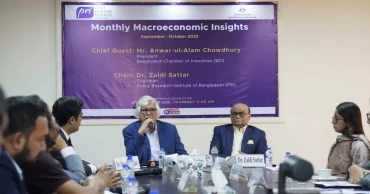
Policy changes, poor business environment fuel NPL crisis: BCI President Parvez
The President of the Bangladesh Chamber of Industries (BCI), Anwar-ul-Alam Chowdhury Parvez, on Thursday strongly contested the narrative that primarily blames business owners for the staggering rise in Non-Performing Loans (NPLs), arguing that the entire responsibility should not be placed on them.
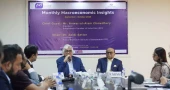
Speaking at the Policy Research Institute (PRI)’s 'Monthly Macroeconomic Insights' seminar, Parvez stated, "The business environment is currently not entrepreneur-friendly. To pay off previous debts, entrepreneurs are being forced to take out new loans, which further increases the risk of default."
He specifically pointed to a recent policy change in loan classification as a major factor contributing to the NPL spike.
"Previously, the classification period for a loan was six months. Now, it has been reduced to three months. Consequently, any loan not repaid within three months is now immediately classified as non-performing," he said.
The BCI President’s remarks came as the keynote paper, presented by PRI Chief Economist Dr. Ashikur Rahman, revealed the alarming scale of the financial crisis. Dr. Rahman reported that the country’s current volume of non-performing loans stands at Tk 6.44 lakh crore, which is approximately 36 percent of the total outstanding loans.
Furthermore, he warned that the total volume of distressed assets in the banking sector could reach Tk 9.50 lakh crore, underscoring significant weaknesses in asset recovery mechanisms.
Dr. Rahman cautioned that a high NPL volume could lead to a future "credit crunch" and negatively impact overall investment.
To stem the rising tide of defaults, business leader Parvez urged the government to improve the country's business climate by focusing on key structural issues.
He called for-improving the law-and-order situation, resolving the persistent energy crisis, stopping the 'mob culture and ensuring consistent policy support for entrepreneurs.
He warned that "NPLs will increase further" if these fundamental issues are not solve immediately.
The seminar, which brought together business leaders and economists, was chaired by PRI Chairman Dr. Zaidi Sattar.
Dr. Zaidi Sattar, Chairman of PRI, chaired the event. In his remarks, Dr. Sattar highlighted that, “The rising REER index since May should be concerning to the exporter community as it indicates erosion of competitiveness. Bangladesh Bank can no longer purchase dollars from the market to depreciate the taka; therefore, loosening import restrictions is the only viable option. This would also benefit exporters.
More vibrant imports would support better exchange-rate management under the current flexible regime and contribute to a more dynamic export environment.”
The discussion featured insights from a distinguished panel comprising Dr. Nasiruddin Ahmed Former Chairman, National Board of Revenue (NBR), Dr. AKM Atiqur Rahman, Professor, North South University, Dr. Wasel Bin Shadat, Research Director, BUILD, and Amrita Makin Islam, DMD, Picard Bangladesh Limited, Director, LFMEAB.
Dr. Wasel mentioned, “Compliant taxpayers are being penalized, which goes against the principle of tax justice. This is one of the main reasons why 85 percent of the economy remains informal.”
Moreover, election manifestos across political parties fail to address the economic situation with sufficient seriousness, he said.
Dr. Nasiruddin Ahmed argued that tax policy should be formulated by politicians and the business community rather than bureaucrats, some of whom he believes contribute to the problem.
He also highlighted employment and the lack of quality, job-oriented education as major national concerns that the next government must address.
Atiqur Rahman noted that without the July mass uprising, the true scale of rising NPLs would have remained hidden, raising doubts about the economy’s ability to sustain itself.
He emphasized the urgent need for export diversification beyond RMG, warning that potential Trump-era tariffs and a Real Effective Exchange Rate (REER) above 6 percent are already weakening competitiveness.
3 months ago