Local-Business
Bangladesh Bank orders pay cuts for Sammilito Islami Bank’s employees
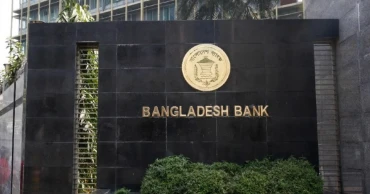
Bangladesh Bank has ordered a reduction in the salaries of employees from the five banks that have been merged to form the new 'Sammilito Islami Bank' (Combined Islamic Bank).
Sammilito Islami Bank’s Assistant Spokesperson Shahriar Siddiqui on Thursday said, "The decision to cut the salaries of employees of the five banks included in the new Sammilito Islami Bank was taken while allocating Tk350 crore in liquidity support."
He explained that the salaries of the banks' employees depend on the depositors' funds, citing an example, "Last year, First Security's income was negative. Yet, they paid salaries amounting to Tk650 crore from depositors' funds. Employees of FSIB and SIBL are currently able to withdraw only a portion of their salaries."
The Governor has instructed the swift implementation of this measure due to the banks' severe liquidity crisis and financial irregularities.
The spokesperson, however, clarified that this decision is part of the restructuring process and is temporary. Once the situation normalises, the officials will receive market-based salaries, he added.
Earlier, on November 5, Bangladesh Bank declared five financially troubled Shariah-based banks as ineffective and appointed administrators. The banks are: Exim Bank, Social Islami Bank, First Security Islami Bank, Union Bank and Global Islami Bank.
Later, on November 9, the central bank's board, chaired by Governor Dr Ahsan H Mansur, granted a preliminary license during a special online meeting to the new Shariah-based state-owned bank, 'Sammilito Islami Bank,' to operate after merging the five weak banks.
3 months ago
Bangladesh Capital Market: DSE slips, CSE ends higher
After opening on a positive note, the Dhaka Stock Exchange (DSE) closed Tuesday’s session in the red, while the Chittagong Stock Exchange (CSE) managed to maintain its upward momentum.
At the DSE, the key index DSEX dropped by 6 points at the end of the day, though the other two indices advanced — the DSES gained 2 points and the DS30 rose by 6 points.
Most issues saw price declines, with 227 companies losing value against 129 gainers, while 30 issues remained unchanged.
The turnover inched up slightly to Tk 636 crore, compared to Tk 635 crore the previous day.
In the block market, shares worth Tk 16 crore were traded across 25 companies, with Simtex Industries PLC alone offloading shares worth Tk 5 crore.
Simtex Industries PLC topped the DSE gainers’ list with a 10% price rise, while People’s Leasing and Financial Services Ltd hit the bottom, falling 9%.
Meanwhile, the CSE closed higher, with its all-share price index CASPI advancing by 114 points.
DSE rebounds; index tops 5,000 after 20-day dip
The port-city bourse saw 125 issues gain, 53 decline, and 15 remain unchanged.
The turnover at the CSE stood at Tk 21 crore, up from Tk 19 crore in the previous session.
New Line Clothings Ltd led the CSE gainers with a 10% jump, while United Power Generation & Distribution Company Ltd ended as the biggest loser, slipping nearly 10%.
3 months ago
Bangladesh Bank extends loan rescheduling facility for defaulters
Bangladesh Bank (BB) has further expanded the scope of policy support available to classified loan borrowers.
All loans classified as adverse (defaulted) on upcoming November 30 will now be eligible for rescheduling under a special facility. This new concession aims to help restructure the business and financial framework of distressed institutions.
The central bank's Banking Regulations and Policy Department (BRPD) issued a circular in this regard on Monday, November 24.
Extended Tenure and Grace Period:
The new directive states that classified loans as of November 30, 2025, can be rescheduled for a maximum term of ten (10) years, with the provision to include a maximum two-year grace period. This means that borrowers with loans classified within the specified timeframe will be eligible for the new policy's rescheduling benefits.
Relaxation for Unclassified and Restructuring Loans:
Special Restructuring: Concessions have also been extended for unclassified term loans. These loans, including those previously rescheduled, can now be restructured by setting an additional maximum maturity period of two (02) years beyond the term described in the BRPD Circular No. 16/2022.
Special Exit Facility Changes
New flexibility has been introduced for the special exit facility as well:
Extended Period: Alongside taking the down payment as per previous instructions (BRPD Circular No.-13/2024), the duration of the exit facility can be extended by an additional one (01) year.
Repayment Obligation: While the rule for monthly or quarterly installment payments remains, the total annual repayment must not be less than 20% of the total loan amount.
Classification: During this period, the loans must be displayed as 'Exit (SMA)' (Special Mention Account), and the required General Provision must be maintained.
Provisions: Specific Provision maintained previously cannot be transferred to the bank's income account without actual realization, although a part of it can be transferred for maintaining General Provision.
Restrictions on New Loans: No new loan facilities can be granted to the institution until the entire loan is fully paid off.
Failure to Pay: If the borrower fails to pay three monthly or one quarterly installment, the loan must be classified in the usual manner.
3 months ago

Door opens for Bangladeshi exporters to sell overseas through online markets
Bangladesh's export sector has officially opened its doors to major global online marketplaces for selling their products with simplified documentation and revenue collection.
In a significant move, Bangladesh Bank has granted permission for local exporters to sell goods directly overseas through platforms like Amazon and eBay, creating a vast new opportunity for the country's exporters.
The central bank's Foreign Exchange Policy Department issued a circular to this effect on Monday (November 24).
The central bank stated that this new policy initiative is designed to boost Bangladesh's participation in the global online marketplace. To make cross-border e-commerce more streamlined and effective, the bank has authorized exports under a Business-to-Business-to-Consumer (B2B2C) framework.
According to the circular, Authorized Dealer (AD) banks can now process export transactions where the foreign consignee acts not as the final buyer, but as an intermediary platform or marketplace. This means Bangladeshi goods can now be exported through major international platforms, including Amazon, eBay, Alibaba, Etsy, or any international subsidiary or third-party warehouse.
The new structure also simplifies the necessary documentation and revenue collection, such as:
Registration Proof: Exporters engaging in this activity must submit proof of their registration with the relevant global platform or warehouse to their AD bank.
Pricing: Since the B2B2C model typically lacks a conventional sales contract, the fair value of the exported goods can be declared based on a Proforma Invoice.
Shipping Documents: If the consignee is solely a service provider, the bank may also accept shipping documents prepared in their name.
The policy also eases rules for realizing export income. Funds earned from these exports are now acceptable not only through standard banking channels but also via international payment service operators. Recognizing that payments for multiple shipments may arrive collectively in platform-based exports, banks are advised to reconcile the export income using a 'First-In, First-Out' (FIFO) principle.
Sector Sees Growth Potential:
Industry experts believe the Bangladesh Bank's decision will significantly revitalize cross-border e-commerce.
"This policy will unlock new markets for small and medium-sized exporters and strengthen Bangladesh's position in the global online marketplace," said Mohammad Hatem, President of BKMEA.
The new framework is expected to play a crucial role in diversifying exports and increasing the volume of Bangladeshi products sold through international digital retail channels, he said.
3 months ago
Islami Bank Board stresses uninterrupted customer service, loan recovery
The board of directors of Islami Bank Bangladesh on Monday underscored the importance of ensuring uninterrupted customer services and accelerating the collection of outstanding loans.
The board, in its meeting at Islami Bank Tower, also emphasised the opening of Letters of Credit (LCs) for essential goods in line with central bank guidelines ahead of Ramadan, according to a press release.
Professor Dr. M. Zubaidur Rahman, chairman of the bank, presided over the meeting. Other participants included Mohammad Khurshid Wahab, chairman of the executive committee; Md. Abdus Salam, FCA, FCS, chairman of the audit committee; Professor Dr. M. Masud Rahman, chairman of the risk management committee; Md. Abdul Jalil, independent director; Md. Omar Faruk Khan, managing director; Professor Dr. Mohammad Abdus Samad, member secretary of the shari’ah supervisory council; and Md. Habibur Rahman, company secretary.
3 months ago
Bangladesh Bank targets full digital payment interoperability by 2027
Bangladesh Bank has set a target to establish a fully interoperable digital transaction system by July 2027, linking banks, Mobile Financial Services (MFS), insurance firms and other financial institutions, said Governor Dr Ahsan H Mansur.
The Governor made the announcement at a programme titled ‘Instant Payment in Bangladesh: Unveiling Inclusion Opportunities’ held at a hotel in Dhaka on Monday.
Addressing the current state of digital payments, the governor admitted that Bangladesh Bank's existing interoperable payment system, launched on November 1, has not been successful so far.
"Although the interoperable system has been launched, it has not been successful because many institutions are not conducting transactions through it," said Dr Mansur.
To overcome this hurdle and accelerate the shift toward a cashless economy, the central bank has signed an agreement with the ‘Gates Foundation’s Mojaloop’ to establish a new Instant Payment Platform. The agreement was virtually signed for security reasons.
Introducing IIPS
The new Mojaloop-based platform will be named the Inclusive Instant Payment System (IIPS).
Governor Mansur highlighted the key feature of the new system: it will eliminate the need for cash-out transactions, facilitating seamless digital transfers across the entire financial ecosystem.
The Governor emphasised the mandatory nature and benefits of this digital transformation, saying, “We must transform our entire transaction ecosystem into a cashless one. Banks, MFS operators, agent banking and financial institutions everyone must be brought under a single channel. The plan is to launch it by July 2027.”
He pointed out that this shift to the IIPS is vital for macroeconomic stability. “In the future, there will be no alternative but to move towards this system. It will increase transparency, reduce corruption, and boost revenue collection.”
3 months ago
‘Deposit Protection Ordinance’ issues to boost confidence in banking sector
The government has issued the ‘Deposit Protection Ordinance, 2025’ to enhance the protection of depositors and increase public confidence in the country's banking sector.
Considering the importance of financial sector stability during the dissolution of parliament, the president promulgated the ordinance using the power vested under Article 93(1) of the constitution. This ordinance repeals the existing ‘Deposit Insurance Act, 2000,’ and introduces a modern framework.
The information was revealed through a circular published on Sunday (November 23) by the Deposit Insurance Department of the Bangladesh Bank.
The primary objective of the new law is to ensure the protected return of deposits placed with both Bank Companies and Finance Companies.
New Department: A separate Deposit Protection Department will be established under the Bangladesh Bank to oversee the protection programme. This department will be responsible for collecting regular premiums, fund management, inspecting member institutions, settling claims, and conducting awareness programs.
Fund Structure: The ordinance mandates the formation of two separate Deposit Protection Funds for bank and finance companies. These funds will be managed using premiums collected from member institutions, fines, investment income, and other approved sources.
Governing Body: The administration of the funds will be overseen by the Bangladesh Bank's Board of Directors, which will act as the 'Trustee Board'.
Membership: Newly licensed bank and finance companies must submit an initial premium at a prescribed rate. All existing bank companies will automatically be considered member institutions under this law, while finance companies will be included from July 1, 2028. The law also includes provisions for the collection of risk-based premiums on a quarterly basis.
Coverage and Claim Settlement
The ordinance explicitly excludes certain classes of deposits from protection, including those belonging to the government, foreign entities, and international organizations. Conversely, deposits made by general individuals or institutions will be considered 'protectable' and will be secured up to a defined limit.
In the event of a bank or finance company's liquidation or resolution, the Deposit Protection Department will directly pay the secured deposits. If necessary, the protection process can also be managed by transferring assets and liabilities to a bridge bank or a third party through the resolution authority.
The Bangladesh Bank has also been empowered under this law to sign Memoranda of Understanding (MoU) with domestic and foreign regulators, exchange information, receive technical assistance, and conduct deposit protection activities in line with international standards.
Experts believe the implementation of this new law will increase the financial sector's capacity to manage risk and combat crises, providing depositors with greater protection.
END/UNB/AI/ssk
3 months ago
Stocks open lower at DSE, CSE as market extends downtrend
Trading at both the Dhaka Stock Exchange (DSE) and the Chittagong Stock Exchange (CSE) opened on a downward trend on Sunday, with most listed companies seeing a decline in share prices during the first hour.
On the DSE, the benchmark DSEX index slipped by 7 points, while the Shariah-based DSES shed 3 points. The blue-chip DS30 index also dropped by 8 points.
The market breadth also remained negative, as prices fell for the majority of traded issues. Against 116 gainers, 200 issues declined, while 56 remained unchanged.
Stock market rebounds as DSEX gains 166 points, rises 1.2% over week
The DSE recorded turnover of over Tk 160 crore during the first half of the session.
A similar downtrend persisted at the CSE, where the broad index fell by 8 points.
Of the traded issues, 35 advanced, 48 declined and 7 remained unchanged.
The turnover on the CSE stood at Tk 4.10 crore in the early session.
3 months ago
Bangladesh Bank halts direct customer services from today
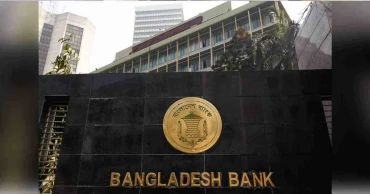
Bangladesh Bank (BB) on Sunday officially halted all direct customer services, including the sale of savings certificates and prize bonds, exchange of torn or damaged banknotes and automated challan services, following an earlier announcement.
The central bank has directed commercial banks to ensure smooth and uninterrupted services in these areas, while intensifying monitoring activities to safeguard the transition.
In a notice issued last Thursday, BB highlighted that central banks worldwide do not provide such services directly at their counters.
The decision, it said, was also driven by security concerns, which were cited as a Key Performance Indicator (KPI).
Originally, the suspension was planned to begin at the Motijheel office from November 30, with other branches following later.
BB to halt sale of savings certificates, prize bonds
The timeline was, however, advanced, and the central bank decided to stop all direct services at all its offices simultaneously starting today.
Until now, BB’s Motijheel office, along with its branches in Sadarghat, Chattogram, Khulna, Barishal, Rangpur, Bogura, Rajshahi, and Sylhet, had been providing these customer services.
3 months ago

Gold prices make big jump in Bangladesh after two rounds of cuts
After two consecutive reductions, gold prices in the domestic market have surged again, with the Bangladesh Jewellers Association (BAJUS) raising the rate by Tk 2,612 per bhori for 22-carat gold.
The new price has been set at Tk 209,520 per bhori, effective from Thursday.
BAJUS announced the revised rates in a statement issued on Wednesday night, citing an increase in the price of pure gold (tejaabi gold) in the local market as the main reason for the adjustment.
As per the new tariff, the price of 22-carat gold per bhori (11.664 grams) will be Tk 209,520. The price of 21-carat gold has been fixed at Tk 200,003 per bhori, 18-carat gold at Tk 171,426 per bhori, and traditional gold at Tk 142,592 per bhori.
In addition to the selling price, buyers must pay a mandatory 5 percent government VAT and a minimum 6 percent BAJUS-set making charge. However, the making charge may vary depending on the design and craftsmanship of the jewellery.
Earlier, on November 18, BAJUS last adjusted gold prices, lowering the 22-carat rate by Tk 1,364 to Tk 206,908 per bhori.
With this latest revision, gold prices have been adjusted 79 times so far this year, 54 increases and 25 decreases.
Despite the price hike, silver rates remain unchanged. A bhori of 22-carat silver is still selling at Tk 4,246 in the domestic market.
3 months ago